
Creating ultra-realistic 3D avatars for video has become increasingly accessible thanks to advancements in AI technology. These avatars are generated using sophisticated algorithms that analyze real human features and movements, allowing for lifelike representations in various applications, from gaming to virtual meetings. In this article, you will learn how AI powers the creation of these avatars, the technologies involved, and their applications.
The Technology Behind AI-Generated Avatars

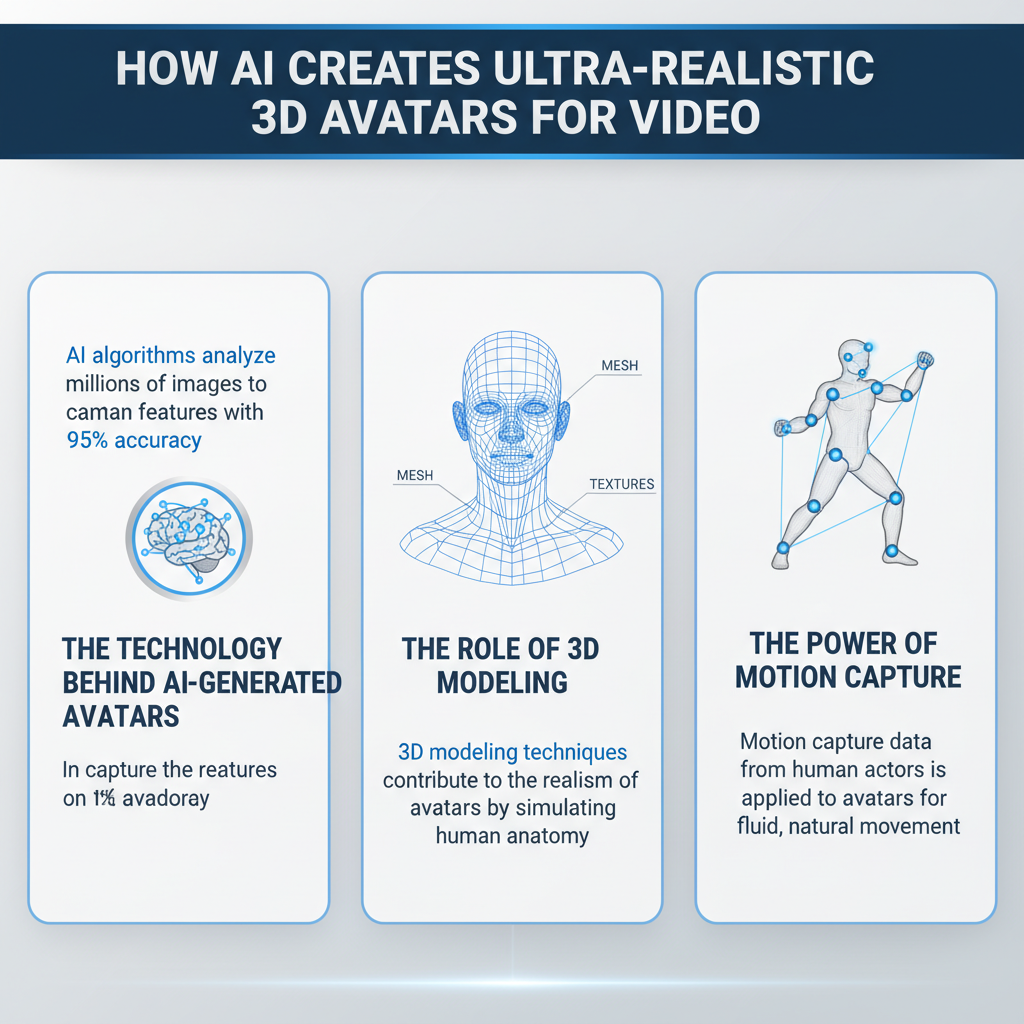
At the heart of AI-generated avatars lies a complex web of technology that analyzes vast datasets of human images. AI algorithms meticulously study thousands, if not millions, of photographs, capturing intricate details like facial expressions, skin texture, and even the subtleties of movement. This deep learning process allows the AI to understand what makes a face recognizable and relatable. For instance, tools like StyleGAN (Generative Adversarial Networks) can produce hyper-realistic images that can be used as a foundation for 3D avatars.
Moreover, techniques such as machine learning and neural networks play a crucial role in refining these avatars. By training on diverse datasets, these algorithms become adept at not only replicating human features but also enhancing them to create more attractive and engaging characters. The result is a seamless blend of technology and artistry, producing avatars that are not only visually stunning but also carry emotional weight, making them ideal for video applications.
The Role of 3D Modeling

Once the AI has generated a realistic 2D representation, the next step involves 3D modeling, which is crucial for bringing the avatar to life. 3D modeling software, such as Blender or Maya, is employed to create the physical structure of the avatar. This involves defining its geometry, including the shape and proportions that give the avatar its unique identity.
Texturing and shading techniques add depth and realism to the avatar’s appearance. By applying textures that mimic skin, hair, and clothing, designers can create an avatar that feels tangible. Advanced shading techniques, like subsurface scattering, allow light to penetrate the skin, giving it a soft, lifelike quality. For example, if you were creating a character for a video game, the attention to detail in the avatar’s clothing texture and skin tone can significantly enhance the player’s immersion in the game.
Motion Capture and Animation
To animate these avatars accurately, motion capture technology plays a pivotal role. By recording real human movements—using sensors placed on the actor’s body—developers can create lifelike animations that mimic the way humans move. This technology captures everything from subtle facial expressions to full-body gestures, making the avatars not just look real but also behave in a realistic manner.
AI algorithms can further interpolate and enhance these movements for smoother animations. For instance, if a character is turning their head to look at something, AI can fill in the gaps between keyframes, ensuring that the motion appears fluid and natural rather than jerky or robotic. This level of detail is essential for applications in films, gaming, and virtual reality, where user engagement is critical.
Applications in Gaming and Virtual Reality
The integration of AI-generated avatars has transformed the gaming landscape, making character interactions more immersive and believable. In many modern games, players can create and customize their own avatars, tailoring them to reflect their personal identities. This level of personalization not only enhances player engagement but also creates a more inclusive gaming environment.
In virtual reality (VR), the benefits of ultra-realistic avatars are even more pronounced. Imagine entering a VR space and interacting with a lifelike avatar that mirrors your own gestures and expressions. This brings a new level of realism to social interactions in virtual environments. For example, platforms like VRChat utilize AI-generated avatars to allow users to engage in lifelike conversations, making virtual gatherings feel more authentic.
Impact on Social Media and Content Creation
Influencers and content creators have quickly recognized the potential of AI avatars for creating personalized and engaging content. These avatars can serve as digital stand-ins, allowing creators to maintain a level of anonymity while still connecting with their audience. By customizing an avatar to reflect their unique style and personality, creators can produce content that resonates with their followers.
Moreover, AI avatars can be used in various formats, including live streams, virtual performances, and even marketing campaigns. The ability to maintain a professional appearance while expressing individuality makes these avatars a popular choice in the ever-evolving landscape of digital content creation. For instance, companies like Synthesia are enabling businesses to create AI-generated video content with avatars that deliver messages in a relatable and engaging manner.
Ethical Considerations and Challenges
While the creation of ultra-realistic avatars opens up exciting possibilities, it also raises important ethical considerations. One of the primary concerns is identity theft and privacy. As avatars become more realistic, the risk of someone misusing these technologies to create deepfakes or impersonate individuals increases. This can lead to significant reputational damage and privacy violations, making it essential to address these challenges proactively.
Discussions are ongoing about the implications of using AI-generated avatars in various contexts, particularly in media and marketing. For instance, if a brand uses an avatar that closely resembles a real person without their consent, it raises questions about ownership and authenticity. As these technologies continue to evolve, it will be vital to establish guidelines and regulations to ensure that ethical standards are upheld.
Future Trends in Avatar Generation
Looking ahead, the future of avatar generation is brimming with possibilities. Advancements in AI are likely to lead to even more realistic avatars, especially in the realm of emotional expression. Imagine avatars that can convey a wide range of emotions, responding to user interactions in real-time with nuanced facial expressions and gestures.
Additionally, the integration of augmented reality (AR) could revolutionize how avatars are used in everyday interactions. Picture walking down the street and seeing your AI-generated avatar overlaying your physical self, providing a seamless blend of the digital and real worlds. This could enhance social interactions, marketing, and even education, making avatars a staple in our daily lives.
The emergence of AI technology has transformed the way we create ultra-realistic 3D avatars for video, opening up new possibilities across various industries. As technology continues to evolve, the potential applications and ethical considerations will grow, making it an exciting area to watch. If you’re interested in exploring the possibilities further, consider delving into AI tools and software that can help you create your own avatars. Whether you’re a gamer, content creator, or simply curious about the future of technology, the world of AI-generated avatars is an exciting frontier just waiting for you to explore!
Frequently Asked Questions
What technology is used to create ultra-realistic 3D avatars for video?
Ultra-realistic 3D avatars for video are primarily generated using advanced AI technologies such as deep learning, neural networks, and computer vision. These technologies analyze extensive datasets of human features and movements to create lifelike representations. Additionally, tools like photogrammetry and motion capture enhance the realism by accurately capturing textures and movements, allowing for the creation of avatars that closely mimic human expressions and gestures.
How does AI ensure the realism of 3D avatars in video content?
AI ensures the realism of 3D avatars by utilizing algorithms that simulate human anatomy and behavior. Techniques such as Generative Adversarial Networks (GANs) are employed to refine the texture and detail of the avatars, making them visually indistinguishable from real humans. Furthermore, AI can adapt to various lighting conditions and backgrounds, allowing the avatars to maintain a consistent and realistic appearance throughout the video.
Why are ultra-realistic 3D avatars becoming popular in video production?
Ultra-realistic 3D avatars are gaining popularity in video production due to their ability to enhance storytelling and engage audiences on a deeper emotional level. They offer creators the flexibility to represent diverse characters without the constraints of physical actors, making them ideal for animated films, video games, and virtual reality experiences. Moreover, as technology advances, the cost of producing these avatars decreases, making them accessible to a wider range of creators.
What are the best software tools for generating ultra-realistic 3D avatars?
Some of the best software tools for generating ultra-realistic 3D avatars include Unreal Engine, Blender, and Adobe Fuse. Unreal Engine is particularly renowned for its real-time rendering capabilities, making it perfect for interactive applications, while Blender offers a robust open-source option for detailed modeling and animation. Adobe Fuse provides an intuitive interface for creating customizable avatars, making it accessible for beginners and professionals alike.
Which industries are most likely to benefit from using ultra-realistic 3D avatars?
Several industries stand to benefit significantly from the use of ultra-realistic 3D avatars, including entertainment, gaming, education, and healthcare. In the entertainment industry, filmmakers and game developers utilize these avatars to create immersive experiences. In education, realistic avatars can facilitate engaging virtual learning environments, while in healthcare, they can be used for simulations and training purposes, enhancing the learning experience for medical professionals.
References
- 3D computer graphics
- https://www.sciencedirect.com/science/article/pii/S1877050919311700
- https://www.nytimes.com/2021/04/08/technology/ai-avatars.html
- https://www.bbc.com/future/article/20220412-how-ai-is-creating-ultra-realistic-avatars
- https://www.wired.com/story/ai-generated-avatars/
- https://www.techcrunch.com/2022/09/01/ai-avatars-tech-explained/
- https://www.researchgate.net/publication/343865678_Generative_Adversarial_Networks_for_3D_Modeling
- https://www.nature.com/articles/s41598-021-82383-0