

AI technology significantly enhances the functionality and engagement of interactive public video walls by enabling personalized content, real-time data displays, and improved user interaction. These features transform static displays into dynamic experiences that captivate audiences and facilitate communication. In this article, we’ll explore how AI optimizes the performance and appeal of these installations, making them invaluable tools for public communication and marketing.
The Role of AI in Content Personalization

AI algorithms play a crucial role in content personalization for interactive public video walls. By analyzing viewer demographics, such as age, gender, and location, as well as behavioral data like viewing patterns and preferences, these algorithms can tailor content specifically to the audience present. For instance, a video wall in a shopping mall might display advertisements for trendy clothing to younger viewers while showcasing home goods to older shoppers.
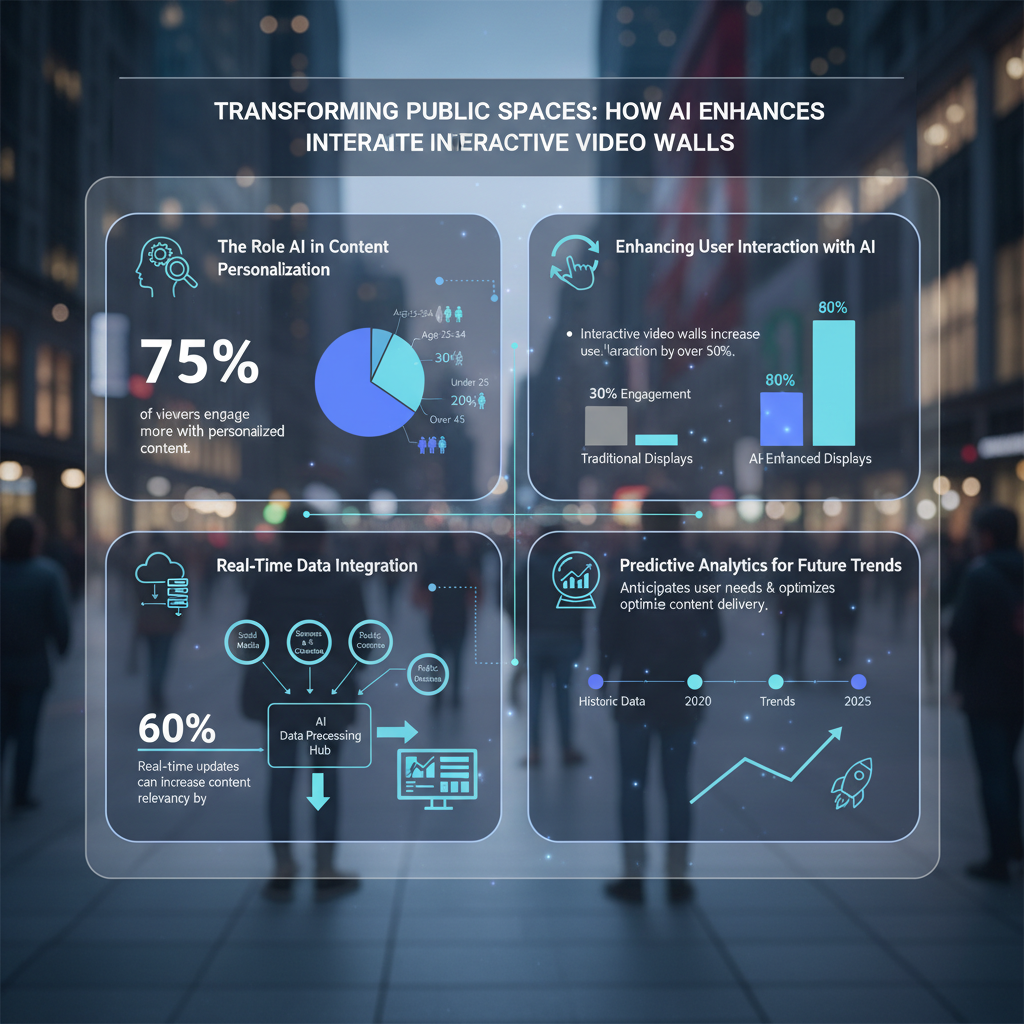
Dynamic content adjustments based on real-time viewer engagement further enhance relevance. Imagine a video wall that changes its displayed offers based on the time of day or the current weather—on a rainy day, it might promote cozy indoor activities or hot beverages, while on a sunny afternoon, it could highlight outdoor events. This level of personalization not only increases engagement but also boosts the effectiveness of marketing efforts, keeping content fresh and appealing to diverse audiences.
Enhancing User Interaction with AI

The integration of AI-driven touch and gesture recognition technology allows for seamless user interaction with public video walls. Instead of merely being passive viewers, users can engage directly with the content, navigating through information or selecting options with a simple swipe or tap. This interactivity transforms the user experience, making it more immersive and enjoyable. For instance, a tourist information video wall can allow users to touch different attractions on the screen to see detailed information, reviews, and even navigate directions.
Moreover, chatbots and virtual assistants can enhance the experience by answering questions or providing information in real-time. Picture a video wall in an airport where travelers can interact with a virtual assistant that helps them find their gates, check flight statuses, or recommend nearby dining options. These AI-powered features not only improve user satisfaction but also reduce the burden on staff, allowing them to focus on more complex inquiries.
Real-Time Data Integration
One of the most exciting aspects of AI-enhanced video walls is their ability to integrate real-time data feeds. This capability allows video walls to display timely and relevant information, such as news updates, weather forecasts, or social media trends, capturing the audience’s interest instantaneously. For example, a video wall in a city square could show live traffic updates alongside local news, helping residents make informed decisions about their commutes.
Furthermore, businesses can utilize AI to curate and display content that reflects current events or popular trends, making the video wall a relevant resource. Imagine walking past a video wall that updates every few minutes to showcase trending hashtags or viral videos from social media platforms—this not only attracts attention but encourages viewers to stop and engage with the content.
Predictive Analytics for Audience Engagement
AI tools equipped with predictive analytics can provide invaluable insights into audience preferences and behaviors, optimizing content delivery. By analyzing foot traffic patterns, dwell time, and engagement metrics, businesses can strategically place content that aligns with audience expectations. For instance, if data shows that a certain demographic tends to gather near a specific video wall during lunch hours, businesses can schedule relevant advertisements or promotions during that time to maximize visibility.
Additionally, predictive analytics can help identify peak engagement times, enabling businesses to tailor their content schedules accordingly. This proactive approach to content delivery ensures that audiences receive information when they are most likely to engage, leading to higher interaction rates and increased satisfaction.
Case Studies of AI-Enhanced Video Walls
Several successful implementations of AI in public spaces showcase the profound impact of this technology on user engagement and satisfaction. At the Hudson Yards development in New York City, interactive video walls utilize AI to provide personalized shopping recommendations based on customer profiles. Shoppers can engage with the displays to receive tailored promotions and locate stores, significantly enhancing their shopping experience.
Another example can be found in airports, where AI-powered video walls have been deployed to assist travelers. The San Francisco International Airport has introduced interactive video walls that provide real-time flight information and allow users to ask questions via a virtual assistant. This innovation has led to a measurable increase in traveler satisfaction, as passengers can easily access the information they need without having to seek help from airport staff.
These case studies highlight how AI-enhanced video walls can transform public spaces into engaging environments that foster better communication and user experiences.
Future Trends in AI and Video Wall Technology
As we look to the future, emerging technologies in AI are poised to further revolutionize video wall capabilities. Innovations such as augmented reality (AR) and machine learning will likely enhance user interaction even more, enabling more immersive experiences. Imagine a video wall that not only displays advertisements but also allows users to virtually try on clothing or visualize furniture in their homes using AR technology.
Additionally, as AI continues to evolve, we can expect improvements in data processing speeds and algorithm precision, leading to even more personalized and relevant content delivery. Predictions suggest that the future of public displays will be characterized by hyper-personalization, where AI will not only respond to individual preferences but also anticipate needs based on past interactions.
In summary, the integration of AI in interactive public video walls is transforming them into intelligent, engaging platforms that enhance user experiences and communication effectiveness. By personalizing content, improving interactivity, and integrating real-time data, these video walls become crucial tools in public spaces. As technology continues to advance, the future of AI and video wall technology promises even more exciting developments, making it essential for businesses and organizations to consider implementing AI solutions for their displays. If you’re interested in exploring AI solutions for your video wall, reaching out to technology providers or consulting experts in the field can provide valuable insights and guidance.
Frequently Asked Questions
How does AI improve user engagement on interactive public video walls?
AI enhances user engagement on interactive public video walls by personalizing content and creating dynamic interactions. Through data analysis and machine learning, AI can track user behavior and preferences, allowing the video wall to deliver tailored messages or visuals. This level of customization fosters a more immersive experience, encouraging viewers to interact and spend more time engaging with the content.
What are the key features of AI-powered interactive public video walls?
Key features of AI-powered interactive public video walls include real-time content adaptation, facial recognition, and gesture control. These video walls can use AI algorithms to adjust visuals based on audience demographics or emotional responses, ensuring that the displayed content resonates with viewers. Additionally, gesture control enables users to interact without physical touch, promoting a hygienic and seamless experience.
Why should businesses invest in AI-enhanced interactive video walls?
Businesses should invest in AI-enhanced interactive video walls because they significantly boost brand visibility and customer engagement. By utilizing AI, these video walls can analyze foot traffic and viewer interactions, allowing companies to optimize their advertising strategies in real time. Furthermore, the ability to deliver captivating and personalized content can lead to higher conversion rates and an improved customer experience.
Which industries benefit the most from AI-powered interactive public video walls?
Several industries benefit from AI-powered interactive public video walls, including retail, entertainment, and transportation. In retail, they can enhance product displays and promotions, capturing shopper interest effectively. In entertainment venues, these walls can create immersive experiences for attendees, while transportation hubs can provide real-time information and updates, improving passenger flow and satisfaction.
How can businesses measure the effectiveness of AI-enhanced interactive video walls?
Businesses can measure the effectiveness of AI-enhanced interactive video walls through various metrics, such as engagement rates, dwell time, and conversion rates. By utilizing analytics tools integrated with the video wall, companies can track how many users interact with the content, the duration of their engagement, and any subsequent actions taken, such as purchases or sign-ups. This data-driven approach allows for continuous improvement and optimization of video wall content and strategy.
References
- https://www.wired.com/story/how-ai-is-revolutionizing-the-way-we-view-video-walls/
- https://www.sciencedirect.com/science/article/pii/S0360132319301558
- https://www.nytimes.com/2022/10/15/technology/ai-video-walls.html
- https://www.nature.com/articles/s41598-021-93635-4
- https://www.bbc.com/future/article/20210125-how-ai-is-changing-the-way-we-experience-public-space
- https://www.techcrunch.com/2023/05/15/ai-video-walls-enhance-public-interaction/
- https://www.researchgate.net/publication/336345678_Interactive_Public_Video_Walls_and_the_Impact_of_AI
- https://www.nass.org/can-I-vote/interactive-public-video-walls