The integration of AI in programmatic video advertising significantly improves targeting, personalization, and campaign efficiency. By leveraging sophisticated machine learning algorithms and comprehensive data analytics, advertisers can optimize their video ad placements and connect with their desired audiences more effectively than ever before. This article will explore how AI transforms the landscape of programmatic video advertising and the benefits it brings to marketers.
The Role of AI in Targeting Audiences

AI plays a pivotal role in pinpointing the right audiences for video advertisements. By analyzing vast amounts of user data, including browsing habits, social media interactions, and demographic information, AI can identify target demographics and interests with remarkable precision. For instance, if a user frequently watches cooking videos, AI can determine that they might be interested in ads for kitchen gadgets or culinary courses.
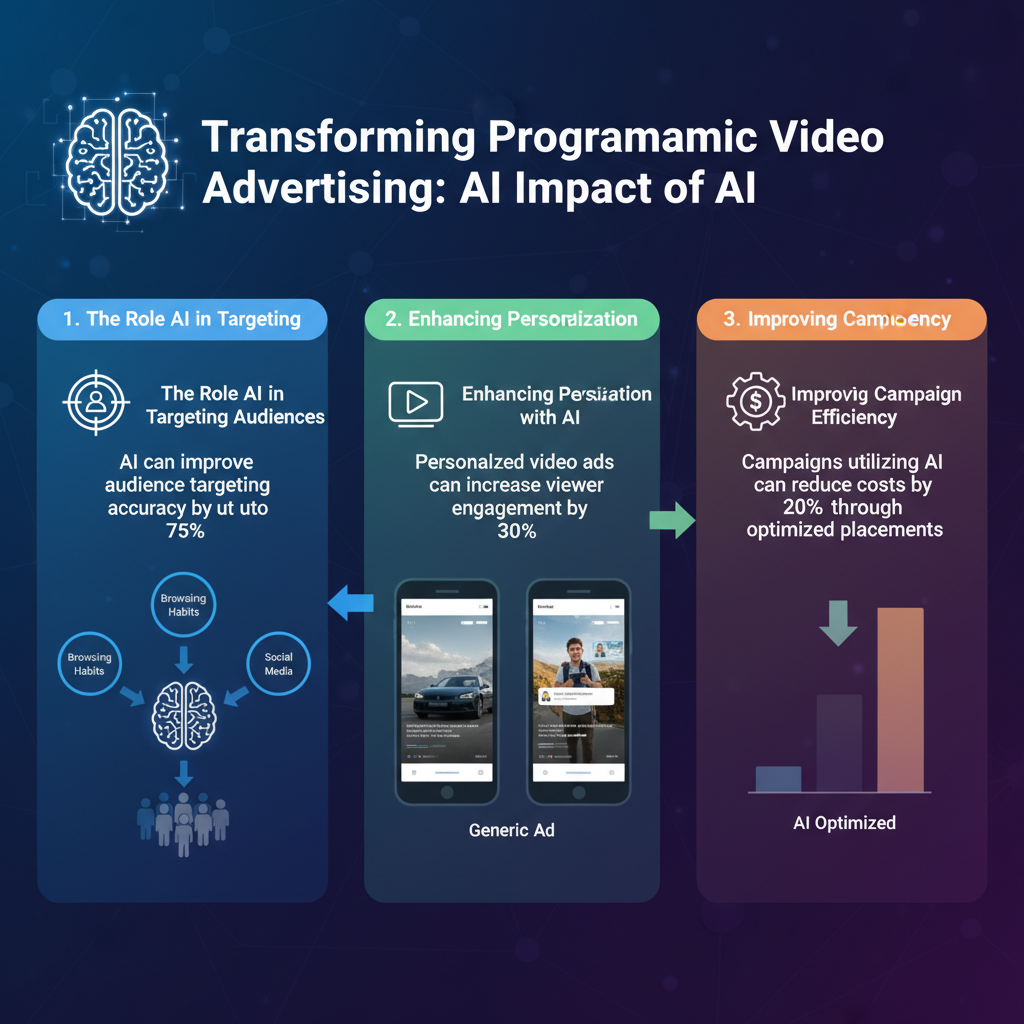
Moreover, predictive analytics allows advertisers to anticipate user behavior and preferences. By examining patterns and trends from previous campaigns, AI can forecast which segments are more likely to engage with certain types of content. This means that instead of casting a wide net, advertisers can focus their efforts on specific groups, ensuring their messages resonate more deeply. This tailored approach not only increases engagement rates but also enhances the overall effectiveness of video advertising, leading to higher conversion rates.
Enhancing Personalization with AI

Personalization is key in today’s advertising landscape, and AI excels at creating dynamic ad content tailored to individual viewer preferences. Imagine a scenario where a user who regularly watches fitness videos is served an ad featuring a new workout program, complete with testimonials from similar fitness enthusiasts. This level of customization is possible through AI’s ability to analyze viewer data and adapt ad content accordingly.
Machine learning algorithms further optimize ad content in real-time based on viewer engagement. If a particular video ad is performing well with a specific audience segment, AI can automatically adjust the messaging, visuals, and even the call-to-action to enhance viewer interaction. This responsiveness not only improves user experience but also increases the likelihood of achieving campaign goals, whether that’s driving traffic, generating leads, or boosting sales.
Improving Campaign Efficiency
The efficiency of programmatic advertising has taken a leap forward thanks to automation driven by AI. By reducing the need for manual intervention, the ad buying process becomes quicker and more streamlined. Advertisers can spend less time on tedious tasks and more on strategy development and creative thinking, ultimately enhancing productivity.
Real-time bidding strategies powered by AI maximize ad spend efficiency and return on investment (ROI). For example, rather than setting a fixed bid for ad placements, AI can analyze competing bids and user data to adjust bids in real-time. This ensures that ads are placed where they are most likely to be seen by the right audience without overspending. The result is a smarter allocation of resources, leading to more impactful advertising campaigns.
Data-Driven Insights and Analytics
One of the significant advantages of incorporating AI into programmatic video advertising is its ability to provide actionable insights from campaign data. By leveraging advanced analytics tools, marketers can gain valuable insights into what’s working and what isn’t. For instance, if a particular video ad leads to higher engagement rates at a specific time of day, advertisers can adjust their scheduling to maximize exposure during those peak hours.
Moreover, the visualization of data trends allows for better decision-making and strategy adjustments. AI-driven dashboards can present data in comprehensible formats, highlighting key performance indicators and trends over time. This empowers marketers to fine-tune their strategies based on real-time data, ensuring they remain agile and responsive to changing audience needs.
Overcoming Challenges in Programmatic Advertising
Despite its advantages, programmatic advertising has faced challenges such as ad fraud and viewability issues. Fortunately, AI helps tackle these problems effectively. By employing advanced algorithms, AI can detect and mitigate fraudulent activities, ensuring that ad placements are genuine and viewable. For example, AI can identify and block bots that generate false impressions, protecting advertisers from wasted ad spend.
Additionally, enhanced targeting capabilities reduce the wastage of ad spend on irrelevant audiences. By ensuring that ads reach users who are genuinely interested in the product or service, AI optimizes ad campaigns, leading to higher engagement and conversion rates. This precision not only saves money but also contributes to a better overall experience for potential customers.
The Future of AI in Video Advertising
Looking ahead, the future of AI in video advertising is promising, with emerging technologies like deep learning set to make even more significant advancements in ad personalization. Deep learning models can analyze complex datasets to uncover deeper insights about consumer behavior, allowing for even more tailored and effective advertising strategies.
Furthermore, the potential for AI to create immersive ad experiences through augmented reality (AR) and virtual reality (VR) opens new avenues for engagement. Imagine being able to try on clothes virtually through a video ad or experiencing a product in a 360-degree environment. These innovations could revolutionize how brands connect with consumers, making advertising not just informative but also interactive and entertaining.
The integration of AI into programmatic video advertising is revolutionizing how marketers connect with consumers. By enhancing targeting, personalization, and overall campaign efficiency, AI allows advertisers to make data-driven decisions that lead to improved outcomes. As technology continues to evolve, staying informed about these advancements will be crucial for marketers looking to stay ahead in the competitive landscape. Take action now and explore how to incorporate AI into your video advertising strategy for better results.
Frequently Asked Questions
How does AI enhance targeting in programmatic video advertising?
AI enhances targeting in programmatic video advertising by analyzing vast amounts of data to understand viewer behavior and preferences. This allows advertisers to identify the right audience segments and tailor their campaigns accordingly. With predictive analytics, AI can forecast which viewers are most likely to engage with specific video content, ensuring that ads reach the right people at the right time, ultimately increasing conversion rates.
What are the benefits of using AI in programmatic video ad optimization?
The benefits of using AI in programmatic video ad optimization include improved performance, cost efficiency, and real-time adjustments. AI algorithms can continually analyze engagement metrics to optimize ad placements, formats, and creative elements. This dynamic approach not only enhances the effectiveness of video ads but also maximizes return on investment by reducing wasted ad spend and improving viewer interactions.
Why should advertisers consider AI for their programmatic video advertising strategies?
Advertisers should consider AI for their programmatic video advertising strategies because it significantly streamlines the ad buying process and enhances outcomes. AI can process data much faster than human analysts, allowing for quicker and more accurate decision-making. Additionally, it helps in personalizing ad experiences for viewers, leading to higher engagement and brand loyalty, which are essential for long-term success in a competitive digital landscape.
Which AI technologies are most effective for programmatic video advertising?
The most effective AI technologies for programmatic video advertising include machine learning, natural language processing, and computer vision. Machine learning is used for predictive analytics and audience segmentation, while natural language processing helps in understanding viewer sentiment and preferences through social media and other text data. Computer vision can analyze video content to determine optimal placements and formats, ensuring ads resonate with the intended audience.
How can small businesses benefit from AI in programmatic video advertising?
Small businesses can benefit from AI in programmatic video advertising by gaining access to advanced targeting and optimization tools that were previously available only to larger companies. AI allows small businesses to create cost-effective campaigns that reach their desired audience without extensive resources. By leveraging AI-driven insights, small businesses can create personalized video ads that boost engagement and drive sales, leveling the playing field in the competitive advertising landscape.
References
- Online advertising
- https://www.forbes.com/sites/bernardmarr/2023/01/16/how-ai-is-changing-the-world-of-programmatic-advertising/
- Peace on Veterans Day 11/11/2021
- Insights | Nielsen
- https://www.sciencedirect.com/science/article/pii/S0167819121000831
- https://www.cnbc.com/2021/10/06/how-ai-is-transforming-programmatic-advertising.html
- https://www.ama.org/the-importance-of-ai-in-programmatic-advertising/