
AI significantly improves ray tracing in gaming displays by optimizing performance, enhancing visual fidelity, and reducing rendering times. With the advent of artificial intelligence, gaming graphics have reached unprecedented levels of realism and immersion, transforming the way players experience their virtual worlds. This article will explore the transformative role of AI in ray tracing technology and how it elevates the gaming experience, providing a deep dive into its mechanisms and benefits.
Understanding Ray Tracing Technology

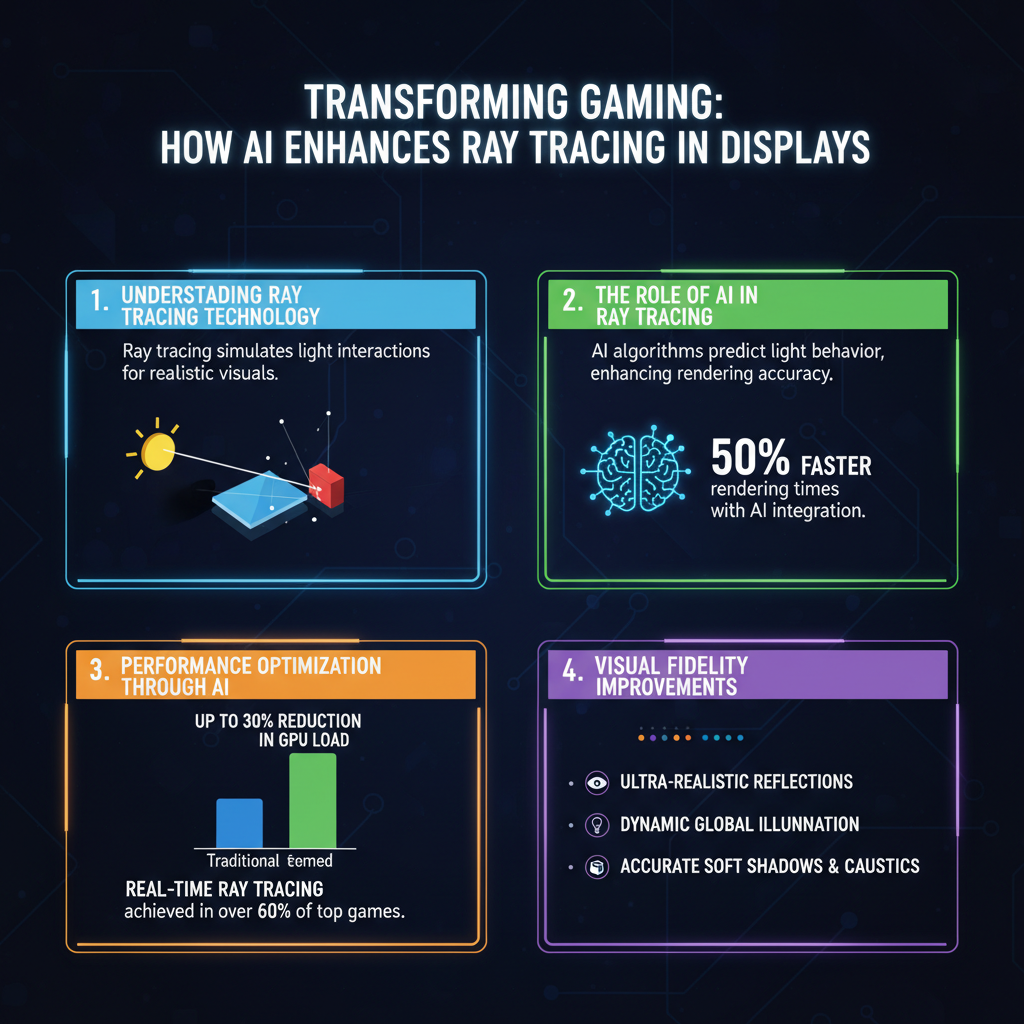
Ray tracing is a rendering technique that simulates the way light interacts with objects in a scene, creating incredibly realistic visuals. Unlike traditional rasterization methods that approximate lighting and shading, ray tracing calculates the path of rays of light as they travel through a scene, bouncing off surfaces and interacting with materials. This results in more accurate reflections, shadows, and lighting effects, making environments appear more lifelike.
Traditional rendering techniques, such as rasterization, have their limitations. They often rely on approximations, which can lead to less realistic images, especially in complex scenes with dynamic lighting. For example, while rasterization can simulate shadows, it may fail to accurately depict the nuances of how light diffuses or refracts through materials. Ray tracing overcomes these hurdles, but it requires immense computational power, which has made it challenging to implement in real-time applications like gaming—until now.
The Role of AI in Ray Tracing
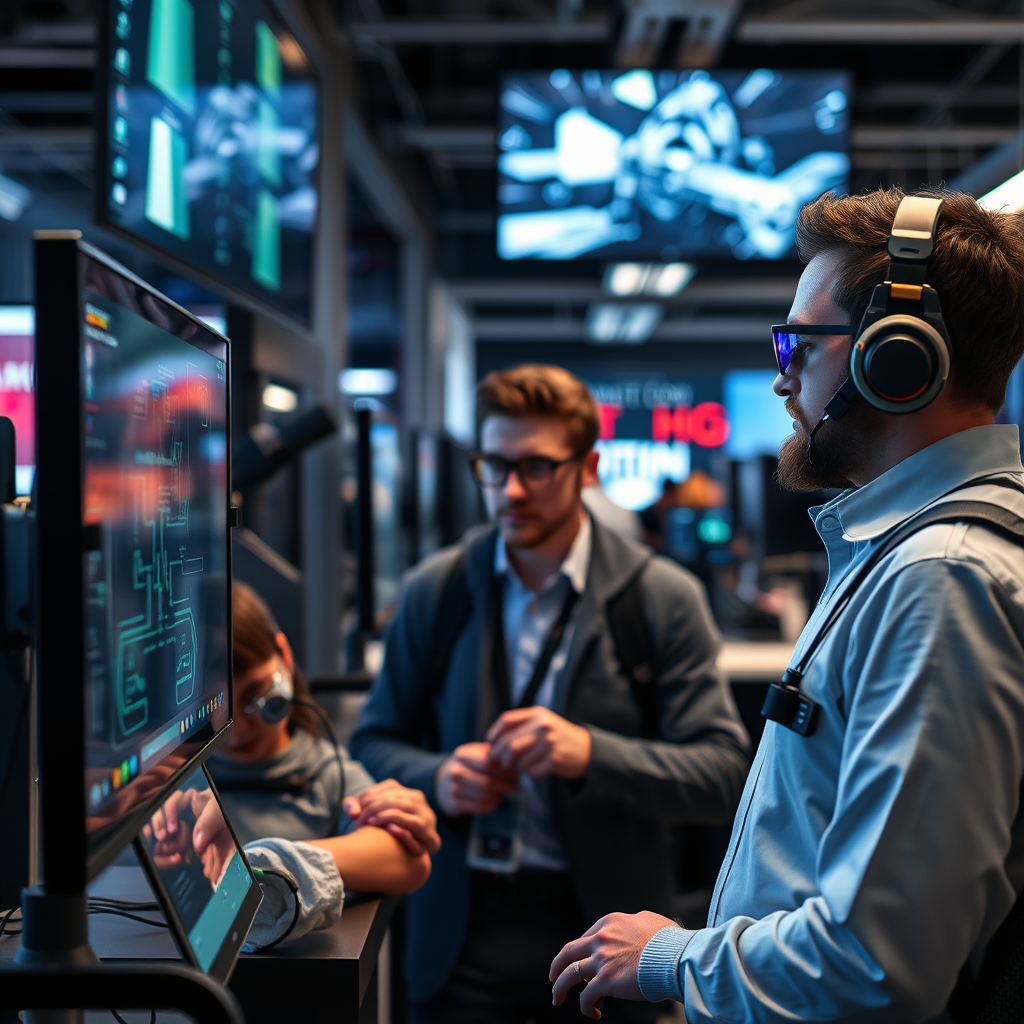
AI algorithms play a crucial role in enhancing ray tracing technology by assisting in the simulation of light behavior. These algorithms can predict and model how light interacts with different surfaces, allowing for more accurate rendering of reflections, refractions, and shadows. For instance, AI can help determine how light disperses through a frosted glass surface, leading to more realistic visuals that would be computationally expensive to achieve through traditional methods.
Moreover, machine learning techniques are integrated into ray tracing workflows to improve image processing and detail. By training on vast datasets of images, AI can learn to recognize patterns and optimize rendering tasks. This results in better texture mapping, improved anti-aliasing, and the ability to enhance details in real-time, all of which contribute to a richer gaming experience.
Performance Optimization Through AI
One of the most significant advantages of AI in ray tracing is its ability to optimize performance. AI-driven techniques can reduce the computational load associated with rendering complex scenes. For example, NVIDIA’s RTX technology employs AI to intelligently manage how rays are cast and which areas of a scene require more detail, allowing for a more efficient use of GPU resources.
Real-time ray tracing benefits enormously from these AI enhancements. By cleverly allocating resources and reducing the number of rays that need to be calculated, gamers can enjoy smoother gameplay with higher frame rates. This is particularly important in fast-paced gaming environments where responsiveness is key. The result is a seamless experience that keeps players immersed in the action.
Visual Fidelity Improvements
AI significantly enhances visual fidelity in gaming displays by dynamically generating high-quality textures and details. Through techniques like texture synthesis and procedural generation, AI can create intricate textures that would otherwise require extensive manual design. This not only saves time for developers but also enriches the player’s visual experience with stunning details that adapt in real-time.
Examples of AI-enhanced features include improved reflections and shadows. In many modern games, reflections can accurately depict the surrounding environment, including dynamic elements like moving characters and changing light conditions. Shadows become more nuanced, with soft edges and variations that mirror real-world physics. This level of detail adds depth and realism to the gaming experience, making virtual worlds feel more authentic and engaging.
AI-Driven Upscaling Techniques
One of the most talked-about innovations in AI-driven gaming is Deep Learning Super Sampling (DLSS). This technology utilizes machine learning to upscale lower-resolution images to higher resolutions without a significant performance hit. By analyzing frames in real-time, DLSS can produce images that look nearly native in quality, allowing players to experience stunning visuals, even on hardware that might struggle with traditional rendering methods.
DLSS exemplifies how AI can deliver higher resolutions while maintaining high frame rates, which is crucial for competitive gaming. For instance, a game running at 1080p can be upscaled to 4K, providing gamers with breathtaking detail without sacrificing the fluidity of gameplay. This capability not only enhances the visual experience but also offers players a competitive edge in fast-paced environments.
Future of AI in Gaming Displays
As AI technology continues to evolve, the future of graphics rendering in gaming looks incredibly promising. Predictions suggest that we will see even more sophisticated AI models capable of real-time scene understanding and adaptive rendering techniques. This could mean environments that respond dynamically to player actions, resulting in a more interactive and immersive experience.
Additionally, emerging technologies such as ray tracing in combination with AI-driven procedural generation could lead to entirely new styles of gameplay and storytelling. Imagine gaming worlds that change and adapt in real-time, creating unique experiences for each player based on their actions and preferences. The potential for innovation is limitless, and gamers can look forward to a future where AI plays an even more integral role in shaping their experiences.
AI is revolutionizing ray tracing in gaming displays by making graphics more realistic while maintaining high performance. With advancements in AI-driven optimization and rendering techniques, players can expect stunning visuals and immersive experiences that bring virtual worlds to life. As gaming technology continues to evolve, staying updated on the latest advancements in AI and ray tracing will be essential for anyone looking to enhance their gaming setup. The future of gaming is bright, and AI is at the forefront of this exciting evolution.
Frequently Asked Questions
How does AI enhance ray tracing in gaming displays?
AI enhances ray tracing in gaming displays by optimizing the rendering process, allowing for more realistic lighting, shadows, and reflections. Through techniques like Deep Learning Super Sampling (DLSS), AI can upscale lower-resolution images in real-time, providing high-quality visuals without the heavy computational load traditionally required for ray tracing. This improvement not only boosts frame rates but also enhances the overall graphical fidelity, making games look more immersive.
What are the benefits of using AI-powered ray tracing in video games?
The benefits of AI-powered ray tracing include improved visual realism, faster rendering times, and enhanced performance on lower-end hardware. By leveraging AI algorithms, games can achieve lifelike effects such as accurate reflections and dynamic lighting, creating a more engaging user experience. Additionally, the efficiency brought by AI allows developers to implement complex graphical features without sacrificing performance, ensuring smoother gameplay even in graphics-intensive environments.
Why is ray tracing important for modern gaming displays?
Ray tracing is crucial for modern gaming displays because it simulates the way light interacts with objects in the real world, resulting in stunningly realistic graphics. As gamers increasingly seek immersive experiences, ray tracing provides unparalleled depth and detail in environments, enhancing elements like shadows and reflections. With the rise of high-resolution displays and virtual reality, ray tracing becomes essential in delivering visuals that meet the expectations of today’s gaming audience.
Which gaming consoles and PCs support AI-enhanced ray tracing?
AI-enhanced ray tracing is supported by the latest gaming consoles, such as the PlayStation 5 and Xbox Series X, as well as high-end gaming PCs equipped with NVIDIA’s RTX series graphics cards and AMD’s Radeon RX 6000 series. These platforms utilize advanced AI techniques alongside ray tracing technology to deliver high-quality graphics in real-time. As hardware continues to evolve, support for AI-enhanced ray tracing is expected to expand further, offering gamers a more visually stunning experience.
How can gamers optimize their settings for AI-enhanced ray tracing?
Gamers can optimize their settings for AI-enhanced ray tracing by adjusting in-game graphics options and ensuring their hardware meets the recommended specifications. It’s advisable to enable features like DLSS on supported games, which allows for higher frame rates while maintaining image quality. Additionally, tweaking settings such as resolution, texture quality, and shadow detail can help balance performance and visual fidelity, enabling a smoother gameplay experience without sacrificing the benefits of ray tracing.
References
- Ray tracing
- https://www.nvidia.com/en-us/research/ai-ray-tracing/
- https://www.techradar.com/news/how-ai-is-improving-ray-tracing-in-gaming
- https://www.sciencedirect.com/science/article/pii/S0097849320302051
- https://www.wired.com/story/ai-ray-tracing-gaming/
- https://www.bbc.com/news/technology-54947311
- https://www.theguardian.com/technology/2021/dec/21/ai-ray-tracing-gaming-graphics
- https://www.microsoft.com/en-us/research/publication/ai-and-ray-tracing/