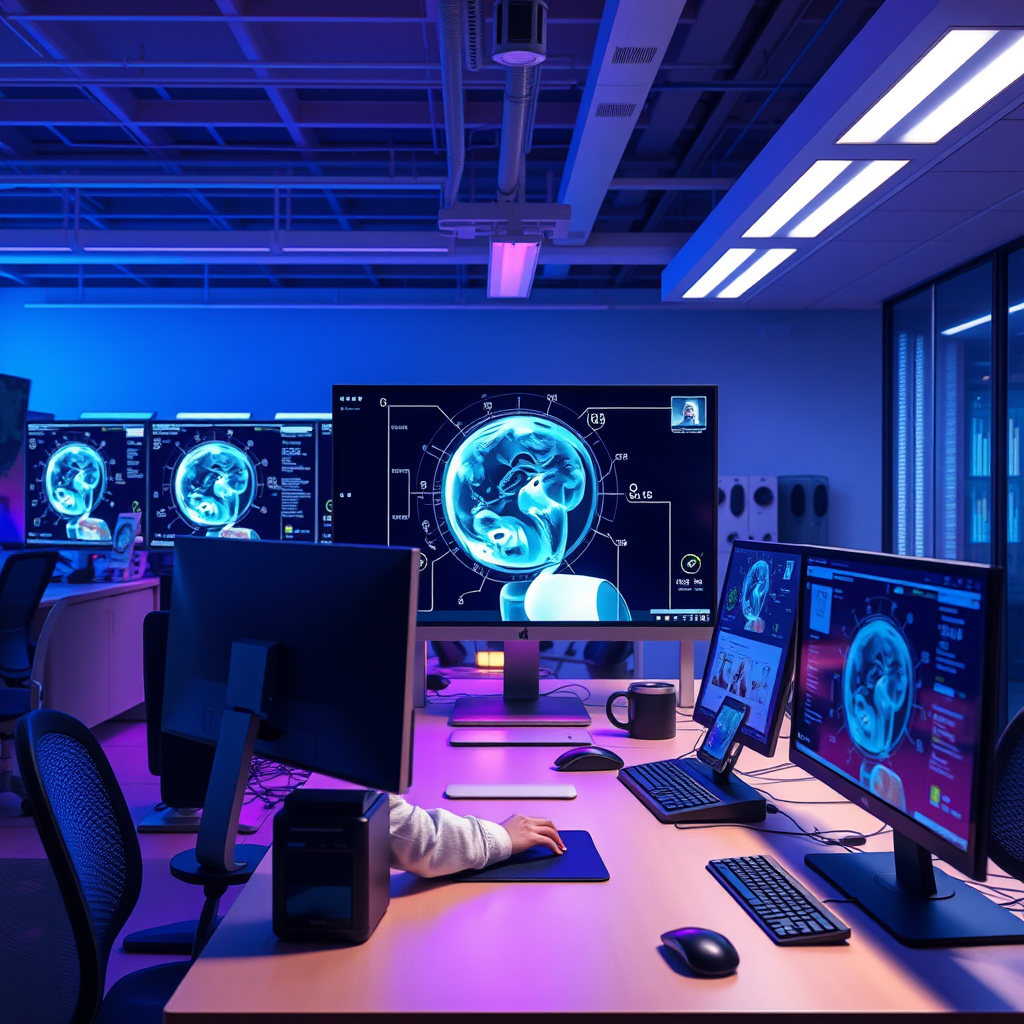

AI-powered medical imaging displays utilize advanced algorithms and machine learning techniques to enhance the interpretation of medical images, improving diagnostic accuracy and speed. These technologies are revolutionizing healthcare by providing clinicians with tools that help them make better decisions and offer timely interventions. In this article, you’ll learn how these technologies work, their benefits, and their impact on healthcare.
Understanding AI in Medical Imaging

Artificial Intelligence (AI) refers to the simulation of human intelligence processes by machines, particularly computer systems. In the realm of medical imaging, AI plays a pivotal role by analyzing vast amounts of data quickly and accurately. This includes everything from recognizing patterns in images to predicting patient outcomes based on historical data.
Machine learning, a subset of AI, involves algorithms that learn from data. Deep learning, a further subset of machine learning, uses neural networks to analyze images. For instance, convolutional neural networks (CNNs) are particularly effective at image analysis, making them ideal for tasks such as identifying tumors in radiologic scans. By leveraging these technologies, AI can enhance the precision of diagnoses, allowing healthcare professionals to focus more on patient care and less on data interpretation.
Key Components of AI-Powered Imaging Displays
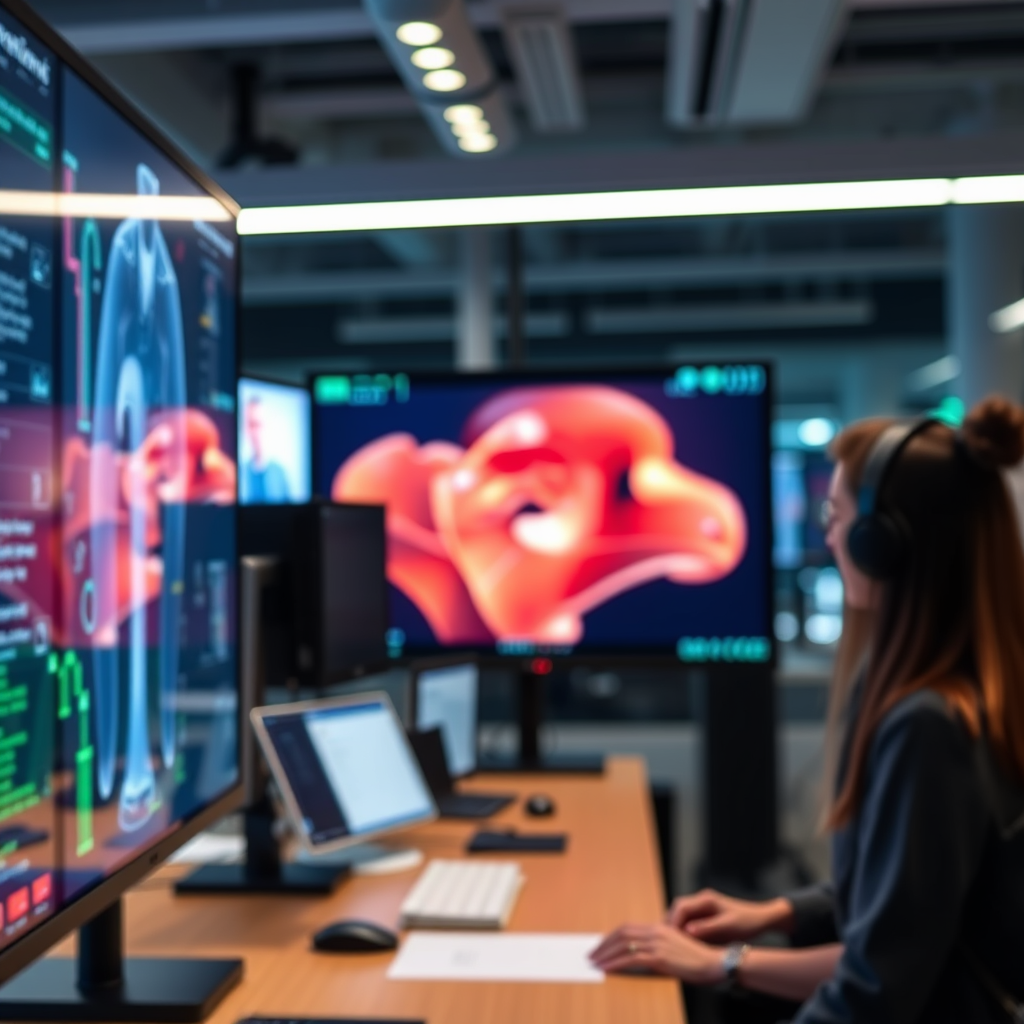
The effectiveness of AI-powered imaging displays stems from the seamless integration of both hardware and software components. Imaging systems consist of sophisticated imaging modalities like MRI, CT scans, and X-rays, which capture detailed images of the body’s internal structures. These images are then processed through advanced software that employs AI algorithms to analyze the data.
The algorithms used in AI-powered imaging displays include various image processing techniques, such as segmentation, enhancement, and classification. Segmentation helps isolate relevant structures within an image, while enhancement techniques improve the visual quality of images. Classification algorithms, on the other hand, categorize images based on predefined criteria, such as identifying whether a lesion is malignant or benign. Together, these components work synergistically to create a powerful diagnostic tool that enhances clinical decision-making.
Benefits of AI-Powered Medical Imaging
One of the most significant benefits of AI-powered medical imaging is increased diagnostic accuracy. Traditional imaging interpretation can be prone to human errors, leading to misdiagnoses or delayed treatments. AI algorithms, trained on extensive datasets, can detect subtle patterns that may be missed by the human eye, thereby reducing the likelihood of errors. For example, studies have shown that AI can outperform radiologists in identifying breast cancer in mammograms, underscoring its potential to improve patient outcomes.
Additionally, AI accelerates image processing and analysis, allowing for faster decisions. In emergencies, every second counts, and AI can provide near-instantaneous interpretations. This speed is not only crucial for life-threatening conditions but also enhances workflow efficiencies in busy healthcare facilities. With AI, radiologists can review images more quickly, ultimately leading to shorter wait times for patients and better allocation of healthcare resources.
Challenges and Limitations
Despite its many advantages, the integration of AI in medical imaging is not without challenges. Data privacy concerns loom large, as the handling of sensitive patient information requires stringent security measures. There is a risk that personal health data could be compromised, leading to ethical dilemmas around consent and data usage.
Moreover, potential biases in AI algorithms pose significant concerns. If the training datasets used to develop these algorithms are not diverse and representative of the population, it could lead to skewed results. For instance, if an algorithm trained predominantly on images from one demographic is used across a diverse population, it may not perform as well for underrepresented groups, potentially exacerbating health disparities. Addressing these challenges is crucial to ensuring the equitable deployment of AI in healthcare.
Future Trends in AI Medical Imaging
Looking ahead, the future of AI in medical imaging is bright, with numerous innovations on the horizon. One exciting trend is the integration of AI with other technologies, such as augmented reality (AR) and virtual reality (VR), to enhance surgical planning and procedures. These technologies can provide surgeons with real-time, interactive visualizations of patient anatomy, leading to more precise interventions.
Additionally, AI is expected to play a significant role in personalized medicine. By analyzing a patient’s unique genetic makeup and medical history alongside imaging data, AI can help tailor treatments to individuals rather than adopting a one-size-fits-all approach. This could lead to more effective therapies and improved patient outcomes.
Case Studies and Real-World Applications
Several hospitals and healthcare facilities have successfully implemented AI-powered medical imaging systems, showcasing their transformative impact. For example, Stanford University Medical Center has developed a deep learning algorithm that can detect pneumonia in chest X-rays with remarkable accuracy. The deployment of this technology has not only improved diagnostic rates but also empowered clinicians to make quicker decisions about patient care.
In another case, Mount Sinai Health System in New York has utilized an AI system to predict acute kidney injury by analyzing electronic health records and imaging data. This proactive approach has led to earlier interventions and better patient outcomes, demonstrating the potential of AI to enhance operational efficiency and patient care.
The impact of these real-world applications shows how AI is not just theoretical, but a practical tool that can significantly improve healthcare delivery.
The integration of AI-powered medical imaging displays represents a transformative shift in healthcare, offering enhanced diagnostic capabilities and efficiency. As these technologies continue to evolve, they promise to play an increasingly vital role in improving patient care and outcomes. Staying informed about these advancements allows both healthcare professionals and patients to better understand how AI may affect their experiences and practices in the future.
Frequently Asked Questions
What are AI-powered medical imaging displays and how do they work?
AI-powered medical imaging displays are advanced technologies that use artificial intelligence algorithms to enhance the visualization of medical images, such as X-rays, MRIs, and CT scans. These displays analyze imaging data to automatically highlight anomalies, improve image quality, and assist radiologists in diagnosing conditions more accurately and efficiently. By leveraging machine learning and deep learning techniques, these systems can identify patterns that may be difficult for the human eye to discern.
How do AI algorithms improve the accuracy of medical imaging?
AI algorithms improve the accuracy of medical imaging by using vast datasets to learn from previous cases, identifying subtle signs of diseases that might be overlooked. These algorithms can analyze images in real-time and provide radiologists with critical insights, such as suggesting potential areas of concern or flagging abnormal findings. This enhanced accuracy not only aids in quicker diagnoses but also reduces the risk of human error, leading to better patient outcomes.
Why should healthcare providers invest in AI-powered medical imaging technology?
Healthcare providers should invest in AI-powered medical imaging technology because it significantly enhances diagnostic capabilities, increases workflow efficiency, and ultimately improves patient care. With quicker and more accurate image analysis, providers can reduce waiting times for diagnoses and treatment plans. Additionally, AI tools can help alleviate the workload on radiologists, allowing them to focus on more complex cases and improving the overall quality of care in medical facilities.
What are the best practices for implementing AI-powered medical imaging displays in a clinical setting?
The best practices for implementing AI-powered medical imaging displays in a clinical setting include thorough training for medical staff, ensuring compatibility with existing imaging systems, and establishing clear protocols for integrating AI insights into daily workflows. It is also crucial to maintain an ongoing evaluation of the AI tools’ performance and accuracy, as well as gathering feedback from radiologists to refine and optimize the usage of these technologies for maximum benefit.
Which challenges do healthcare providers face when adopting AI in medical imaging?
Healthcare providers face several challenges when adopting AI in medical imaging, including concerns over data privacy, the need for high-quality training datasets, and resistance to change from staff. Additionally, integrating AI systems into existing infrastructures can be complex and costly. Providers must address these challenges by investing in robust cybersecurity measures, ensuring comprehensive training programs, and fostering a culture of collaboration and openness to new technologies among their staff.
References
- Medical imaging
- https://www.ncbi.nlm.nih.gov/pmc/articles/PMC6897320/
- https://www.sciencedirect.com/science/article/pii/S1361841519301901
- https://www.fda.gov/media/119989/download
- https://www.nature.com/articles/s41598-020-66509-4
- https://www.ama-assn.org/delivering-care/public-health/ai-imaging-technology-its-impact-patient-care
- https://www.hhs.gov/hipaa/for-professionals/health-it/health-it-initiatives/ai-in-healthcare/index.html
- https://www.reuters.com/article/us-healthcare-ai-idUSKBN2A20R6