Content Delivery Networks (CDNs) significantly improve video streaming by ensuring faster load times, reducing buffering, and providing a more reliable viewing experience. These networks achieve this by distributing content across various servers around the globe, which allows for quicker access and delivery of video content. In this article, you’ll learn how CDNs work in the background to deliver high-quality video content efficiently, and why they are essential for businesses and end-users alike.
Understanding CDNs and Their Functionality

At their core, CDNs are systems of distributed servers that store and deliver web content to users based on their geographic location. By caching video content on servers closer to where viewers are located, CDNs help to minimize latency—the delay before a transfer of data begins following an instruction. This means that when a user clicks ‘play’ on a video, the content is retrieved from a server that is physically nearer to them, allowing for faster load times.
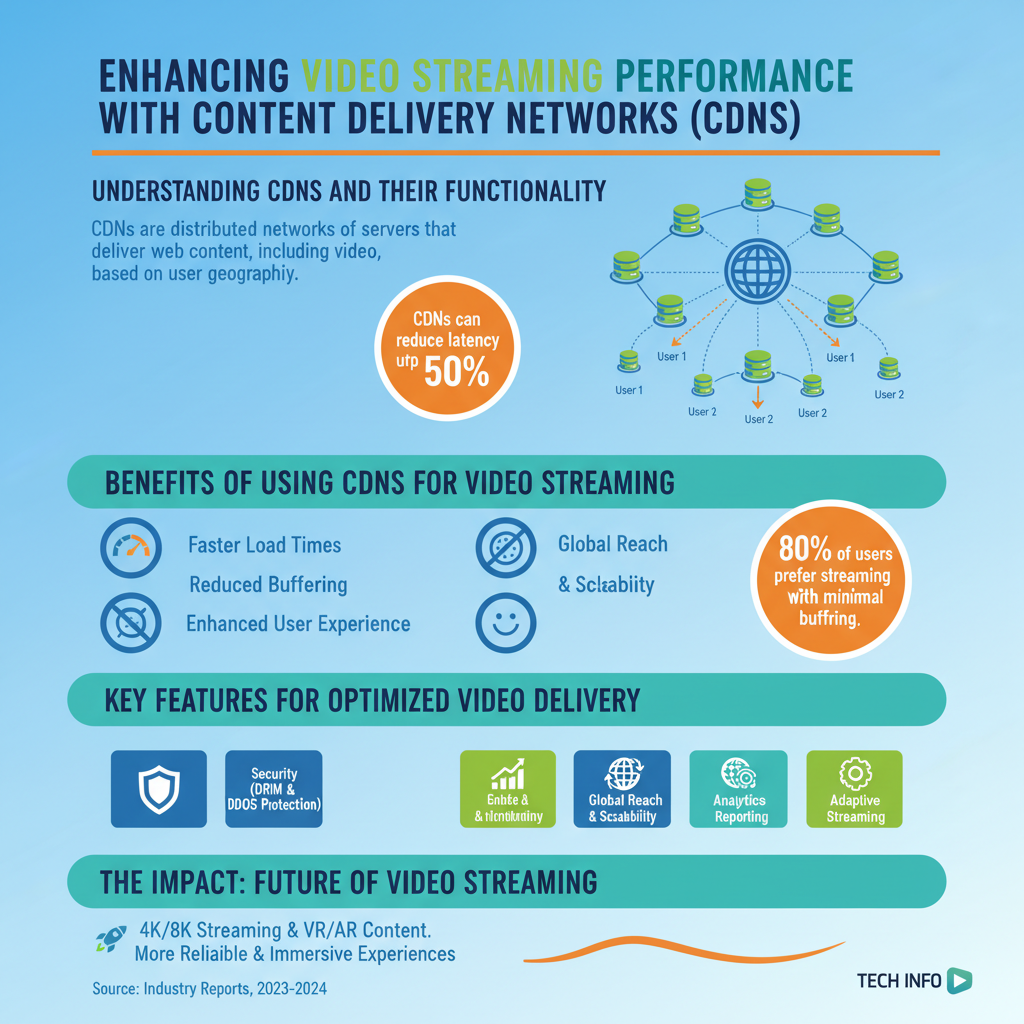
CDNs operate by utilizing a network of strategically placed servers that work together to deliver content more efficiently. When one server gets overloaded or experiences downtime, the system automatically reroutes requests to another server, ensuring that the content can still be accessed quickly and reliably. This distributed architecture not only speeds up delivery but also enhances the overall robustness of the streaming infrastructure.
Benefits of Using CDNs for Video Streaming

One of the most significant benefits of using CDNs for video streaming is the enhanced streaming speeds they provide, which lead to improved user satisfaction. With faster load times, users are less likely to abandon videos due to frustration, resulting in higher engagement rates and longer viewing times. Research shows that even a one-second delay in loading can result in a 7% reduction in conversions, making speed a critical factor for any streaming service.
Additionally, reduced buffering times directly contribute to a better viewing experience. Buffering can be a major annoyance for viewers, often leading to a loss of interest in the content being presented. With CDNs, the intelligent caching and delivery mechanisms work to minimize buffering, ensuring that users can enjoy uninterrupted streaming. This improvement in service not only keeps audiences engaged but can also significantly boost retention rates, as viewers are more likely to return to a service that consistently meets their expectations.
How CDNs Optimize Video Quality
Another impressive feature of CDNs is their capability to optimize video quality through adaptive bitrate streaming. This technology allows the video quality to be adjusted dynamically based on the user’s available bandwidth. For instance, if a user’s internet connection becomes slower, the CDN can automatically lower the video resolution to ensure smooth playback without interruptions.
Moreover, CDNs can also adjust video resolution in real-time. This means that even as a viewer’s connection fluctuates—perhaps they move from Wi-Fi to a mobile data connection—the CDN can respond quickly to these changes. By providing the best possible quality based on the viewer’s current circumstances, CDNs ensure that users have a seamless experience, regardless of their internet speed or device capabilities.
The Role of CDNs in Scalability
Scalability is another crucial advantage offered by CDNs, especially for video streaming services that may experience sudden spikes in traffic, such as during live events or the premiere of popular shows. CDNs are designed to handle large volumes of data requests efficiently, allowing businesses to maintain consistent performance even when demand surges. This means that a platform can avoid the dreaded crashes or slowdowns that can occur when too many users try to access the content simultaneously.
In addition to handling traffic spikes, CDNs provide a cost-effective solution for businesses looking to expand their audience reach. Instead of investing heavily in building extensive infrastructure like additional servers and data centers, companies can leverage existing CDN networks to distribute their content. This not only saves on costs but also allows businesses to focus on content creation and marketing, knowing that their streaming infrastructure can grow alongside their audience.
Security Enhancements Provided by CDNs
As video content becomes increasingly valuable, the need for security becomes paramount. CDNs play a vital role in protecting video content from various threats, including DDoS attacks and unauthorized access. With their distributed nature, CDNs can absorb and mitigate potential attacks, keeping the content secure and accessible to legitimate users.
Moreover, CDNs provide encryption and secure connections, ensuring that user data is safeguarded during transmission. This is particularly important in a time when data privacy concerns are at an all-time high. By implementing CDN security measures, businesses can instill greater confidence in their users, encouraging them to engage more freely with the content.
Case Studies: Successful CDN Implementations
To illustrate the effectiveness of CDNs, let’s look at a couple of real-world examples. First, a major streaming service reported a dramatic 50% reduction in buffering after integrating a CDN into their system. This improvement not only enhanced user satisfaction but also contributed to increased subscription renewals and overall service growth.
Another example comes from a popular gaming platform that significantly improved its live-streaming quality by utilizing CDN technology. The platform faced challenges with latency and buffering during peak times, which frustrated its user base. By implementing a CDN, they were able to deliver smoother streams and enhance the overall gaming experience, leading to an uptick in user engagement and positive feedback.
Future Trends in CDN Technology for Video Streaming
Looking ahead, the landscape of CDN technology is evolving rapidly. One of the most exciting trends is the rise of edge computing, which pushes processing closer to the user, further enhancing CDN efficiency. By processing data at the edge of the network, latency can be reduced even more, resulting in faster response times and improved user experiences.
Additionally, innovations in artificial intelligence and machine learning are paving the way for smarter content delivery strategies. These technologies can analyze user behavior and preferences, allowing CDNs to optimize content delivery even further. For instance, AI can help predict traffic patterns and automatically adjust resource allocation to ensure peak performance during high-demand periods.
Summarizing how CDNs play a crucial role in enhancing video streaming, it’s clear they are indispensable for delivering high-quality, reliable, and secure video content. For businesses looking to improve their streaming services, leveraging CDN technology is a strategic move that can lead to increased user satisfaction and engagement. Explore CDN options and elevate your video streaming capabilities today!
Frequently Asked Questions
What is a Content Delivery Network (CDN) and how does it work for video streaming?
A Content Delivery Network (CDN) is a network of servers distributed across various geographic locations that work together to deliver content, such as videos, more efficiently. By caching video content closer to the user’s location, CDNs reduce latency and buffering times. When a user requests a video, the CDN routes the request to the nearest server, ensuring faster load times and a smoother streaming experience.
How do CDNs reduce buffering during video playback?
CDNs minimize buffering by distributing video content across multiple servers, allowing for quicker access and reduced load times. When a user streams a video, the CDN selects the optimal server based on the user’s location and current network conditions, which decreases the distance the data must travel. This efficient delivery method helps maintain consistent streaming quality, even during peak traffic periods.
Why should I use a CDN for my video streaming service?
Utilizing a CDN for your video streaming service can significantly enhance user experience by providing faster load times, reducing buffering, and improving video quality. Additionally, CDNs offer scalability, enabling your service to handle increased traffic without compromising performance. By ensuring seamless playback across various devices and locations, CDNs can help retain viewers and increase overall engagement.
Which features make a CDN the best choice for video streaming?
The best CDNs for video streaming typically offer features such as adaptive bitrate streaming, real-time analytics, and global server coverage. Adaptive bitrate streaming allows the CDN to adjust video quality based on the user’s internet speed, promoting smoother playback. Real-time analytics provide insights into viewer behavior and performance metrics, enabling you to optimize your content delivery strategy effectively.
How can I choose the right CDN provider for my video streaming needs?
When selecting a CDN provider for video streaming, consider factors such as the provider’s network reach, pricing structure, and specific features tailored for video delivery. Look for a CDN that offers robust security measures, low latency, and reliable customer support. Additionally, read reviews and case studies to assess the provider’s performance in real-world scenarios, ensuring they can meet your unique streaming requirements.
References
- Content delivery network
- https://www.akamai.com/us/en/multimedia/documents/white-paper/the-role-of-cdns-in-video-streaming.pdf
- https://www.ncbi.nlm.nih.gov/pmc/articles/PMC6836085/
- https://www.cio.com/article/3316154/how-cdns-can-improve-video-streaming-performance.html
- 2021 SANS Cyber Threat Intelligence (CTI) Survey
- https://www.ietf.org/rfc/rfc6202.txt
- https://www.cloudflare.com/learning/cdn/what-is-a-cdn/
- https://www.researchgate.net/publication/337886053_Improving_Video_Streaming_Quality_with_CDNs
- https://www.wired.com/story/cdn-technology-video-streaming/