
Edge AI significantly optimizes display performance in IoT devices by processing data locally and reducing latency. This means users experience faster, more responsive interactions and improved visual quality. As IoT technology continues to evolve, the integration of Edge AI plays a crucial role in enhancing user experiences across various applications. In this article, you’ll discover how Edge AI achieves these benefits and its implications for the future of IoT technology.
Understanding Edge AI in IoT

Edge AI refers to the deployment of artificial intelligence algorithms on devices at the “edge” of the network, rather than relying on centralized cloud computing. This positioning allows for immediate data processing, reducing the time it takes to send data back and forth to the cloud. In IoT ecosystems, where devices such as smart cameras, wearables, and displays collect and share vast amounts of data, Edge AI enables quicker decision-making and responsiveness.
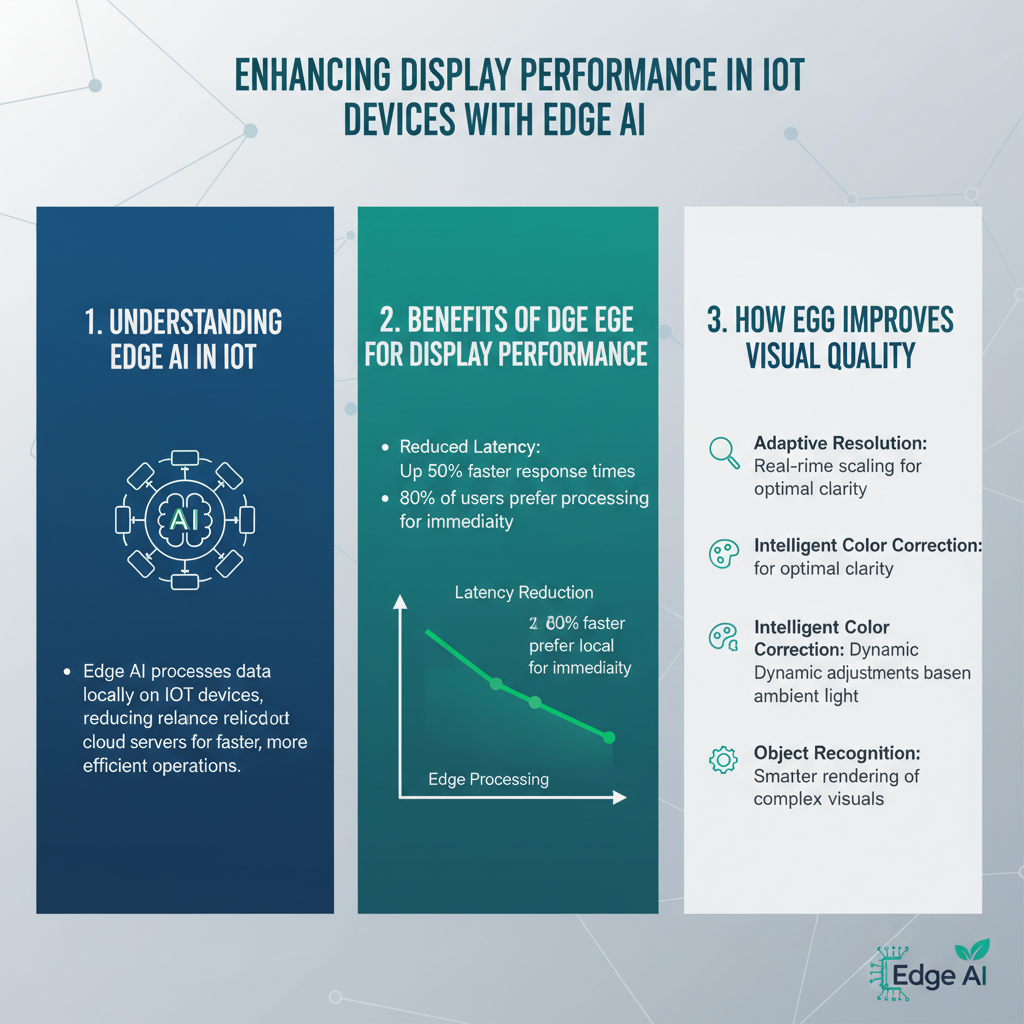
The key differences between Edge AI and traditional cloud computing lie in latency and bandwidth usage. With cloud computing, data must be transmitted to a remote server for processing, often resulting in delays. Conversely, Edge AI processes data locally, which minimizes latency and uses bandwidth more efficiently since less data needs to be sent to the cloud. This capability is especially critical for applications requiring real-time analysis, such as augmented reality displays or interactive kiosks.
Benefits of Edge AI for Display Performance

One of the most significant benefits of Edge AI is its ability to reduce latency, which leads to real-time data processing. For instance, in smart retail environments, digital signage can instantly update promotions based on customer interactions or inventory levels. This immediate responsiveness enhances customer engagement and satisfaction, driving sales and creating a more dynamic shopping experience.
Moreover, Edge AI enhances efficiency through localized data management. By processing data on-device, IoT devices can operate seamlessly without constant internet connectivity. This is particularly beneficial in environments with limited bandwidth, such as remote industrial sites. The ability to perform analytics and display adjustments locally ensures that the devices remain functional and responsive, even when offline or experiencing connectivity issues.
How Edge AI Improves Visual Quality
Edge AI also plays a pivotal role in enhancing visual quality by employing techniques for image enhancement and rendering at the edge. With the proliferation of high-definition displays, it’s crucial that the content delivered is crisp and visually appealing. Edge AI can analyze and adjust image quality in real-time, ensuring that users always experience optimal visuals regardless of their environment.
For example, machine learning algorithms can be utilized to adapt display settings based on ambient light conditions. If a display is installed in a brightly lit area, Edge AI can automatically adjust brightness, contrast, and color settings to maintain clarity and vibrancy. This adaptability not only improves user experience but also extends the lifespan of the display by reducing wear on the components from unnecessary brightness levels.
Case Studies: Real-World Applications
To illustrate the power of Edge AI in enhancing display performance, let’s look at some real-world applications. In the retail sector, smart displays powered by Edge AI are revolutionizing advertising strategies. For instance, a popular clothing retailer uses digital signage that analyzes foot traffic data to display targeted promotions to customers based on their demographics and behaviors. This not only boosts engagement but also enhances the effectiveness of marketing efforts.
In healthcare, Edge AI is being implemented in devices such as smart monitors that provide real-time patient data visualization. These monitors can analyze vital signs and other health metrics on the spot, enabling healthcare professionals to make quicker decisions. For instance, an ICU patient monitor can alert staff immediately if a patient’s condition changes, allowing for timely intervention based on the most current data.
In industrial IoT, machinery equipped with Edge AI can display performance metrics and alerts directly on-site, allowing operators to respond to issues before they escalate. This not only improves safety but also enhances operational efficiency by minimizing downtime.
Challenges and Considerations
Despite the many advantages, there are challenges and considerations associated with Edge AI in display optimization. One potential limitation is the processing power of edge devices. While many IoT devices are becoming more powerful, there may still be constraints on how much data can be processed in real-time. Manufacturers need to carefully balance performance with hardware capabilities.
Moreover, security concerns and data privacy issues must be addressed. Local processing means that sensitive data may reside on the device longer, potentially exposing it to risks if the device is compromised. It’s essential for developers to implement robust security measures, such as encryption and secure access protocols, to protect user data and maintain compliance with privacy regulations.
Future Trends in Edge AI and IoT Displays
Looking ahead, we can expect significant advancements in Edge AI technology that will further enhance display performance in IoT devices. One major trend is the increasing integration of AI with 5G technology. The high-speed and low-latency capabilities of 5G will amplify the advantages of Edge AI, allowing for even more sophisticated applications in real-time data processing and visualization.
Moreover, the evolving role of AI will continue to enhance user experiences. As machine learning algorithms become more refined, we can anticipate more personalized interactions. Smart displays might learn user preferences over time, adjusting content and settings to provide a bespoke experience tailored to individual needs.
In conclusion, the integration of Edge AI is revolutionizing how IoT devices handle display performance, making them faster, smarter, and more efficient. By reducing latency, enhancing visual quality, and providing real-world applications that demonstrate its effectiveness, Edge AI stands at the forefront of IoT technology. Understanding its benefits and challenges will help industries better prepare for the future. Embracing this technology is essential for staying ahead in the ever-evolving IoT landscape!
Frequently Asked Questions
What is Edge AI and how does it enhance display performance in IoT devices?
Edge AI refers to the deployment of artificial intelligence algorithms directly on IoT devices, allowing for real-time data processing and decision-making without relying heavily on cloud computing. By processing data locally, Edge AI minimizes latency and optimizes display performance in IoT devices, ensuring smoother visuals and quicker responses to user interactions. This capability is especially crucial in applications like smart signage and augmented reality, where immediate feedback is essential for a seamless user experience.
How does Edge AI reduce latency in IoT devices with displays?
Edge AI reduces latency by allowing IoT devices to process data locally instead of sending it to the cloud for analysis. This immediate processing means that the device can respond to user inputs and environmental changes almost instantaneously, significantly enhancing the display performance. For instance, in smart home applications, Edge AI can adjust lighting or display settings based on real-time data, ensuring a more responsive and interactive user experience.
Why is real-time data processing important for display performance in IoT devices?
Real-time data processing is critical for display performance in IoT devices because it enables instant updates and interactions, which are vital for user engagement. In scenarios such as digital signage or interactive kiosks, delays in processing can lead to a disjointed experience, frustrating users and diminishing the effectiveness of the display. Edge AI facilitates this rapid processing, ensuring that display content is dynamic and relevant, thereby enhancing overall performance.
What are the best use cases for Edge AI in optimizing display performance?
The best use cases for Edge AI in optimizing display performance include smart retail displays, augmented reality applications, and interactive information kiosks. For example, in smart retail, Edge AI can analyze customer behavior in real-time, adjusting advertisements or displays based on foot traffic and engagement levels. Similarly, in augmented reality, Edge AI can process visual data instantly, providing users with an immersive experience without lag, thereby maximizing the effectiveness of the display.
Which IoT devices benefit the most from Edge AI in terms of display optimization?
IoT devices that benefit most from Edge AI in terms of display optimization include smart TVs, digital signage systems, and wearable technology like augmented reality glasses. These devices require high-performance displays that can adapt quickly to user inputs and environmental factors. By leveraging Edge AI, these devices can deliver enhanced visual experiences, real-time content updates, and improved user interactivity, making them more appealing and functional to consumers.
References
- Edge computing
- https://www.nist.gov/news-events/news/2020/03/why-edge-computing-matters-iot
- https://www.sciencedirect.com/science/article/pii/S0010465521000202
- https://www.researchgate.net/publication/339303469_Edge_AI_for_the_Internet_of_Things
- Blog – IBM Research
- https://www.microsoft.com/en-us/research/publication/ai-at-the-edge-for-iot/
- https://www.nature.com/articles/s41598-020-69749-3
- https://www.bbc.com/future/article/20210104-how-ai-is-transforming-iot-devices
- https://www.itu.int/en/ITU-T/academia/Pages/Edge-Computing.aspx