
Frame interpolation enhances the smoothness of high-frame-rate videos by creating intermediate frames between the existing ones, allowing for a more fluid and enjoyable viewing experience. By analyzing motion and context, this innovative technique transforms the way we perceive movement on screen. In this article, we’ll delve into the mechanics behind frame interpolation, its applications in various fields, and the cutting-edge technology that makes it possible.
Understanding Frame Interpolation

Frame interpolation is a video processing technique designed to increase the frame rate of videos by synthesizing additional frames between the original ones. The primary purpose of this technology is to create smoother motion, making fast-moving sequences appear more fluid and less choppy. Unlike traditional frame rate adjustments, which may simply duplicate existing frames or drop frames to match a desired rate, frame interpolation intelligently generates new frames based on the actual motion occurring in the video. This results in a more immersive experience, particularly in action-packed scenes or sports broadcasts.
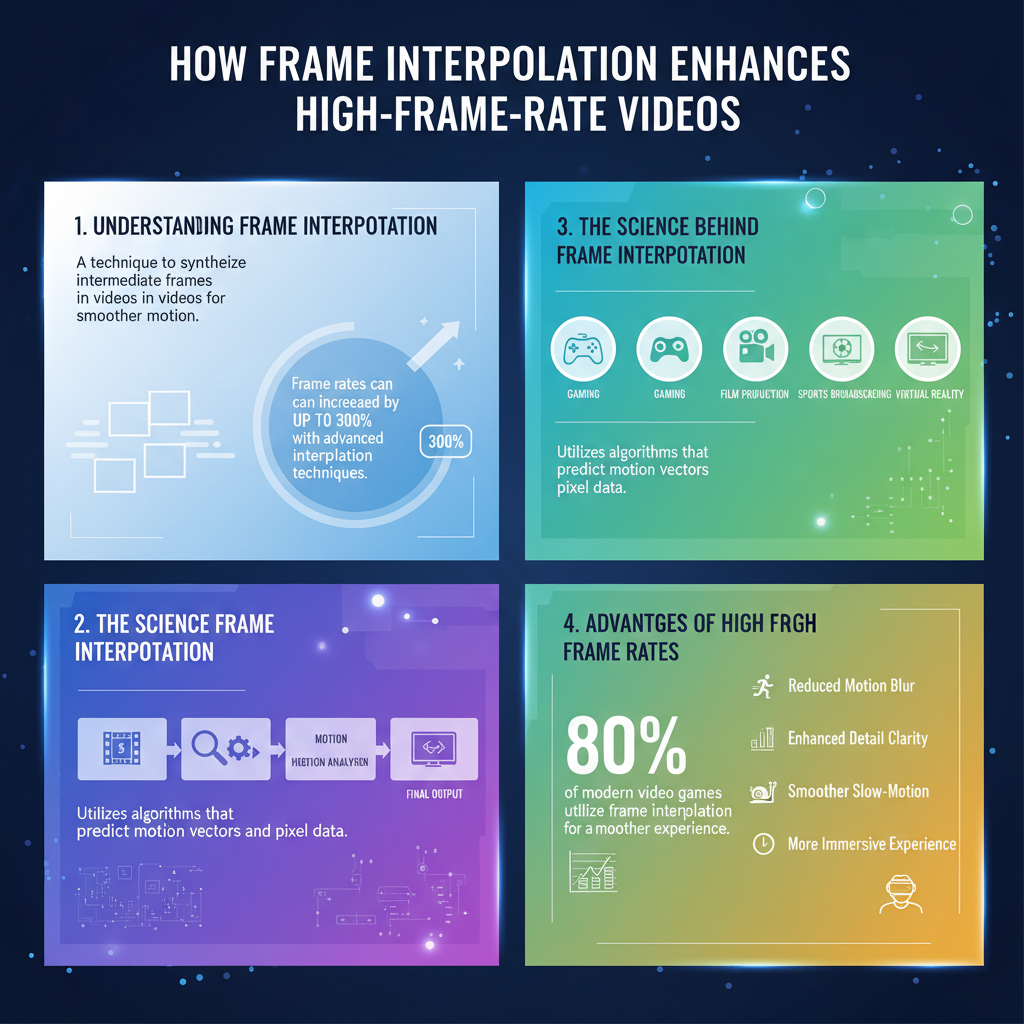
For example, if a video originally runs at 30 frames per second (fps), frame interpolation can elevate it to 60 fps or even higher, making the action appear seamless. This technique not only improves the aesthetics of the content but also enhances the overall viewer experience.
The Science Behind Frame Interpolation

At the heart of frame interpolation is the concept of motion estimation, which involves predicting how objects move between frames. By analyzing the differences between successive frames, algorithms can identify the direction and speed of motion, allowing them to create new frames that accurately capture the in-between moments. This predictive analysis is crucial for generating realistic motion and ensuring that the resulting video feels natural to the viewer.
Several algorithms are employed in frame interpolation, including optical flow and deep learning techniques. Optical flow algorithms track the movement of pixels across frames, estimating the motion vectors that define how objects shift. On the other hand, deep learning methods utilize neural networks trained on large datasets to understand complex motion patterns, enabling even more accurate frame generation. These advanced techniques are especially useful in complex scenes where traditional algorithms may struggle.
For instance, a deep learning model can be trained to analyze various types of motion, such as the rapid movements of a sports player or the subtle shifts of background elements in a cinematic scene. This adaptability makes modern frame interpolation highly effective across different genres of video content.
Applications of Frame Interpolation
Frame interpolation finds its applications in various fields, including film, television, and gaming. In the film and television industry, it is used to create smoother motion sequences that enhance the visual storytelling experience. Directors and cinematographers can employ this technique to provide audiences with a more engaging and dynamic viewing experience, particularly in action scenes where clarity of motion is paramount.
In the gaming world, frame interpolation significantly enhances visual fidelity and responsiveness. Gamers benefit from smoother gameplay, which is crucial during fast-paced action. Additionally, many modern gaming consoles and graphics cards employ frame interpolation to upscale frame rates in real-time, ensuring that players enjoy the best possible experience without noticeable lag or stutter.
One notable example is the use of frame interpolation in the popular video game “Call of Duty.” By employing this technology, players can enjoy a more fluid gaming experience, making it easier to track fast-moving opponents and react quickly to in-game events.
Advantages of High Frame Rates
One of the primary advantages of high frame rates is the improved motion clarity it provides. In fast-paced scenes, such as sports broadcasts or action movies, higher frame rates reduce motion blur, allowing viewers to see every detail of the action. This clarity can significantly enhance the viewing experience, making it easier to follow the action and appreciate the intricacies of cinematography.
Moreover, high frame rates can improve the overall viewer experience in various genres, including sports and action-packed films. For example, during a thrilling basketball game, viewers can catch every dribble, pass, and jump, creating a more immersive experience. This level of detail can make fans feel as though they are right in the middle of the action, contributing to a more engaging and enjoyable viewing experience.
Challenges and Limitations
Despite its many advantages, frame interpolation is not without its challenges and limitations. One potential issue is the occurrence of artifacts during interpolation, such as ghosting or blurring. These artifacts can arise when the algorithms misinterpret motion or struggle to accurately predict the movement of complex scenes. For instance, if a fast-moving object crosses in front of a static background, the algorithm may generate a blurred image that detracts from the overall quality of the video.
Additionally, frame interpolation requires significant computational power. The advanced algorithms, particularly those that rely on deep learning, demand robust hardware and processing capabilities. This can be a barrier for smaller production studios or independent filmmakers who may not have access to the necessary resources. As technology continues to advance, however, we may see more efficient algorithms that can deliver high-quality results with less computational overhead.
Future of Frame Interpolation Technology
The future of frame interpolation technology looks promising, with trends moving towards AI-driven solutions and advancements in machine learning. As researchers continue to refine deep learning techniques, we can expect even more sophisticated algorithms that enhance the quality of interpolated frames. These advancements may allow for real-time frame interpolation in a wider array of applications, from live broadcasts to interactive media.
In the coming years, we may also see frame interpolation becoming more widely accessible, allowing creators of all sizes to leverage this technology for their projects. With the rise of virtual reality and augmented reality content, the demand for smooth, high-frame-rate experiences will only increase, pushing the boundaries of what frame interpolation can achieve.
The rapid advancements in frame interpolation technology continue to shape how we experience high-frame-rate videos. By understanding its mechanics and applications, viewers can appreciate the smoothness and clarity that this technique brings to modern visual media. Explore more about this fascinating topic, and consider diving into the latest high-frame-rate content to see frame interpolation in action!
Frequently Asked Questions
What is frame interpolation and how does it work in high-frame-rate videos?
Frame interpolation is a technique used to create intermediate frames between existing ones in a video, resulting in smoother motion and improved visual fluidity. This process typically involves analyzing the motion between frames and generating new frames that predict the movement of subjects or objects, often using algorithms like motion estimation and motion compensation. In high-frame-rate videos, frame interpolation enhances the viewing experience by reducing motion blur and providing a more lifelike representation of fast-moving scenes.
Why is frame interpolation important for high-frame-rate videos?
Frame interpolation is crucial for high-frame-rate videos because it significantly enhances the visual quality and smoothness of motion. As frame rates increase, the potential for motion blur and choppiness also rises, especially during fast-paced action scenes. By utilizing frame interpolation, viewers can enjoy a clearer and more engaging experience, allowing for better immersion and enjoyment of the content.
How do different algorithms for frame interpolation compare in effectiveness?
Different algorithms for frame interpolation, such as linear interpolation, optical flow, and deep learning methods, vary in effectiveness based on the complexity of the video content. Linear interpolation is simple and fast but may not capture motion accurately in complex scenes. Optical flow methods offer improved accuracy by analyzing pixel movement, while deep learning approaches can provide superior results by learning patterns from large datasets, although they may require more processing power. Ultimately, the best algorithm depends on the specific application and the quality of output desired.
Which devices or software support frame interpolation for high-frame-rate video playback?
Many modern devices and software applications support frame interpolation for high-frame-rate video playback, including smart TVs, gaming consoles, and advanced video editing software like Adobe Premiere Pro and Final Cut Pro. Additionally, popular media players such as VLC and Kodi have options or plugins to enable frame interpolation. When choosing a device, look for features like Motion Smoothing or MEMC (Motion Estimation Motion Compensation) for optimal playback.
What are the common challenges or drawbacks of using frame interpolation in high-frame-rate videos?
While frame interpolation can enhance video quality, it also comes with challenges such as the potential for artifacts like ghosting or unnatural motion, particularly in scenes with rapid movement or complex backgrounds. Additionally, the processing power required for advanced interpolation algorithms can lead to increased latency and may not be suitable for all devices. Users should balance the benefits of smoother motion with the possibility of visual distortions, especially in content where precision is critical.
References
- Motion interpolation
- https://www.sciencedirect.com/science/article/pii/S0031320319306370
- https://www.techradar.com/news/how-frame-interpolation-works
- https://www.nature.com/articles/s41598-019-48781-4
- https://www.researchgate.net/publication/334538469_A_Survey_on_Frame_Interpolation_Techniques
- https://www.cnbc.com/2020/09/24/how-frame-interpolation-works-and-why-its-important.html
- https://www.acm.org/publications/toc/2020/overview-of-frame-interpolation-methods
- https://www.bbc.com/future/article/20200227-how-a-slow-motion-video-is-made