

Optical Image Stabilization (OIS) significantly enhances video recording by minimizing blur and shakiness, ensuring smoother and more professional-looking footage. This technology is essential for anyone looking to elevate their videography, whether capturing family moments, creating travel vlogs, or shooting dynamic sports footage. OIS achieves this by employing advanced mechanisms that counteract camera movements, making a noticeable difference in video quality. In this article, you’ll discover how OIS works, its benefits for different types of videography, and tips for maximizing its effectiveness.
Understanding Optical Image Stabilization

Optical Image Stabilization operates by utilizing physical movements within the camera lens or sensor to counteract vibrations caused by hand movements or external factors. When you press the record button, the camera’s stabilization system detects any unwanted movement and adjusts the lens or sensor accordingly. This dynamic response helps keep the image steady, resulting in clearer and more stable footage.
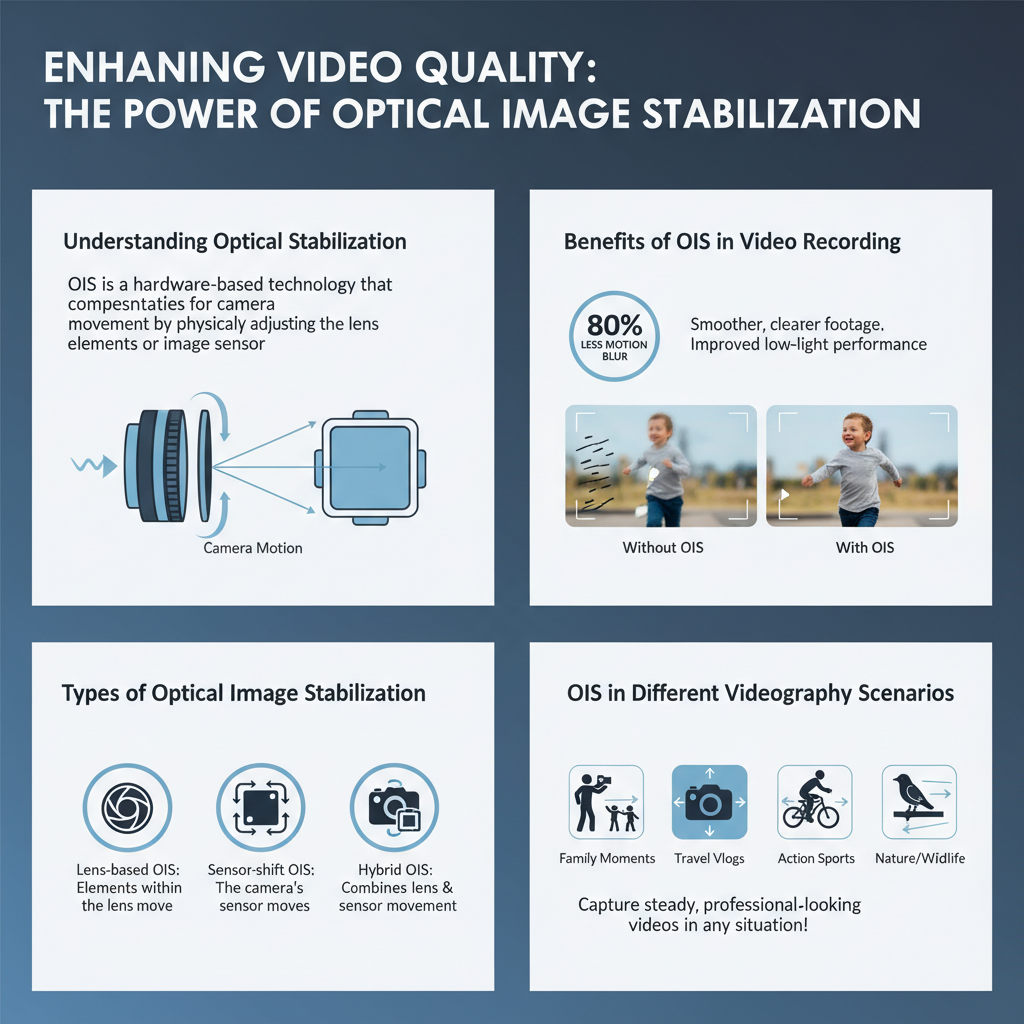
Unlike digital stabilization, which crops the video frame to eliminate shake, OIS maintains the full resolution and quality of your footage. This means that while digital stabilization can lead to a loss in image quality due to cropping, OIS retains the original frame, thus delivering sharper images and a more immersive viewing experience. It’s a key factor for videographers who prioritize quality and clarity in their recordings.
Benefits of OIS in Video Recording

The benefits of OIS in video recording are profound and multifaceted. First and foremost, OIS produces sharper images by reducing motion blur, especially in handheld shooting scenarios. This is particularly beneficial for those who may not have a steady hand or are shooting in dynamic environments. For example, if you’re filming a child’s soccer game, OIS will help you capture fast-moving action without the distractions of blurriness.
Additionally, OIS enhances the overall viewing experience, making videos appear more polished and professional. Audiences are less likely to be distracted by shaky footage, allowing them to engage more fully with the content. This is crucial for content creators who want their videos to resonate with viewers, whether on social media platforms or professional portfolios. By improving the quality of the recorded material, OIS ultimately contributes to a stronger connection between the creator and the audience.
Types of Optical Image Stabilization
There are primarily two types of Optical Image Stabilization: lens-based OIS and sensor-shift OIS.
Lens-based OIS involves stabilization mechanisms integrated within the camera lens itself. This type is particularly effective for zoom lenses, where the lens can compensate for shake during zoom operations. For instance, if you’re shooting a nature documentary and need to zoom in on a distant animal, lens-based OIS will help ensure that your footage remains steady, even at longer focal lengths.
On the other hand, sensor-shift OIS involves moving the image sensor within the camera body to counteract shake. This type of stabilization is commonly found in compact cameras and smartphones. Because the sensor can react to movements in real-time, it is particularly effective for casual videographers who may not have the luxury of using a tripod or gimbal. For example, if you’re filming a walking tour of a new city, sensor-shift OIS will help you maintain a steady shot, even while on the move.
OIS in Different Videography Scenarios
The applicability of OIS varies across different videography scenarios, making it an essential tool for various types of content creators.
Action and Sports Videography: In fast-paced environments, such as sports events or action sequences, OIS is crucial for capturing fast-moving subjects without distortion. Imagine filming a thrilling skateboard trick or a soccer game from the sidelines; OIS will help you keep the focus on the action without the jitters that could detract from the excitement.
Travel and Vlogging: For travel enthusiasts and vloggers, OIS plays a vital role in keeping footage stable while walking or moving. When you’re recording a bustling street market or a scenic hike, OIS ensures that your viewers feel as if they are right there with you, experiencing the journey firsthand. This immersive storytelling can significantly enhance audience engagement and connection to your content.
Tips for Maximizing OIS Effectiveness
To get the most out of Optical Image Stabilization, consider these actionable tips:
1. Use OIS in conjunction with tripod stabilization: While OIS is excellent for handheld shooting, combining it with a tripod or gimbal can yield even better results. This hybrid approach allows for greater stability, especially in challenging shooting conditions.
2. Be aware of the limitations of OIS: While OIS is a powerful tool, it does have its limitations. For instance, in low light conditions, OIS may struggle to keep up with the slower shutter speeds required for proper exposure. Additionally, extreme movements, such as fast pans or abrupt shifts, may overwhelm the stabilization system. Understanding these limitations will help you plan your shots more effectively.
3. Experiment with settings: Most cameras with OIS offer different modes or levels of stabilization. Take the time to experiment with these settings to find what works best for your specific shooting style and environment.
The Future of Optical Image Stabilization
As technology continues to evolve, the future of Optical Image Stabilization looks promising. Emerging technologies, such as AI-driven stabilization, promise even greater improvements in video quality. These systems can analyze footage in real time and make adjustments that human operators might overlook, leading to even smoother results.
Moreover, continuous advancements in OIS systems are expected to enhance usability for both amateur and professional videographers. As new cameras and lenses are released, look out for innovative features that could further simplify the stabilization process, making it accessible to everyone from hobbyists to seasoned professionals.
In summary, Optical Image Stabilization is a game-changer for video recording, helping to create smoother, clearer, and more visually appealing content. Whether you’re a seasoned videographer or just starting out, understanding and utilizing OIS can elevate your video quality. Explore your camera’s features and consider investing in OIS-equipped lenses to take your videos to the next level! With a little practice and the right tools, you can create stunning videos that captivate your audience and stand out in an ever-growing digital landscape.
Frequently Asked Questions
What is Optical Image Stabilization (OIS) and how does it work in video recording?
Optical Image Stabilization (OIS) is a technology used in cameras and smartphones to reduce blurriness caused by camera shake during video recording. It works by using gyroscopic sensors to detect movement and compensates for it by adjusting the position of the camera’s lens elements or sensor. This results in smoother, more professional-looking video footage, especially when shooting handheld or in motion.
How does OIS improve the quality of shaky videos?
OIS enhances video quality by minimizing the effects of unwanted movements, such as hand tremors or vibrations. By stabilizing the image in real-time, OIS ensures that the footage maintains a clear focus and consistent framing, which is crucial for creating visually appealing videos. This stabilization allows for a more immersive viewing experience, making the final product look more polished and professional.
Why is OIS important for smartphone videography?
OIS is essential for smartphone videography because smartphones are often used in dynamic environments where users might not have a tripod or stabilizer. The compact nature of smartphones makes them more susceptible to shake, and without OIS, videos can appear shaky and unprofessional. By incorporating OIS, smartphones can deliver high-quality video footage, allowing users to capture memorable moments with clarity and stability.
Which devices typically feature Optical Image Stabilization for video recording?
Many modern smartphones, DSLRs, and mirrorless cameras are equipped with Optical Image Stabilization to enhance video recording capabilities. High-end models from brands like Canon, Nikon, Sony, and Apple often feature OIS due to the increasing demand for high-quality video content. When selecting a device, look for OIS specifications mentioned in product descriptions to ensure you get the best stabilization for your video projects.
What are the best practices for using OIS effectively in video recording?
To leverage OIS effectively, ensure that you are holding the camera steadily and using smooth, deliberate movements while filming. Avoid rapid pans or jerky motions, as these can negate the benefits of OIS. Additionally, consider using OIS in conjunction with other stabilization methods, such as gimbals or tripods, for even smoother results, particularly in more challenging shooting environments.
References
- Image stabilization
- https://www.sciencedirect.com/science/article/pii/S0031320317303435
- https://www.nytimes.com/2020/11/25/technology/photography-video-stabilization.html
- https://www.techradar.com/news/what-is-optical-image-stabilization
- https://www.cio.com/article/243350/how-image-stabilization-improves-video-capture.html
- https://www.npr.org/sections/alltechconsidered/2016/04/13/474407324/why-optical-image-stabilization-matters-in-video-recording
- https://www.wired.com/story/what-is-optical-image-stabilization/