

Quantum dot technology dramatically enhances video color accuracy by utilizing tiny semiconductor particles that emit specific colors when energized. This innovative approach allows for richer colors, improved brightness, and an expanded color gamut compared to traditional display technologies. In this article, you’ll discover how quantum dots function, the advantages they offer over conventional displays, and their transformative impact on the overall viewing experience.
Understanding Quantum Dot Technology

At the heart of quantum dot technology are quantum dots themselves—minuscule semiconductor particles that range from 2 to 10 nanometers in size. These particles possess unique optical properties; the color of light they emit is determined by their size. Smaller quantum dots emit blue light, while larger ones emit red light, with various sizes producing different colors in between. This size-dependent color emission allows for incredibly pure and vibrant colors, making quantum dots an appealing choice for display technologies.
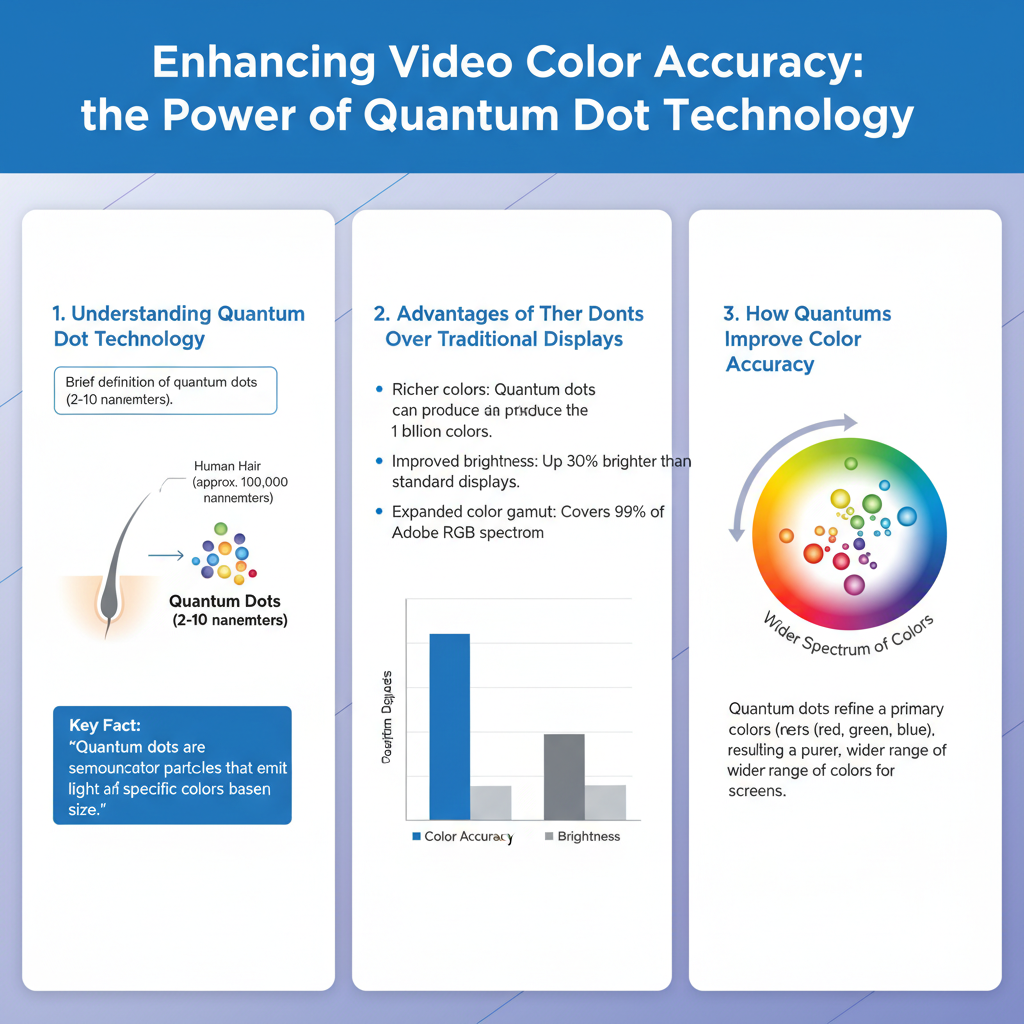
When quantum dots are incorporated into displays, they work in tandem with backlighting systems. Typically, a blue LED backlight is used, and the quantum dots convert some of that blue light into red and green wavelengths. This conversion results in a rich spectrum of colors that enhances overall image quality, making visuals on quantum dot displays more lifelike and appealing to the eye. This precision in color reproduction is a game changer, particularly for applications requiring accurate color representation, such as graphic design, photography, and film production.
Advantages of Quantum Dots Over Traditional Displays

One of the standout features of quantum dots is their ability to provide a wider color gamut compared to traditional display technologies, such as LCDs. A wider color gamut means that displays can reproduce a broader range of colors, resulting in images that are more vibrant and true to life. For instance, while conventional LCD screens might cover the sRGB color space, quantum dot displays can achieve coverage of the DCI-P3 color space, which is often used in digital cinema. This capability allows for a more immersive viewing experience, particularly when watching films or playing video games that are designed to take advantage of these richer colors.
Moreover, quantum dot displays can achieve higher brightness levels without compromising color accuracy. This is particularly beneficial in brightly lit environments where traditional displays might struggle. The enhanced luminance capability of quantum dots means that viewers can enjoy vibrant colors even in challenging lighting conditions. For example, during daylight hours, a quantum dot TV can maintain its stunning image quality, ensuring that you won’t miss any details or color nuances in your favorite movies or shows.
How Quantum Dots Improve Color Accuracy
The ability of quantum dots to emit very specific wavelengths of light leads to precise color reproduction. This precision minimizes color distortion, which is often a problem with traditional display technologies. For instance, standard LCDs may struggle to display certain shades accurately, leading to a washed-out appearance or color banding. Quantum dots, on the other hand, maintain color integrity across various brightness levels, resulting in a more uniform and accurate representation of colors.
Another significant advantage is the enhanced viewing angles provided by quantum dot displays. Traditional LCDs often exhibit color shifts when viewed from off-angles, which can detract from the viewing experience. Quantum dots help to mitigate this issue by maintaining color fidelity even when viewed from the side. This means everyone in the room can enjoy the same stunning visuals, regardless of where they are seated. Whether you’re hosting a movie night or working on a collaborative project, quantum dot technology ensures that everyone gets the best possible image quality.
Applications of Quantum Dot Technology in Video Displays
Quantum dot technology has found a prominent place in high-end televisions and monitors, particularly in 4K and 8K displays. Brands like Samsung and Sony have embraced quantum dot technology in their flagship models, resulting in stunning visuals that captivate viewers. For example, Samsung’s QLED TVs utilize quantum dots to deliver mesmerizing color accuracy and brightness, making them a popular choice among consumers looking for top-tier home entertainment options.
Beyond televisions, quantum dot technology is also making waves in the world of projectors and mobile devices. Some high-end projectors now incorporate quantum dot technology to enhance color performance, enabling vibrant presentations and movie experiences in both home theaters and professional settings. Additionally, smartphones and tablets are beginning to adopt quantum dot displays, providing users with vivid visuals that enhance everything from gaming to streaming. As this technology continues to evolve, its applications will likely expand even further, offering consumers richer experiences across various devices.
Future Trends in Quantum Dot Technology
The future of quantum dot technology is bright, with ongoing research aimed at developing new formulations that enhance efficiency and reduce production costs. Scientists are working on creating “quantum dot films” that can be easily integrated into existing display technologies, making them more accessible to manufacturers and consumers alike. This could lead to a new wave of affordable quantum dot displays that bring high-quality visuals to a wider audience.
Moreover, exciting advancements are being made in the integration of quantum dots with OLED technology. By combining the strengths of both technologies, manufacturers aim to create displays that not only offer unparalleled color accuracy but also improved contrast ratios and deeper blacks. This synergy could result in displays that push the boundaries of visual fidelity, providing viewers with an immersive experience that feels almost lifelike.
Limitations and Challenges
Despite the many advantages of quantum dot displays, there are some challenges that the technology faces. One notable limitation is the cost of production. Quantum dot displays can be more expensive to manufacture compared to traditional LCDs, which may deter some consumers looking for budget-friendly options. As demand for quantum dot technology grows, however, economies of scale may help drive down prices, making these displays more accessible in the future.
Additionally, there are ongoing concerns regarding the stability and longevity of quantum dots under prolonged use. Some formulations have shown signs of degradation over time, which could impact color accuracy and overall display performance. Researchers are actively working to address these issues, focusing on developing more durable quantum dots that maintain their performance over extended periods. As the technology matures, these challenges are expected to be overcome, leading to even better quantum dot displays.
In summary, quantum dot technology plays a crucial role in enhancing video color accuracy through its ability to produce precise colors and improve overall image quality. With advantages such as wider color gamuts, higher brightness, and superior viewing angles, quantum dot displays are transforming the way we experience visual content. As this technology continues to evolve, viewers can expect even more vibrant and lifelike visual experiences. If you’re considering upgrading your viewing setup, a quantum dot display could provide you with unmatched color performance and an enriched entertainment experience.
Frequently Asked Questions
What is quantum dot technology and how does it improve video color accuracy?
Quantum dot technology utilizes semiconductor particles known as quantum dots to enhance the color reproduction in displays. These particles emit specific colors when exposed to light, allowing screens to produce a wider color gamut and more precise hues compared to traditional display technologies. This results in video content that appears more vibrant and true to life, significantly improving the overall viewing experience.
Why are quantum dot displays better than standard LED or OLED displays for color accuracy?
Quantum dot displays offer several advantages over standard LED and OLED displays when it comes to color accuracy. They can achieve a broader color spectrum by emitting highly pure colors, which means they can reproduce more shades and subtleties in video content. Additionally, quantum dots maintain their color performance even at higher brightness levels, reducing color distortion that can occur in other display types.
How does quantum dot technology affect HDR (High Dynamic Range) video performance?
Quantum dot technology significantly enhances HDR video performance by enabling displays to produce brighter highlights and deeper blacks while maintaining color accuracy. The ability to emit precise colors allows quantum dot displays to deliver a more dynamic range of brightness and contrast, making HDR content look more realistic and immersive. This is particularly important for viewers looking for lifelike images in movies and gaming.
What are the best quantum dot TVs for accurate color reproduction?
Some of the best quantum dot TVs known for their exceptional color accuracy include the Samsung QLED series and the Sony X95J. These models utilize advanced quantum dot technology to deliver vibrant color reproduction and a high level of detail. When selecting a quantum dot TV, look for features like a wide color gamut, high peak brightness, and support for HDR formats to ensure the best color accuracy.
Which factors should I consider when choosing a quantum dot display for video editing or professional use?
When choosing a quantum dot display for video editing or professional use, consider the color accuracy, calibration capabilities, and the display’s ability to cover industry-standard color spaces like Adobe RGB and DCI-P3. Additionally, check for features like uniform brightness, low input lag, and high resolution to ensure that the display meets your professional editing needs. A good quantum dot monitor will not only enhance your color grading process but also ensure that the final output is true to your creative vision.
References
- Quantum dot
- https://www.sciencedirect.com/science/article/pii/S0020025512006480
- https://www.nature.com/articles/s41598-020-77840-3
- https://www.bbc.com/news/technology-56347391
- https://www.reuters.com/article/us-television-quantumdot-idUSKBN2A10IU
- https://www.sciencedaily.com/releases/2020/10/201013145150.htm
- https://www.techrepublic.com/article/how-quantum-dots-are-enhancing-the-future-of-display-technology/