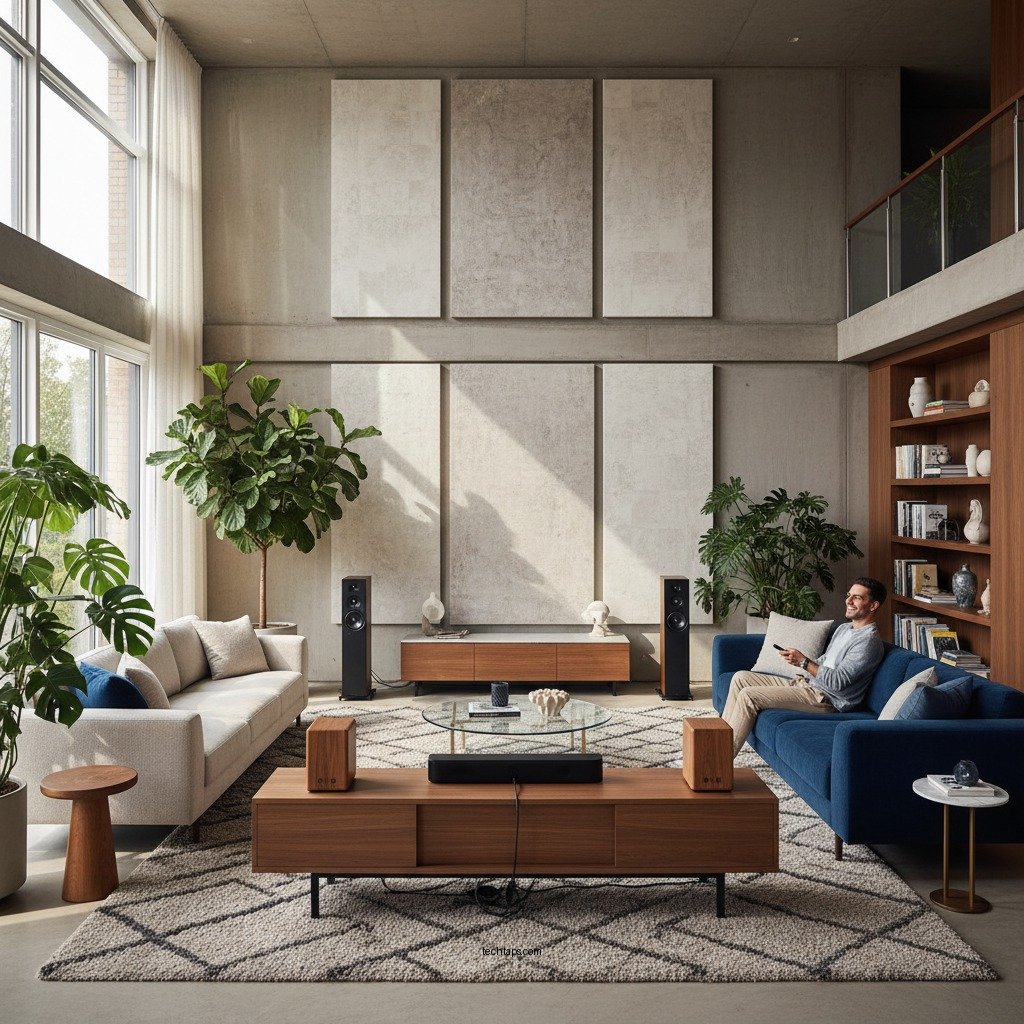

Achieving perfect audio quality in a large living room is a multifaceted task that requires careful consideration of speaker placement, room acoustics, and the right equipment. By strategically addressing these elements, you can significantly enhance sound clarity and richness while minimizing unwanted echoes and distortions. This guide will walk you through the essential steps to optimize your audio setup, ensuring an immersive listening experience.
Understanding Room Acoustics
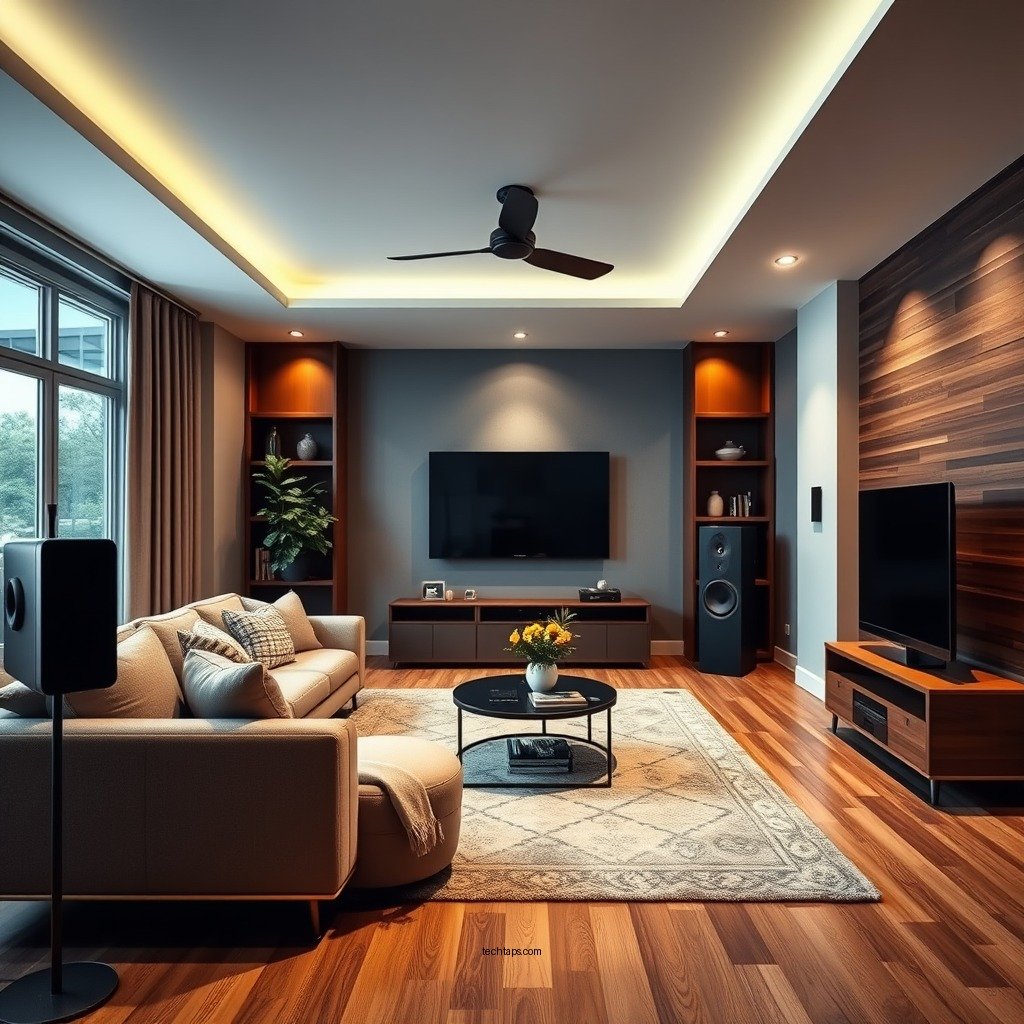
The acoustics of a room play a crucial role in determining how sound behaves within that space. Understanding and managing these acoustics can make a significant difference in audio quality.
– Identify sound-absorbing materials: The first step in managing room acoustics is to incorporate materials that can absorb sound. Soft furnishings such as rugs, curtains, and cushions help dampen sound reflections, preventing echoes and creating a warmer sound environment. A thick area rug on a hardwood floor can drastically improve sound absorption, while heavy drapes can further minimize reflections from windows.
– Assess room shape and size: The dimensions and shape of your living room impact how sound waves travel. For instance, a room with high ceilings may create a more pronounced echo compared to a cozier space with lower ceilings. Understanding these dynamics allows you to position your speakers and seating effectively to optimize sound distribution.
Speaker Placement Techniques
Proper speaker placement is vital for achieving optimal sound quality. The way you position your speakers can significantly enhance your audio experience.– Position speakers at ear level: For the best sound delivery, place your speakers at ear level when seated. This positioning ensures that the sound waves reach your ears directly, enhancing clarity and allowing for a more immersive experience.
– Create an equilateral triangle: Arrange your speakers and seating to form an equilateral triangle. This setup not only balances the audio from all speakers but also allows for a more coherent soundstage. The distance between the speakers should equal the distance from the speakers to the listening position, creating an ideal acoustic environment.
Choosing the Right Equipment
Selecting the right audio equipment is essential for achieving high-quality sound in a large living room.
– Invest in quality speakers: Research and invest in speakers that are well-suited to your space and audio preferences. Brands such as Klipsch, Bowers & Wilkins, and Bose offer a range of models designed for various room sizes and acoustic challenges. Pay attention to specifications like frequency response and power handling to ensure the speakers can handle the acoustic demands of a larger space.
– Consider a subwoofer: A subwoofer can significantly enhance your audio experience by providing deep bass response, which is especially important in larger rooms where low-frequency sounds may dissipate. Look for a subwoofer that complements your main speakers and consider its placement, as it can impact the overall sound quality.
Calibration and Tuning
Once you have your equipment set up, calibration and tuning are essential steps to ensure optimal performance.
– Use room calibration software: Many modern audio receivers come equipped with room calibration software that analyzes the acoustics of your space and adjusts settings accordingly. This tool can help correct any imbalances in sound caused by your room’s unique characteristics.
– Conduct manual adjustments: While automated calibration is beneficial, manual adjustments can fine-tune the sound to your liking. Experiment with equalizer settings to enhance specific frequencies based on your listening habits. For instance, if you enjoy bass-heavy music, you may want to boost lower frequencies slightly.
Minimizing Background Noise
To enjoy a high-quality audio experience, minimizing background noise is crucial.
– Seal gaps and windows: External noise can significantly disrupt your listening experience. Use weather stripping or acoustic caulk to seal gaps around windows and doors. This not only helps block outside noise but can also improve the overall acoustic performance of your room.
– Use soundproofing techniques: Consider implementing soundproofing techniques, such as adding insulation to walls or installing acoustic panels. These solutions help absorb sound and prevent noise from entering or exiting your living room, creating a more controlled audio environment.
Testing and Fine-Tuning
After setting up your audio system, testing and fine-tuning your setup should be an ongoing process.
– Listen to various genres: To truly assess the performance of your audio setup, listen to a variety of music genres. Different styles can reveal strengths and weaknesses in your audio system. Whether it’s classical, rock, or electronic music, each genre will have unique requirements that can help you identify any issues.
– Make iterative adjustments: Take the time to make iterative adjustments based on your listening tests. Small tweaks to speaker positioning or equalizer settings can lead to significant improvements in sound quality. Don’t hesitate to experiment until you find the perfect setup that suits your preferences.
Top 7 Speaker Brands for Large Rooms (2024)
| # | Brand | Model | Frequency Response | Rating |
|---|---|---|---|---|
| 1 | Bowers & Wilkins | 702 S2 | 25Hz – 33kHz | ★★★★★ |
| 2 | Klipsch | RP-8000F | 32Hz – 25kHz | ★★★★★ |
| 3 | Polk Audio | RTI A9 | 38Hz – 40kHz | ★★★★☆ |
| 4 | Yamaha | NS-F901 | 25Hz – 40kHz | ★★★★★ |
| 5 | Monitor Audio | Silver 500 | 30Hz – 60kHz | ★★★★☆ |
| 6 | SVS | Prime Pinnacle | 25Hz – 30kHz | ★★★★★ |
| 7 | Focal | Chora 826 | 28Hz – 28kHz | ★★★★☆ |
By following these steps, you can significantly enhance the audio experience in your large living room. From understanding room acoustics to speaker placement and equipment choices, every aspect plays a crucial role in achieving the perfect sound. Don’t hesitate to experiment and adjust as needed to find what works best for your space. With the right attention to detail and a bit of patience, you can transform your living room into an audio haven that delivers exceptional sound quality for all your entertainment needs.
Frequently Asked Questions
What are the best speaker placements for achieving perfect audio quality in a large living room?
To achieve optimal audio quality in a large living room, position your speakers at ear level and form an equilateral triangle with your listening area. Ensure that the speakers are at least a few feet away from walls and corners to minimize unwanted reflections and enhance sound clarity. Experimenting with placement can significantly improve the overall listening experience.
How can I reduce echo and improve sound quality in a large living room?
Reducing echo in a large living room can be achieved by incorporating soft furnishings such as rugs, curtains, and upholstered furniture, which absorb sound. Additionally, using acoustic panels on walls and ceilings can effectively dampen excess reverberation, leading to improved sound quality. Strategically placing bookshelves or plants can also help break up sound waves.
Why is room acoustics important for perfect audio quality in a large living room?
Room acoustics play a crucial role in audio quality because they affect how sound waves interact within the space. Factors such as wall materials, furniture arrangement, and room shape can either enhance or degrade sound clarity. Understanding and optimizing these elements ensures a more balanced audio experience, making it essential for achieving perfect sound quality.
Which audio equipment is best for enhancing sound in a large living room?
For enhancing sound in a large living room, consider investing in high-quality floor-standing speakers or a surround sound system designed for larger spaces. A good AV receiver with powerful amplification and the ability to calibrate sound settings based on room size can also make a significant difference. Additionally, using a subwoofer can provide deeper bass and enrich the overall audio experience.
How can I optimize my audio setup for streaming services in a large living room?
To optimize your audio setup for streaming services in a large living room, ensure that your internet connection is strong and stable, as a poor connection can impact sound quality. Use a high-fidelity audio receiver or soundbar compatible with your streaming device for better sound reproduction. Regularly updating your streaming apps and devices can also help maintain the best audio performance.
References
- Sound quality
https://en.wikipedia.org/wiki/Audio_quality - https://www.ncbi.nlm.nih.gov/pmc/articles/PMC7121739/
https://www.ncbi.nlm.nih.gov/pmc/articles/PMC7121739/ - https://www.sciencedirect.com/topics/engineering/audio-quality
https://www.sciencedirect.com/topics/engineering/audio-quality - https://pubmed.ncbi.nlm.nih.gov/27632686/
https://pubmed.ncbi.nlm.nih.gov/27632686/ - https://www.bbc.com/future/article/20210406-the-science-of-sound-and-how-it-shapes-our-world
https://www.bbc.com/future/article/20210406-the-science-of-sound-and-how-it-shapes-our-world - https://www.nature.com/articles/s41598-020-76501-6
https://www.nature.com/articles/s41598-020-76501-6 - https://www.theguardian.com/technology/2020/jul/29/what-makes-a-good-sound-system
https://www.theguardian.com/technology/2020/jul/29/what-makes-a-good-sound-system - Google Scholar Google Scholar
https://scholar.google.com/scholar?q=achieve+perfect+audio+quality+large+living+room - Google Scholar Google Scholar
https://scholar.google.com/scholar?q=audio+quality+in+large+rooms - Google Scholar Google Scholar
https://scholar.google.com/scholar?q=improving+audio+quality+residential+spaces