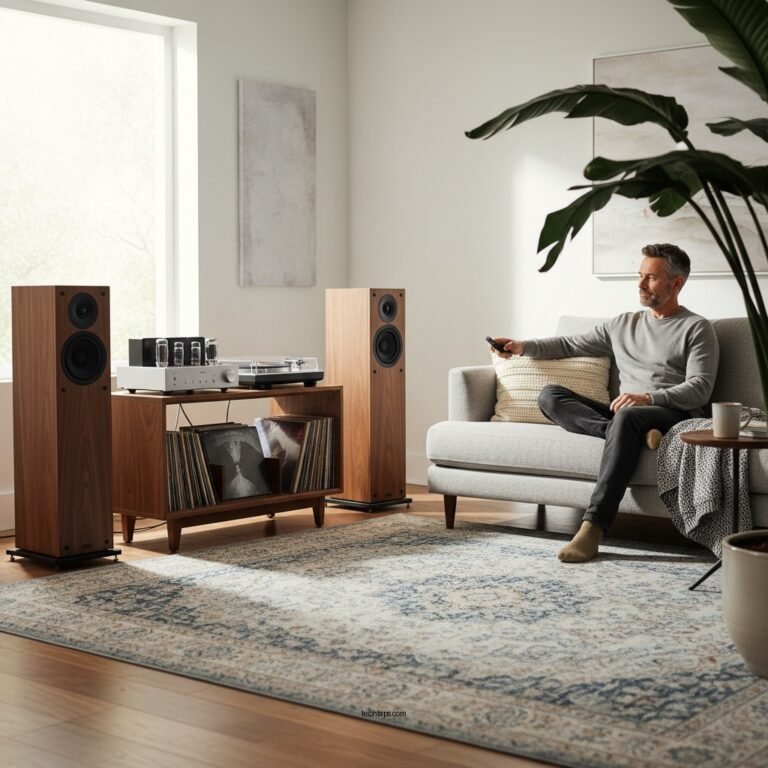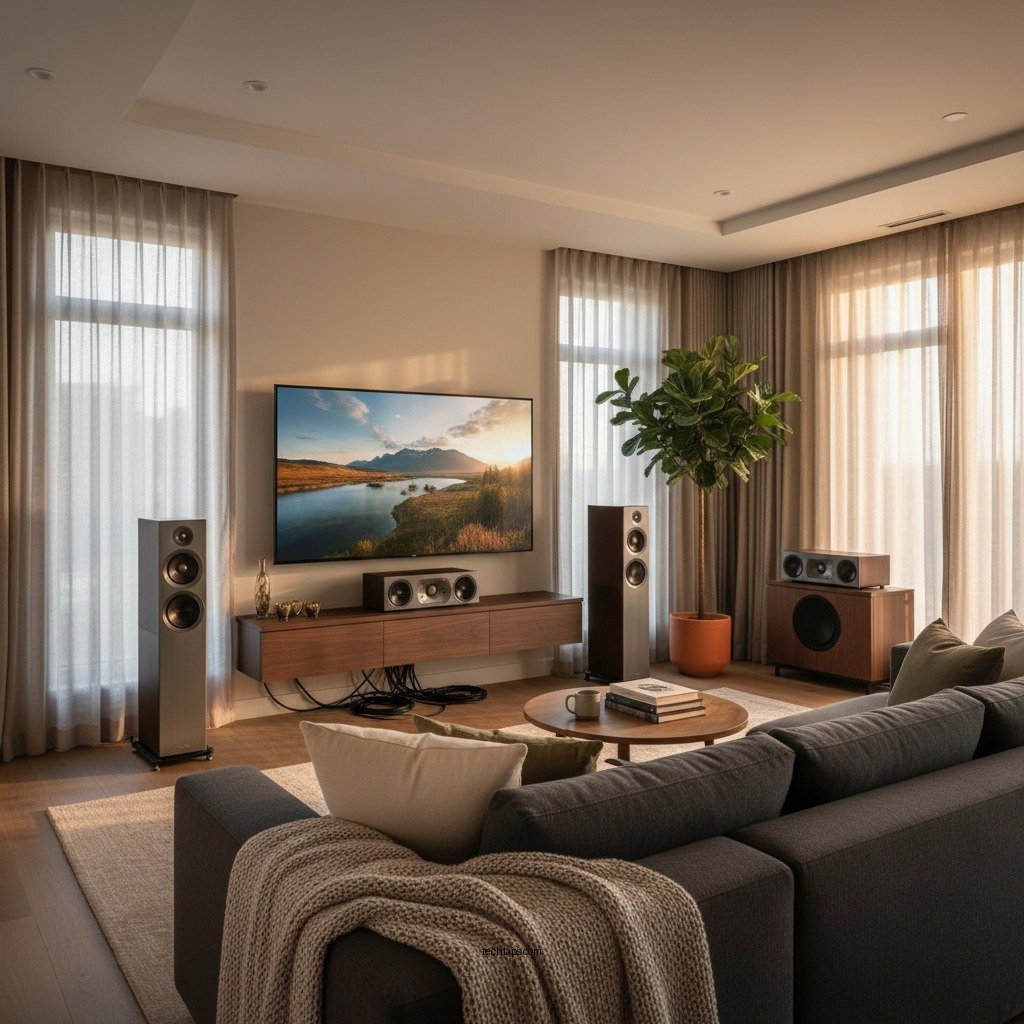

To build a premium 9.1 surround sound system, start by selecting high-quality components that enhance audio performance, ensuring an immersive experience. This guide will walk you through the essential elements, from speaker selection to setup, so you can enjoy cinematic sound in the comfort of your home. Whether you are a cinephile or an avid gamer, a well-configured 9.1 surround sound system can elevate your entertainment experience, making you feel as though you are part of the action.
Understanding the 9.1 Surround Sound Format
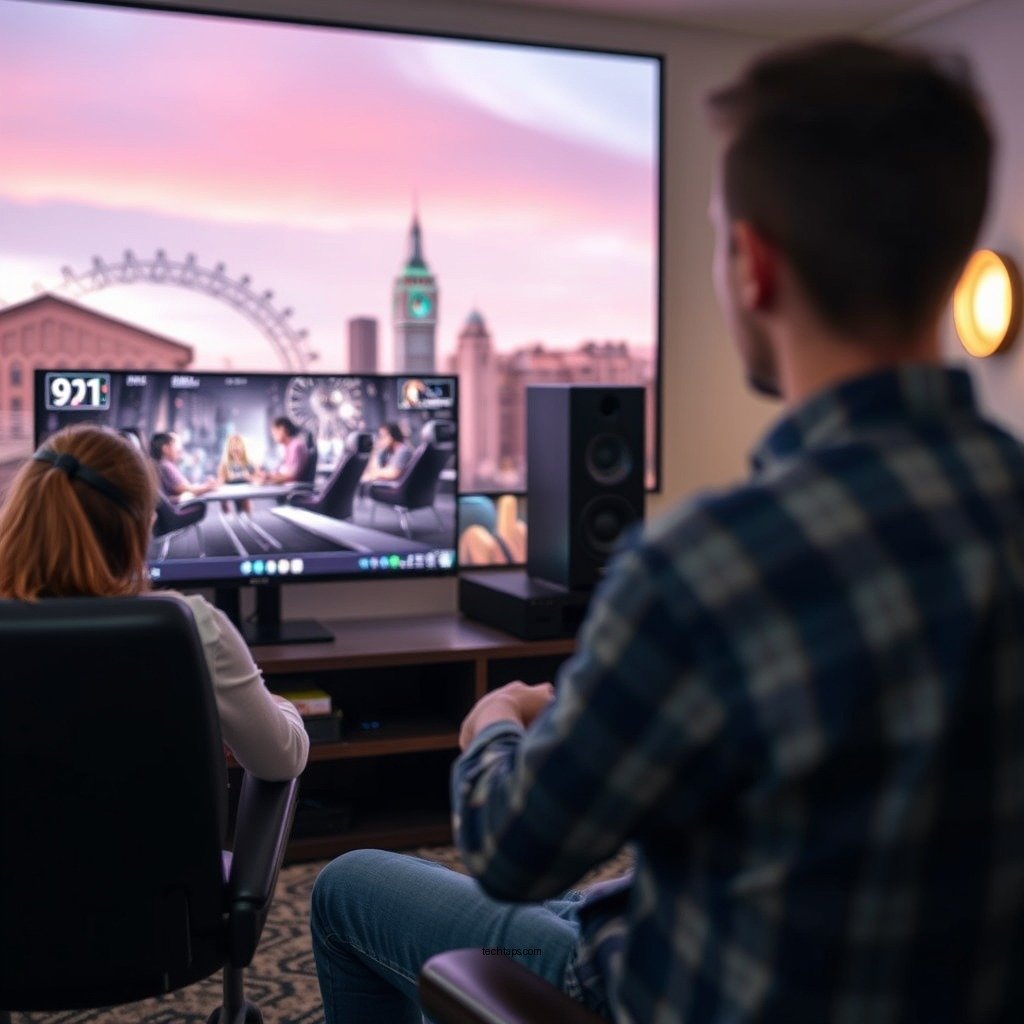
The 9.1 channel configuration is an advanced surround sound setup that includes nine audio channels and one subwoofer channel, which allows for a rich and dynamic audio experience. In a typical 9.1 system, you have five standard channels (left, center, right, left surround, and right surround), four additional height channels (left height, right height, rear left height, and rear right height), and one subwoofer channel that delivers deep bass.
The inclusion of height channels is particularly beneficial for creating a three-dimensional soundstage that enhances immersion. This allows sounds to move above and around the listener, replicating the audio experience one would expect in a professional cinema. The result is an unparalleled auditory environment that not only makes movies more engaging but also enhances video games and music.
Selecting the Right Speakers
When building a premium 9.1 surround sound system, the selection of speakers is crucial. Here are some key features to consider:
– Frequency Response: Look for speakers that can cover a broad frequency range. A good quality speaker should reproduce sounds from deep bass to high treble effectively.
– Sensitivity: This refers to how efficiently a speaker converts power into sound. Higher sensitivity speakers will require less power to produce the same volume level.
– Build Quality: Choose speakers made from high-quality materials that minimize distortion and resonate less.
– Surround Sound Compatibility: Ensure the speakers are designed for surround sound systems, particularly for configurations that include height channels.
Recommendations for Brands and Models
– Klipsch Reference Premiere Series: Known for their horn-loaded tweeters, these speakers provide excellent clarity and dynamic range.
– SVS Prime Elevation: Ideal for height channels, these speakers are designed to be mounted on the wall or ceiling, making them versatile for a 9.1 setup.
– Bowers & Wilkins 700 Series: Offers exceptional audio fidelity and a refined aesthetic, perfect for both music and home theater applications.
– Definitive Technology BP9080X: These floor-standing speakers come with built-in subwoofers and upward-firing height drivers for a truly immersive experience.
Choosing an AV Receiver
The AV receiver is the heart of your surround sound system, responsible for managing audio and video signals. When selecting an AV receiver for a 9.1 surround sound system, consider the following features:
– Channel Configuration: Ensure the receiver supports 9.1 channels, along with any additional configurations for future upgrades.
– Power Output: Look for a receiver that can deliver enough power to drive your speakers effectively without distortion.
– Connectivity Options: Multiple HDMI inputs, wireless connectivity (like Wi-Fi and Bluetooth), and support for various audio formats (such as Dolby Atmos and DTS:X) are essential for flexibility and future-proofing.
– Audio Processing Capabilities: Advanced audio processing features like room calibration technology can help tailor the sound to your specific environment.
Comparison Table of Recommended AV Receivers
Top 5 AV Receivers for 9.1 Surround Sound (2023)
| # | Model | Channels | Power Output | Price |
|---|---|---|---|---|
| 1 | Denon AVR-X6700H | 11.2 | 125W | $1,999 |
| 2 | Yamaha RX-A3080 | 9.2 | 140W | $1,699 |
| 3 | Onkyo TX-RZ840 | 9.2 | 120W | $1,199 |
| 4 | Marantz SR7015 | 9.2 | 125W | $2,199 |
| 5 | Pioneer VSX-LX503 | 9.2 | 120W | $1,399 |
Setting Up Your Speaker Layout
An optimal speaker layout is pivotal for achieving the best sound quality and immersion. The standard configuration for a 9.1 system involves the following placement guidelines:
1. Front Speakers: Position the left and right speakers at ear level, forming an angle of approximately 30 degrees from the listening position.
2. Center Speaker: Place the center speaker directly above or below the television for clear dialogue delivery.
3. Surround Speakers: The left and right surround speakers should be placed slightly above ear level, ideally 90 to 110 degrees from the listening position.
4. Height Speakers: Install the height speakers above the front speakers, angled towards the listening area to enhance vertical sound placement.
5. Subwoofer: The subwoofer can be placed in various locations, but a corner often provides the best bass response. Experiment with placement to find the optimal spot for your room.
Tips for Calibration
To ensure your speakers are balanced, utilize an audio calibration tool or the automatic calibration feature provided by most AV receivers. This process typically involves:
– Microphone Placement: Set the calibration microphone at your main listening position.
– Test Tones: The receiver will send test tones to each speaker to measure their output levels.
– Adjustment: Based on the measurements, the receiver will adjust the level and distance settings for each speaker to create an optimal listening experience.
Connecting and Configuring Your System
Connecting your components correctly is crucial for ensuring seamless performance. Follow these steps for proper setup:
1. Connect the Speakers: Use quality speaker wire to connect each speaker to the corresponding terminals on the AV receiver. Ensure that positive (+) and negative (-) terminals are matched correctly.
2. Connect the Subwoofer: Use an RCA cable to connect the subwoofer to the subwoofer output on the receiver.
3. Connect Video Sources: Connect your Blu-ray player, gaming console, and streaming devices using HDMI cables to the HDMI inputs on the receiver.
4. Connect to the TV: Use a high-speed HDMI cable to connect the HDMI output of the receiver to your television.
5. Power On: Once all components are connected, power on the receiver and select the appropriate input source.
Configuring the AV Receiver
After connections are established, configure your AV receiver for optimal performance:
– Select the Audio Mode: Choose the surround sound format that matches your setup (e.g., Dolby Atmos for 9.1 systems).
– Adjust Equalizer Settings: Fine-tune the equalizer settings to match your listening preferences and room acoustics.
– Update Firmware: Ensure your AV receiver’s firmware is up to date for the best compatibility and performance.
Enhancing Audio with Additional Components
To further elevate your audio experience, consider adding complementary components to your 9.1 surround sound system:
– Subwoofers: A high-quality subwoofer can enhance the low frequencies significantly. The SVS SB-3000 is a great choice, offering powerful bass and precise control.
– Sound Enhancement Devices: Acoustic panels can help minimize sound reflections and improve clarity. Additionally, consider soundbars for enhanced dialogue clarity when watching TV or movies.
Recommended Subwoofers
1. SVS SB-3000: 13-inch driver, 800 watts RMS, compact design.
2. Klipsch R-120SW: 12-inch driver, 400 watts RMS, known for its punchy bass.
3. REL Acoustics T/7i: 10-inch driver, 300 watts RMS, ideal for musical fidelity.
Maintenance and Optimization Tips
Regular maintenance is essential for preserving the performance of your surround sound system:
– Dust Speakers: Regularly dust your speakers and components to prevent debris buildup, which can affect sound quality.
– Check Connections: Periodically inspect all connections to ensure they remain secure and free from corrosion.
– Room Acoustics: Adjust speaker placement and consider adding rugs, curtains, and furniture to optimize room acoustics.
Optimizing Audio Settings
To fine-tune your audio settings based on room acoustics and personal preferences, consider the following:
– Room Calibration: Use the room calibration feature of your receiver to automatically adjust settings based on your room’s unique acoustics.
– Listening Modes: Experiment with different listening modes (e.g., Movie, Music, Game) to find the best match for various content types.
– Personal Preferences: Adjust bass and treble settings to suit your listening preferences, ensuring a comfortable and enjoyable experience.
Building your premium 9.1 surround sound system involves careful selection of components, precise setup, and regular maintenance to ensure the best audio experience. By following these steps, you can create a home theater that delivers captivating sound and enhances your entertainment experience. Don’t wait—start planning your dream sound system today!
Frequently Asked Questions
What are the essential components needed to build a premium 9.1 surround sound system?
To build a premium 9.1 surround sound system, you will need a high-quality AV receiver, nine speakers (including front, surround, and overhead speakers for immersive sound), and a powerful subwoofer. Additionally, you’ll require quality speaker wire, an HDMI cable for your source devices, and possibly a calibration microphone for optimal sound setup.
How do I choose the right AV receiver for my 9.1 surround sound system?
When selecting an AV receiver for your 9.1 surround sound system, look for one that supports the latest audio formats like Dolby Atmos and DTS:X. Ensure it has enough channels to accommodate all your speakers and offers sufficient power output to fill your room with sound. Features like room calibration technology and multiple HDMI inputs can also enhance your setup.
Why is speaker placement crucial in a 9.1 surround sound system?
Speaker placement is critical in a 9.1 surround sound system because it directly affects sound quality and immersion. Proper placement ensures that sound waves reach your ears in the intended sequence, creating a three-dimensional audio experience. Following recommended guidelines for distance and angle can significantly enhance your listening experience.
What are the best speaker brands for a high-quality 9.1 surround sound system?
Some of the best speaker brands for a premium 9.1 surround sound system include Klipsch, Bowers & Wilkins, and KEF, known for their exceptional sound quality and range of options. Additionally, brands like JBL and Pioneer offer great value without sacrificing performance. Choosing speakers that match your AV receiver’s specifications is essential for optimal compatibility.
Which cables and accessories are necessary for setting up a 9.1 surround sound system?
To set up a 9.1 surround sound system, you will need high-quality speaker wire to connect your speakers to the AV receiver, HDMI cables for video and audio transmission, and possibly an optical cable for older devices. Accessories like a surge protector, speaker stands, and wall mounts can also enhance your setup’s performance and aesthetics.
References
- Surround sound
https://en.wikipedia.org/wiki/Surround_sound - https://www.sciencedirect.com/topics/engineering/surround-sound
https://www.sciencedirect.com/topics/engineering/surround-sound - https://www.bbc.com/future/article/20200701-how-to-build-a-home-cinema
https://www.bbc.com/future/article/20200701-how-to-build-a-home-cinema - https://www.nytimes.com/2020/01/21/technology/personaltech/home-theater-systems.html
https://www.nytimes.com/2020/01/21/technology/personaltech/home-theater-systems.html - https://www.theguardian.com/technology/2021/jul/12/how-to-build-a-home-cinema-on-a-budget
https://www.theguardian.com/technology/2021/jul/12/how-to-build-a-home-cinema-on-a-budget - https://www.nature.com/articles/s41598-021-87731-5
https://www.nature.com/articles/s41598-021-87731-5 - https://pubmed.ncbi.nlm.nih.gov/29041158/
https://pubmed.ncbi.nlm.nih.gov/29041158/ - Google Scholar Google Scholar
https://scholar.google.com/scholar?q=How+to+Build+a+Premium+9.1+Surround+Sound+System - Google Scholar Google Scholar
https://scholar.google.com/scholar?q=surround+sound+system+set+up - Google Scholar Google Scholar
https://scholar.google.com/scholar?q=home+theater+design+and+setup