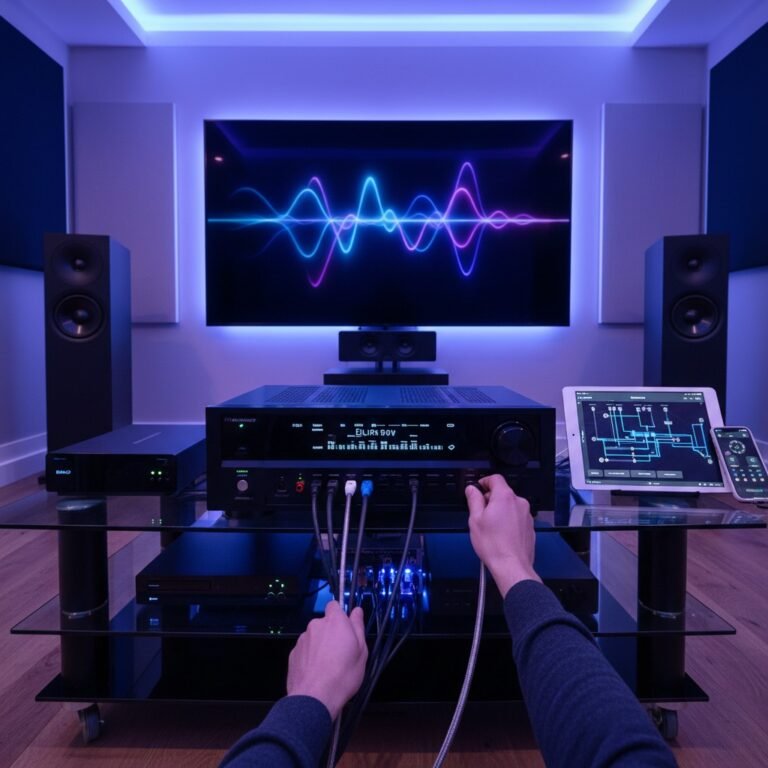
To resolve lip-sync issues on your Sony home theater system, start by checking the audio and video settings for any discrepancies in delay. Adjusting the audio delay settings is often the quickest solution to synchronize audio with visual content. In this guide, you’ll learn various methods to troubleshoot and fix lip-sync problems effectively, ensuring a seamless viewing experience.
Understanding Lip-Sync Issues
Lip-sync issues occur when the audio and video of a film or show are not synchronized, leading to a disjointed viewing experience. This can manifest as dialogue being out of sync with the actors’ lip movements or sound effects arriving after the related visuals. Such issues can arise from various factors, including the type of content being played, the source device, and the settings within the home theater system.
Common causes of lip-sync discrepancies include input lag, which is the delay between the signal being sent from the source device and the time it takes for the display to show it. Streaming services may also introduce delays due to buffering or compression algorithms, further complicating the synchronization of audio and video. Understanding these underlying factors is crucial to effectively addressing the problem.
Check Your Source Device Settings
The first step in troubleshooting lip-sync issues is to review the audio and video output settings on your source device, which could be a Blu-ray player, streaming device, or game console. Ensure that the output format of the device matches the capabilities of your Sony home theater system.
For instance, if your home theater system supports Dolby Digital but your source device is set to output stereo, this mismatch can lead to processing delays and, consequently, lip-sync issues. Check if your device is configured to output audio in a format your system can handle, and make adjustments as necessary.
Moreover, ensure that any video settings, such as resolution and frame rate, are appropriately configured, as mismatched settings can also contribute to delays.
Adjust Audio Delay Settings
Accessing and adjusting the audio delay settings on your Sony home theater system is often the most effective way to address lip-sync issues. Here’s a step-by-step guide to help you navigate through the settings:
1. Turn on your Sony Home Theater System and ensure it is connected to your display device.
2. Access the main menu using your remote control.
3. Navigate to Settings and then select Audio Settings.
4. Look for an option labeled Audio Delay or Lip Sync Adjustment.
5. Adjust the audio delay settings by small increments (typically in milliseconds) until the audio aligns with the visual content.
6. Test with various content to ensure the adjustment works across different sources.
By fine-tuning these settings, you can significantly reduce the delay that causes lip-sync issues.
Common Audio Formats and Their Latency (ms)
| # | Audio Format | Typical Latency (ms) | Best For |
|---|---|---|---|
| 1 | PCM | 0-10 | Standard Playback |
| 2 | Dolby Digital | 10-20 | Movies |
| 3 | DTS | 20-30 | Surround Sound |
| 4 | Dolby Atmos | 30-50 | High-Quality Audio |
| 5 | MP3 | 20-40 | Compressed Music |
| 6 | AAC | 15-30 | Streaming Audio |
| 7 | WAV | 0-5 | Lossless Audio |
Update Firmware and Software
Keeping your Sony home theater system’s firmware up-to-date is crucial for optimal performance and to resolve any potential bugs that may lead to lip-sync issues. Manufacturers frequently release updates that enhance audio processing, improve compatibility with various formats, and fix known problems.
To check for updates on your Sony device, follow these steps:
1. Navigate to Settings on your home theater system.
2. Select System Update or Software Update.
3. Follow the prompts to check for and install any available updates.
It’s advisable to regularly check for updates, especially if you notice new issues arising or after connecting new devices to your system. Updating firmware can often resolve underlying issues that cause audio-video sync problems.
Test Different Audio Outputs
If lip-sync problems persist, try switching between different audio outputs. For instance, if you are currently using HDMI, consider switching to optical cable or vice versa. Each connection type may have varying processing delays that could influence synchronization.
Directly connecting your home theater system to the TV may also yield better results compared to routing the audio through multiple devices. Testing different configurations can help isolate the issue and lead to a more stable audio-video sync.
Troubleshoot Cable Connections
Poor cable connections can also contribute to lip-sync issues. Inspect all cable connections for damage, wear, or loose fittings. Ensure that all cables are securely connected, and replace any that appear frayed or damaged.
Using high-quality cables can minimize signal loss and degradation, which can exacerbate sync issues. For optimal performance, consider investing in certified high-speed HDMI cables or quality optical cables.
Consider Playback Sources
Finally, test the lip-sync issue across various playback sources, including DVDs, Blu-rays, streaming content, or video games. Understanding that some sources may inherently have sync issues is essential for diagnosing the problem.
For example, streaming platforms may experience latency due to buffering or compression methods. If the issue is isolated to one source, the problem may lie with that specific content rather than your home theater system.
By systematically addressing the settings, connections, and sources, you can effectively troubleshoot and resolve lip-sync issues on your Sony home theater system.
Conclusion
By following the outlined steps, you can effectively resolve lip-sync issues on your Sony home theater system. Start by checking your audio and video settings, adjusting audio delay, and ensuring your firmware is up-to-date. Testing different audio outputs and inspecting cable connections are also essential in isolating the problem. Finally, understanding the playback sources will help you identify if the issue is with the content itself. If problems persist, do not hesitate to reach out to Sony support for further assistance. Take action now and enjoy an uninterrupted and immersive viewing experience!
Frequently Asked Questions
What are common causes of lip-sync issues on a Sony home theater system?
Common causes of lip-sync issues on a Sony home theater system include audio delay due to external devices, such as cable boxes or streaming devices, as well as improper settings in your receiver or TV. Additionally, signal processing delays can occur in certain audio formats or when using HDMI ARC connections, leading to mismatched audio and video.
How can I adjust the audio delay on my Sony home theater system to fix lip-sync problems?
To adjust the audio delay on your Sony home theater system, access the audio settings menu on your receiver. Look for an option labeled “Audio Sync” or “Lip Sync” and adjust the delay using the remote control until the audio aligns with the video. This feature allows you to fine-tune the timing based on your specific setup and preferences.
Why does my Sony home theater system have lip-sync issues when streaming content?
Lip-sync issues during streaming on your Sony home theater system may arise due to the inherent latency in digital streaming services, which can cause a delay between audio and video playback. Additionally, the quality of your internet connection or buffering issues can exacerbate this problem, making it crucial to ensure a stable and fast connection while streaming.
What is the best way to troubleshoot lip-sync problems on a Sony home theater system?
The best way to troubleshoot lip-sync problems on your Sony home theater system is to first check all connections, ensuring that HDMI cables are securely plugged into both your TV and receiver. Next, try switching the audio output format on your connected devices, and test different HDMI ports. If problems persist, consider resetting the system or updating the firmware for improved performance.
Which settings should I check on my Sony home theater system to resolve lip-sync issues?
To resolve lip-sync issues on your Sony home theater system, check the “Audio Delay” setting in the audio menu, as well as the “Dynamic Range” or “Sound Mode” settings, which can impact timing. Additionally, ensure that the video processing settings on your TV are set to “Game” or “Low Latency” mode, which can help minimize delays between audio and video signals.
References
- https://www.sony.com/electronics/support/articles/00008713
https://www.sony.com/electronics/support/articles/00008713 - https://www.lifewire.com/how-to-fix-audio-sync-issues-on-your-tv-1846987
https://www.lifewire.com/how-to-fix-audio-sync-issues-on-your-tv-1846987 - Google Scholar Google Scholar
https://scholar.google.com/scholar?q=lip-sync+issues+Sony+Home+Theater - Google Scholar Google Scholar
https://scholar.google.com/scholar?q=audio+delay+Sony+home+theater - Google Scholar Google Scholar
https://scholar.google.com/scholar?q=fixing+audio+sync+problems+home+theater - Google Scholar Google Scholar
https://scholar.google.com/scholar?q=How+to+Fix+Lip-Sync+Issues+on+a+Sony+Home+Theater+System - How to Fix Lip-Sync Issues on a Sony Home Theater System – Search results
https://en.wikipedia.org/wiki/Special:Search?search=How+to+Fix+Lip-Sync+Issues+on+a+Sony+Home+Theater+System - https://www.ncbi.nlm.nih.gov/search/research-articles/?term=How+to+Fix+Lip-Sync+Issues+on+a+Sony+Home+Theater+System
https://www.ncbi.nlm.nih.gov/search/research-articles/?term=How+to+Fix+Lip-Sync+Issues+on+a+Sony+Home+Theater+System