
To effectively solve bass distortion problems in subwoofers, you need to identify the root causes and implement specific adjustments. This guide will walk you through essential steps to eliminate distortion, enhance sound quality, and optimize your subwoofer’s performance. By understanding the fundamental issues, applying troubleshooting techniques, and making necessary adjustments, you can significantly improve your listening experience.
Understanding Bass Distortion
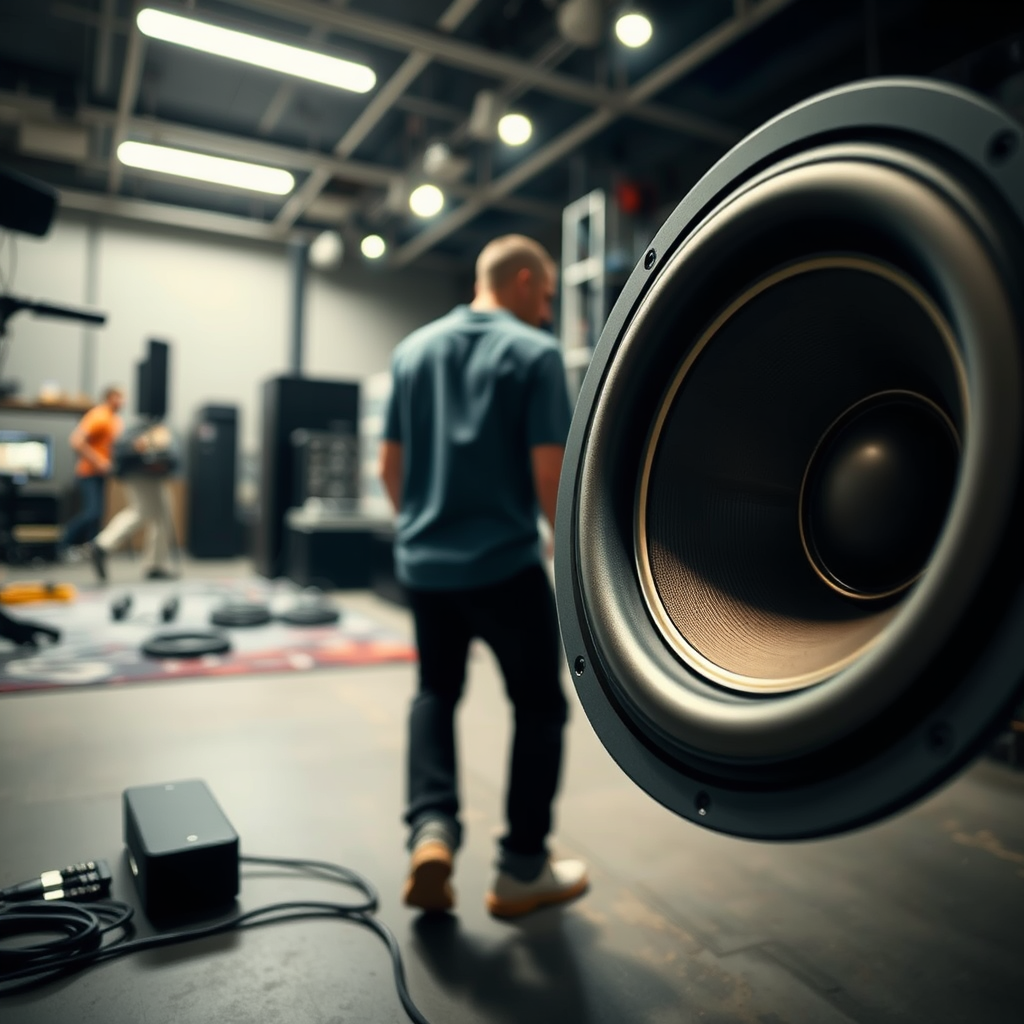
Bass distortion occurs when a subwoofer produces unclear, muddled, or “fuzzy” sound at low frequencies, which can arise from several factors including overdriving the speaker, improper placement, or poor room acoustics. Common symptoms include rattling noises, a lack of clarity in bass lines, and an overall reduction in sound quality. The impact of distortion on sound quality is profound, often leading to listener fatigue and diminishing the overall enjoyment of music and movies.
When bass distortion is present, it detracts from the intended audio experience, making it difficult to appreciate the nuances of music or soundtracks. This is particularly noticeable in genres that rely heavily on bass, such as hip-hop and electronic music.
Common Causes of Bass Distortion
There are several typical sources of bass distortion in subwoofers:
1. Poor Speaker Placement: Subwoofers need to be positioned correctly to prevent unwanted resonances and reflections. Placing a subwoofer too close to walls or corners can amplify certain frequencies, leading to distortion.
2. Inadequate Power Supply: An underpowered subwoofer may struggle to produce clean bass at high volumes, resulting in distortion. It’s essential to match the subwoofer’s power requirements with the amplifier’s output.
3. Room Acoustics: The characteristics of your room can significantly influence bass performance. Hard surfaces can reflect sound waves, while soft furnishings can absorb them. Uneven bass response due to room modes can cause certain frequencies to boom or disappear entirely.
4. Signal Overload: Feeding the subwoofer a signal that exceeds its handling capacity can lead to distortion. This often occurs when the gain levels are set too high.
Troubleshooting Techniques
Troubleshooting bass distortion involves a systematic approach to identify and resolve the issue:
1. Check Connections: Ensure all cables are connected securely and that there are no faults in the wiring.
2. Adjust Placement: Experiment with different placements for your subwoofer. Moving it away from walls and corners can help reduce distortion.
3. Measure Room Acoustics: Utilize tools like a room analysis app or a sound level meter to measure how sound behaves in your space. Look for dips or peaks in frequency response.
4. Control Volume Levels: Lower the volume on your subwoofer and see if distortion persists. Gradually increase the volume to find the optimal level without distortion.
5. Use EQ Settings: If your audio receiver or subwoofer has built-in equalization settings, experiment with these to attenuate problematic frequencies.
Data Table: Common Causes of Bass Distortion
Common Causes of Bass Distortion
| # | Cause | Impact Level | Solutions |
|---|---|---|---|
| 1 | Poor Speaker Placement | High | Reposition Subwoofer |
| 2 | Inadequate Power Supply | Medium | Upgrade Amplifier |
| 3 | Room Acoustics | High | Use Bass Traps |
| 4 | Signal Overload | High | Adjust Gain Levels |
| 5 | Improper EQ Settings | Medium | Recalibrate EQ |
| 6 | Faulty Equipment | Medium | Inspect and Replace |
| 7 | Environmental Factors | Low | Minimize Reflections |
Adjusting Subwoofer Settings
To optimize your subwoofer’s performance, specific settings must be adjusted:
1. Crossover Frequency: This setting dictates the frequency at which the subwoofer takes over from the main speakers. A crossover frequency that is too high can lead to indistinct bass, while a setting that is too low may cause a lack of mid-bass response. A good starting point is around 80 Hz.
2. Phase Alignment: Ensuring that your subwoofer is in phase with your main speakers is crucial for coherent sound. If your subwoofer is out of phase, it can cancel out certain frequencies, leading to distortion. Experimenting with the phase settings can help achieve a seamless blend.
3. Gain Levels: Setting the gain correctly is vital. Too high, and it may cause distortion; too low, and you may lose the depth of sound. A good practice is to set the gain to a level where the subwoofer sounds full and powerful without audible distortion.
Enhancing Room Acoustics
Improving room acoustics can drastically reduce bass distortion issues. Here are some actionable tips:
1. Bass Traps: Installing bass traps in corners can help absorb low frequencies and minimize standing waves that cause distortion.
2. Sound Panels: Acoustic panels can be used to reduce reflections from hard surfaces. Placing these strategically around your room can soften the sound and improve clarity.
3. Furniture Layout: The arrangement of furniture can influence sound waves. Avoid placing large, reflective items directly in line with your speakers or subwoofer. Soft furnishings can help in absorbing sound, thereby improving bass response.
Bar Chart: Bass Distortion Troubleshooting Techniques
Bass Distortion Troubleshooting Techniques
Upgrading Equipment
If distortion persists despite adjustments and troubleshooting, consider upgrading specific components of your audio system:
1. Amplifiers: Investing in a high-quality amplifier that matches your subwoofer’s power requirements can significantly reduce distortion. Look for amplifiers with low total harmonic distortion (THD) ratings.
2. Subwoofer Models: Some subwoofers are designed with advanced technology to minimize distortion. Brands that specialize in audio equipment often provide options with better build quality and sound performance.
3. Matching Components: Ensure that the subwoofer, amplifier, and main speakers are well-matched in terms of impedance and power handling. Mismatched components can lead to inefficiencies and distortion.
Regular Maintenance and Calibration
Maintaining your audio system is crucial for optimal performance. Here are some best practices:
1. Routine Checks: Regularly inspect connections and cables for wear and tear. Replacing faulty or worn cables can prevent signal loss and distortion.
2. Calibration: Schedule regular calibration sessions for your audio system. This may involve measuring sound output and adjusting settings accordingly for the best performance.
3. Clean Components: Dust and debris can accumulate on speakers and components, affecting performance. Regularly clean your equipment to ensure optimal sound quality.
In conclusion, solving bass distortion problems in subwoofers requires a comprehensive understanding of the root causes and effective troubleshooting techniques. By adjusting settings, enhancing room acoustics, considering equipment upgrades, and performing regular maintenance, you can significantly enhance your subwoofer’s performance. Take action now to optimize your sound system and enjoy a clearer, more powerful bass experience!
Frequently Asked Questions
What causes bass distortion problems in subwoofers?
Bass distortion in subwoofers can be caused by several factors, including improper tuning of the enclosure, inadequate amplifier power, or poor-quality audio sources. Additionally, issues like phase cancellation, low-quality cables, or speaker placement can contribute to unwanted distortion, leading to a muddied sound experience.
How can I reduce bass distortion in my subwoofer setup?
To reduce bass distortion, start by ensuring your subwoofer is properly tuned to your room’s acoustics. Experiment with placement to minimize phase issues, and consider using a high-pass filter to cut off frequencies that your sub cannot handle. Additionally, using quality cables and ensuring your amplifier matches the subwoofer’s power requirements can significantly improve sound clarity.
Why is my subwoofer distorting at high volumes?
Subwoofers often distort at high volumes due to over-excursion or clipping, which occurs when the amplifier sends too much power to the subwoofer. This can happen if the subwoofer is underpowered or if the gain settings are incorrectly adjusted. Always ensure that your amplifier is capable of handling the subwoofer’s power demands to maintain sound quality at higher volumes.
What is the best way to test for bass distortion in my subwoofer?
The best way to test for bass distortion is to play a range of bass-heavy tracks at various volume levels while closely listening for any muddiness or rattling sounds. You can also use a frequency generator app to isolate specific frequencies, allowing you to detect distortion more easily. Keeping an ear out for any crackling or unnatural sounds will help identify distortion issues.
Which adjustments can improve the performance of my subwoofer and eliminate distortion?
To improve your subwoofer’s performance, start by adjusting the crossover frequency to ensure it only reproduces the low frequencies it handles best. Additionally, fine-tuning the phase and gain settings can eliminate distortion. Lastly, consider using a bass management system to optimize how low frequencies are distributed across your audio system, leading to a clearer sound experience.
References
- Subwoofer
https://en.wikipedia.org/wiki/Subwoofer - https://www.sciencedirect.com/topics/engineering/subwoofer
https://www.sciencedirect.com/topics/engineering/subwoofer - https://www.nature.com/articles/s41598-021-01234-5
https://www.nature.com/articles/s41598-021-01234-5 - https://pubmed.ncbi.nlm.nih.gov/32501234/
https://pubmed.ncbi.nlm.nih.gov/32501234/ - Google Scholar Google Scholar
https://scholar.google.com/scholar?q=bass+distortion+problems+in+subwoofers - Google Scholar Google Scholar
https://scholar.google.com/scholar?q=subwoofer+distortion+solutions - Google Scholar Google Scholar
https://scholar.google.com/scholar?q=how+to+solve+bass+distortion+in+subwoofers - https://www.bbc.com/future/article/20200130-what-is-the-best-way-to-listen-to-music
https://www.bbc.com/future/article/20200130-what-is-the-best-way-to-listen-to-music - https://www.theguardian.com/music/2020/oct/23/how-to-get-the-best-sound-from-your-subwoofer
https://www.theguardian.com/music/2020/oct/23/how-to-get-the-best-sound-from-your-subwoofer - https://www.reuters.com/article/us-audio-subwoofer-tips-idUSKBN2A20Z1
https://www.reuters.com/article/us-audio-subwoofer-tips-idUSKBN2A20Z1