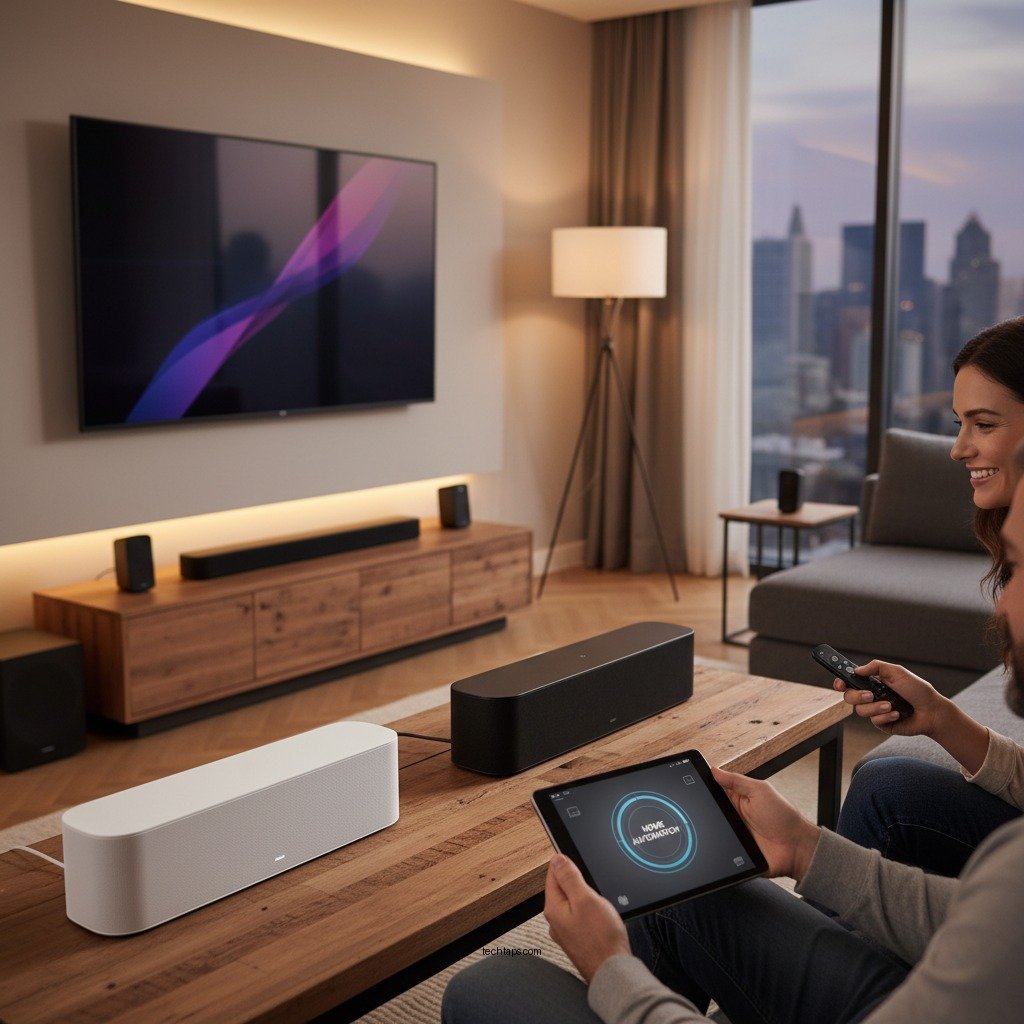

The Sonos Beam generally outperforms the Vizio Soundbar in terms of smart home integration, thanks to its seamless compatibility with various smart home ecosystems and voice assistants. While both soundbars offer distinct advantages, the Sonos Beam stands out for users looking to create a comprehensive smart home experience. This article will explore the key features, advantages, and drawbacks of both soundbars to help you make an informed decision on which is best suited for your smart home setup.
Overview of Sonos Beam

The Sonos Beam is designed as a compact soundbar that delivers exceptional audio quality without taking up much space. It’s an ideal choice for smaller living areas or for users who prefer a minimalist aesthetic. The soundbar features a sleek, modern design and is equipped with five speaker drivers that create a rich sound experience, making it perfect for both music and dialogue clarity in movies and TV shows.
One of the standout features of the Sonos Beam is its built-in voice control capabilities. Users can easily interact with their soundbar through Amazon Alexa and Google Assistant, allowing for hands-free control over music playback, volume adjustments, and even smart home devices. This integration enables users to create a fully connected environment where everything can be controlled with simple voice commands, enhancing the overall smart home experience.
Overview of Vizio Soundbar
The Vizio Soundbar is known for its budget-friendly pricing while still delivering decent sound quality, making it a popular choice among cost-conscious consumers. Its design is generally straightforward, focusing on functionality over aesthetics. Vizio offers various models that cater to different needs, including options equipped with subwoofers for enhanced bass response.
However, when it comes to smart home features, the Vizio Soundbar falls short compared to its competitors. While it can connect to smart TVs and basic devices, it lacks the extensive integration capabilities that modern smart home users may desire. This limited functionality may not satisfy those looking for a fully integrated audio experience within their smart home ecosystem.
Smart Home Compatibility
The Sonos Beam shines in smart home compatibility, supporting various ecosystems such as Apple HomeKit, Google Home, and Amazon Alexa. This broad compatibility allows users to seamlessly integrate the soundbar with smart lights, thermostats, and other connected devices. The Sonos app also enhances this experience by enabling users to control their music, manage connected devices, and create customized audio settings.
In contrast, Vizio’s compatibility is primarily limited to basic setups and smart TVs. While it can connect with some smart devices, it does not support a wide range of platforms or advanced features like multi-room audio. This can be a significant drawback for users who want a cohesive smart home experience where all devices communicate effectively with one another.
Smart Home Compatibility Comparison (2024)
| # | Feature | Sonos Beam | Vizio Soundbar |
|---|---|---|---|
| 1 | Amazon Alexa Support | Yes | No |
| 2 | Google Assistant Support | Yes | No |
| 3 | Apple HomeKit Support | Yes | No |
| 4 | Multi-Room Audio | Yes | Limited |
| 5 | Smart Device Integration | Wide | Basic |
| 6 | Firmware Updates | Automatic | Manual |
| 7 | Custom Audio Settings | Yes | Limited |
| 8 | Voice Control | Advanced | Basic |
| 9 | App Control | Yes | Limited |
| 10 | Smart Home Ecosystem Integration | Extensive | Limited |
Voice Control Features
The voice control capabilities of the Sonos Beam are another area where it excels. Thanks to its advanced voice recognition technology, users can enjoy an intuitive and responsive experience. The soundbar can recognize commands even in noisy environments, ensuring that you can control playback without needing to raise your voice. Additionally, users can create routines or control other smart devices, making it an integral part of a smart home.
Conversely, the Vizio Soundbar offers only basic voice control features. While some models may support voice commands through compatibility with certain smart TVs, it lacks the sophisticated voice recognition capabilities found in the Sonos Beam. This limitation can detract from the convenience that voice control is meant to provide, especially for users who might want to control multiple devices hands-free.
Audio Quality and Performance
When it comes to audio quality, the Sonos Beam significantly outperforms the Vizio Soundbar. The Beam features a well-balanced sound profile, rich bass, and clarity across all frequencies, making it suitable for various media types, from music to movies. The soundstage created by the Beam allows users to feel immersed in their content, contributing to a more enjoyable viewing and listening experience.
On the other hand, the Vizio Soundbar provides satisfactory audio performance for casual listening but lacks the depth and richness that audiophiles or serious movie watchers might crave. Many users report that while the sound is adequate for dialogue, it often fails to deliver the immersive experience that more advanced soundbars, like the Sonos Beam, can provide. This discrepancy can be particularly noticeable in action scenes or when listening to music with complex layers.
User Experience and Setup
The user experience with the Sonos Beam is designed to be straightforward and user-friendly. The setup process is quick and intuitive, with a dedicated app that guides users through each step. Once set up, users can easily customize their audio settings, group multiple Sonos speakers, and manage their smart devices all from one central application. The integration with streaming services is also seamless, allowing users to access their favorite music and podcasts with ease.
Vizio’s setup is generally straightforward as well, but it may lack the depth of customization options offered by Sonos. While users can connect the soundbar to their TV and start using it quickly, the lack of a dedicated app for managing audio settings or smart device integration can lead to a less engaging user experience. For those who prefer more control over their audio environment, this could be a significant limitation.
Price and Value Assessment
When considering price, the Sonos Beam is positioned at a higher price point, reflecting its advanced features and superior sound quality. The investment may be justified for users who prioritize smart home integration and premium audio performance. The enhanced user experience and functionality can offer long-term value, especially for those deeply embedded in the smart home ecosystem.
In contrast, the Vizio Soundbar presents an attractive option for budget-conscious consumers. With a lower entry price, it provides decent sound quality for casual use, making it a suitable choice for individuals who may not require extensive smart integration features or audiophile-level performance. However, potential buyers should weigh the cost savings against the limitations in features and compatibility that come with opting for a more budget-friendly option.
Conclusion
Summarizing the key points, the Sonos Beam stands out for its robust smart home integration and voice control capabilities, making it the better choice for those invested in a smart home ecosystem. Its superior audio quality and user-friendly experience further solidify its status as a premium soundbar. Meanwhile, the Vizio Soundbar, while budget-friendly, offers limited smart features and audio performance. To choose the right soundbar for your needs, consider your existing smart home devices and what level of integration you desire, as this will significantly influence your overall satisfaction with the product.
Frequently Asked Questions
What are the key differences between Sonos Beam and Vizio Soundbar for smart home integration?
The Sonos Beam is designed with seamless smart home integration in mind, featuring built-in support for Alexa and Google Assistant, while also connecting effortlessly with other Sonos speakers. In contrast, the Vizio Soundbar, while offering excellent sound quality, may lack the same level of smart features and compatibility, making the Beam a better choice for users heavily invested in smart home ecosystems.
How does audio quality compare between Sonos Beam and Vizio Soundbar?
The Sonos Beam is known for its rich, immersive sound profile and Dolby Atmos support, making it ideal for a cinematic experience. The Vizio Soundbar also delivers impressive audio performance, particularly for its price range, but may not match the Beam’s clarity and spatial audio capabilities, especially in a smart home setup.
Why should I choose Sonos Beam over Vizio Soundbar for my smart home?
Choosing the Sonos Beam offers superior smart home integration, allowing you to control music and devices hands-free with voice commands. Additionally, its versatility in connecting with other Sonos products enhances multi-room audio experiences, making it a better investment for those looking to create a cohesive smart home audio system.
Which soundbar is better for gaming: Sonos Beam or Vizio Soundbar?
For gaming, the Sonos Beam is often preferred due to its low latency and enhanced surround sound capabilities, which provide an immersive experience. The Vizio Soundbar also performs well, but users may find the Beam’s superior audio performance and compatibility with gaming consoles more beneficial for an engaging gaming experience.
What is the best way to set up Sonos Beam or Vizio Soundbar for the best smart home experience?
To achieve the best smart home experience with either soundbar, start by placing it centrally in your room for optimal sound distribution. Connect the soundbar to your Wi-Fi network and integrate it with your smart home devices via the respective apps, ensuring you enable voice control features. For Sonos Beam, adding additional Sonos speakers can enhance the setup further, while Vizio users should explore compatible smart home hubs for better integration.
References
- https://www.bbc.com/news/technology-49870776
https://www.bbc.com/news/technology-49870776 - https://www.theguardian.com/technology/2020/jan/14/sonos-beam-review
https://www.theguardian.com/technology/2020/jan/14/sonos-beam-review - https://www.nytimes.com/2020/01/14/technology/sonos-beam-review.html
https://www.nytimes.com/2020/01/14/technology/sonos-beam-review.html - https://www.sciencedirect.com/topics/engineering/sound-bar
https://www.sciencedirect.com/topics/engineering/sound-bar - https://www.cdc.gov/healthyhomes/healthyhome/soundbars.html
https://www.cdc.gov/healthyhomes/healthyhome/soundbars.html - Google Scholar Google Scholar
https://scholar.google.com/scholar?q=Sonos+Beam+vs+Vizio+Soundbar - Google Scholar Google Scholar
https://scholar.google.com/scholar?q=smart+home+integration+soundbar - Google Scholar Google Scholar
https://scholar.google.com/scholar?q=Sonos+Beam+Vizio+comparison - https://www.britannica.com/technology/soundbar
https://www.britannica.com/technology/soundbar - Google Scholar Google Scholar
https://scholar.google.com/scholar?q=Sonos+Beam+vs.+Vizio+Soundbar:+Which+is+Better+for+Smart+Home+Integration?