

The future of 480Hz refresh rate displays in eSports is nothing short of exhilarating, promising to elevate competitive gaming experiences to an entirely new level. These monitors will provide gamers with unparalleled fluidity, responsiveness, and clarity, enabling them to perform at their peak. As we delve into this groundbreaking technology, we will explore its implications for player performance, the gaming industry, and the overall eSports landscape.
The Evolution of Refresh Rate Technology
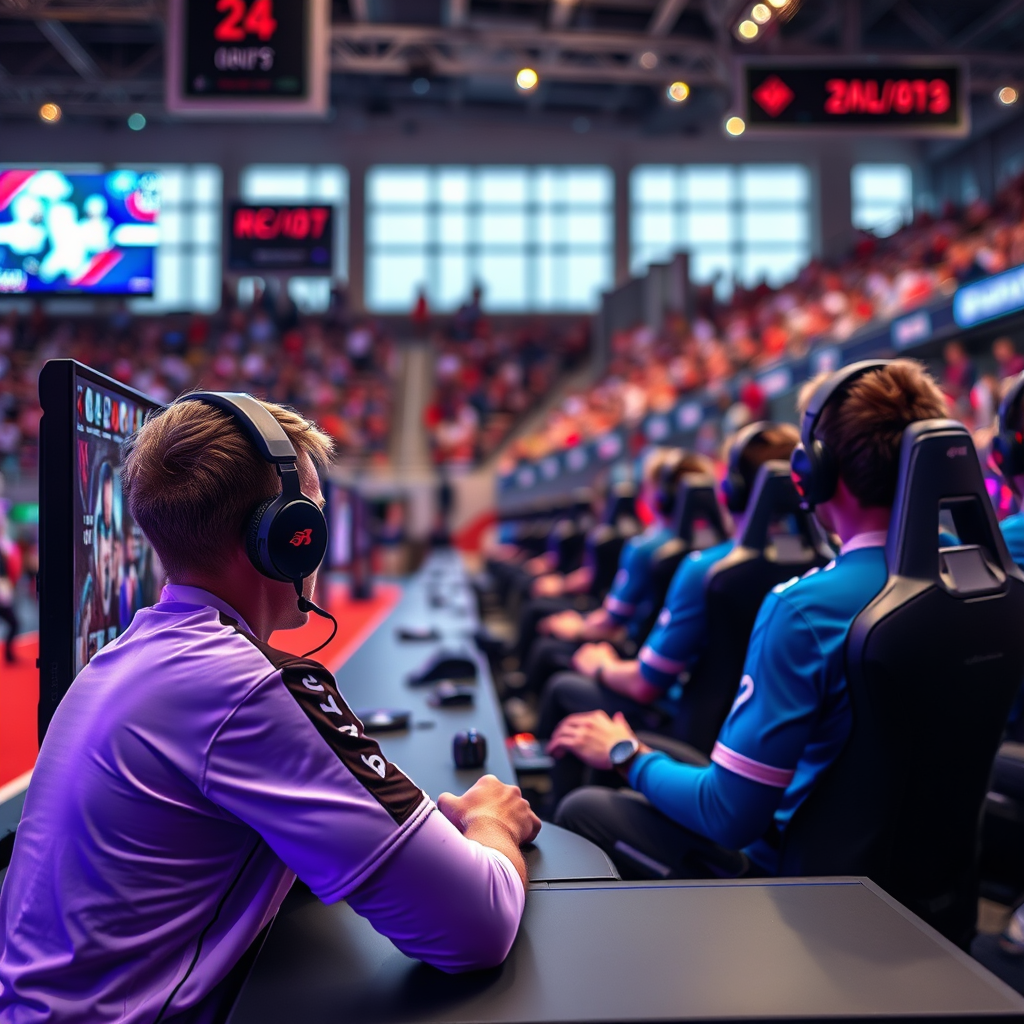
The journey of refresh rate technology has been a fascinating evolution, transitioning from the humble 60Hz to an impressive 240Hz, and now racing towards 480Hz. Each leap has brought significant enhancements in the gaming experience. Initially, 60Hz was the standard, primarily suitable for casual gaming and everyday tasks. As the demand for competitive gaming grew, so did the need for higher refresh rates. The introduction of 144Hz and later 240Hz displays marked a pivotal point, providing smoother gameplay and reducing screen tearing, which is critical in fast-paced titles such as first-person shooters and racing games.
Refresh rates play a crucial role in gaming performance and visual fidelity. A higher refresh rate means more frames per second are displayed, leading to a smoother visual experience. For players, this translates to better tracking of fast-moving objects, more precise aiming, and an overall increase in immersion. With 480Hz displays on the horizon, gamers can expect even greater advancements in these areas, creating a more dynamic and responsive gaming environment.
Benefits of 480Hz Displays for Gamers

The primary allure of 480Hz displays lies in their enhanced responsiveness, which can significantly improve reaction times. In competitive gaming, every millisecond counts. A monitor that refreshes at 480Hz can display frames every 2.08 milliseconds, allowing players to see and react to in-game events almost instantaneously. This responsiveness can give players a critical edge in high-stakes situations where split-second decisions can determine victory or defeat.
Moreover, the reduction in motion blur is another compelling advantage. As players execute rapid movements or engage in high-octane action, traditional displays may struggle to deliver clear visuals, resulting in a frustrating experience. With a 480Hz refresh rate, motion blur is minimized, providing crisp, clear images even during the most frenetic gameplay. This clarity enhances the player’s ability to track opponents and react accurately, further solidifying the competitive advantage that such displays offer.
Hardware Requirements for Optimal Performance
To fully harness the power of 480Hz refresh rate displays, gamers must ensure their systems are equipped with the necessary hardware. A robust graphics card is essential, as it needs to support the high frame rates these monitors can deliver. Many of the latest GPUs from manufacturers like NVIDIA and AMD are designed to meet this demand, but gamers should verify that their specific model can handle 480Hz output.
Additionally, processing power is critical. A high-refresh-rate monitor requires a capable CPU to maintain seamless gameplay without bottlenecks. Players should aim for a balance between their GPU and CPU to ensure that the entire system can deliver the performance required for competitive gaming. Furthermore, having sufficient RAM and fast storage solutions, such as SSDs, can also contribute to a smoother experience by reducing load times and enhancing overall system responsiveness.
Impact on Competitive Gaming
The introduction of 480Hz displays is poised to have a profound impact on competitive gaming. Tournament settings will likely adapt to incorporate these cutting-edge monitors, as sponsors and organizers aim to provide players with the best tools available. This shift could influence player strategies, as competitors may need to adjust their gameplay styles to maximize the advantages afforded by high-refresh-rate technology.
Feedback from professional gamers already hints at the potential benefits. Many eSports athletes have expressed their enthusiasm for higher refresh rates, noting that they enhance their performance and provide a more engaging experience. As more players transition to 480Hz displays, we can expect to see a rise in the overall skill level within the eSports community, as the technology encourages faster reflexes and sharper decision-making.
Potential Challenges and Considerations
While the advantages of 480Hz displays are compelling, there are potential challenges and considerations for gamers. One significant factor is the cost of upgrading. As with any cutting-edge technology, the price tag for 480Hz monitors is likely to be steep initially, which may deter some players from making the leap. However, as the technology matures and becomes more mainstream, prices may eventually drop, making it more accessible to a broader audience.
Compatibility is another concern. Not all games are optimized to take full advantage of such high refresh rates, particularly older titles. Players may need to invest in newer games or updates that support 480Hz to truly experience the benefits. Additionally, ensuring that existing hardware can handle 480Hz output without issues will be crucial to avoid disappointment.
Future Trends in Display Technology
Looking beyond 480Hz, the landscape of display technology continues to evolve. We may see advancements that push refresh rates even higher, alongside improvements in resolution and color accuracy. Technologies like OLED and mini-LED are also gaining traction, promising to enhance visual quality and contrast, which can complement high refresh rates beautifully.
Adaptive sync technologies, such as NVIDIA’s G-SYNC and AMD’s FreeSync, will likely play a crucial role in future developments. These technologies synchronize the display’s refresh rate with the GPU’s output, eliminating screen tearing and stuttering, thus enhancing the gaming experience even further. As we look to the future, the integration of these technologies with 480Hz displays could redefine how gamers interact with their favorite titles.
The introduction of 480Hz refresh rate displays is set to transform the landscape of eSports, providing gamers with the tools needed to excel. As these displays become more accessible, players should consider the benefits and prepare for the next wave of competitive gaming enhancements. With a deeper understanding of the technology and its advantages, gamers can stay ahead of the curve in this fast-evolving industry. Embracing this technology may very well be the key to unlocking the next level of performance in the thrilling world of eSports.
Frequently Asked Questions
What are the benefits of using a 480Hz refresh rate display for eSports gaming?
A 480Hz refresh rate display provides incredibly smooth motion and responsiveness, which is crucial in fast-paced eSports games. This high refresh rate minimizes motion blur and enhances visual clarity during rapid movements, allowing players to react faster and make more precise decisions. Additionally, it reduces input lag, which is essential for competitive gaming, ensuring that players experience real-time feedback that can make a difference in high-stakes matches.
How does a 480Hz refresh rate compare to lower refresh rates, like 144Hz or 240Hz?
Compared to lower refresh rates like 144Hz or 240Hz, a 480Hz refresh rate offers significantly smoother visuals and greater fluidity in motion. This is particularly beneficial in eSports, where even the slightest delay can impact performance. While most gamers may not notice a drastic difference between 240Hz and 480Hz in casual play, competitive players will appreciate the enhanced responsiveness and clarity that comes with the higher refresh rate, especially during fast-paced action sequences.
Why should eSports professionals consider upgrading to a 480Hz monitor?
eSports professionals should consider upgrading to a 480Hz monitor because it provides a competitive edge in performance and reaction times. The ultra-high refresh rate helps reduce visual artifacts, making it easier to track fast-moving targets. Additionally, the improved response time can directly influence in-game performance, allowing players to achieve better accuracy and quicker reactions, which are crucial in high-pressure gaming environments.
What should gamers look for in a 480Hz monitor for eSports?
When selecting a 480Hz monitor for eSports, gamers should look for features such as low input lag, high response time (ideally 1ms or less), and adaptive sync technologies like G-Sync or FreeSync to prevent screen tearing. Additionally, consider factors like panel type (e.g., TN for faster response times or IPS for better color accuracy), resolution, and ergonomics. These features combined will ensure an optimal gaming experience tailored for competitive play.
Which games will benefit the most from a 480Hz refresh rate display?
Fast-paced games such as first-person shooters (FPS) like “Counter-Strike: Global Offensive,” battle royale games like “Fortnite,” and racing simulations can greatly benefit from a 480Hz refresh rate display. These genres demand quick reflexes and precise aiming, making the advantages of higher refresh rates particularly noticeable. As eSports continue to evolve, games that prioritize speed and competitive play will increasingly leverage the benefits of 480Hz technology.
References
- Refresh rate
- https://www.sciencedirect.com/science/article/pii/S0360132318304165
- https://www.nytimes.com/2020/09/21/technology/esports-gaming-technology.html
- https://www.techradar.com/news/the-future-of-gaming-displays
- https://www.bbc.com/news/technology-53122906
- https://www.itu.int/en/ITU-T/focusgroups/esports/Pages/default.aspx
- https://www.nature.com/articles/s41598-020-73009-2