AI-powered emotion detection in videos is set to transform our interactions with visual content by offering personalized experiences that resonate with the viewer’s emotional state. This innovative technology allows machines to analyze facial expressions, voice tones, and even body language to interpret human emotions accurately. As a result, it paves the way for tailored viewing experiences, sophisticated marketing strategies, and enhanced mental health applications. In this article, we’ll delve into the advancements, applications, and ethical considerations surrounding this groundbreaking technology, highlighting its potential to reshape various industries.
The Advancements in AI Emotion Detection

Machine Learning Algorithms:
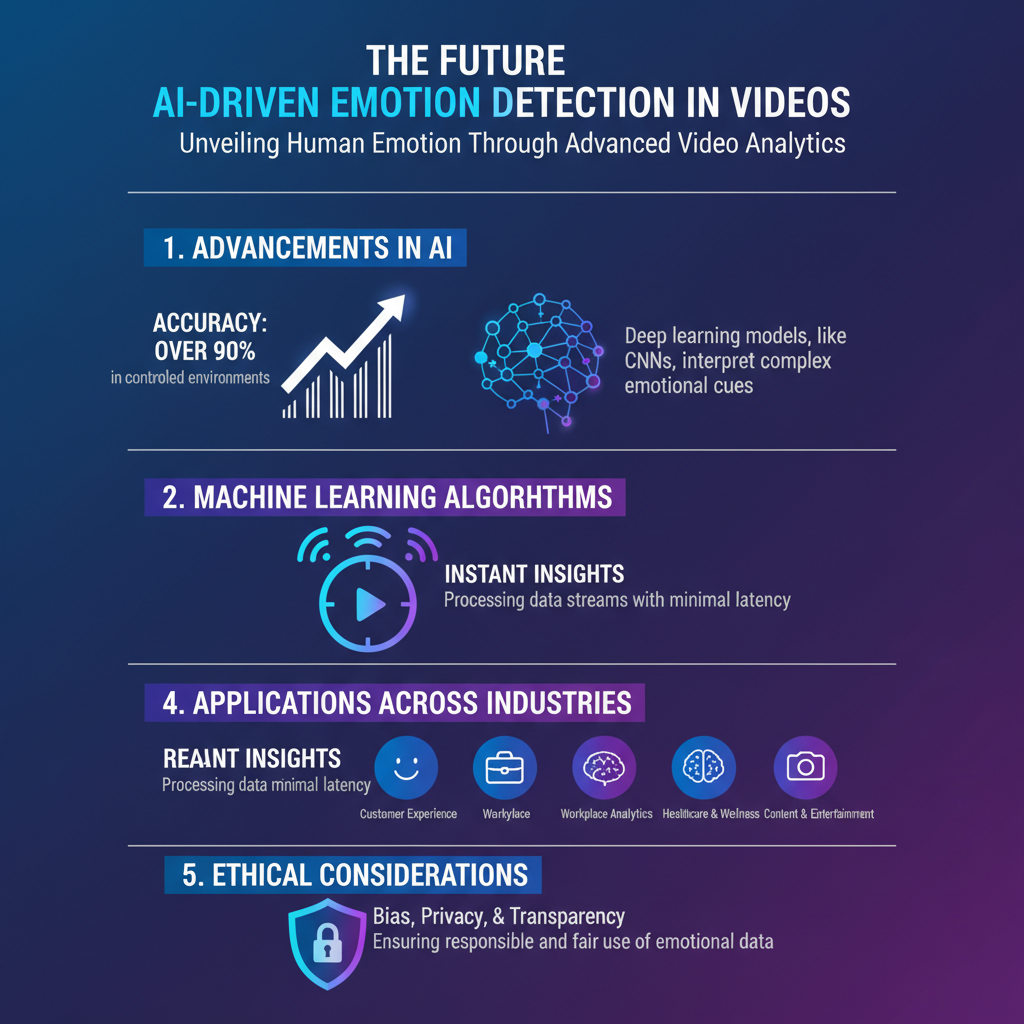
At the heart of AI-driven emotion detection lies the power of machine learning algorithms. Deep learning, particularly through the use of neural networks, has significantly improved the accuracy of emotion recognition systems. These algorithms are trained on vast datasets containing thousands of examples of human emotions, enabling them to identify subtle cues in facial expressions, voice modulations, and even physiological responses. For instance, companies like Affectiva have developed emotion recognition technology that can detect a range of emotions such as happiness, sadness, anger, and surprise with remarkable precision. This advancement not only enhances the capabilities of emotion detection systems but also ensures that they can adapt and learn over time, becoming more efficient with increased usage.
Real-Time Processing:
Another exciting development is the ability to process emotions in real-time, especially during live video feeds. This contrasts sharply with traditional emotion detection methods that often rely on pre-recorded content. Real-time analysis allows for immediate feedback and interaction, opening up possibilities in various applications, such as live streaming platforms and virtual events. For example, a live sports event could harness this technology to gauge the audience’s emotional responses, allowing broadcasters to adapt content dynamically based on viewer reactions. This instant feedback loop creates a more engaging and interactive experience, making viewers feel more connected to the content.
Applications in Entertainment and Media

Personalized Content Recommendations:
One of the most exciting applications of AI emotion detection is its ability to provide personalized content recommendations. Streaming platforms like Netflix are increasingly utilizing this technology to analyze viewer emotions and tailor their suggestions accordingly. By understanding what makes viewers happy, sad, or excited, these platforms can recommend films and shows that align with the viewer’s current mood, enhancing the overall viewing experience. Imagine logging into your favorite streaming service and being greeted with a curated list of movies based on your emotional state—how cool is that?
Enhanced Storytelling Techniques:
Filmmakers are also starting to explore how emotion analysis can inform their storytelling techniques. By gauging audience reactions during test screenings, directors and producers can identify which scenes resonate well with viewers and which do not. This data-driven approach allows for more refined storytelling, ensuring that films not only entertain but also evoke the intended emotional responses. For example, if a particular scene is found to evoke a stronger emotional reaction, filmmakers can choose to amplify those elements in the final cut, ultimately enhancing audience engagement.
Impacts on Marketing and Advertising
Targeted Advertising:
In the realm of marketing, brands are leveraging AI-driven emotion detection to create emotionally resonant advertising campaigns. By analyzing viewer responses to different advertisements, companies can understand which emotions drive engagement and conversion. For instance, a brand may discover that humorous ads elicit more positive responses in their target demographic, leading them to focus on creating lighthearted content that resonates emotionally. This data-driven approach not only increases the effectiveness of marketing strategies but also fosters a deeper connection between brands and consumers.
Consumer Insight:
Moreover, emotion detection technology provides invaluable insights for market research and product development. By analyzing how consumers emotionally respond to products or advertisements, companies can gather qualitative data that goes beyond traditional surveys. For example, if a new product launch is met with enthusiasm and joy in consumer reactions, brands can capitalize on that positive sentiment to enhance marketing efforts. This ability to tap into genuine emotional responses can inform everything from product design to customer service strategies.
Benefits for Mental Health
Therapeutic Tools:
AI emotion detection holds immense potential in the mental health sector. By monitoring patients’ emotional states through video sessions, therapists can gain insights that might not be verbally communicated. This technology can serve as a therapeutic tool, allowing mental health professionals to tailor their approaches based on real-time emotional feedback. For instance, if a patient appears anxious during a session, the therapist can adjust their techniques to provide more comfort and support.
Remote Support:
Furthermore, emotion detection can play a crucial role in providing remote support for individuals undergoing virtual therapy sessions. In a world where mental health resources are increasingly being delivered online, understanding a patient’s emotional state through video can enhance the effectiveness of therapy. For instance, AI algorithms can alert therapists if a patient shows signs of distress during a session, allowing for timely interventions. This capability not only improves the quality of care but also makes mental health support more accessible and responsive.
Ethical Considerations and Challenges
Privacy Concerns:
As with any emerging technology, AI emotion detection raises significant ethical considerations, particularly regarding privacy. The collection and analysis of emotional data can lead to concerns surrounding user consent and data security. It’s essential for companies to ensure that users are aware of how their emotional data is being collected, used, and stored. Transparency is key to building trust between consumers and technology providers, and it’s crucial that ethical guidelines are established to govern the use of this technology.
Misinterpretation Risks:
Additionally, there are risks associated with potential misinterpretation of emotional data. An inaccurate reading of someone’s emotional state could lead to inappropriate responses, whether in marketing, mental health, or other areas. For example, if an algorithm misinterprets a person’s expression of discomfort as confusion, it could result in misguided interventions or recommendations. Therefore, it’s vital to continuously refine these technologies and ensure that human oversight is involved in critical applications.
The Future Landscape of Emotion Detection
Integration with Other Technologies:
Looking ahead, the integration of AI emotion detection with other technologies like virtual reality (VR) and augmented reality (AR) holds great promise. Imagine a VR experience that adapts in real-time to your emotional responses, creating an immersive environment tailored to your feelings. Such applications could revolutionize gaming, education, and therapy, providing users with experiences that resonate on a deeply emotional level.
Potential Developments:
Future enhancements could also see AI systems becoming more empathetic, with the ability to understand and respond to complex human emotions. As researchers continue to refine emotion detection algorithms, the potential for creating machines that can genuinely empathize with humans increases. This evolution could lead to applications in customer service, healthcare, and personal assistants that not only respond to commands but also understand emotional nuances.
As AI-powered emotion detection continues to evolve, it promises significant benefits across various sectors, from entertainment to mental health. With the ability to provide personalized experiences, enhance storytelling, and improve therapeutic interventions, the future is bright for this technology. However, a careful balance between innovation and ethical responsibility is crucial. As we navigate this exciting landscape, staying informed about developments in AI emotion detection will empower us to leverage its capabilities while ensuring we prioritize user privacy and emotional well-being.
Frequently Asked Questions
What is AI-powered emotion detection in videos and how does it work?
AI-powered emotion detection in videos refers to the use of artificial intelligence algorithms to analyze visual and auditory cues in video content to determine the emotions expressed by individuals. This technology typically employs machine learning techniques, including facial recognition and voice analysis, to identify emotional states such as happiness, sadness, anger, or surprise. By processing large datasets of labeled emotional expressions, these systems can learn to interpret human emotions in real-time, enhancing user experience in areas like marketing, entertainment, and mental health analysis.
How can businesses benefit from using AI emotion detection technology in their video content?
Businesses can leverage AI emotion detection technology to enhance customer engagement and improve marketing strategies by understanding viewer reactions to their content. By analyzing emotional responses, companies can tailor their messaging, optimize content for target audiences, and increase conversion rates. Additionally, this technology can be used in customer service to gauge satisfaction levels during interactions, allowing for more personalized and effective communication.
Why is AI emotion detection important for content creators and marketers?
AI emotion detection is crucial for content creators and marketers because it provides insights into audience engagement and emotional responses to content. By understanding how viewers feel about specific videos or marketing campaigns, creators can refine their strategies, improve content quality, and foster deeper connections with their audience. This data-driven approach not only enhances creativity but also ensures that marketing efforts resonate with target demographics, leading to better results in terms of reach and impact.
What are the ethical implications of using AI-powered emotion detection in videos?
The ethical implications of AI-powered emotion detection in videos revolve around privacy concerns and the potential for misuse of emotional data. As this technology can analyze personal emotions, it raises questions about consent, data security, and the potential for manipulation. It is vital for developers and businesses to implement transparent practices and ensure that users are informed about how their emotional data is being used, maintaining ethical standards that prioritize user trust and privacy.
Which industries are most likely to adopt AI emotion detection technology in the near future?
Industries that are most likely to adopt AI emotion detection technology include entertainment, healthcare, education, and marketing. In entertainment, filmmakers and advertisers can use this technology to gauge audience reactions and optimize content accordingly. In healthcare, it can assist in mental health assessments by analyzing emotional responses. Educational platforms may utilize it to enhance learning experiences, while marketers can refine campaigns based on emotional insights, making it a versatile tool across various fields.
References
- https://www.sciencedirect.com/science/article/pii/S0360132321000337
- Publisher Correction: Antimicrobial spray nanocoating of supramolecular Fe(III)-tannic acid metal…
- https://www.bbc.com/news/technology-58034738
- https://www.forbes.com/sites/bernardmarr/2021/07/19/the-future-of-ai-in-video-content-what-you-need-to-know/?sh=25b3f8316e3b
- https://www.theguardian.com/technology/2022/jun/15/artificial-intelligence-emotion-detection-video
- Planning as an Iterative Process | Proceedings of the AAAI Conference on Artificial Intelligence
- https://www.ncbi.nlm.nih.gov/pmc/articles/PMC7917263/
- https://www.wired.com/story/ai-emotion-detection-videos/