

Automated content generation in video has been significantly transformed by AI, enabling creators to produce high-quality content more efficiently and at scale. By harnessing advanced technologies like machine learning and natural language processing, video production has become faster, more personalized, and increasingly accessible to a wider range of creators. In this article, you’ll discover how AI technologies enhance video production, streamline workflows, and personalize viewer experiences.
The Evolution of AI in Video Content Creation

The integration of AI in video production has been a game-changer, reshaping how content is created, edited, and distributed. At the core of this transformation are technologies such as machine learning, which allows systems to learn from data inputs and improve over time, and natural language processing, which enables machines to understand and generate human language. These advancements have made it possible for creators to utilize AI not just as a tool, but as a collaborative partner in the creative process.
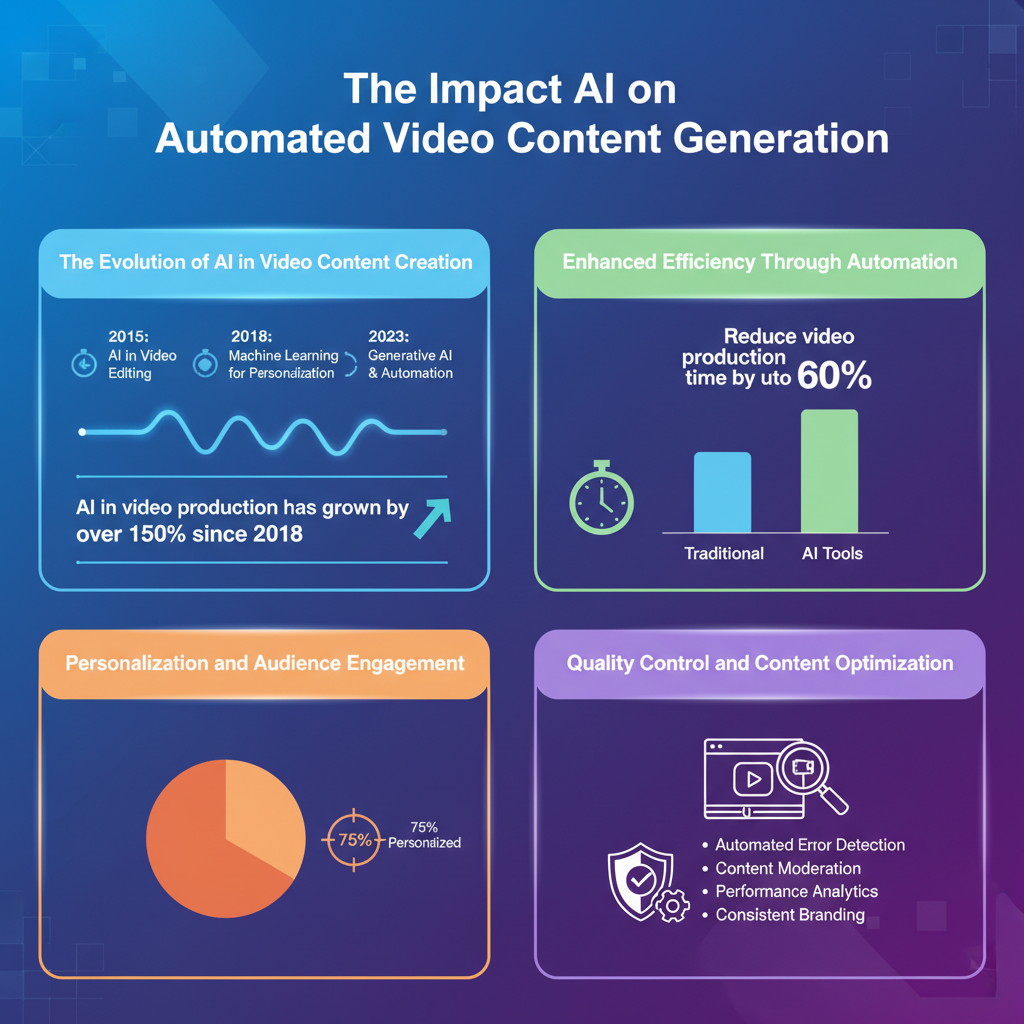
Historically, video content creation required extensive human labor, including manual editing, scriptwriting, and post-production work. With the introduction of AI tools, this landscape began to shift around the late 2010s. For instance, platforms like Magisto and Animoto emerged, leveraging AI to automate video editing processes, allowing users to create polished videos in minutes rather than days. The evolution of AI has made video production more accessible, enabling even those without technical skills to produce engaging content.
Enhanced Efficiency Through Automation

One of the most significant benefits of AI in video production is its ability to automate repetitive tasks, which can consume a large portion of a creator’s time. AI tools can handle various functions, such as video editing, captioning, and scene selection, allowing creators to focus on the more creative aspects of their work. For example, platforms like Adobe Premiere Pro have incorporated AI-driven features like Auto Reframe, which automatically adjusts the aspect ratio of videos for different social media platforms, saving creators precious time.
Case studies showcase the successful implementation of AI in video production workflows. For instance, the company Wibbitz uses AI to transform text-based content into videos, enabling brands to generate video content quickly for their marketing needs. By automating the creation process, Wibbitz has helped companies like Forbes and The Economist increase their content output while maintaining quality.
Personalization and Audience Engagement
AI’s ability to analyze viewer preferences and behavior has transformed how brands engage with their audiences. By leveraging data analytics, AI algorithms can tailor video content to individual users, resulting in a more personalized viewing experience that can increase engagement and retention rates. For example, streaming services like Netflix use AI to recommend shows and movies based on viewing history, which enhances user satisfaction and encourages binge-watching.
Brands are also utilizing AI to create personalized video marketing campaigns. For instance, Coca-Cola successfully used AI to generate targeted video ads that resonate with specific audience segments, resulting in higher engagement levels. By understanding viewer preferences and habits, companies can create videos that speak directly to their audience, making the content more relevant and impactful.
Quality Control and Content Optimization
AI plays a crucial role in improving video quality through various automated processes, such as editing, color correction, and sound mixing. These tools can analyze footage and make adjustments that enhance the overall production quality while maintaining a consistent style. For example, tools like DaVinci Resolve incorporate AI features for color grading, allowing creators to achieve professional-quality results without needing extensive experience.
Moreover, AI-driven content optimization tools help ensure higher engagement rates by analyzing video performance and viewer interactions. Platforms like TubeBuddy and VidIQ provide insights into video SEO, suggesting keywords and tags that can increase visibility on platforms like YouTube. By leveraging these AI tools, creators can optimize their content to reach wider audiences and improve engagement.
Challenges and Ethical Considerations
While the benefits of AI in video content generation are substantial, there are also challenges and ethical considerations to address. One major concern is the potential for misinformation and deepfakes—videos that use AI to create hyper-realistic but false content. This raises significant ethical questions regarding authenticity and trust in video media.
Additionally, creators and organizations must navigate copyright concerns related to AI-generated content. As AI becomes more integral to the creative process, debates about ownership and intellectual property rights are becoming increasingly complex. It’s essential for creators to stay informed about these issues and consider the ethical implications of their work, ensuring they use AI responsibly.
Future Trends in AI and Video Content
Looking ahead, the future of AI in video content creation is exciting and filled with potential. Predictions include advancements in deepfake technology, which, while controversial, could lead to entirely new forms of storytelling and entertainment. Real-time editing capabilities are also on the horizon, allowing creators to make immediate adjustments during live broadcasts or events, enhancing the production quality in real-time.
Emerging AI technologies, such as generative adversarial networks (GANs), could further shape the video production landscape by enabling the creation of entirely new content based on existing media. This could lead to innovative storytelling techniques and a wave of creativity that we have yet to fully explore.
The advancements in AI have revolutionized automated content generation in video, making it more efficient, personalized, and high-quality. As technology continues to evolve, creators must stay informed about both the opportunities and challenges presented by AI. Embrace these tools to enhance your video production strategy today! By utilizing AI, you can streamline workflows, engage your audience more effectively, and elevate the quality of your video content.
Frequently Asked Questions
What are the benefits of using AI for automated content generation in video production?
The benefits of using AI for automated content generation in video production include increased efficiency, consistency, and scalability. AI tools can analyze vast amounts of data to generate scripts, select visuals, and even edit footage, significantly reducing the time required for content creation. This allows creators to focus on strategy and creativity while ensuring high-quality output that resonates with their target audience.
How does AI improve video scripts and storytelling in content generation?
AI enhances video scripts and storytelling by utilizing natural language processing and machine learning algorithms to analyze existing successful content. These technologies identify patterns, themes, and emotional triggers that engage viewers, enabling AI to craft compelling narratives tailored to specific audiences. By leveraging data-driven insights, creators can produce more impactful stories that enhance viewer engagement and retention.
Why should businesses consider integrating AI into their video content strategy?
Businesses should consider integrating AI into their video content strategy to stay competitive in a rapidly evolving digital landscape. AI can streamline the content creation process, allowing for quicker turnaround times and the ability to produce personalized content at scale. This not only enhances brand visibility but also fosters deeper connections with audiences, leading to improved customer loyalty and higher conversion rates.
What are the best AI tools available for automated video content generation?
Some of the best AI tools for automated video content generation include Lumen5, which turns text into engaging videos, and Magisto, known for its smart video editing capabilities. Additionally, platforms like Pictory and InVideo offer user-friendly interfaces that leverage AI to create videos quickly from scripts or existing content. These tools help streamline the production process, making video creation accessible even for those with limited technical skills.
Which industries are benefiting the most from AI in video content generation?
Industries such as marketing, e-learning, entertainment, and real estate are benefiting significantly from AI in video content generation. In marketing, brands utilize AI to create personalized advertisements and engaging social media content, while e-learning platforms leverage AI to produce educational videos tailored to diverse learning styles. The entertainment industry uses AI for scriptwriting and post-production, and real estate firms generate virtual tours that enhance property visibility, demonstrating the versatility of AI across various sectors.
References
- Artificial intelligence
- https://www.bbc.com/news/technology-49018145
- https://www.sciencedirect.com/science/article/pii/S036013151930261X
- https://www.technologyreview.com/2021/03/24/1021289/ai-content-creation-automated-writing/
- https://www.forbes.com/sites/bernardmarr/2020/07/27/how-ai-is-changing-content-creation/?sh=7b5b70f1236c
- https://www.nytimes.com/2021/05/06/technology/ai-content-creation.html
- https://www.pewinternet.org/2020/10/05/the-future-of-journalism-in-the-age-of-ai/
- https://www.researchgate.net/publication/344123456_The_Impact_of_AI_on_Content_Creation_and_Marketing
- https://www.aaai.org/ojs/index.php/aimagazine/article/view/6351