
The integration of AI technology significantly enhances gaming monitor response times, providing gamers with smoother visuals and reduced lag. By leveraging machine learning algorithms and predictive analytics, AI optimizes display performance, ensuring a competitive edge. In this article, we will explore how AI is transforming gaming monitors and what it means for gamers.
Understanding Response Times in Gaming Monitors
Response time refers to the speed at which a pixel can change from one color to another, typically measured in milliseconds (ms). In gaming, response time is crucial because it directly affects how quickly a display can keep up with fast-moving images. High response times can result in ghosting or motion blur, which can be detrimental during fast-paced gaming scenarios, such as first-person shooters or racing games.
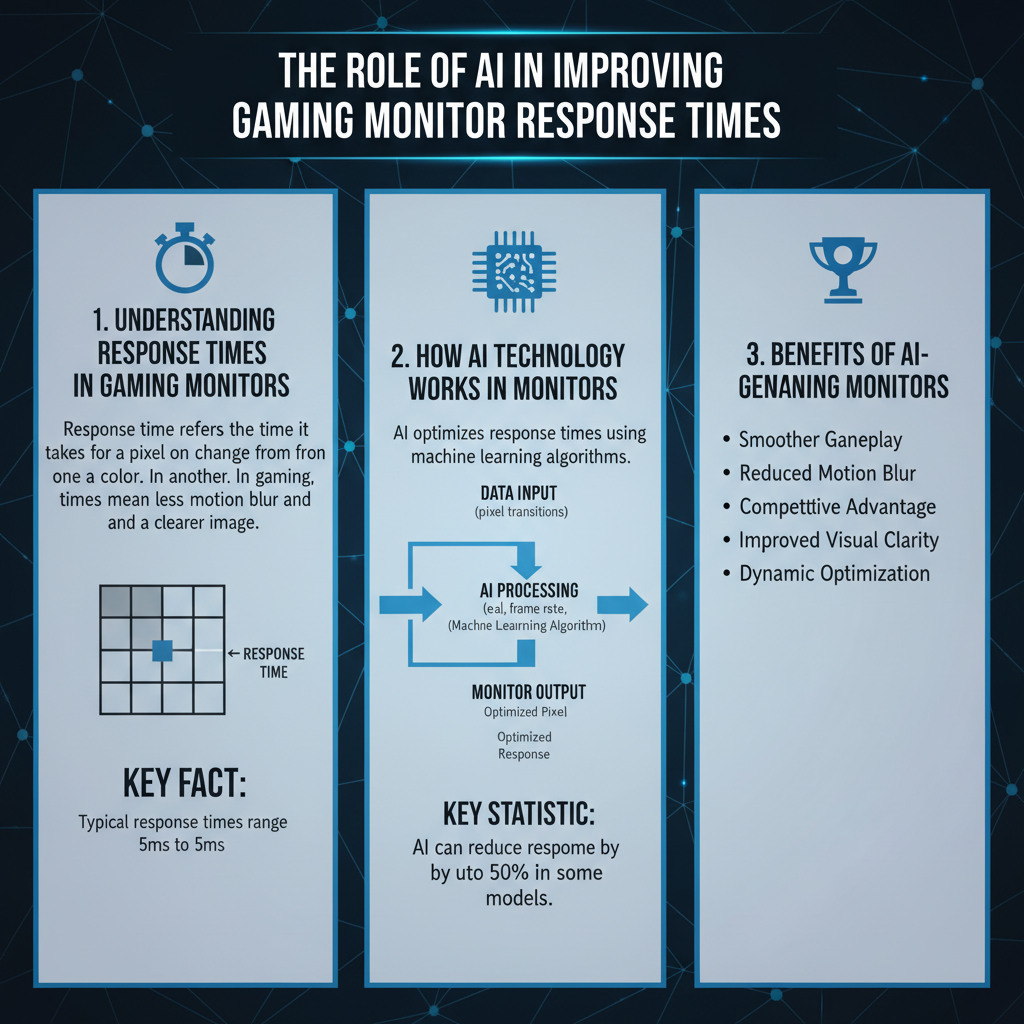
Low response times enhance the user experience by providing sharper images and more accurate color representation, allowing gamers to react swiftly to in-game events. For example, a response time of 1 ms is often ideal for competitive gaming, as it minimizes lag and ensures that players can see their actions reflected on-screen almost instantaneously. As gaming becomes more immersive and demanding, understanding response times is essential for anyone looking to gain an advantage.
How AI Technology Works in Monitors
AI technology in gaming monitors primarily utilizes machine learning algorithms to analyze and predict performance metrics. These algorithms can adjust various settings in real-time to optimize response times and overall display quality. For instance, AI can assess the content being displayed and make adjustments to reduce input lag and enhance visual clarity.
Machine learning plays a pivotal role in this process by learning from previous gaming sessions. It can identify patterns in gameplay, such as movement speeds and color transitions, and adjust the monitor’s performance accordingly. This predictive capability means that the monitor can proactively ensure that response times remain low, keeping gameplay smooth and immersive without requiring manual adjustments from the gamer.
Benefits of AI-Enhanced Gaming Monitors
One of the most significant benefits of AI-enhanced gaming monitors is improved visual clarity. By reducing motion blur, gamers can enjoy a more lifelike and immersive experience. This is particularly important in fast-paced games where every millisecond counts. For example, when playing a racing game, AI technology can ensure that objects moving at high speeds remain clear and detailed, allowing players to make split-second decisions.
Moreover, AI enhances synchronization between the monitor and the graphics output of the gaming system. Technologies like Adaptive Sync and NVIDIA G-SYNC, powered by AI, help eliminate screen tearing and stuttering, resulting in smoother gameplay. This synchronization allows for a more fluid visual experience, which is critical for maintaining competitive performance in online gaming.
AI’s Role in Customizing Gaming Experiences
AI’s ability to customize gaming experiences is one of its most exciting features. By analyzing player behavior and preferences, AI can create personalized settings that enhance comfort and performance. For example, if a player frequently engages in strategy games, the monitor can adjust its color settings and refresh rates to optimize visibility of important details.
Additionally, AI can make real-time adjustments based on the gaming genre. In a fast-paced shooter, for instance, the monitor might prioritize quick refresh rates and low lag, while in a slower-paced role-playing game, it might adjust to improve color accuracy and contrast. This level of customization not only enhances gameplay but also allows gamers to tailor their experiences to fit their unique styles.
Case Studies: AI in Action
Several gaming monitor brands have already begun to harness the power of AI to enhance performance. For example, ASUS’s ROG Swift series utilizes AI-powered features to minimize input lag and improve refresh rates, resulting in a more responsive gaming experience. Users have reported a noticeable difference in gameplay, particularly in competitive scenarios where every millisecond matters.
Another example is the LG UltraGear series, which integrates AI to optimize settings based on the type of game being played. Gamers have shared testimonials about how these AI features have significantly improved their overall experience, from smoother graphics to reduced eye strain during long gaming sessions. These real-world examples highlight how AI is not just a buzzword; it’s actively transforming the gaming landscape.
Future Trends in AI and Gaming Monitors
Looking ahead, the future of AI in gaming monitors is promising. We can expect advancements in response times and display technology that will continue to push the boundaries of what’s possible. For instance, innovations in AI could lead to even faster response times, potentially reaching sub-millisecond levels, which would be a game-changer for competitive gaming.
Moreover, as AI algorithms become more sophisticated, we might see monitors that can not only predict and adjust settings based on gameplay but also learn from the player’s style over time. This could create an even more seamless and personalized gaming experience, further blurring the lines between player and machine. The impact on competitive gaming and esports could be profound, with AI-enhanced monitors becoming essential tools for aspiring professional players.
Choosing the Right AI-Enhanced Monitor
When selecting an AI-enhanced gaming monitor, there are several key features to consider. Look for monitors that advertise low response times (ideally 1 ms or lower) and high refresh rates (144Hz or more) to ensure smooth gameplay. Additionally, check for compatibility with AI-powered technologies like NVIDIA G-SYNC or AMD FreeSync, which help synchronize your graphics card and monitor for optimal performance.
Budget is another critical factor. While high-end monitors with advanced AI features can be costly, there are mid-range options that still offer impressive performance. Research and read reviews to find a monitor that balances performance with your budget. Investing in a quality gaming monitor can significantly enhance your gaming experience, making it a worthwhile consideration.
The advancements in AI technology are revolutionizing gaming monitors, offering gamers unprecedented levels of performance and responsiveness. By understanding how AI enhances response times, gamers can make informed choices about their equipment to improve their gaming experience. Don’t miss out on the benefits of AI—explore the latest gaming monitors to find the perfect fit for your needs!
Frequently Asked Questions
What is the importance of response time in gaming monitors?
Response time is crucial for gaming monitors as it measures how quickly a pixel can change from one color to another, impacting the clarity and fluidity of fast-moving images. A lower response time, typically 1ms to 5ms, reduces motion blur and ghosting, which are detrimental to gaming performance, especially in fast-paced genres like first-person shooters. Enhanced response times ensure smoother visuals, allowing gamers to react more quickly to in-game actions.
How does AI technology improve response times in gaming monitors?
AI technology enhances response times in gaming monitors by utilizing algorithms that predict and preemptively adjust pixel transitions based on the anticipated frame content. This means that rather than waiting for a signal from the graphics card, the monitor can optimize the display settings in real-time, reducing lag and improving overall responsiveness. As a result, gamers experience sharper images and reduced latency, leading to a more immersive gaming experience.
Why should I consider a gaming monitor with AI enhancements for esports?
Choosing a gaming monitor with AI enhancements is vital for esports due to the competitive nature of these games, where every millisecond counts. AI-driven monitors can significantly reduce input lag and motion blur, enabling players to have a clearer view of the action and react faster than opponents using standard monitors. This technology can provide a competitive edge, enhancing precision and performance during critical moments in high-stakes matches.
Which features should I look for in a gaming monitor to ensure optimal response times?
When selecting a gaming monitor for optimal response times, look for features such as a low response time rating (1ms to 5ms), high refresh rates (144Hz or higher), and adaptive sync technologies like G-Sync or FreeSync. Additionally, monitors with AI enhancements that leverage machine learning to predict frame transitions can greatly improve visual performance. Finally, ensure the monitor has a fast input lag rating for the most responsive gaming experience.
What are the best gaming monitors available with AI technology to enhance response times?
Some of the best gaming monitors featuring AI technology for enhanced response times include the ASUS ROG Swift PG259QN, which boasts an impressive 360Hz refresh rate and NVIDIA G-Sync technology, and the Acer Predator X25, known for its 1ms response time and AI-driven features. Other notable mentions are the Dell Alienware AW2521H and the Samsung Odyssey G7, both of which combine high refresh rates, low response times, and AI enhancements for an exceptional gaming experience.
References
- Computer monitor
- https://www.sciencedirect.com/science/article/pii/S1877050919315351
- https://www.nytimes.com/2021/07/20/technology/technology-gaming.html
- https://www.techrepublic.com/article/how-ai-is-changing-the-way-games-are-made-and-played/
- https://www.bbc.com/news/technology-49079557
- https://www.wired.com/story/artificial-intelligence-video-games/
- https://www.npr.org/sections/alltechconsidered/2018/11/29/671830154/how-ai-is-transforming-the-future-of-gaming
- https://www.researchgate.net/publication/330312826_Artificial_intelligence_in_video_games
- Blogs recent news | Game Developer