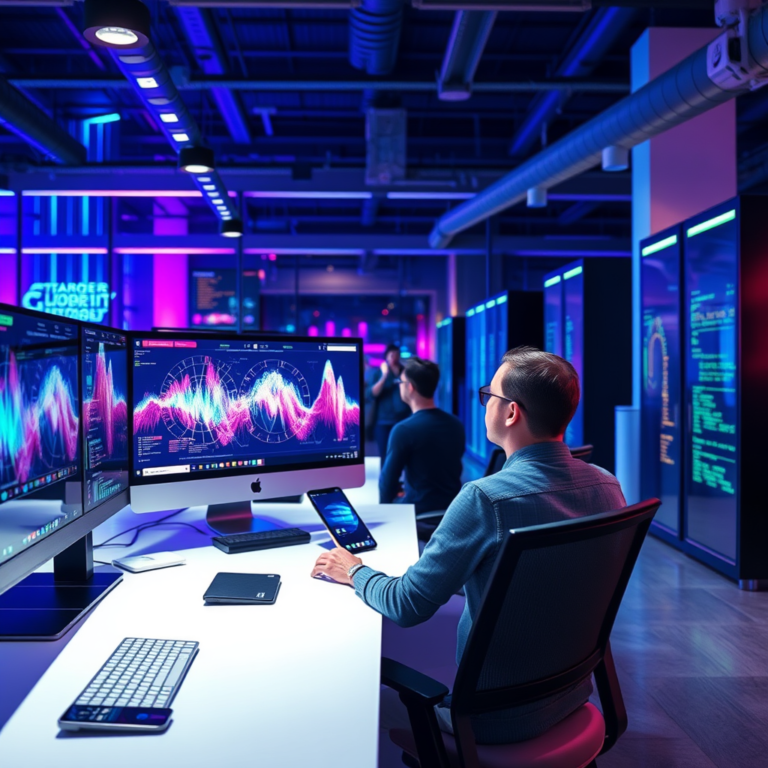

Real-time depth mapping powered by AI is revolutionizing video effects by allowing creators to generate immersive, three-dimensional environments with unprecedented accuracy. This technology enhances visual storytelling by rendering depth information in real-time, making video content more engaging and visually compelling. In this article, you’ll learn how AI is transforming depth mapping and its implications for the future of video production.
Understanding Depth Mapping

Depth mapping is the process of creating a three-dimensional representation of a scene by measuring the distance between objects and the camera. Essentially, it helps in understanding how far away different elements are from the viewer, which is crucial for creating realistic visual experiences. This technique is not only fundamental to various applications—including augmented reality (AR), virtual reality (VR), and cinematic effects—but it also plays a significant role in how we perceive depth in our everyday lives.
In practical terms, depth maps can be generated using various methods, such as stereo vision, where two cameras capture the same scene from different angles, or through depth-sensing cameras that use infrared light. Depth mapping can effectively separate foreground from background, allowing for enhanced object recognition and interaction. As a result, it has become a cornerstone technology for industries ranging from gaming to film, where depth perception is critical for viewer immersion.
The Integration of AI in Depth Mapping

The integration of AI algorithms into depth mapping takes this technology to the next level. These algorithms analyze video frames to predict and generate depth information dynamically, using techniques such as convolutional neural networks (CNNs) to interpret visual data. Unlike traditional methods that rely heavily on hardware or pre-calibrated settings, AI-driven depth mapping can adapt and improve itself over time. As machine learning models encounter new scenes, lighting conditions, and object types, they become increasingly accurate, effectively learning from their experiences.
For instance, AI can now differentiate between various surfaces and textures, which allows for more nuanced depth perception. If a scene contains a person walking in front of a busy background, AI can effectively identify the person and maintain accurate depth cues relative to the surroundings. This not only reduces the workload for video editors but also enhances the overall quality of visual effects, making them look more natural and lifelike.
Benefits of Real-Time Depth Mapping
One of the most significant benefits of real-time depth mapping is that it enhances the viewer’s experience by providing realistic depth cues, making scenes more engaging. When viewers can perceive depth accurately, they feel more connected to the content. Whether it’s a horror film or a breathtaking nature documentary, the illusion of three-dimensional space can significantly elevate the emotional impact.
Moreover, real-time depth mapping facilitates complex visual effects, such as accurate object occlusion and interaction in AR and VR settings. Imagine playing a VR game where a character can duck behind a realistically rendered tree; the tree’s depth map allows the game to render the character correctly behind it, creating a seamless experience. This capability is especially valuable in fields like architecture and design, where professionals can visualize their projects in immersive environments.
Applications in Video Effects
Real-time depth mapping is transforming how video effects are created and experienced. For instance, in the film industry, it allows for the seamless blending of CGI (computer-generated imagery) with live-action footage. Movies like “Avatar” and “The Lion King” have utilized advanced depth mapping techniques to create stunning visuals that transport audiences into fantastical worlds. By incorporating AI-driven depth mapping, filmmakers can achieve levels of realism that were once thought impossible.
In the gaming industry, real-time depth mapping is critical for creating immersive environments that respond to player actions. Titles like “Half-Life: Alyx” leverage this technology to ensure that players can interact naturally with their surroundings, leading to a more engaging gaming experience. Furthermore, live broadcasting events, such as sports or concerts, can utilize depth mapping to enhance viewer engagement. For example, broadcasters can overlay graphics that react to the depth of players on the field, creating an interactive experience for viewers at home.
Challenges and Limitations
Despite its many advantages, AI-driven depth mapping is not without challenges and limitations. One of the primary hurdles is its performance in low-light conditions. While AI algorithms are improving, they can still struggle to accurately perceive depth when there is insufficient light or when surfaces are highly reflective. For example, a shiny surface, like a wet road or a glass window, can confuse depth sensors, leading to inaccuracies in the generated depth map.
Another technical challenge is ensuring consistency across frames. In video production, especially in fast-paced scenes, maintaining a stable depth map can be tricky. Any inconsistencies can break the immersion and distract viewers. Content creators need to invest time in refining their depth mapping techniques to overcome these hurdles, often requiring additional resources or hardware.
Future Trends and Innovations
Looking ahead, advancements in AI and computer vision will likely lead to more sophisticated depth mapping solutions. As researchers continue to explore innovative algorithms, we can expect improvements in accuracy and efficiency. For example, the integration of depth sensors with AI could enable real-time processing on consumer-grade devices, making this technology more accessible to independent filmmakers and content creators.
Furthermore, developments in mixed reality (MR) will push the boundaries of depth mapping. Imagine a world where filmmakers can easily create interactive, immersive experiences with depth mapping tools that operate seamlessly across various platforms. With the evolution of 5G technology, the potential for real-time depth mapping in cloud-based applications also presents exciting opportunities for collaborative projects in video production.
The integration of AI in real-time depth mapping is reshaping the landscape of video effects, making them more accessible and powerful for creators. As technology continues to evolve, the possibilities for immersive storytelling are expanding rapidly, inviting content creators to explore new horizons in their work. Consider experimenting with AI-driven tools in your next video project to see the impact firsthand. The future of video production is bright, and with AI at the forefront, it’s an exciting time to be a part of this industry.
Frequently Asked Questions
What is real-time depth mapping in video effects, and how does AI enhance it?
Real-time depth mapping is the process of determining the distance of objects in a video frame from the camera, allowing for the creation of immersive visual effects. AI enhances this by using advanced algorithms and machine learning techniques to analyze video data quickly and accurately, enabling dynamic adjustments to depth information in real time. This results in more realistic and engaging video effects, such as background blurring or 3D compositing.
How does AI improve the accuracy of depth mapping in video production?
AI improves the accuracy of depth mapping by utilizing deep learning models that can recognize and segment objects within a scene. These models are trained on vast datasets to understand various perspectives and lighting conditions, allowing them to predict depth more accurately than traditional methods. By continuously learning from new data, AI systems can adapt to different environments, enhancing the precision of depth information in video production.
Why is real-time depth mapping important for video effects in modern filmmaking?
Real-time depth mapping is crucial in modern filmmaking because it allows for the seamless integration of digital effects with live-action footage. This technology enables filmmakers to create visually stunning scenes with less post-production work, saving time and reducing costs. Furthermore, it enhances viewer engagement by providing a more immersive experience, as depth-aware effects can significantly elevate the storytelling aspect of a film.
What are the best AI tools for real-time depth mapping in video effects?
Some of the best AI tools for real-time depth mapping include NVIDIA’s Maxine, Adobe After Effects with Sensei AI, and DepthKit. These tools leverage state-of-the-art AI algorithms to provide filmmakers with powerful depth mapping capabilities, allowing for features like virtual backgrounds, interactive elements, and enhanced special effects. Choosing the right tool often depends on the specific needs of the project, such as budget, ease of use, and compatibility with existing workflows.
Which industries benefit the most from AI-driven real-time depth mapping technology?
Several industries benefit from AI-driven real-time depth mapping technology, including film and television, gaming, virtual reality, and augmented reality. In filmmaking, it enhances visual effects and storytelling, while in gaming, it allows for more interactive and immersive environments. Additionally, the AR and VR sectors utilize depth mapping to create realistic simulations and experiences, making it a versatile tool across creative and technical fields.
References
- Depth perception
- https://www.sciencedirect.com/science/article/pii/S0031320321001624
- https://www.nature.com/articles/s41598-019-52303-3
- https://www.researchgate.net/publication/339009130_Real-Time_Depth_Estimation_for_Visual_Effects
- https://www.microsoft.com/en-us/research/project/real-time-depth-mapping/
- https://www.bbc.com/future/article/20211029-how-ai-is-revolutionising-the-world-of-video
- https://www.igi-global.com/chapter/depth-mapping-using-ai-techniques/251238
- https://www.nytimes.com/2022/01/12/technology/artificial-intelligence-video.html
- https://www.technologyreview.com/2021/10/22/1039192/a-new-ai-technique-can-generate-3d-video-from-2d-images/