

Choosing between wired and wireless audio largely depends on your specific needs and preferences. Wired audio systems typically offer superior sound quality and reliability, while wireless options provide unmatched convenience and portability. In this article, you’ll learn the pros and cons of each type to help you decide which is the best fit for your audio experience.
Understanding Wired Audio

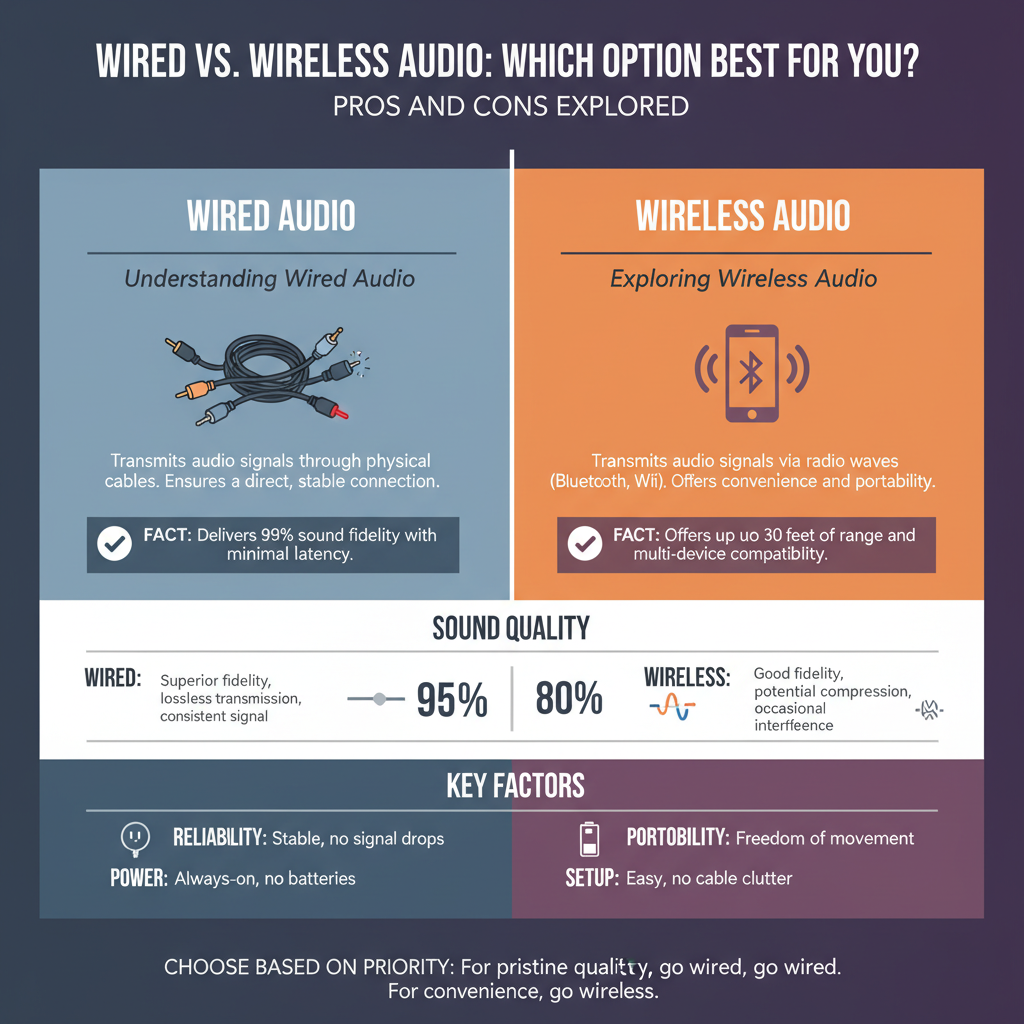
Wired audio systems, often seen in professional studios and high-end home setups, are known for their ability to deliver high fidelity sound with minimal latency. When you connect your devices using cables—like RCA, XLR, or optical—you benefit from a direct signal transfer that ensures the audio remains pure and unaltered. This makes wired audio a go-to choice for audiophiles who appreciate the nuances of sound and seek the best possible listening experience. Additionally, wired systems are less susceptible to the interference that can sometimes plague wireless signals, ensuring consistent performance. For environments where sound quality is paramount, such as recording studios or critical listening rooms, wired setups are often the preferred choice.
Exploring Wireless Audio
On the other hand, wireless audio has revolutionized how we enjoy music and sound on the go. With technologies like Bluetooth and Wi-Fi, wireless audio systems allow you to connect multiple devices without the hassle of cables. This flexibility is perfect for active lifestyles—imagine enjoying your favorite playlist while jogging, commuting, or even lounging by the pool without being tethered to a device. Moreover, many wireless systems now support smart assistants, voice commands, and multi-room setups, enhancing your listening experience further. However, while the convenience is undeniable, it’s essential to consider the potential trade-offs in sound quality that can accompany the wireless experience.
Key Differences in Sound Quality
When it comes to sound quality, the distinction between wired and wireless audio is significant. Wired audio generally delivers superior sound fidelity because the audio signal is transmitted without compression. This means you can enjoy your music exactly as the artist intended, with all the rich details intact. For example, audiophiles often prefer wired headphones for critical listening sessions to experience the full depth of sound. Conversely, wireless audio may experience compression, especially with Bluetooth codecs like SBC, which can affect clarity and detail. While advancements in wireless technology have improved sound quality, some purists still argue that nothing beats a wired connection for the ultimate listening experience.
Battery Life and Charging Considerations
Battery life is another crucial factor to consider when choosing between wired and wireless audio. Wired systems have a distinct advantage here, as they require no batteries, ensuring uninterrupted listening whenever you want. This is particularly beneficial for long sessions, such as binge-watching a series or diving into an immersive gaming experience. In contrast, wireless devices depend on battery power, which can limit listening sessions. Most modern wireless headphones and speakers offer decent battery life—often ranging from 8 to 30 hours—but it’s essential to keep an eye on battery levels to avoid interruptions. Some models even feature quick charging capabilities, which can help minimize downtime.
Usage Scenarios: When to Choose Which
Understanding your typical usage scenarios can significantly influence your decision. Wired audio is ideal for home setups, gaming, and professional environments where sound quality is critical. For instance, if you’re a gamer who needs ultra-low latency for competitive play, a wired headset can provide the responsiveness you need. Additionally, musicians often prefer wired connections for recording to ensure the highest sound fidelity. On the other hand, wireless audio is perfect for travel, casual listening, and portability. Whether you’re commuting on the subway or enjoying a day at the beach, the freedom of movement that wireless options provide is hard to beat. Think about where and how you’ll be using your audio equipment, as this will guide your choice.
Cost and Equipment Considerations
Cost can also play a significant role in your decision-making process. Wired audio setups can often be more cost-effective in the long run, as they typically require fewer maintenance needs and no additional purchases for batteries. For instance, a pair of high-quality wired headphones may only require a one-time investment, whereas wireless headphones may need periodic charging and potentially even replacement after a few years of use. However, it’s worth noting that the initial investment in wired audio gear can be higher, especially if you’re investing in high-end components. Wireless options may involve additional costs for compatible devices and accessories, like Bluetooth transmitters, making it essential to factor in the total cost of ownership for both types.
Making Your Decision
Ultimately, making the right choice between wired and wireless audio comes down to considering your primary use case, environment, and priorities. Are you someone who values sound quality above all else, or do you prioritize convenience and flexibility? If possible, test both options to determine your personal preference. Many audio retailers offer demo setups, allowing you to hear the differences firsthand. By weighing the benefits of wired versus wireless audio through your unique lens, you can make a more informed decision that aligns with your lifestyle and listening habits.
In weighing the benefits of wired versus wireless audio, think about what matters most to you—sound quality or convenience. Both options have their strengths and weaknesses, so assess your listening habits and lifestyle to make an informed choice. Whether you opt for the reliability of wired audio or the freedom of wireless, the right decision will enhance your overall audio experience.
Frequently Asked Questions
What are the main differences between wired and wireless audio systems?
The primary differences between wired and wireless audio systems lie in their connection methods and sound quality. Wired audio typically offers superior sound quality due to direct connections that minimize latency and interference, making it ideal for professional settings and audiophiles. In contrast, wireless audio systems provide convenience and portability, allowing users to connect devices without physical cables, which is perfect for casual listening and mobile use.
How does sound quality compare between wired and wireless audio devices?
Sound quality can significantly differ between wired and wireless audio devices. Generally, wired audio systems produce clearer and more accurate sound because they are less susceptible to interference and signal degradation. However, advancements in wireless technology, such as aptX and AAC codecs, have improved sound quality in wireless devices, making them more competitive. Ultimately, the choice may depend on individual preferences and specific use cases.
Why should I choose a wired audio system over a wireless one?
Choosing a wired audio system is often recommended for those who prioritize sound fidelity and reliability. Wired systems eliminate concerns about battery life and connectivity issues that can arise with wireless devices. Additionally, they are commonly favored in professional environments, such as recording studios and live performances, where high-quality sound reproduction is essential.
What are the best scenarios for using wireless audio?
Wireless audio systems are best suited for scenarios that require mobility and convenience, such as outdoor gatherings, home theater setups, and casual listening while on the go. They are ideal for users who value the freedom of movement without being tethered to a device. Moreover, wireless audio can facilitate multi-room setups, allowing users to stream music throughout their homes effortlessly.
Which audio system is more cost-effective: wired or wireless?
The cost-effectiveness of wired versus wireless audio systems can vary based on individual needs and preferences. Generally, wired systems can be more affordable initially, as they often require fewer components. However, wireless systems may incur ongoing costs due to battery replacements or subscription services for streaming. Ultimately, the best choice depends on how you plan to use the audio system and your budget constraints.


