
Choosing between bookshelf and floorstanding speakers ultimately depends on your space, budget, and audio preferences. If you have limited space or are an occasional listener, bookshelf speakers may be the ideal choice. However, for those seeking a more immersive audio experience and have the space to accommodate them, floorstanding speakers are worth the investment. This article will help you weigh the pros and cons of each option to make an informed decision.
Understanding the Basics of Speaker Types
When diving into the world of audio equipment, it’s essential to understand the fundamental differences between bookshelf and floorstanding speakers. Bookshelf speakers are typically compact, designed to fit neatly on shelves, stands, or even desks, making them perfect for apartments, smaller rooms, or setups with limited real estate. Their design allows for versatility in placement, whether you’re setting up a cozy corner or want to maximize your audio experience in a smaller area.
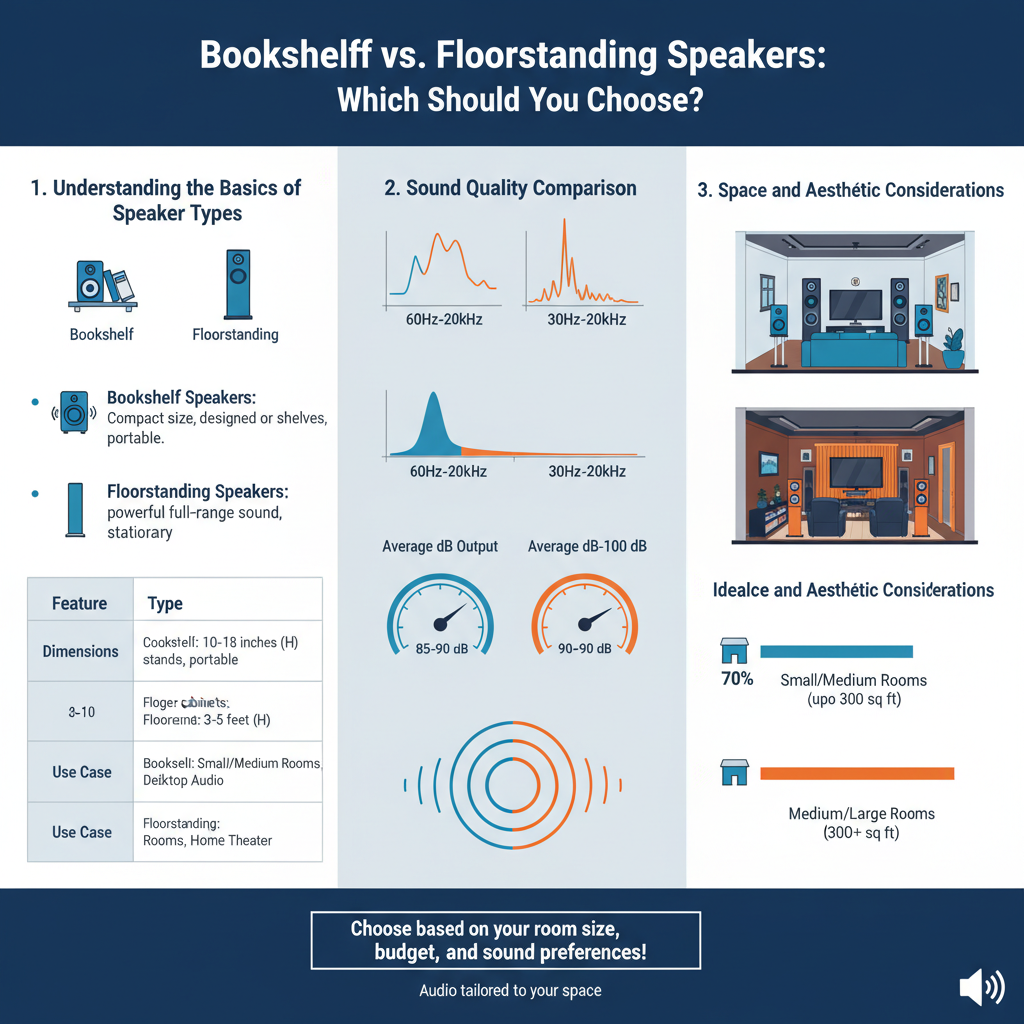
On the other hand, floorstanding speakers, often referred to as tower speakers, are larger and designed to stand on the floor. Their size allows them to accommodate bigger drivers and more speaker units, which means they can produce a fuller sound profile. Floorstanding speakers are ideal for larger rooms or home theaters, where they can truly shine and fill the space with rich, immersive sound.
Sound Quality Comparison
One of the most significant factors to consider when choosing between bookshelf and floorstanding speakers is sound quality. Floorstanding speakers typically outperform bookshelf models in terms of bass response and overall soundstage. The larger cabinets house bigger woofers, which are essential for producing deep, powerful bass that can make music and movie soundtracks come alive. If you enjoy genres like rock, hip-hop, or orchestral music, floorstanding speakers can deliver an exhilarating listening experience.
However, this doesn’t mean that bookshelf speakers are lacking in sound quality. Many modern bookshelf models utilize advanced technology and clever engineering to deliver impressive audio performance, often surprising listeners with their depth and clarity. For those who prefer a more compact setup without sacrificing too much sound quality, bookshelf speakers can still provide an enjoyable listening experience. For enhanced bass response, pairing bookshelf speakers with a subwoofer can create a more balanced sound profile, allowing you to enjoy the full range of your favorite tracks without missing the low-end punch.
Space and Aesthetic Considerations
The physical space you have available plays a crucial role in determining which type of speaker to choose. Bookshelf speakers are great for smaller rooms because they can be placed on existing furniture or dedicated stands, allowing you to save floor space while still enjoying good sound. Their smaller footprint makes them less intrusive, which is a significant advantage for those living in apartments or smaller homes.
On the other hand, floorstanding speakers can become a focal point in your room. With their towering presence, they can add a touch of elegance or modernity, depending on the design. However, they require more space for optimal sound placement and may need to be positioned away from walls to avoid sound distortion. If you have the room to accommodate them, floorstanding speakers can enhance your audio setup while also serving as an attractive addition to your home décor.
Budget and Price Range
When it comes to pricing, bookshelf speakers generally come at a lower price point compared to their floorstanding counterparts. This makes them an accessible option for budget-conscious buyers or those just starting their audio journey. You can find quality bookshelf speakers that fit well within a modest budget, allowing you to enjoy great sound without breaking the bank.
Floorstanding speakers, while often more expensive, can justify their price tag through enhanced audio performance and longevity. Investing in a good pair of floorstanding speakers can lead to years of high-quality sound enjoyment, especially for those who are serious about their audio experience. It’s worth noting that there are budget-friendly floorstanding options available as well, but doing thorough research and reading reviews can help you find the best value for your money.
Setup and Installation
Setting up your audio equipment should be a straightforward process, and this is another area where bookshelf speakers tend to shine. They are typically easier to install, requiring minimal equipment. You can simply place them on a shelf or stand, connect them to your receiver, and you’re ready to go. This ease of setup is particularly appealing for those who may not have a lot of experience with home audio systems.
In contrast, floorstanding speakers may require a bit more thought and effort during installation. Proper positioning is key to achieving the best sound quality; they often need to be angled correctly and positioned at a certain distance from walls and furniture to optimize acoustics. This can involve some trial and error, but the payoff is usually worth it in terms of sound quality. If you’re willing to put in the effort, you can create a truly immersive audio experience with floorstanding speakers.
Use Cases and Listening Habits
Your listening habits and how you plan to use your speakers should also inform your decision. If you primarily listen to music casually, enjoy podcasts, or use speakers for TV and movie sound, bookshelf speakers may be perfectly adequate. They can deliver clear dialogue and decent sound quality for casual listening without taking over your space.
However, if you consider yourself an audiophile or a home theater enthusiast, floorstanding speakers could be a game-changer. They excel in delivering rich, dynamic sound that enhances both music and movie experiences. For those who enjoy high-fidelity audio and want to capture every nuance in their favorite recordings, floorstanding speakers offer a depth and clarity that can elevate your listening experience.
In the end, it comes down to how you intend to use your audio setup. Assessing your listening habits and audio needs will help you make a more informed choice.
In summary, your choice between bookshelf and floorstanding speakers should be guided by your available space, budget, and listening preferences. If you have the room and desire for high-quality audio, floorstanding speakers are an excellent investment. However, if space is at a premium or your audio needs are less demanding, bookshelf speakers can deliver great sound without overwhelming your environment. Explore your options further to find the perfect fit for your audio setup!
Frequently Asked Questions
What are the key differences between bookshelf and floorstanding speakers?
The primary differences between bookshelf and floorstanding speakers lie in their size, sound output, and placement. Bookshelf speakers are smaller and designed to be placed on shelves or stands, making them ideal for limited spaces. In contrast, floorstanding speakers are taller, more powerful, and can produce deeper bass, making them suitable for larger rooms or dedicated home theater setups.
How do I choose between bookshelf and floorstanding speakers for my home audio system?
Choosing between bookshelf and floorstanding speakers depends on your space, listening preferences, and budget. If you have limited space or prefer a minimalist aesthetic, bookshelf speakers may be the best fit. However, if you’re looking for richer sound quality and have the room for them, floorstanding speakers can deliver a more immersive audio experience, especially for music and movies.
Why are floorstanding speakers generally more expensive than bookshelf speakers?
Floorstanding speakers typically come with larger drivers, more advanced technology, and a bigger cabinet volume, which contributes to their higher cost. These features allow for better sound quality, particularly in bass response and overall soundstage. Additionally, the construction and materials used in floorstanding models often add to their expense, reflecting their capacity to deliver a more robust audio performance.
What are the best uses for bookshelf speakers compared to floorstanding speakers?
Bookshelf speakers are ideal for smaller spaces, such as apartments or offices, where they can be used for casual listening or as part of a compact home theater system. They perform well in stereo setups and can be paired with a subwoofer for enhanced bass. In contrast, floorstanding speakers are better suited for larger rooms and dedicated home theaters, delivering powerful sound that can fill the space, making them perfect for movie watching and high-fidelity music listening.
Which type of speaker is better for music, bookshelf or floorstanding?
The answer depends on the type of music you enjoy and your listening environment. Floorstanding speakers generally provide a broader soundstage and deeper bass, making them better for genres that require dynamic range, such as classical or rock. However, high-quality bookshelf speakers can also produce excellent sound, particularly when paired with a subwoofer, making them a great choice for jazz or acoustic music in smaller spaces. Ultimately, it’s essential to consider your room size and personal preferences when making a decision.
References
- Loudspeaker
- https://www.theguardian.com/technology/2020/nov/11/how-to-choose-the-best-speakers
- https://www.techhive.com/article/3538653/bookshelf-vs-floorstanding-speakers-what-you-need-to-know.html
- https://www.soundguys.com/bookshelf-vs-floorstanding-speakers-22119/
- https://www.cnet.com/news/bookshelf-vs-floorstanding-speakers/