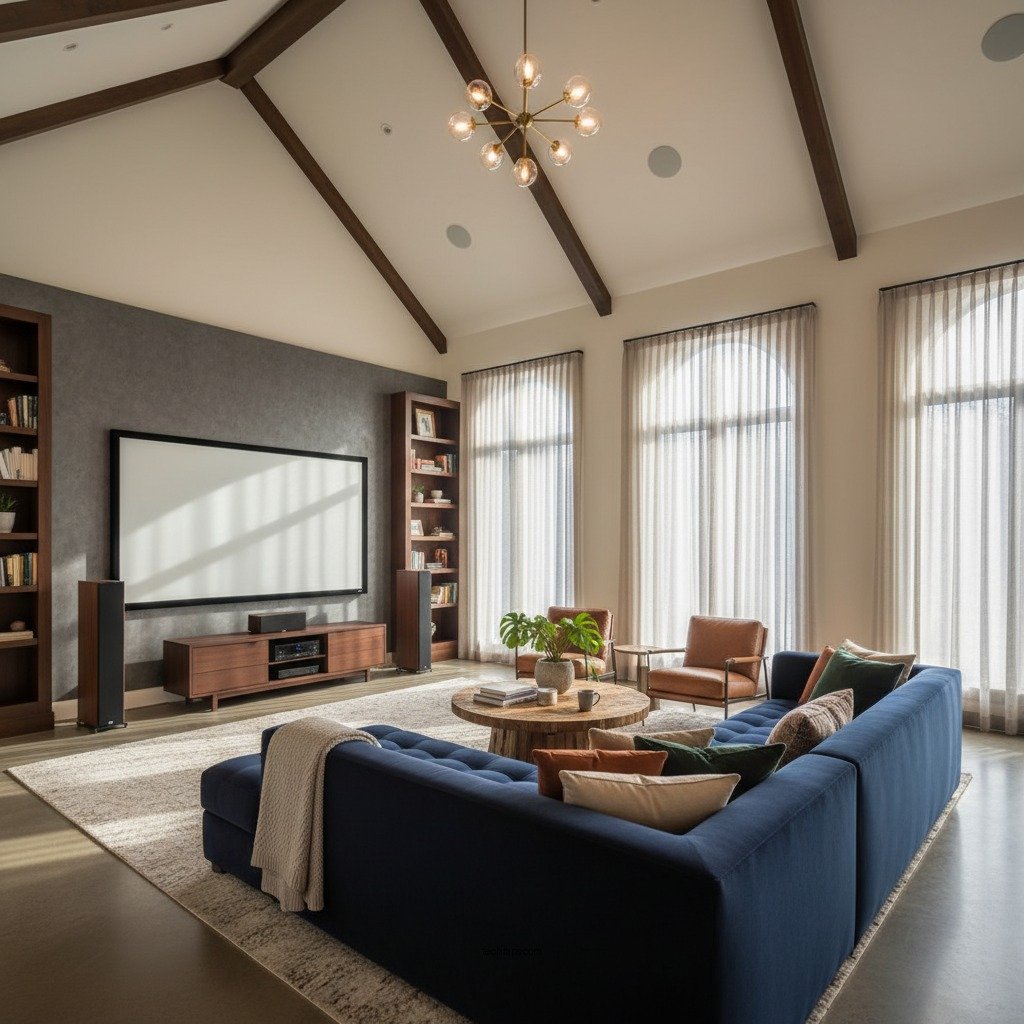
Creating a home theater in a room with high ceilings can significantly enhance your cinematic experience. The vertical space allows for greater flexibility in equipment placement and room design, but it also poses unique challenges in sound and visual quality. To achieve a successful setup, thoughtful planning around equipment selection, seating arrangements, acoustic treatment, lighting, wiring, decor, and ongoing maintenance is essential. In this article, we’ll guide you through these critical steps to ensure your home theater meets and exceeds your entertainment expectations.


![Smart 4K Projector [Bundled with Google TV Stick] with WiFi and Bluetooth, 3000ANSI, Auto Lens Cap, Portable Outdoor Movie Projector with Built-in Apps Auto Focus for Ceiling/Home Theater/Bedroom](https://m.media-amazon.com/images/I/51OmgnIpWWL._SL500_.jpg)
Choosing the Right Equipment
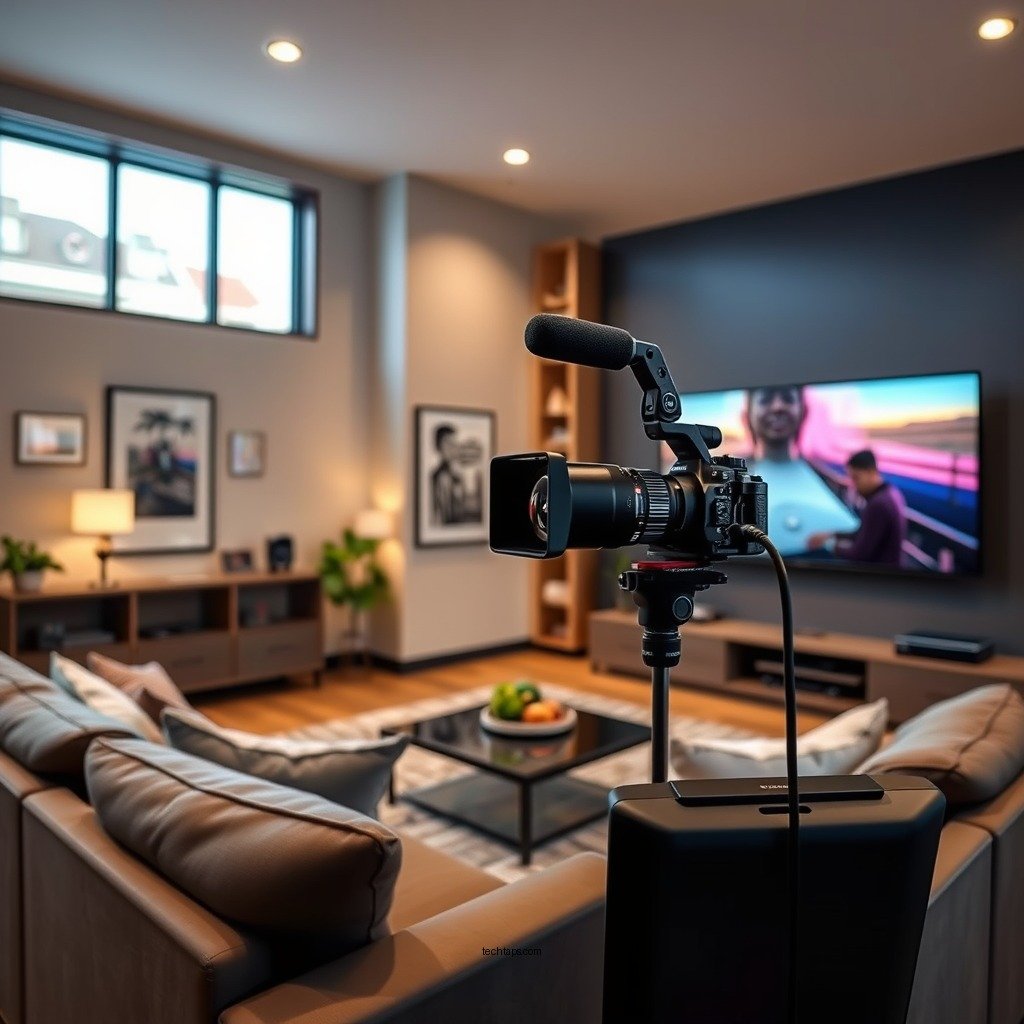
The foundation of any home theater lies in its equipment. In a room with high ceilings, selecting the right projector or screen is paramount. A high-quality projector that suits elevated installations is crucial for optimal visibility. Look for models with high lumens output to ensure bright images even in ambient light conditions. Additionally, consider a screen that is appropriately sized for the distance from your seating area; larger screens can provide a more immersive experience.
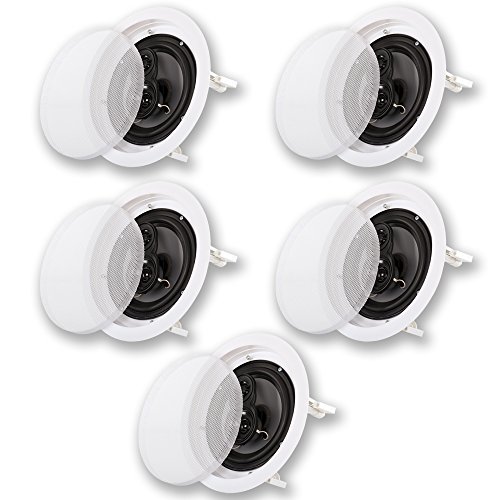
For audio, investing in a surround sound system is essential. In larger spaces, speakers need to be strategically placed to fill the room appropriately. Systems that support Dolby Atmos or DTS:X can provide an enveloping sound experience, enhancing the cinematic feel. Opt for in-wall or ceiling-mounted speakers when possible, as they can help maintain a clean aesthetic while also taking advantage of the vertical space.
Optimal Seating Arrangements
Positioning your seating correctly is vital to maximize comfort and viewing angles. A general rule of thumb is to place seats at a distance of 1.5 to 2.5 times the diagonal size of your screen. For instance, if you have a 100-inch screen, seating should be placed between 12.5 to 20.8 feet away.
In rooms with high ceilings, tiered seating can dramatically improve sight lines for all viewers. Opt for risers that elevate the back row of seats to ensure unobstructed views of the screen. This not only enhances the viewing experience but also adds a professional touch to your home theater setup. Incorporate plush, comfortable seating such as recliners or sofas that enhance the movie-watching experience.
Acoustic Treatment for Enhanced Sound
Acoustic treatment is crucial in high-ceiling rooms, as sound can bounce off walls and ceilings, leading to echoes and muddied audio. Incorporating acoustic panels on walls and ceilings can significantly improve sound clarity. These panels absorb sound waves, reducing reflections and creating a more immersive auditory environment.
Additionally, consider adding carpet or area rugs to help absorb sound. Hard floors can exacerbate sound bouncing, so adding soft materials will help minimize echo and enhance sound quality. Thick curtains can also be beneficial, not only for controlling light but for sound absorption as well.
Top 7 Acoustic Treatment Options for Home Theaters (2024)
| # | Material | Sound Absorption Coefficient | Cost per Square Foot | Effectiveness Rating |
|---|---|---|---|---|
| 1 | Acoustic Panels | 0.95 | $4 | ★★★★☆ |
| 2 | Bass Traps | 0.90 | $6 | ★★★★★ |
| 3 | Carpet Tiles | 0.60 | $2.50 | ★★★★☆ |
| 4 | Rug Pads | 0.75 | $1.50 | ★★★★☆ |
| 5 | Heavy Curtains | 0.70 | $3 | ★★★★☆ |
| 6 | Soundproof Drywall | 0.85 | $8 | ★★★★★ |
| 7 | Acoustic Foam | 0.80 | $5 | ★★★★☆ |
Lighting Considerations
Lighting plays a crucial role in setting the mood for your home theater. To create a true cinematic experience, installing dimmable lighting allows you to control brightness levels and transition from ambient to focused light as needed. Recessed lighting can provide subtle illumination without detracting from the screen’s brightness.
Using blackout curtains is another effective way to minimize external light interference. These heavy fabrics block out sunlight and streetlights, ensuring that your movie nights are uninterrupted by outside distractions. Consider adding LED strip lights behind the screen or along the base of your seating for an ambient glow that enhances the overall atmosphere.
Wiring and Connectivity
Planning your wiring and connectivity is essential for a clean and functional home theater. Start by mapping out where each component will be placed and the necessary connections. This will allow you to choose the right lengths of cables and avoid clutter.
Wireless options, such as Bluetooth or Wi-Fi audio systems, can help reduce cable management issues, especially in rooms with high ceilings where running wires can be complicated. Ensure your devices are compatible with each other and that your internet connection can handle streaming high-definition content without lag.
Decor and Aesthetics
The decor of your home theater should enhance the viewing experience while reflecting your personal style. Darker color schemes, such as deep blues, blacks, or grays, can create an immersive environment by minimizing distractions. Consider using paint or wall coverings that absorb light rather than reflect it.
Incorporating themed decor, such as movie posters, vintage film reels, or even a popcorn machine, can enhance the cinema vibe. Additionally, ensure that the decor complements the overall design of your home, creating a cohesive look that seamlessly integrates with your living space.
Maintenance and Upgrades
To keep your home theater functioning optimally, regular maintenance is key. This includes checking and cleaning your equipment, updating software, and ensuring that all connections are secure. Regularly inspect your speakers and projector for dust or debris that could affect performance.
Staying updated with new technology is vital for enhancing your home theater experience over time. Consider investing in upgrades, such as a 4K projector or an advanced sound system, to keep pace with evolving standards in home entertainment. Keeping abreast of industry trends will help you make informed decisions about potential improvements.
By following these guidelines, you can create a home theater in a room with high ceilings that not only meets but exceeds your entertainment expectations. Start planning your setup today for an immersive viewing experience right in your home!
Frequently Asked Questions
What are the best speaker placement strategies for a home theater in a room with high ceilings?
For optimal sound quality in a home theater with high ceilings, place speakers at ear level when seated, ideally between 36 to 42 inches from the floor. Additionally, consider using wall-mounted speakers or ceiling speakers to take advantage of the height, ensuring that the sound is directed towards the listening area to create an immersive experience.
How can I effectively manage acoustic challenges in a home theater with high ceilings?
To manage acoustic challenges in a home theater with high ceilings, use sound-absorbing materials like acoustic panels and rugs to minimize echo and reverberation. Additionally, strategically placing furniture and using heavy curtains can help dampen sound reflections, enhancing audio clarity and overall viewing experience.
Why is a projector screen height important in a high-ceiling home theater setup?
The height of the projector screen is crucial in a high-ceiling home theater setup because it affects both viewing comfort and image quality. Ideally, the bottom of the screen should be positioned at eye level when seated, typically around 24 to 36 inches from the floor, ensuring that viewers can comfortably watch without straining their necks.
Which lighting options are best for a home theater with high ceilings?
For a home theater with high ceilings, consider using dimmable recessed lighting to create a versatile ambiance. Additionally, wall sconces and LED strip lights can enhance the cinematic experience while providing indirect lighting that doesn’t interfere with the screen visibility, making it easier to transition between movie modes and ambient lighting.
What type of seating arrangement works best in a home theater with high ceilings?
A tiered seating arrangement is often the best choice for a home theater with high ceilings, as it allows each row to have an unobstructed view of the screen. Additionally, consider using comfortable, reclinable seats spaced adequately apart to enhance the viewing experience while accommodating the vertical space effectively.
References
- Home cinema
https://en.wikipedia.org/wiki/Home_theater - https://www.sciencedirect.com/topics/engineering/home-theater
https://www.sciencedirect.com/topics/engineering/home-theater - https://www.bbc.com/news/technology-56074680
https://www.bbc.com/news/technology-56074680 - https://www.nytimes.com/2021/02/12/technology/personaltech/home-theater.html
https://www.nytimes.com/2021/02/12/technology/personaltech/home-theater.html - https://www.theguardian.com/technology/2020/nov/26/home-cinema-setup
https://www.theguardian.com/technology/2020/nov/26/home-cinema-setup - Google Scholar Google Scholar
https://scholar.google.com/scholar?q=Home+Theater+Setup+High+Ceilings - Google Scholar Google Scholar
https://scholar.google.com/scholar?q=Home+Theater+Acoustics+High+Ceilings - Google Scholar Google Scholar
https://scholar.google.com/scholar?q=Home+Theater+Room+Design+High+Ceilings - Google Scholar Google Scholar
https://scholar.google.com/scholar?q=How+to+Set+Up+Home+Theater+in+a+Room+with+High+Ceilings - How to Set Up Home Theater in a Room with High Ceilings – Search results
https://en.wikipedia.org/wiki/Special:Search?search=How+to+Set+Up+Home+Theater+in+a+Room+with+High+Ceilings