
Choosing between OLED, QLED, and Mini-LED ultimately depends on your individual viewing preferences and needs. If you crave stunning contrast and vibrant colors, OLED is likely your best bet. However, if you need a display that excels in brightness and color volume, QLED might be the better option for you. Mini-LED technology sits in the middle, offering enhanced brightness and HDR performance, making it a compelling choice for many. In this article, we’ll delve into the strengths and weaknesses of each display technology to guide you toward making an informed decision for your next TV purchase.
Understanding OLED Technology
OLED, or Organic Light Emitting Diode, technology is often regarded as the gold standard in display quality. The magic of OLED lies in its ability to control individual pixels, which allows for breathtaking color accuracy and true blacks. When a pixel is turned off, it emits no light, resulting in an absolute black that enhances the overall contrast of the image. This feature is particularly appealing for movie nights, where dark scenes can be more immersive.
Another significant advantage of OLED technology is its wider viewing angles. Typically, the colors and brightness remain consistent even when viewed from the side, making it a great choice for larger gatherings or family movie nights. Additionally, OLED panels have faster response times, which is fantastic for gaming enthusiasts who demand quick action without motion blur. Brands like LG and Sony have set high standards in the OLED market, with models like the LG OLED CX and Sony A8H consistently receiving rave reviews for their performance.
Exploring QLED Technology
QLED, or Quantum Dot LED, technology offers a unique approach to display performance. By utilizing quantum dots—tiny semiconductor particles that emit specific colors when exposed to light—QLED TVs can achieve impressive brightness levels and enhanced color volume. This makes QLED displays particularly suitable for bright rooms, where they can outshine their OLED counterparts.
Moreover, one of the standout features of QLED technology is its longevity. QLED panels are less prone to burn-in, a concern for those who might leave static images on the screen for extended periods. Brands like Samsung have been leading the charge in QLED technology with their Neo QLED series, which incorporates Mini-LED backlighting for even better performance. If you’re a sports enthusiast or a casual viewer who enjoys watching TV in a sunlit living room, QLED could be the ideal choice for you.
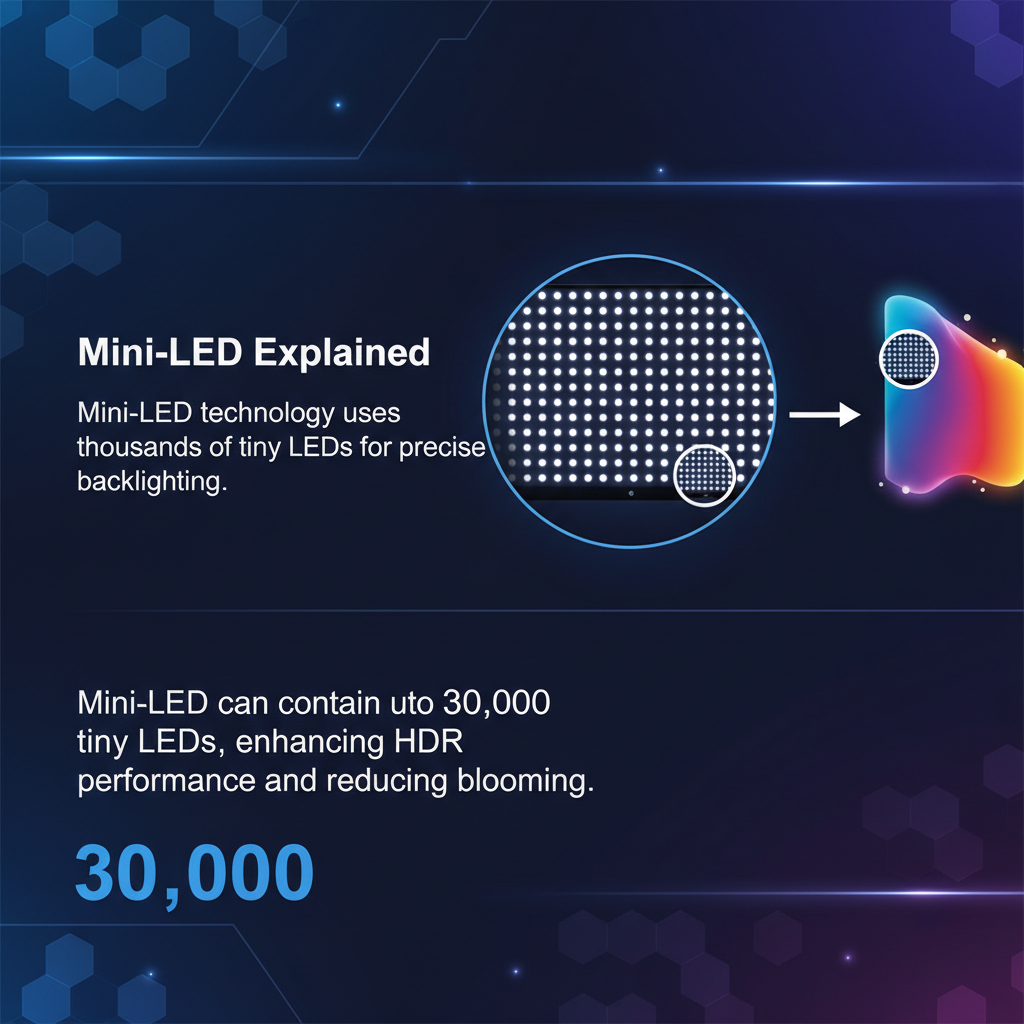
Mini-LED Explained
Mini-LED technology is a relatively new player in the display arena, but it’s quickly gaining traction for its impressive capabilities. This technology enhances traditional LED backlighting by employing smaller diodes, which allows for more precise control over the light emitted from the screen. As a result, Mini-LED displays can deliver deeper blacks and brighter highlights, significantly improving HDR performance.
One of the most impressive features of Mini-LED is its ability to minimize blooming effects—a common issue in standard LED displays where bright objects appear to bleed into darker areas. The improved local dimming capabilities of Mini-LED allow for greater contrast, making it a strong contender for viewing HDR content. Brands like TCL and ASUS have integrated Mini-LED technology into their product lines, providing consumers with a versatile option that balances performance and cost.
Comparison of Picture Quality
When it comes to picture quality, OLED generally takes the lead, especially in terms of contrast and viewing angles. The ability to turn off individual pixels allows OLED screens to achieve unparalleled blacks, making colors pop and enhancing the overall viewing experience. However, in well-lit environments, QLED shines with its superior brightness and vibrant colors, making it the preferred choice for rooms with lots of natural light.
Mini-LED, on the other hand, bridges the gap between the two. It offers impressive brightness levels and contrast, making it an excellent choice for both movies and gaming. For instance, if you’re a gamer who enjoys playing during the day, a Mini-LED display could provide the best of both worlds—excellent brightness while still maintaining a level of contrast that enhances gameplay. Ultimately, the choice here comes down to your specific viewing environment and personal preferences.
Price and Availability
When considering price, OLED TVs are generally the most expensive option among the three, reflecting their advanced technology and superior performance. High-end models from brands like LG and Sony can range from $1,500 to over $5,000, depending on size and features.
QLED TVs tend to be more affordable, with many options available under the $1,500 mark, making them accessible for a broader audience. Mini-LED pricing is also becoming competitive as the technology matures, with several models available that offer excellent performance at mid-range prices. For example, TCL’s Mini-LED models start at around $800, providing a great balance of quality and affordability.
Best Use Cases for Each Technology
Each display technology has its strengths, making them suitable for different use cases. If you’re a movie buff who values exceptional picture quality and immersive viewing experiences, OLED is the way to go. Its deep blacks and vibrant colors are perfect for enjoying films in a dark environment.
For viewers who enjoy watching sports or live events in bright rooms, QLED is the ideal choice. Its ability to produce bright, vivid images ensures that you won’t miss any action, even in well-lit settings.
Mini-LED technology is versatile, catering to various needs. Whether you’re gaming or watching movies, Mini-LED provides a fantastic balance of brightness and contrast, making it suitable for both scenarios. It’s a great option for families with diverse viewing preferences, allowing everyone to enjoy their favorite content without compromise.
Future Trends in Display Technology
Looking ahead, innovations in OLED technology are focusing on improving lifespan and reducing burn-in issues, which have been significant concerns for potential buyers. Companies are researching ways to enhance the durability of OLED panels, making them more appealing for long-term use.
QLED technology is also evolving, with advancements in quantum dot materials that promise to enhance color accuracy and brightness even further. Meanwhile, Mini-LED is gaining popularity as a cost-effective alternative, with more brands incorporating this technology into their offerings. As competition heats up, consumers can look forward to better performance at more accessible prices.
In choosing between OLED, QLED, and Mini-LED, it’s essential to consider your viewing habits and environment. Each technology has unique advantages, so weigh the pros and cons carefully. Whether you prioritize deep blacks, brightness, or affordability, there’s a display option perfect for you. Explore your choices, and elevate your viewing experience today!
Frequently Asked Questions
What are the main differences between OLED, QLED, and Mini-LED technologies?
OLED (Organic Light Emitting Diode) displays use individual pixels that emit their own light, resulting in deep blacks and vibrant colors. QLED (Quantum Dot Light Emitting Diode), on the other hand, utilizes a backlight with quantum dots for enhanced brightness and color accuracy, but it cannot achieve true blacks like OLED. Mini-LED is a newer technology that improves standard LED displays with smaller backlight zones, allowing for better contrast and improved black levels. Each technology has unique strengths, making them suitable for different viewing environments and preferences.
Which display technology is better for gaming: OLED, QLED, or Mini-LED?
For gaming, OLED is often considered the best option due to its fast response times and superior contrast ratios, which create immersive visuals. However, QLED also performs well, especially in bright rooms, as it maintains brightness levels without significant glare. Mini-LED offers a good balance between brightness and contrast, but it may not match the deep blacks of OLED. Ultimately, the best choice will depend on your gaming environment and personal preferences, such as whether you prioritize color accuracy, brightness, or contrast.
Why do OLED TVs burn-in, and how does this compare to QLED and Mini-LED?
OLED TVs are susceptible to burn-in because static images can cause uneven wear on the organic compounds in the pixels, leading to permanent ghosting of those images. QLED and Mini-LED technologies are less prone to burn-in since they rely on traditional LCD technology with backlighting, which doesn’t have the same pixel degradation issues. For users concerned about burn-in, QLED or Mini-LED might be safer choices, especially for content with static logos or user interfaces.
How does brightness compare across OLED, QLED, and Mini-LED displays?
QLED displays generally offer the highest brightness levels, making them ideal for well-lit rooms where visibility is crucial. Mini-LED technology also provides increased brightness compared to traditional LED displays due to its smaller backlight zones, allowing for improved HDR performance. OLED displays, while they deliver exceptional contrast and color depth, typically fall short in peak brightness when compared to QLED and Mini-LED. If you often watch TV in bright environments, QLED or Mini-LED might be more suitable.
What is the best overall display technology for movies and TV shows: OLED, QLED, or Mini-LED?
For movies and TV shows, many experts recommend OLED as the best overall display technology due to its superior color accuracy, perfect black levels, and wide viewing angles, which enhance the cinematic experience. However, if you watch in a bright room or prefer brighter images, QLED or Mini-LED might be more advantageous. Ultimately, the best choice will depend on your viewing habits and the lighting conditions of your viewing area, so consider your specific needs when making a decision.
References
- OLED
- Quantum dot display
- https://www.cnet.com/tech/home-theater/oled-vs-qled-vs-mini-led-tv-which-is-best/
- https://www.techradar.com/news/oled-vs-qled-vs-mini-led
- https://www.theverge.com/2021/5/14/22435894/oled-vs-qled-vs-mini-led-tv-guide
- https://www.consumerreports.org/televisions/oled-vs-qled-vs-mini-led/
- https://www.digitaltrends.com/home-theater/oled-vs-qled-vs-mini-led/
- https://www.wired.com/story/oled-vs-qled-vs-mini-led/
- https://www.pcmag.com/news/oled-vs-qled-vs-mini-led-which-is-best-for-you
- Not Found