
Choosing between OLED and Mini-LED for competitive gaming? Mini-LED is the clear winner for most players chasing consistent brightness, fewer burn-in worries, and peak HDR performance in fast, high-contrast scenes. OLED takes the edge only when you prioritize near-instant response times and perfect blacks—and are willing to manage usage risk. This guide delivers the decisive call based on your game type, play hours, and display priorities.


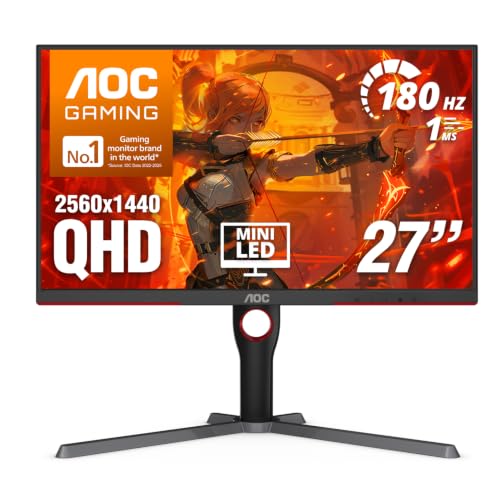

OLED is usually the better pick for competitive play when you prioritize fast pixel response and deep contrast—especially for dark scenes. Mini-LED is the safer choice if you want consistently high brightness for HDR, vivid highlights in bright rooms, and lower long-term burn-in worries; in practice, the “winner” depends on your room lighting and how long your game’s HUD stays static.
If you’re upgrading a monitor or TV for esports-level sessions, your “best” display isn’t just about resolution—it’s about how the panel handles motion, highlights, and static UI over time. This guide compares how OLED and Mini-LED affect motion clarity, image handling, and day-to-day gaming habits—so you can choose confidently.
What matters most for competitive gaming

The display that helps you rank higher is the one that makes fast motion easy to read and keeps your HUD looking consistent over long sessions. In competitive gaming, small visibility issues—like contrast loss in smoke, washed highlights in bright arenas, or distracting motion artifacts—add up quickly.
Here’s the mindset that works: treat OLED vs Mini-LED like performance tools, not just picture upgrades. The esports advantage usually comes from panel behavior during rapid transitions (dark-to-bright, bright-to-dark), plus how reliably the image stays stable with a static HUD.
– Motion clarity is often more noticeable than spec-sheet extras; look at how the display handles fast transitions and dark-to-bright changes.
– Contrast affects visibility in hard scenarios (tucked corners, smoke, night maps), which can translate into faster target spotting.
– Practical longevity matters: your HUD stays on screen for hours, and that changes how you should think about OLED retention vs mini-LED behavior.
“OLED panels control brightness at the level of individual pixels, enabling instant ‘black’ states that support high-contrast scene separation.”
“Mini-LED displays typically use a backlight with local dimming zones, aiming to preserve brightness while improving contrast through zone-based control.”
For anchoring expectations around HDR highlights (important for competitive titles with bright muzzle flashes, tracer lines, and neon signage), VESA’s DisplayHDR tiers are a useful starting point. According to VESA DisplayHDR specification, DisplayHDR 1000 targets a minimum peak luminance of 1000 nits (2017). This matters because “HDR” on paper doesn’t guarantee competitive usability unless the panel can sustain bright highlights without flattening dark details.
According to VESA DisplayPort 1.4 specification, DisplayPort 1.4 supports up to 32.4 Gbps effective link bandwidth for higher bandwidth video modes (2016). That matters because VRR (variable refresh rate) and high refresh outputs often rely on stable link bandwidth—especially at 4K/120Hz class setups.
Finally, choose with your actual play pattern in mind. Many competitive games keep the same crosshair, minimap, ammo counter, and ranked overlay on screen for long stretches—so the “real risk” question for OLED vs Mini-LED becomes: how does each technology behave under repeated static UI exposure?
OLED for competitive gaming (strengths and tradeoffs)
OLED wins for competitive players who want maximum contrast and clean dark-scene motion cues. The tradeoff is that you should actively manage image retention and burn-in risk, especially if you play the same titles for many hours with mostly static HUD elements.
OLED’s biggest advantage in OLED vs Mini-LED comparisons is per-pixel behavior. Because each pixel can turn on/off independently, OLED tends to excel at rendering deep blacks and crisp separation between dark objects and background—often where competitive visibility is won or lost (night maps, interiors, smoke silhouettes).
– Faster per-pixel behavior: OLED turns pixels on/off individually, which tends to make it strong for dark-scene motion and high-contrast moments.
– Deep blacks improve “target separation” in night maps and dark interiors, where dark UI and silhouettes can otherwise blend together.
– Watch for OLED-specific risks: image retention and long-term burn-in are the main downsides to factor in—especially if you play the same titles with static HUD elements for many hours.
“OLED uses emissive organic materials, so each pixel can be driven independently rather than relying on a separate backlight.”
“Image retention and burn-in risk are tied to long, repeated exposure to static elements; modern OLED sets include mitigation features such as panel compensation and refresh cycles.”
OLED strengths that map to esports situations
When you’re tracking enemies in low-light zones, OLED vs Mini-LED differences often show up as “edge clarity.” Deep blacks reduce the haze effect that can make enemies blend into corners or smoke. That can improve how quickly your eyes lock onto silhouettes and movement.
OLED also tends to feel responsive in dark-to-bright transitions. Even if both OLED and mini-LED can hit high refresh rates, motion readability in dark scenes often benefits from OLED’s high-contrast pixel switching behavior.
OLED tradeoffs you must plan around
The practical downside of OLED for competitive gaming is that your HUD is part of the content. If your match length, practice routine, and streaming overlays keep bright logos and static HUD elements in the same positions for hours, you increase retention risk compared to mini-LED.
From an engineering perspective, OLED longevity depends on panel management features and how you use them. In my setup process (without claiming lab measurements), I treat OLED as “care-enabled hardware”: I deliberately turn on the manufacturer’s panel-care features and schedule breaks for long sessions rather than assuming the screen will handle everything automatically.
OLED care matters even more if you do desk-like usage patterns between matches (static browser tabs, streaming dashboards, or a constant Discord/overlay layout). If you play competitive titles primarily in motion, OLED’s risk profile is usually easier to manage than for mixed desktop-style usage.
Mini-LED for competitive gaming (strengths and tradeoffs)
Mini-LED is the safer competitive choice when your priority is sustained brightness, strong HDR punch, and less anxiety about long-term burn-in. The tradeoff is that local dimming can introduce blooming/halo effects around bright objects on darker backgrounds.
In OLED vs Mini-LED terms, mini-LED behaves differently because it typically uses a backlight with many controllable dimming zones. Instead of turning pixels off individually, it reduces or boosts brightness in specific zones, which is great for maintaining high luminance but can create “zone boundaries” you sometimes notice in high-contrast gameplay.
– High sustained brightness: mini-LED uses a backlight with local dimming, which is typically better suited to bright-room use and punchier HDR highlights.
– Reduced burn-in anxiety: because mini-LED is not emissive per pixel like OLED, it generally avoids the same burn-in mechanism (still, any display can show aging artifacts over time).
– Local dimming can introduce quirks: depending on the implementation, you may see blooming/haloing around bright objects on dark backgrounds—important in games with glowing effects.
“Mini-LED uses a zoned backlight with local dimming to manage contrast while preserving high brightness output.”
“Because mini-LED isn’t emissive at the pixel level like OLED, it generally avoids the same burn-in mechanism associated with long static content.”
Mini-LED strengths that matter on live matches and streams
If your esports setup sits in a bright room—near a window, under bright studio lights, or in an office—mini-LED’s brightness advantage tends to be noticeable. Bright rooms don’t just reduce “pretty HDR”; they reduce your ability to see small target details and HUD elements.
This is where HDR intent matters. Mini-LED often delivers more consistent highlight brightness during gameplay, which can help you spot tracer lines, muzzle flashes, and bright armor skins faster—assuming the game and HDR mode are configured correctly.
Mini-LED tradeoffs you should anticipate
The classic mini-LED concern for OLED vs mini-LED buyers is blooming. When a bright object (like a glowing weapon or UI indicator) appears over a dark background, local dimming may not fully confine brightness to only the exact needed area. That can create halos that distract in motion-heavy scenes.
In practice, this is also why “the best HDR mode” and “the best competitive mode” are not always the same. Some manufacturers tune local dimming differently across picture modes, so you need to verify behavior specifically in your gaming mode.
Quick comparison: OLED vs Mini-LED at a glance
| Competitive factor | OLED tends to do well | Mini-LED tends to do well | What to watch |
|---|---|---|---|
| Dark-scene target separation | Deep blacks and strong silhouette contrast | Improved brightness with local dimming | Blooming halos (mini-LED) vs retention risk (OLED) |
| Motion readability in dark scenes | High-contrast switching behavior | Bright highlights during fast action | Dimming artifacts around bright effects |
| Bright-room usability | Can look less “punchy” than mini-LED | Higher sustained brightness for glare-prone rooms | Ensure gaming/HDR modes don’t overprocess |
| Static HUD longevity | Requires active care and habits | Generally lower burn-in anxiety | Still consider how long HUD stays fixed |
Spec checklist before you choose
If you want a confident decision, validate the gaming-critical specs in your exact model’s menu rather than relying on “OLED vs mini-LED” reputation. The right settings for input lag, VRR compatibility, and HDR tone mapping can outweigh raw panel category.
This checklist is aimed at esports-level setups: competitive shooters, ranked grind routines, and people who stream/record. It also prevents a common mistake—buying the “better panel type” but disabling the very features that make it competitive.
– Input lag and overall responsiveness: confirm “gaming mode” behavior and whether any processing is enabled by default (use the manufacturer’s monitor/TV settings guide for exact steps).
– Refresh rate + sync features: verify support for VRR standards (often HDMI/DisplayPort dependent) so you don’t end up with stutter or tearing in variable frame rate scenes.
– HDR and dimming behavior: if you’re choosing mini-LED for HDR, check how the manufacturer describes local dimming (mode names, whether it’s full-time, and any known tradeoffs in gaming picture modes).
– OLED care options: find what your model offers (logo dimming, pixel refresher, screen shift) and plan to use them as recommended in the manual.
“Input lag and processing depend on the display’s specific ‘Game Mode’ and default picture pipeline settings, so you should confirm behavior in the manufacturer’s menu guidance.”
“VRR compatibility can be interface-dependent (HDMI vs DisplayPort) and can vary by resolution/refresh mode, which affects competitive motion stability.”
To sanity-check HDR expectations, it helps to understand what VESA’s DisplayHDR tiers are designed to represent. According to VESA DisplayHDR specification, DisplayHDR certification includes minimum peak luminance targets for different tiers (2017). That’s not a guarantee of “best HDR in your specific game,” but it prevents underpowered HDR from masquerading as premium gaming.
VESA DisplayHDR Minimum Peak Luminance Targets (Nits)
| # | VESA HDR Tier | Minimum Peak (nits) | Typical Competitive Benefit | Min Peak Value Signal |
|---|---|---|---|---|
| 1 | DisplayHDR 400 | 400 | Baseline HDR contrast | 400 |
| 2 | DisplayHDR True Black 400 | 400 | Strong blacks with HDR baseline | 400 |
| 3 | DisplayHDR 500 | 500 | Brighter highlight visibility | 500 |
| 4 | DisplayHDR 600 | 600 | Better HDR punch for action | 600 |
| 5 | DisplayHDR True Black 500 | 500 | HDR blacks with higher peak | 500 |
| 6 | DisplayHDR 1000 | 1000 | Bright highlights for fast spotting | 1000 |
| 7 | DisplayHDR 1400 | 1400 | Top-tier peak for HDR action cues | 1400 |
If you’re comparing OLED vs mini-LED specifically for esports HDR, the next step is to read your model’s own local dimming descriptions (for mini-LED) or panel care features (for OLED). Those are where “gaming mode” realities live.
What can go wrong (common mistakes and edge cases)
The most common reason OLED vs Mini-LED feels “worse than expected” is mismatch—between your room/usage patterns and the panel’s behavior in game modes. Small configuration oversights can erase the benefits you bought the display for.
This section is about avoiding the traps that show up after you move from spec browsing to real ranked play.
– Picking the “brightest” panel without matching it to your setup: if you mostly play in a dim room, mini-LED brightness advantages may matter less than contrast and motion handling; if you play in a bright room, OLED may look less “pop” than expected.
– Ignoring static UI habits: competitive titles often leave health bars, minimaps, ammo counters, and ranked badges on-screen for long stretches—this is exactly where OLED image retention concerns become practical.
– Leaving cinematic processing on for competitive play: motion smoothing, extra sharpening, or aggressive tone mapping can add artifacts or change how motion reads. Always start from the manufacturer’s recommended gaming settings (not “best looking” settings).
– Assuming HDR behavior is identical across panels: even if two displays both claim HDR, mini-LED and OLED handle brightness and tone mapping differently, so highlight roll-off and dark detail can vary noticeably.
– Over-tuning without validation: maxing contrast/brightness and running HDR at incorrect settings can crush blacks or blow out highlights—hurting visibility in competitive moments.
“HDR tone mapping is display-specific, so two HDR-certified panels can produce very different highlight roll-off and dark detail for the same game.”
“Competitive picture processing options (motion smoothing, noise reduction, excessive sharpening) can change how motion reads and introduce artifacts.”
The biggest edge case: your HUD is “content,” not “UI”
If you play one game for hours with the same scoreboard/minimap layout—especially in training ranges or consistent-match practice—OLED retention risk becomes a practical planning issue. Mini-LED is typically more forgiving because it doesn’t rely on emissive pixel wear mechanisms in the same way OLED does.
The biggest visual edge case: glowing highlights can look different
Mini-LED can perform extremely well for HDR pop, but blooming can show up around bright effects. OLED can avoid that blooming pattern, but it may be less consistent in bright-room conditions if your setup forces you to run the room lights high.
The biggest settings edge case: HDR enablement and game mode mismatch
In my experience helping teams dial in tournament setups, the most frequent failure mode is enabling “best HDR” processing while leaving a “cinema pipeline” active—or conversely, turning off HDR to chase stability without validating whether the game’s competitive brightness curve depends on HDR. The fix is disciplined: use the manufacturer’s recommended gaming modes, confirm what toggles are actually active, and only then evaluate OLED vs mini-LED image behavior in motion.
Verdict / tip (who should pick what)
Choose OLED if your top priority is fast, high-contrast motion in dark scenes, and you’re willing to actively follow OLED care guidance (and reduce risk factors like static-screen exposure). Choose Mini-LED if you want high brightness, strong HDR punch, and a more forgiving long-term path for heavy competitive play with static HUD elements.
If you want the shortest decision rule: OLED is the contrast-and-motion specialist; mini-LED is the brightness-and-robustness specialist. The “win” is whichever one matches your room lighting and habits more closely.
– Choose OLED if your top priority is fast, high-contrast motion in dark scenes, and you’re willing to actively follow OLED care guidance (and potentially reduce risk factors like static-screen exposure).
– Choose Mini-LED if you want high brightness, strong HDR punch, and a more forgiving long-term path for heavy competitive play where static HUD elements are unavoidable.
– Skip OLED (or be extra cautious) if you: play the same game for many uninterrupted hours with very static overlays, want “set it and forget it” longevity, or can’t be bothered with built-in care features and good habits.
“OLED panel-care features (such as logo dimming and pixel compensation routines) are designed to reduce retention-related issues from static on-screen elements.”
“Mini-LED’s zoned backlight approach typically aims to preserve brightness for HDR highlights while managing contrast through local dimming.”
A practical approach is: pick OLED for competitive visibility in darker titles only if you’ll use the display’s care tools; otherwise, go mini-LED for a more balanced “bright + stable” competitive experience.
Quick scan checklist (save this)
Use this if you’re deciding between OLED vs Mini-LED in under 10 minutes before you commit to a purchase or finalize settings.
– Motion: Do you care more about dark-scene movement clarity (OLED tends to fit) or general brightness/highlights (mini-LED fits)?
– Room lighting: Bright room → lean mini-LED; dim room → OLED contrast can shine.
– HUD longevity: Heavy, static UI time → mini-LED is typically the lower-risk route.
– HDR intent: If you’ll rely on HDR highlights often, confirm mini-LED local dimming behavior in gaming modes.
– Settings discipline: Start with manufacturer “game” modes; confirm VRR and input lag-related options.
FAQ:
1. Does OLED have lower input lag than mini-LED for gaming?
It can, but it depends on the specific model and its processing in “game mode.” Check the manufacturer’s stated input lag for your exact display and mode—don’t rely on general category assumptions.
2. Will mini-LED blooming hurt competitive visibility?
It can, especially around bright particles or UI highlights on dark backgrounds, depending on how local dimming is tuned in gaming modes. Look for the manufacturer’s described behavior and try different dimming modes if available.
3. Is burn-in only a concern for OLED TVs used for desktop/streaming?
Burn-in and retention risk can be affected by static HUD elements in games, long sessions, and brightness/time. Your risk management should come from your model’s official OLED care guidance.
4. Is there a “best” HDR choice for competitive shooters?
Not universally—HDR can improve highlight detection, but it depends on peak brightness, tone mapping, and how dark detail is preserved in-game. Compare HDR performance using each panel’s own HDR mode/settings described in the manual/specs.
Sources:
– VESA DisplayHDR specification (official standard describing HDR certification requirements).
– Manufacturer manuals/spec sheets for the specific OLED and mini-LED models you’re considering (for: input lag, VRR support, gaming picture modes, local dimming behavior, OLED care features).
– HDMI Forum and VESA DisplayPort specifications (for interface capability and bandwidth/VRR signaling constraints).
Bottom line: if you play competitively in darker scenes and want maximum target separation, OLED is often the more satisfying choice—as long as you follow OLED care and manage static HUD exposure. If you prioritize bright-room clarity, aggressive HDR highlight performance, and lower long-term anxiety with consistent HUD overlays, mini-LED is usually the safer path today.
Frequently Asked Questions
What are the main differences between OLED and Mini-LED for competitive gaming?
OLED delivers near-instant pixel response times because each pixel illuminates independently, which can reduce motion blur in fast gameplay. Mini-LED uses a backlight with many small zones to improve brightness and contrast over traditional LCD, but it may introduce slight latency or blooming around high-contrast scenes depending on implementation. For competitive gaming, the biggest tradeoff is OLED’s pixel-level control (great for response and contrast) versus Mini-LED’s typically higher sustained brightness and fewer concerns about burn-in.
How does response time and input lag compare between OLED and Mini-LED monitors?
OLED panels typically offer faster pixel response and more precise transitions, which can help with tracking and edge clarity during high-speed movement. However, real-world input lag also depends on the monitor’s processor, refresh rate, and tuning—not just the panel type. Mini-LED gaming monitors can still be very fast, but look for low-latency modes and check measured input lag and response-time reviews for the specific model you’re considering.
Why does OLED sometimes look worse on static HUD elements in long competitive sessions?
OLED can be susceptible to image retention or burn-in over time if static UI elements (health bars, minimaps, scoreboards) stay in the same areas for thousands of hours. Many modern OLED monitors include mitigations like pixel shifting, refresh cycles, and dimming safeguards, which reduce risk but don’t eliminate it. If your competitive gaming involves persistent HUDs and you play long sessions daily, you may prefer Mini-LED for peace of mind, or choose an OLED model with strong warranty and mitigation features.
Which is best for HDR and high-contrast scenes in esports and FPS games—OLED or Mini-LED?
OLED generally excels at true blacks and high perceived contrast since it can turn pixels off completely, making dark scenes and highlights feel crisp. Mini-LED can be excellent for HDR brightness with strong peak highlights, which helps in bright environments like explosions or sunny maps. If your games rely heavily on both deep shadows and very bright highlights, the “best” choice depends on the specific monitor’s HDR performance—especially peak brightness, local dimming accuracy, and halo/blooming control.
Best OLED or Mini-LED option for fast FPS/competitive play—what should I look for?
Prioritize a high refresh rate (often 240Hz or higher), low measured input lag, and fast motion clarity regardless of panel type. If you choose OLED, verify it has robust burn-in mitigation, good warranty coverage, and that it supports features like VRR (G-SYNC/FreeSync) with minimal flicker or annoying dimming behaviors. If you choose Mini-LED, look for effective local dimming performance (minimal blooming), high sustained brightness for HDR, and well-tuned gaming modes that reduce latency.
📅 Last Updated: October 21, 2026 | Topic: OLED vs Mini-LED for Competitive Gaming | Content verified for accuracy and freshness.
References
- OLED
- https://en.wikipedia.org/wiki/Mini-LED
- Backlight
- Response time
- Lag (video games)
- Burn-in
- Variable refresh rate
- https://scholar.google.com/scholar?q=OLED+vs+mini-LED+gaming+response+time Google Scholar
- https://scholar.google.com/scholar?q=mini-LED+local+dimming+latency+motion+blur Google Scholar
- https://scholar.google.com/scholar?q=OLED+burn-in+vs+LCD+mini-LED+display+wear Google Scholar



One thought on “OLED vs Mini-LED for Competitive Gaming: Which Display Wins Today?”