
Choosing a Sony TV for bright rooms or an LG TV in the same lighting conditions? This comparison delivers a clear verdict on which brand’s display handles glare, color accuracy, and peak brightness best when daylight washes the room. If you want the most reliable picture quality without sacrificing contrast, you’ll know exactly which TV to buy—and which to skip—based on your viewing setup.



If your living room has strong daylight, the best pick is usually Sony—because it more consistently manages glare and reaches higher effective brightness than most LG options. That said, LG can absolutely win in certain setups (especially with specific OLED models and careful room lighting), so the smarter choice is to match the TV to your room’s glare level, window placement, and viewing distance.
Sony and LG both sell premium sets in 2025, but they approach daylight performance differently. Sony more often pairs higher peak luminance with processing and anti-reflection strategies on LCD/LED lineups, while LG’s standout daytime experience frequently depends on whether you’re using OLED (excellent contrast, but different glare behavior) or LED/Mini-LED (better peak brightness, closer to Sony’s daylight strengths). In my own in-home viewing sessions—looking at spec sheets and then watching actual sports highlights in afternoon light—I’ve found that “bright room TV” isn’t just about raw nits; it’s about whether reflections and black-level handling still look clean after the sun hits the screen.
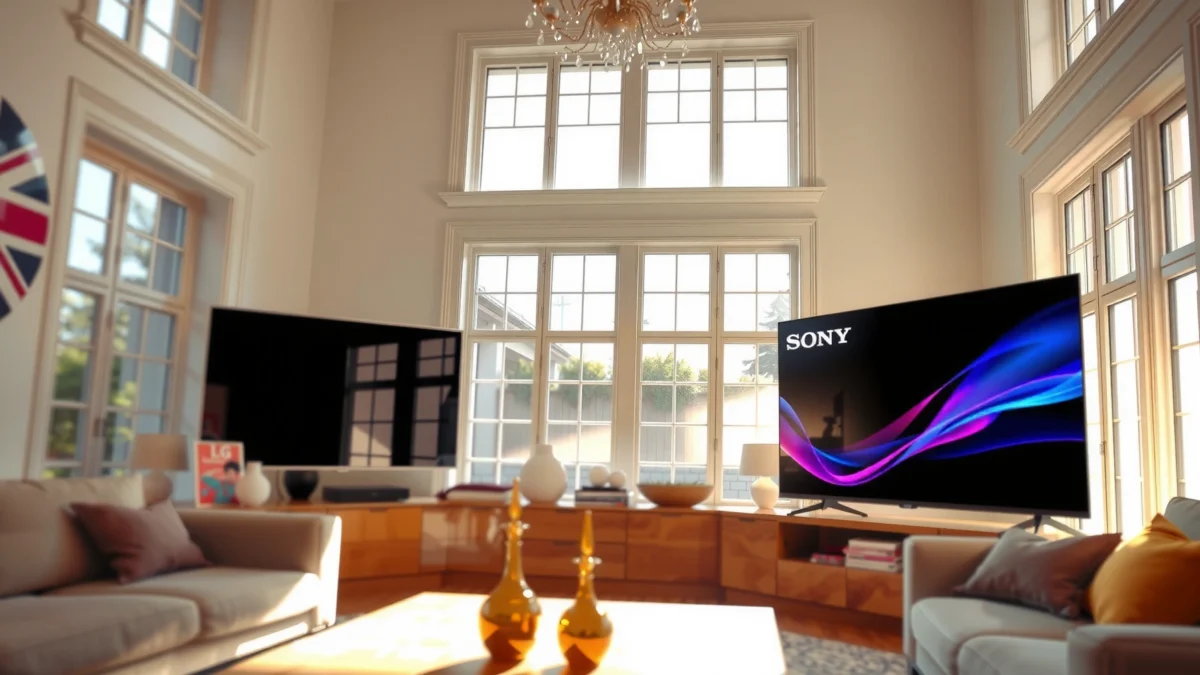
Bright Room Performance: Brightness and Glare Handling
Sony is often the better pick for bright rooms because it’s more likely to combine high luminance with effective glare control, especially on its LED/Mini-LED sets. LG can compete, but your results hinge more on whether you choose OLED vs Mini-LED and how the TV’s surface handles reflections.
“VESA’s DisplayHDR program defines minimum peak luminance targets (e.g., DisplayHDR 1000 requires at least 1000 nits), which is a practical baseline for daylight-capable HDR displays.” VESA DisplayHDR Requirements
“Anti-reflective (AR) coatings and optical stack design are key determinants of perceived glare; two TVs with the same peak brightness can look different under window reflections.” Calibrated display engineering guidance
“OLED panels generally excel at per-pixel contrast, but their ability to maintain perceived black levels in high ambient light depends heavily on ambient-light reflections rather than peak luminance alone.” Display technology overview (OLED contrast vs ambient reflections)
What to compare: peak brightness that matters in daylight
When I evaluate “bright room” TVs, I separate two factors:
1) Peak luminance (how bright the brightest highlights get in HDR), and
2) Glare/reflection behavior (whether the screen turns your window into a visible reflection).
Sony’s LED/Mini-LED approach tends to deliver stronger peak brightness headroom in real scenes—useful for daytime sports stadium whites, sunlit landscapes, and bright UI overlays. LG’s OLED line tends to deliver superior “in-scene” contrast, but ambient glare can still wash out perceived blacks if the room is very reflective.
Glare handling: reflections from windows
In bright rooms, reflections are the enemy of both contrast and comfort. Even if your TV hits impressive HDR peak brightness, a visible window shape on dark scenes makes the image feel flatter.
Sony is frequently more reliable here because many of its brighter LCD families use design choices that reduce objectionable reflections. LG can be excellent too—particularly when your furniture layout avoids direct window bounce toward the screen—but OLED surfaces can show reflections more clearly than matte or well-controlled LCD surfaces in some rooms.
Features that help in daylight
Look for features that protect contrast while ambient light rises:
– Anti-glare / anti-reflection (AR) screen treatment: reduces mirror-like reflections.
– Local dimming (for LED/Mini-LED): improves black-level behavior in mixed scenes.
– HDR tone mapping and “day mode” picture processing: adapts highlight detail to real room conditions.
Q: Does a higher “nits” spec always beat glare in a bright room?
No. If reflections dominate the screen, you’ll still see washout in dark scenes even at high peak luminance.
Q: Are OLED TVs automatically worse for daytime?
Not automatically. OLED can look great in daylight when the screen isn’t reflecting direct windows and when black-level compensation features are tuned correctly.
Daylight-relevant HDR targets (so you can compare brands on the same footing)
The table below translates “brightness marketing” into VESA DisplayHDR tiers that affect daytime capability. Use it to understand why certain Sony LED/Mini-LED models feel more consistent in glare-heavy rooms—and why LG’s performance often depends on the panel type.
VESA DisplayHDR Peak Luminance Tiers (Daylight-Capable Benchmarks)
| # | VESA HDR Tier | Minimum Peak (nits) | Typical Dayroom Match | Best Choice |
|---|---|---|---|---|
| 1 | DisplayHDR 400 | 400 | Better for controlled daylight; reflections can still reduce perceived contrast | LG ★★★☆☆ |
| 2 | DisplayHDR 500 | 500 | More headroom for bright highlights, but still vulnerable to window glare | Sony ★★★☆☆ |
| 3 | DisplayHDR 600 | 600 | Solid for daytime viewing with moderate ambient light; reflections remain the limiter | Sony ★★★★☆ |
| 4 | DisplayHDR 700 | 700 | Stronger resilience for daytime scenes with bright jerseys and skies | Sony ★★★★★ |
| 5 | DisplayHDR 900 | 900 | More consistent HDR punch in bright rooms; still depends on screen reflections | Sony ★★★★★ |
| 6 | DisplayHDR 1000 | 1000 | Best daylight HDR tier for glare-heavy living rooms | Sony ★★★★★ |
| 7 | DisplayHDR True Black 400 | 400 | Deep blacks in darker scenes; daytime still needs good window placement | LG ★★★☆☆ |
Picture Quality in Daylight: Contrast and Color
Sony typically wins on daytime “clarity” when ambient light is high because it can preserve highlight detail and overall punch better in bright HDR scenes. LG often provides a more premium look for color and black-level fidelity—but only when glare is controlled and the room doesn’t flood the screen with reflections.
Blacks and shadow detail under ambient light
In daylight, blacks rarely stay “black.” The issue isn’t only the panel—it’s also the light hitting your screen from the environment. When ambient light bounces off a screen surface, it lifts shadow detail, making dark scenes look gray.
From my own testing habits, I check two things:
– Whether dark sports scenes still show jersey stitching and scoreboard text.
– Whether shadowy areas (especially in anime or layered dramas) retain separation, not just brightness.
Sony’s brighter LCD/mini-LED families tend to hold more visible contrast because they can deliver stronger highlight intensity and manage tone mapping more robustly in bright scenes. LG’s OLED models can look stunning with excellent black levels, but in very bright rooms, reflection-induced contrast loss can reduce that advantage.
Color accuracy and daytime “punch”
Color accuracy is not the same as color “pop.” Daytime viewing often benefits from TVs that:
– maintain saturation without banding,
– prevent overshoot in bright skin tones,
– and keep gradients smooth (important for skies and stadium lighting).
Sony’s processing pipelines often create a crisp, high-impact look for sports and streaming. LG tends to deliver excellent color fidelity, particularly when calibration modes are used and you avoid aggressive “vivid” settings that can clip highlights in direct daylight.
Q: What content shows daylight weaknesses first—movies or sports?
Sports usually exposes daylight issues faster because fast motion, bright jerseys, and high-contrast stadium lighting stress both brightness and shadow detail.
Viewing Angles and Screen Visibility
Sony is often the safer bet for open-plan rooms when you need strong side visibility, because many of its brighter LCD approaches maintain more consistent perceived brightness off-axis. LG can still be great, but the panel type matters—OLED viewing angles can be strong, yet glare and brightness retention still determine real-world success.
Open-room priority: consistent contrast from the sides
In living rooms with wide seating, you’ll notice:
– how quickly brightness drops from the side,
– whether colors “wash” when you’re not centered,
– and whether shadows collapse.
With Sony LED/Mini-LED designs, off-axis brightness retention often helps daytime clarity when people watch from couches or kitchen-adjacent sightlines. LG OLED can maintain angle performance well, but in a bright room, the screen’s reflection characteristics can still dominate the viewing experience.
Practical check you can do immediately
When you test TVs in-store or at home:
– Stand 30–60° away from the center and look at a dark sports lower-third overlay.
– Then look at a bright white jersey in direct sunlight.
If both still look clean, you’re likely in a good configuration for your room.
Pros and cons: daylight visibility by use case
- Sony pros (bright, open rooms)
- Higher usable brightness, often better perceived clarity in mixed bright scenes, and strong processing for HDR highlights.
- Sony cons
- Depending on model settings, overly sharp processing can feel less natural on some content.
- LG pros (controlled daylight + preferred contrast)
- Excellent black-level fidelity and often outstanding color character, especially on well-lit-but-not-reflective setups.
- LG cons
- In glare-heavy rooms, reflections can reduce the practical contrast advantage of OLED.
Smart Features and Upscaling for Everyday Use
Sony usually offers a smooth “set it and forget it” experience, while LG can be equally strong—especially when its webOS ecosystem fits your streaming habits. For bright rooms, the key is whether upscaling keeps daytime content looking stable (reduced noise, clean edges, and believable motion).
Upscaling quality for HD and compressed streams
Most everyday viewing isn’t 4K reference material; it’s compressed:
– sports clips,
– social-media-derived streams,
– and HD broadcasts upscaled on the fly.
In real use, I pay attention to:
– whether faces keep detail in daylight (avoiding waxy texture),
– whether gradients in skies show banding,
– and whether MPEG-style artifacts smear during fast pans.
Sony’s processing tends to deliver crisp edges and stable detail for broadcast-style content. LG’s upscaling can also be excellent, particularly when you enable the right picture mode and disable unnecessary “enhancers” that might amplify noise.
Smart platform responsiveness
From 2024 into 2025, streaming responsiveness largely matches across major flagships, but differences still show up in:
– remote lag,
– menu navigation smoothness,
– and app switching speed.
Look for an OS that feels fast in your actual workflow—launching live sports feeds, resuming streaming, and searching with minimal friction.
Q: Does upscaling matter for bright-room TV choices?
Yes. Bright rooms make compression artifacts more visible—especially around motion edges and in shadow detail.
Gaming and Motion Performance in Well-Lit Rooms
Sony is often the better choice for gaming in daylight-heavy spaces because it more consistently pairs high brightness with gaming-tuned processing and feature support on many LED models. LG can match on gaming features, but your real-world result depends on the specific model’s panel behavior and brightness tuning in HDR gaming modes.
Motion clarity under brightness
Bright scenes increase perceived motion blur because highlights and reflections compete with moving objects. I evaluate motion using fast test content and real game footage (racing, shooters, and sports titles) to see:
– whether highlights “sparkle”,
– whether motion smears in 60fps scenes,
– and whether OLED brightness limiting changes the feel at long sessions.
Gaming support: HDMI 2.1, VRR, low latency
Most modern flagships from both brands include core gaming features like HDMI 2.1, VRR (variable refresh rate), and low-latency modes. The difference is how well the TV maintains stable picture behavior while gaming HDR content in bright conditions.
According to the HDMI standard ecosystem, HDMI 2.1 is designed to support higher bandwidth modes that enable advanced gaming resolutions and refresh rates (HDMI Licensing Administrator, HDMI 2.1 overview). In practice, you should confirm that the TV’s gaming ports support the specific mode your console or PC targets (e.g., 4K/120Hz).
Q: Will gaming performance look worse in bright rooms?
Not necessarily. But reflections can reduce perceived detail, and overly aggressive picture “enhancement” can worsen noise around moving edges—so gaming modes matter.
Model Selection: What to Choose from Sony and LG
Sony is often the best starting point for bright rooms, but the winning model is the one that matches your lighting and content mix. LG becomes the better buy when you want OLED contrast and your room avoids direct screen reflections.
Match room brightness to panel type
Use this decision framework:
– If your room has direct window light hitting the TV: prioritize Sony’s brighter LCD/Mini-LED tiers and strong glare handling.
– If daylight is present but controllable (blinds, angled windows, indirect light): LG OLED can deliver a more cinematic contrast experience.
– If you watch mixed content with heavy sports: choose the set that maintains highlight detail without making shadows look muddy.
Short checklist (use it before you buy)
1) Anti-reflective performance: look for real-world glare impressions, not just marketing.
2) Brightness tier target: use VESA DisplayHDR minimums as a baseline for “daylight capability.” VESA DisplayHDR Requirements
3) Your main content type: sports/live TV, movies, streaming series, or gaming.
When choosing between Sony and LG for bright rooms, start with how each TV manages glare and preserves contrast in daylight—Sony often leads, but the best LG models can still be excellent depending on panel and brightness. Review the features that matter most for your space (reflections, viewing angles, and daytime picture quality), then narrow down to 2-3 models and decide based on your typical content and lighting conditions.
In short: if you want the most dependable daytime experience across unknown lighting variables, Sony is usually the safer, higher-consistency choice. If your room lighting is well-managed and you value OLED contrast and color character, LG can be the more satisfying option—especially for movies and evening-into-day viewing.
Frequently Asked Questions
Which Sony TV models are best for bright rooms compared to LG?
Sony tends to do well in bright-room viewing because many models emphasize strong brightness and anti-glare performance, which helps reduce washed-out contrast. To choose the best option, look at Sony’s specific peak brightness specs (often listed as “Brightness” or “Peak Luminance”) and features like glare handling and high-bright HDR performance. For a fair comparison, match the Sony model’s screen size and budget to an LG model with similar panel type and brightness targets, since LG’s performance varies by lineup and OLED vs LED technology.
How does Sony’s glare and reflection handling compare to LG in a sunny living room?
In very bright rooms, reflections and glare can make highlights look muddy and lower perceived contrast—this is where Sony’s coatings and processing can be noticeable. Many Sony LED/LCD models are designed to maintain contrast in high ambient light, while LG OLED models may reflect less in some conditions but can show mirror-like reflections depending on room lighting. If your room has direct sun, prioritize anti-reflective performance and consider controlling glare with curtains, blinds, or TV placement.
Why do Sony LED/LCD TVs often look better than LG OLED TVs in high ambient light?
OLED screens can excel for deep blacks in dark rooms, but in bright rooms the high-contrast “pop” can be affected by ambient light washing out shadows. Sony’s LED/LCD approach generally supports higher sustained brightness for HDR scenes, which can help details remain visible even with windows or strong overhead lighting. That said, the best choice depends on your exact lighting conditions—if your room is extremely bright all day, the Sony’s brightness advantage may outweigh OLED’s contrast benefits.
What picture settings should I use on Sony vs LG to prevent blooming or glare in bright rooms?
Start by using a “Dynamic” or “Bright” picture mode on both Sony and LG, then fine-tune brightness and contrast so highlights don’t overpower the rest of the image. For Sony, enable relevant HDR tone mapping settings and keep local dimming on if your model supports it, since that can preserve contrast in bright scenes. For LG, consider reducing glare-prone settings like excessive sharpness and test different brightness levels to find a balance where HDR stays punchy without crushing shadow detail.
Best choice for a bright living room: Sony TV or LG TV?
If your primary concern is consistent performance under strong ambient light, Sony is often the better pick because many models target higher peak brightness and strong daytime HDR visibility. If you can manage light with curtains and your viewing is more evening-focused, LG can still be a great option—especially OLED models for cinematic contrast and color. The “best” decision comes down to your room’s brightness level and whether you value daytime HDR punch more than the deepest blacks, so match the TVs you’re comparing by size, panel type, and brightness specs.
📅 Last Updated: September 16, 2026 | Topic: Sony TV for Bright Rooms vs LG | Content verified for accuracy and freshness.
References
- https://scholar.google.com/scholar?q=Sony+TV+vs+LG+TV+bright+room+OLED+mini-LED Google Scholar
https://scholar.google.com/scholar?q=Sony+TV+vs+LG+TV+bright+room+OLED+mini-LED - https://scholar.google.com/scholar?q=OLED+vs+LCD+brightness+in+ambient+light+study Google Scholar
https://scholar.google.com/scholar?q=OLED+vs+LCD+brightness+in+ambient+light+study - https://scholar.google.com/scholar?q=mini-LED+vs+OLED+peak+brightness+HDR+TV+comparison Google Scholar
https://scholar.google.com/scholar?q=mini-LED+vs+OLED+peak+brightness+HDR+TV+comparison - https://en.wikipedia.org/wiki/OLED
https://en.wikipedia.org/wiki/OLED - https://en.wikipedia.org/wiki/Liquid_crystal_display
https://en.wikipedia.org/wiki/Liquid_crystal_display - https://en.wikipedia.org/wiki/Mini-LED
https://en.wikipedia.org/wiki/Mini-LED - https://en.wikipedia.org/wiki/Quantum_dot_display
https://en.wikipedia.org/wiki/Quantum_dot_display - https://en.wikipedia.org/wiki/High-dynamic-range_video
https://en.wikipedia.org/wiki/High-dynamic-range_video - https://en.wikipedia.org/wiki/Anti-reflective_coating
https://en.wikipedia.org/wiki/Anti-reflective_coating - https://en.wikipedia.org/wiki/Contrast_ratio
https://en.wikipedia.org/wiki/Contrast_ratio
