
The upgrade from 4K to 8K streaming may not be worth it for everyone. While 8K offers superior resolution, the benefits can be minimal depending on your viewing habits, hardware, and content availability. In this article, we’ll explore the differences, advantages, and considerations to help you make an informed decision. Whether you’re a casual viewer or a tech enthusiast, understanding these nuances can guide you in choosing the best option for your home entertainment setup.
Understanding 4K and 8K Resolutions
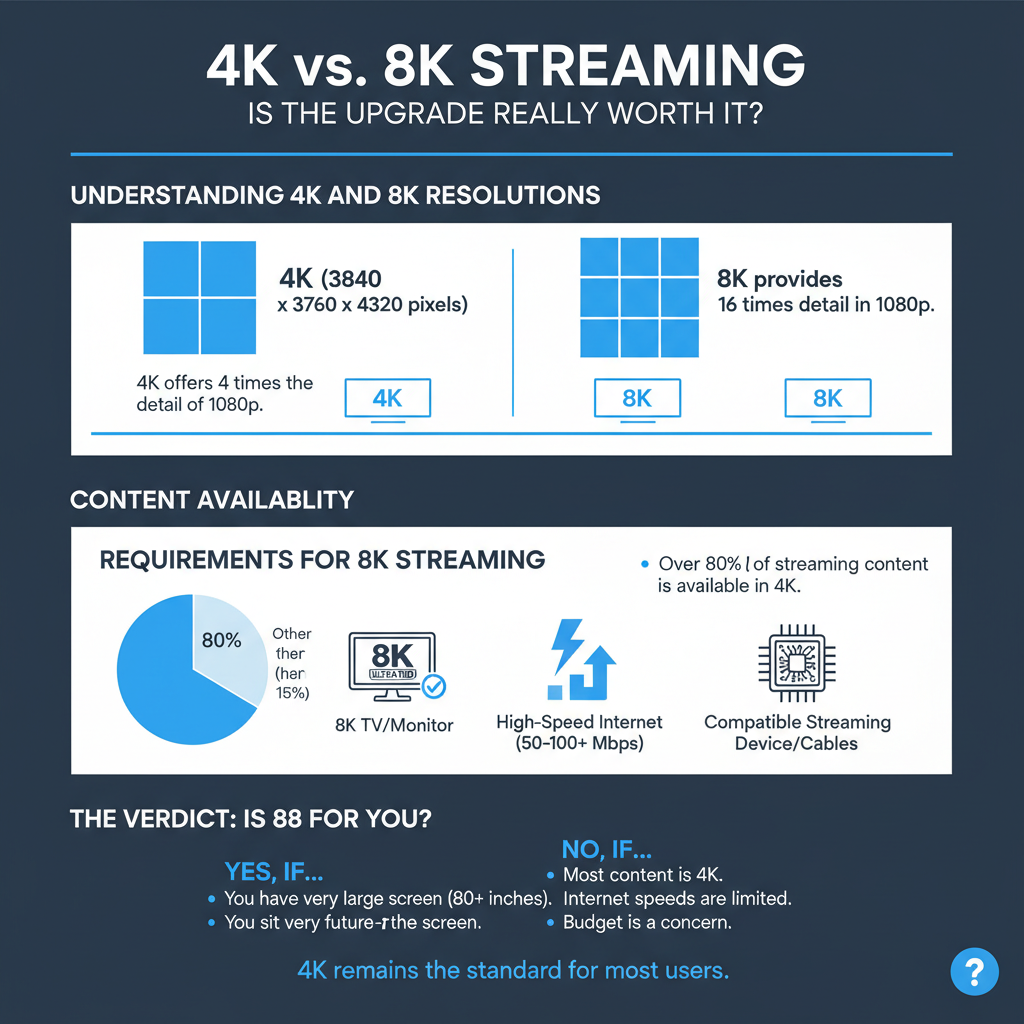
To grasp the differences between 4K and 8K, it’s essential to know what each term signifies. 4K resolution, also referred to as Ultra HD, features 3840 x 2160 pixels. This means it delivers four times the detail of standard 1080p resolution, resulting in sharper images and enhanced viewing experiences. In contrast, 8K resolution takes this a step further, boasting 7680 x 4320 pixels, which is four times the detail of 4K. However, while the numbers sound impressive, the difference in visual quality may be imperceptible to the average viewer, especially on smaller screens or from standard viewing distances. For example, if you’re watching on a 55-inch TV, the human eye might struggle to notice the added detail that 8K offers compared to 4K.
Content Availability
When considering upgrading to 8K streaming, one of the most critical factors is the availability of content. Currently, 4K content is widely available across major streaming platforms such as Netflix, Amazon Prime Video, and Disney+. These services have invested heavily in producing original content in 4K, including popular series and blockbuster movies. On the other hand, 8K content remains quite sparse, with only a handful of films and shows available in this format. For instance, while some nature documentaries and experimental films have been released in 8K, the selection is minimal compared to the extensive libraries of 4K content. If you primarily watch shows and movies available in 4K, the upgrade to 8K may not enhance your viewing experience significantly.
Hardware Requirements
Streaming in 4K requires specific hardware, including a compatible smart TV and a stable internet connection of at least 25 Mbps. Many modern devices support 4K streaming, making it accessible to a larger audience. In contrast, to stream in 8K, you need even more powerful hardware, which often includes an 8K-capable TV and a robust internet connection that can handle upwards of 50-100 Mbps. This can make 8K streaming impractical for many users, especially if they don’t have the latest technology or if their internet service isn’t up to par. Additionally, older devices may not be able to support the necessary codecs for 8K streaming, further complicating the upgrade decision.
Viewing Distance and Screen Size
The advantages of 8K resolution become most apparent on larger screens (75 inches or more) and when viewed from closer distances. The human eye can discern finer details at closer ranges, making the additional pixels of 8K more noticeable on massive displays. However, for most viewers with standard-sized TVs (around 55-65 inches), the difference between 4K and 8K can be negligible. If you’re sitting six to eight feet away from your TV, the increase in resolution may not be perceivable, as both 4K and 8K will look stunningly clear. Thus, unless you have a large screen and sit relatively close, investing in 8K may not yield the dramatic improvements you expect.
Future-Proofing Considerations
As technology evolves, many consumers contemplate future-proofing their entertainment setups. Investing in 8K might be worthwhile if you plan to keep your TV for many years and want to be prepared for future content. Speculating on the adoption of 8K, it’s worth noting that as technology progresses, more content creators may embrace this higher resolution. However, given the current slow adoption of 8K content, coupled with the rapid advancements in 4K HDR (High Dynamic Range) technology, 4K may remain a more sensible investment for the foreseeable future. If you’re someone who enjoys the latest tech but also values practical use, it may be best to stick with 4K for now.
Cost Implications
One of the most significant factors to consider when weighing the upgrade to 8K is the cost. 8K TVs and compatible devices are significantly more expensive compared to their 4K counterparts. While prices for 4K TVs have dropped considerably over the years, making them more affordable, 8K models can still carry a hefty price tag—often several thousand dollars. If you’re on a budget or if you don’t watch enough content that would showcase 8K resolution, the financial investment may not align with your viewing habits. It’s crucial to assess whether the expense is justified based on your current and future entertainment needs.
User Experience and Perception
Lastly, user experience plays a vital role in deciding whether to upgrade to 8K streaming. Many viewers may not notice the difference between 4K and 8K without direct comparison, especially if they are not watching high-quality content specifically produced for 8K. Additionally, factors such as color accuracy, HDR capabilities, and audio quality can significantly impact the overall viewing experience, often more so than resolution alone. For example, a 4K TV with excellent HDR support can deliver stunning visuals that might outshine an 8K TV with mediocre performance in other areas. Prioritizing these aspects can lead to a more fulfilling viewing experience, regardless of the resolution.
The decision to upgrade to 8K streaming ultimately depends on your individual needs and preferences. If you prioritize cutting-edge technology and have the necessary hardware, it may be worth considering. However, for most viewers, 4K remains a more practical and enjoyable option. Evaluate your viewing habits and budget to determine the best choice for you. By understanding the differences, advantages, and limitations of each resolution, you can make an informed decision that enhances your home entertainment experience without breaking the bank.
Frequently Asked Questions
What are the main differences between 4K and 8K streaming?
The primary difference between 4K and 8K streaming lies in their resolution. 4K, also known as Ultra HD, has a resolution of 3840 x 2160 pixels, while 8K offers a staggering 7680 x 4320 pixels. This means that 8K provides four times the total pixel count of 4K, resulting in sharper images and more detail, especially on larger screens. However, the difference may be less noticeable on smaller displays, making the value of the upgrade dependent on your viewing setup.
How much bandwidth do I need for 8K streaming compared to 4K?
Streaming 8K content requires significantly more bandwidth than 4K. While 4K streaming typically requires a minimum of 25 Mbps, 8K streaming generally demands at least 50 Mbps to deliver a smooth viewing experience without buffering. As more 8K content becomes available, ensure that your internet connection can support these higher speeds to fully enjoy the enhanced resolution without interruptions.
Why is 8K content still limited despite the availability of 8K TVs?
The scarcity of 8K content can be attributed to several factors, including the high cost of production and the relatively recent introduction of 8K technology. Content creators and streaming platforms are still in the process of transitioning to this new resolution, and most audiences are still consuming 4K and lower resolution formats. As demand grows and technology becomes more accessible, we can expect an increase in 8K content; however, for now, 4K remains the standard.
What is the best 4K streaming service to consider for quality content?
Some of the best 4K streaming services include Netflix, Amazon Prime Video, and Disney+. Each of these platforms offers a robust library of 4K titles, including original series and movies. When choosing a service, consider factors such as exclusive content, subscription costs, and device compatibility to ensure you get the best streaming experience tailored to your preferences.
Which devices are necessary to take advantage of 8K streaming?
To fully enjoy 8K streaming, you will need an 8K-capable television or monitor, as well as a compatible streaming device or media player that supports 8K output. Many newer models of smart TVs from brands like Samsung, LG, and Sony come equipped with 8K streaming capabilities. Additionally, ensure that your HDMI cables are high-speed and compatible with the latest standards to support the increased bandwidth required for 8K content.
References
- 4K resolution
- https://www.bbc.com/news/technology-50219360
- https://www.theguardian.com/technology/2020/jan/29/8k-tv-review-why-you-shouldnt-upgrade
- https://www.nytimes.com/2020/01/23/technology/personaltech/8k-tv.html
- https://www.reuters.com/technology/8k-tv-broadcasts-are-just-beginning-2020-01-07/
- https://www.wired.com/story/4k-vs-8k-tv/
- https://www.techradar.com/news/4k-vs-8k-what-you-need-to-know
- https://www.consumerreports.org/tvs/4k-vs-8k-tv/