
AI-powered upscaling enhances the picture quality of lower resolution content on modern TVs by utilizing advanced algorithms to analyze and improve image details. This means that your favorite movies, shows, and even video games can look sharper and more vibrant, regardless of their original resolution. In this article, you’ll learn how this technology works, its benefits, and what to consider when choosing a TV with AI upscaling capabilities.
What is AI-Powered Upscaling?
AI upscaling refers to the process of enhancing the resolution of an image or video using artificial intelligence algorithms. Unlike traditional upscaling methods, which simply stretch the pixels of a lower resolution image to fit a higher resolution screen, AI-powered upscaling goes a step further. It analyzes the content frame by frame, identifying patterns and characteristics within the images to recreate details that are often lost in the original source. By doing so, it can produce a more natural and visually appealing result.
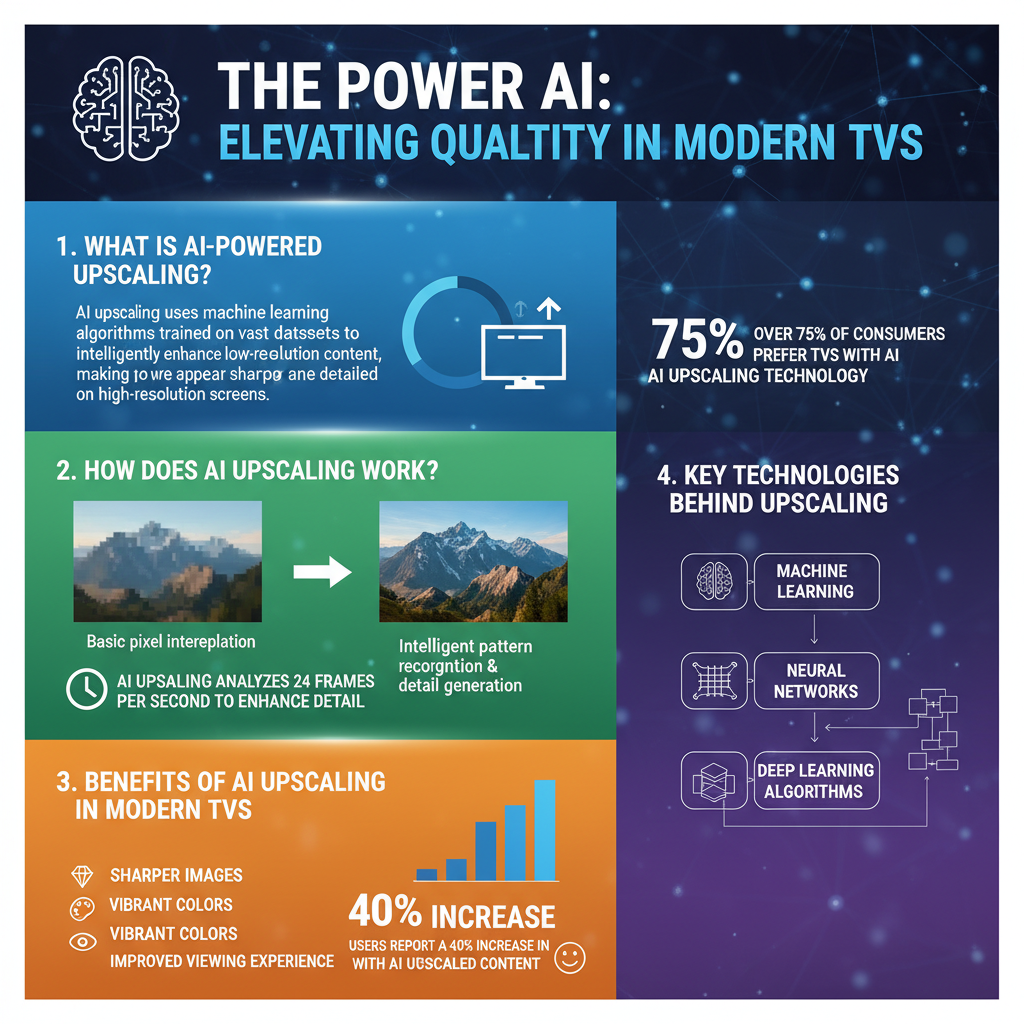
The fundamental difference between traditional upscaling and AI-driven techniques lies in the use of machine learning. Traditional methods might use simple algorithms to resize an image, leading to pixelation or blurriness. In contrast, AI upscaling leverages neural networks to predict and generate missing data, essentially “filling in the gaps” in a way that appears more authentic and detailed.
How Does AI Upscaling Work?
At the heart of AI upscaling are neural networks and machine learning, which mimic the way the human brain processes information. These networks are trained on vast datasets containing images of various resolutions and qualities. By learning from these images, the AI can recognize details, textures, and edges that should be present in a high-resolution version of a picture.
When you play a video or stream content on a TV with AI upscaling, the process begins by analyzing each frame of the content. The AI examines the image for patterns, shapes, and colors, and then enhances it by using its learned understanding to create additional details. For instance, if a low-resolution image shows a blurred background, the AI can infer what the background should look like based on similar higher-resolution images it has processed in the past. This frame-by-frame analysis results in a clearer, more detailed picture that enhances your viewing experience.
Benefits of AI Upscaling in Modern TVs
The most significant benefit of AI upscaling is the enhanced picture quality it provides. This technology transforms lower resolution content into a more immersive viewing experience, making every detail pop and ensuring that you don’t miss out on the intricate visuals of your favorite shows or games. Whether you’re watching an old film or streaming a new series, AI upscaling can dramatically improve the visual fidelity.
Moreover, AI upscaling excels with various types of content. In the realm of gaming, for example, it can enhance the graphics of older games that may not have been designed for modern high-definition displays. For streaming services, where the quality of content can vary greatly, AI upscaling ensures that even standard-definition videos look their best on large screens. This versatility makes AI upscaling an attractive feature for anyone looking to enhance their home entertainment setup.
Key Technologies Behind AI Upscaling
Several key technologies form the backbone of AI upscaling in modern TVs. One of the most common methods is deep learning, a subset of machine learning that uses layered neural networks to process complex data. This technology is employed by many manufacturers to develop proprietary upscaling algorithms that enhance the viewing experience.
Popular brands like LG, Samsung, and Sony have developed their own unique AI upscaling technologies. For instance, LG uses its AI Picture Pro technology, which analyzes content in real-time and optimizes it for the best viewing experience. Samsung’s Quantum Processor uses AI to improve resolution and color, while Sony’s X1 Ultimate processor employs advanced algorithms to enhance detail and reduce noise. Each brand has its strengths, and understanding these differences can help you choose the right TV for your needs.
What to Look for in a TV with AI Upscaling
When shopping for a TV with AI upscaling capabilities, there are several key specifications and features to consider. First and foremost, look for the type of AI technology used. Research the brand’s proprietary algorithms and read reviews to see how well they perform in real-world scenarios.
Another important factor is the TV’s resolution. A higher native resolution, such as 4K or 8K, paired with effective AI upscaling can yield stunning results, especially when watching content that is lower in resolution. Additionally, consider the input options and compatibility with various streaming services, as this can impact your overall viewing experience.
Leading brands that excel in AI upscaling include LG, Sony, and Samsung. Each of these manufacturers has received positive feedback for the quality of their upscaling features. Make sure to check for models that are specifically noted for their AI capabilities, as this will ensure you are getting the best technology available.
Common Misconceptions About AI Upscaling
Despite its impressive capabilities, there are some common misconceptions about AI upscaling that deserve clarification. One prevalent myth is that AI upscaling can turn any low-resolution content into true high-definition quality. While it can significantly enhance the appearance of lower-resolution images, it cannot create details that were never present in the original content. The improvement is substantial, but it’s essential to have realistic expectations.
Another misconception is that AI upscaling is a one-size-fits-all solution. Different types of content, such as animated films versus live-action dramas, may respond differently to upscaling processes. Some viewers might prefer the natural look of a film without heavy enhancements, while others may enjoy the enhanced vibrancy of AI upscaled content. Understanding these nuances can help you appreciate the technology better.
Future of AI-Powered Upscaling
The future of AI-powered upscaling in the television market looks promising. As AI technologies continue to evolve, we can expect even more sophisticated algorithms that will enhance image quality to unprecedented levels. Innovations in machine learning will likely lead to smarter upscaling techniques that can adapt to different types of content in real time, optimizing the viewing experience on the fly.
Additionally, we may see greater integration of AI upscaling with other smart TV features, such as voice control and personalization options. The combination of these technologies could lead to a more interactive and engaging viewing experience, making it easier for users to find and enjoy the content they love.
As AI continues to advance, the possibilities are endless. The integration of cutting-edge technology with home entertainment is set to redefine how we experience our favorite films, shows, and games.
Modern TVs equipped with AI-powered upscaling offer a remarkable viewing experience by transforming lower resolution content into stunning visuals. By understanding the workings of this technology, its benefits, and the essential features to look for, you can make an informed choice when selecting a TV. Embrace the future of home entertainment and enjoy the clarity that AI can bring to your screen!
Frequently Asked Questions
What is AI-powered upscaling in modern TVs and how does it work?
AI-powered upscaling is a technology used in modern televisions that enhances lower-resolution content to improve its visual quality on high-resolution displays, such as 4K and 8K screens. This process involves advanced algorithms and neural networks that analyze the image’s pixels, identifying patterns and details to fill in gaps and reduce noise. By utilizing machine learning, the TV can predict and generate more realistic textures and edges, resulting in a sharper and clearer picture, making your viewing experience more enjoyable.
Why should I consider a TV with AI upscaling features?
A TV with AI upscaling features can significantly enhance your viewing experience by providing better image quality for all types of content, including older movies and TV shows that were not originally produced in high resolution. This technology allows for a more immersive experience, making finer details more visible and colors more vibrant. Additionally, as content continues to evolve and high-resolution formats become more common, having a TV that can intelligently upscale will ensure that you get the most out of your media library.
How does AI upscaling differ from traditional upscaling methods?
Traditional upscaling methods typically rely on simple algorithms that stretch or interpolate pixels to fit a higher resolution, often resulting in blurry or pixelated images. In contrast, AI upscaling uses sophisticated machine learning techniques to analyze the content in real-time, understanding the context and characteristics of the image. This allows AI upscaling to produce sharper, more detailed images with improved clarity and depth, making it a superior choice for enhancing visual quality on modern TVs.
Which brands offer the best AI-powered upscaling in their TVs?
Several leading TV brands are known for their advanced AI-powered upscaling technologies, including LG, Samsung, Sony, and TCL. LG’s Alpha 9 AI Processor, for example, is designed to enhance image quality through deep learning, while Samsung’s Quantum Processor 8K optimizes picture quality for various types of content. Sony’s X1 Ultimate processor also employs advanced algorithms for exceptional upscaling. When choosing a TV, consider models from these brands that specifically highlight their AI upscaling capabilities for the best results.
Can AI upscaling improve the quality of streaming content?
Yes, AI upscaling can significantly improve the quality of streaming content, particularly when the original resolution is lower than the TV’s native resolution. Streaming services often compress video files, which can result in loss of detail. AI upscaling compensates for this by enhancing the resolution and clarity of the image in real-time, making even standard-definition or 1080p content look closer to 4K quality. This feature is especially beneficial for viewers who frequently watch streaming platforms, ensuring a more enjoyable viewing experience.
References
- https://en.wikipedia.org/wiki/Video_upscaling
- https://www.sciencedirect.com/science/article/pii/S0141933119308222
- https://www.bbc.com/news/technology-49064729
- https://www.theguardian.com/technology/2021/sep/29/ai-upscaling-television-pixel
- https://www.techrepublic.com/article/what-is-ai-upscaling-and-how-does-it-work/
- https://www.cnet.com/news/how-ai-upscaling-is-making-your-tv-picture-better-than-ever/