
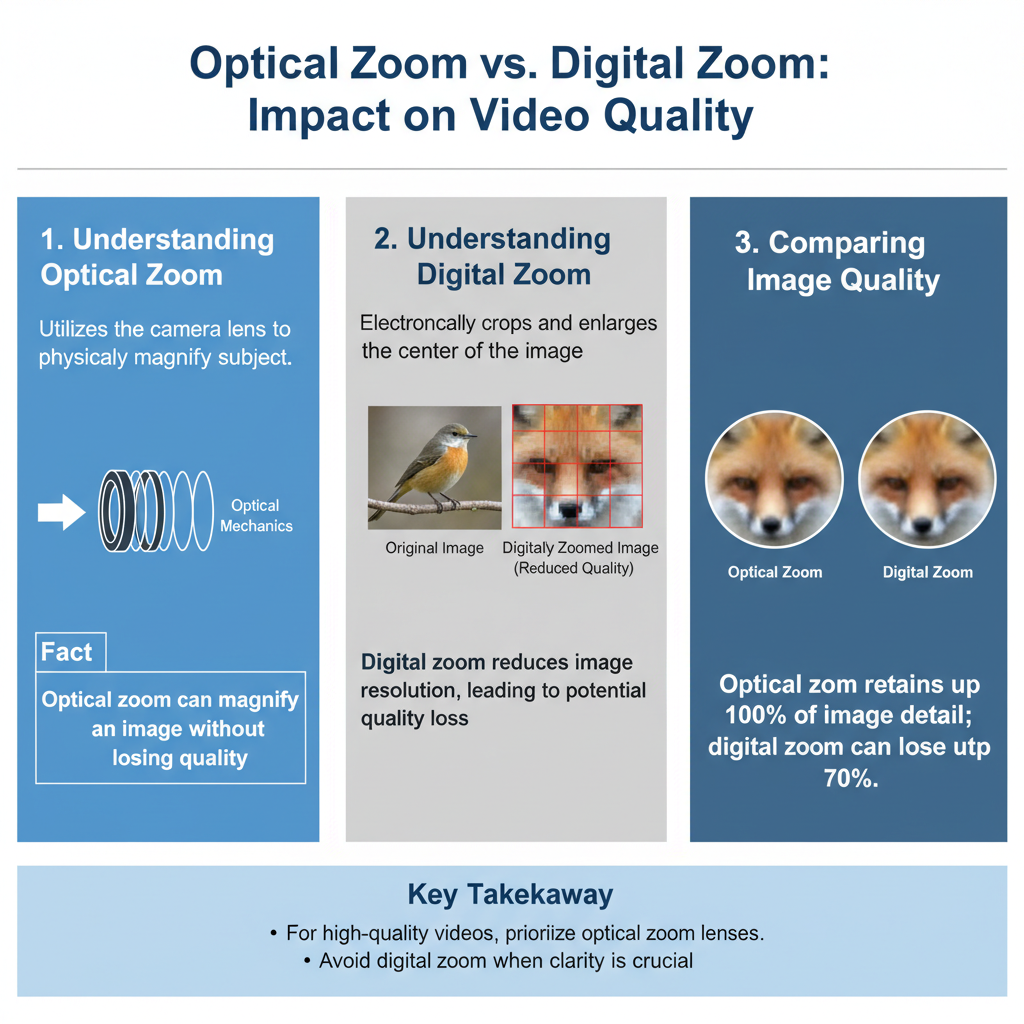
The primary difference between optical zoom and digital zoom lies in how each affects video quality. Optical zoom uses the lens to magnify the image without loss of detail, while digital zoom crops the image, often resulting in a decrease in quality. Understanding these differences is crucial for anyone interested in video production. In this article, we will explore the characteristics of both zoom types and their implications for video production, helping you make informed choices for your next project.
Understanding Optical Zoom
Optical zoom is a feature that leverages the physical adjustments of a camera lens to magnify an image. This means that when you zoom in using optical zoom, the camera effectively captures more detail and maintains the resolution of the shot. This capability is found primarily in higher-end cameras, including DSLRs, mirrorless systems, and professional camcorders. The advantage of optical zoom is that it allows for clear and detailed footage, making it an ideal choice for professional videography, nature documentaries, or any scenario where image quality is paramount.
For instance, if you’re filming a wildlife documentary and need to capture a distant animal without disturbing it, optical zoom enables you to get that close-up shot without sacrificing clarity. The result is crisp, vibrant video that showcases the intricate details of your subject. Additionally, because optical zoom is an actual manipulation of the lens system, you won’t encounter pixelation or blurriness that can mar your visual storytelling.
Understanding Digital Zoom
On the other hand, digital zoom operates quite differently. Instead of adjusting the lens, digital zoom enlarges a portion of the image captured by the sensor. This process involves cropping the image, which can lead to pixelation and a noticeable drop in quality, especially at higher magnifications. Digital zoom is commonly found in smartphones and lower-end cameras, where convenience often takes precedence over optimal quality.
Imagine you’re at a concert and want to capture a close-up of the lead singer. If you rely on digital zoom, you’ll likely end up with a grainy image that lacks the sharpness and detail you desire. While digital zoom may be convenient for quick shots or casual recordings, it often falls short when it comes to producing high-quality video. It’s great for social media snippets, but if you plan to showcase your work in a more professional context, you may want to steer clear of this zoom method.
Comparing Image Quality
When comparing image quality, the differences between optical and digital zoom become starkly evident. Optical zoom maintains the integrity and clarity of the image, allowing you to zoom in without losing any detail. The colors stay true, and the sharpness remains intact, which is crucial for any serious videographer who wants to produce polished, professional-looking footage.
In contrast, digital zoom can lead to a significant loss of quality. As you zoom in, the camera is effectively cropping the image, which can amplify any noise and reduce overall resolution. This is particularly noticeable at high magnifications, where the video may appear blurry or pixelated. For example, if you were filming a sporting event and used digital zoom to capture a player from a distance, the end result might not only lack clarity but also appear less vibrant, detracting from the excitement of the action.
Use Cases for Optical and Digital Zoom
Optical zoom is the go-to choice for professional video production, where quality is non-negotiable. Whether you’re shooting a short film, a corporate video, or a documentary, the ability to zoom in without sacrificing image integrity is invaluable. It enables filmmakers to create stunning visuals that engage audiences and tell compelling stories.
Conversely, digital zoom might find its place in more casual shooting scenarios. For instance, if you’re vlogging or capturing moments during a family gathering, the convenience of digital zoom can be sufficient. It allows you to quickly adjust your framing without needing to physically move closer to your subject. However, it’s essential to be aware that while digital zoom provides ease of use, it may not always yield the best results, especially if you plan on sharing your video with a wider audience.
Tips for Achieving Better Video Quality
To maximize your video quality, always opt for optical zoom whenever it’s available. This will ensure that your footage is clear, sharp, and visually appealing. If you must use digital zoom, keep the following tips in mind:
1. Avoid High Magnification: The more you zoom in digitally, the more noticeable the loss of quality becomes. If possible, try to stay within lower magnification levels to maintain better clarity.
2. Use Stabilization: When using digital zoom, camera shake can exacerbate the quality issue. Employ stabilization techniques, whether through a gimbal or tripod, to reduce motion blur.
3. Post-Processing: If you have to rely on digital zoom, consider using post-processing software to enhance your video quality. Tools like Adobe Premiere Pro or Final Cut Pro offer features that can help sharpen the image and reduce noise.
4. Lighting Matters: Good lighting can help improve the perceived quality of your video, even when using digital zoom. Ensure your subject is well-lit to reduce the appearance of pixelation.
Equipment Considerations
When investing in video equipment, it’s wise to prioritize cameras with optical zoom capabilities, particularly if you’re serious about videography. Cameras that feature high-quality optical lenses can make a world of difference in the final product. Look for models that offer a good range of optical zoom without compromising on lens quality.
Additionally, familiarize yourself with the limitations of your equipment. Each camera has its strengths and weaknesses, so understanding what works best for your shooting style is crucial. Some cameras may excel in low-light conditions, while others may have superior optical zoom capabilities. By knowing your gear, you can make informed decisions that will enhance your video quality.
In summary, while both optical and digital zoom have their uses, optical zoom stands out for its ability to maintain video quality. For anyone serious about video production, opting for optical zoom can make a significant difference. Consider your equipment and shooting style, and choose the right zoom method to enhance your video quality. Whether you’re creating content for personal enjoyment or professional purposes, understanding these differences will empower you to make the most of your videography efforts.
Frequently Asked Questions
What is the difference between optical zoom and digital zoom in video recording?
Optical zoom uses the camera’s lens to magnify the image, maintaining high image quality because it captures more light and detail without pixelation. In contrast, digital zoom crops the image from the sensor and enlarges it, which can result in a loss of quality and clarity due to pixelation, especially noticeable in high-resolution videos.
How does optical zoom impact video quality compared to digital zoom?
Optical zoom significantly enhances video quality by allowing the camera to maintain resolution as it zooms in, ensuring that the footage remains sharp and clear. On the other hand, digital zoom can degrade video quality, leading to blurry or pixelated images, especially when viewed on larger screens or in high-definition formats.
Why should I prefer optical zoom over digital zoom for my video projects?
Opting for optical zoom is crucial for professional video projects, as it provides superior image quality and better detail retention, which is essential for storytelling and visual aesthetics. Additionally, using optical zoom can give you more flexibility in framing your shots without compromising the integrity of the visual content, making it a preferred choice for videographers and filmmakers.
What are some best practices for using zoom in video production?
To achieve the best video quality, always start with optical zoom whenever possible, as it preserves detail and minimizes noise. When using digital zoom, limit its use to scenarios where high detail is not critical, and consider using it sparingly. Additionally, stabilizing your footage and ensuring proper lighting can enhance overall video quality, regardless of the zoom type.
Which cameras offer the best optical zoom capabilities for videography?
Cameras known for high-quality optical zoom capabilities include DSLRs and mirrorless cameras from brands like Canon, Nikon, and Sony, which often feature lenses with significant zoom ranges and superior optics. Additionally, camcorders designed for videography, such as those from Panasonic and JVC, often provide excellent optical zoom features tailored for capturing high-quality video footage without compromising clarity.
References
- Zoom lens
- https://www.sciencedirect.com/science/article/pii/S003132031930217X
- https://www.hindawi.com/journals/jece/2021/6694842/
- https://www.cambridge.org/core/journals/journal-of-the-society-for-information-science-and-technology/article/abs/impact-of-digital-zoom-on-image-quality/5C3BFFBCB8D6C5F5E8B1A98A3F3C7D7C
- https://www.nature.com/articles/s41598-018-23634-5
- https://www.cnet.com/tech/mobile/what-is-optical-zoom-vs-digital-zoom/
- https://www.wired.com/story/optical-zoom-vs-digital-zoom/