Advancements in AI-powered noise reduction technology significantly enhance the quality of low-light videos by effectively minimizing grain and noise, resulting in clearer and more visually appealing footage. This technology employs sophisticated algorithms to analyze video frames, allowing for the removal of unwanted noise while preserving essential details. As a result, filmmakers and content creators can achieve stunning visuals without extensive post-production work. In this article, we will explore how this technology functions, its benefits, and its applications in various fields.




Understanding Noise in Low-Light Videos

To grasp the impact of AI-powered noise reduction, it’s essential to understand what noise is and how it affects video quality. In the context of video, “noise” refers to random variations in brightness or color that can degrade the clarity of an image. This noise is often particularly noticeable in low-light conditions, where the lack of available light leads cameras to amplify signal levels, inadvertently boosting both the desired image and the unwanted noise.
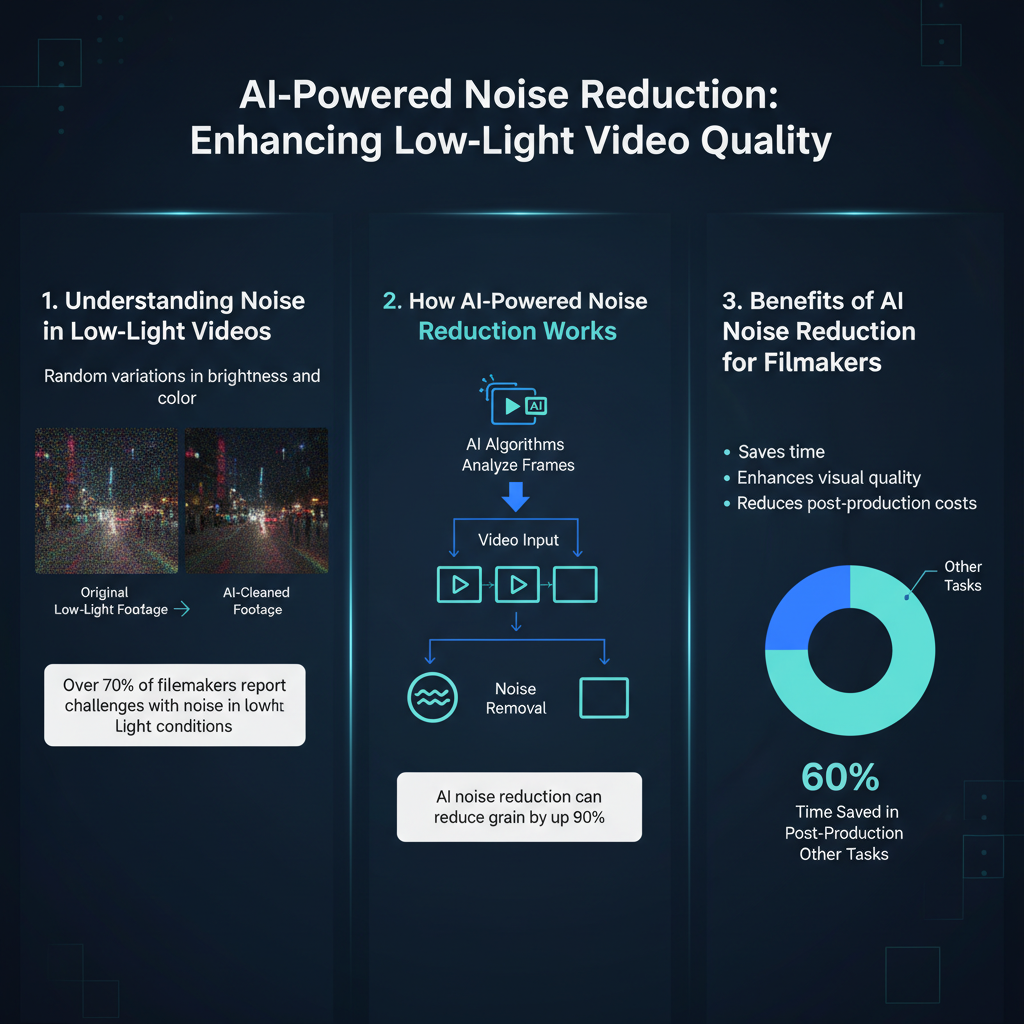
Common sources of noise in low-light situations include sensor limitations, high ISO settings, and environmental factors such as low ambient lighting or fluctuating light sources. For instance, when shooting a scene in a dimly lit room, the camera’s sensor may struggle to capture clear images, resulting in grainy footage that distracts viewers and undermines the intended visual impact. Understanding these sources allows filmmakers to better appreciate the role of AI in noise management.
How AI-Powered Noise Reduction Works
AI-powered noise reduction employs advanced algorithms that utilize machine learning techniques to identify and eliminate noise while preserving the integrity of the video. These algorithms analyze each frame, distinguishing between the actual image data and the noise that needs to be removed. This process often involves training the AI on large datasets of both clean and noisy images, allowing it to learn the patterns of noise and how to negate them effectively.
In contrast to traditional noise reduction methods, which often rely on basic filtering techniques that can blur or distort the image, AI approaches are more nuanced. Traditional methods may apply uniform adjustments across the entire frame, leading to loss of detail and an artificial appearance. AI-driven solutions, however, can tailor their noise reduction efforts based on the unique characteristics of each frame, resulting in cleaner images that retain natural detail and texture.
Benefits of AI Noise Reduction for Filmmakers
The benefits of AI noise reduction technology for filmmakers are profound. First and foremost, it significantly improves visual clarity, allowing for professional-grade output even in challenging lighting conditions. This capability can elevate the overall quality of a project, making it more appealing to audiences and enhancing storytelling potential.
Additionally, AI noise reduction can be a cost-effective solution for filmmakers. By reducing the need for extensive post-production work to fix noise issues, filmmakers can save both time and money. Instead of spending hours in editing software trying to salvage grainy footage, they can focus on other creative aspects of their projects. This efficiency can be a game-changer, especially for independent filmmakers or small production teams working with limited budgets.
Applications in Various Industries
AI-powered noise reduction technology has found applications beyond the realm of filmmaking and content creation. In the world of surveillance and security, for instance, clear video footage is crucial for identifying potential threats or incidents. AI noise reduction can enhance the quality of low-light surveillance video, making it easier for security personnel to monitor and respond to situations effectively.
Similarly, in the field of medical imaging, clear visuals are vital for accurate diagnoses. AI-driven noise reduction can help improve the quality of images captured in low-light environments, such as endoscopic procedures, leading to better outcomes for patients. The versatility of this technology opens doors for various industries seeking to improve visual quality in low-light conditions.
User-Friendly Tools and Software
As AI noise reduction continues to gain traction, numerous software options have emerged to cater to different user needs. Popular tools include Adobe Premiere Pro’s built-in noise reduction effects, Neat Video, and DaVinci Resolve, which all utilize AI algorithms to enhance video quality. These programs offer user-friendly interfaces and presets that make it accessible even for those with limited technical expertise.
When selecting the right tool, consider factors such as the complexity of your projects, your budget, and the specific features you need. For example, if you are a professional filmmaker, investing in advanced software with comprehensive editing capabilities may be worthwhile. Conversely, casual content creators might prefer more straightforward, cost-effective solutions that still deliver impressive results.
Future Trends in Video Technology
Looking ahead, the evolution of AI in video production is poised for remarkable advancements. As AI technology continues to improve, we can expect even more sophisticated algorithms that not only reduce noise but also enhance other aspects of video quality, such as color correction and dynamic range.
Moreover, the implications for consumer electronics and streaming services could be significant. As AI becomes more integrated into cameras and smartphones, the ability to capture high-quality low-light video will become more accessible to everyday users. This democratization of technology could lead to a new wave of content creation, where anyone can produce visually stunning videos effortlessly.
The advancements in AI-powered noise reduction are transforming how we capture and produce low-light videos, allowing for unprecedented clarity and detail. As filmmakers, content creators, and various industries adopt these technologies, the potential for high-quality visual storytelling continues to grow. Explore the tools mentioned and consider integrating AI noise reduction into your video production workflow for stunning results. With the rapid pace of technological progress, there’s never been a better time to embrace these innovations and elevate your video projects to new heights.
Frequently Asked Questions
What is AI-powered noise reduction and how does it work in low-light videos?
AI-powered noise reduction is a technology that utilizes artificial intelligence algorithms to analyze and filter out unwanted noise in video footage, especially in low-light conditions. By assessing pixel patterns and differentiating between noise and actual image content, the AI can effectively enhance clarity and detail, resulting in smoother, more visually appealing videos. This process is particularly beneficial in low-light settings where traditional noise reduction methods might struggle.
How does AI noise reduction improve video quality in dark environments?
In dark environments, video footage often suffers from graininess and visual artifacts known as noise, which can obscure important details. AI noise reduction enhances video quality by intelligently identifying and removing this noise while preserving fine textures and colors. As a result, viewers can enjoy clearer images with better contrast, making the content more engaging and professional-looking, even in challenging lighting situations.
Why should filmmakers use AI noise reduction tools for low-light shooting?
Filmmakers should consider using AI noise reduction tools to elevate the quality of their low-light footage, as these tools provide an efficient solution to a common problem. By minimizing noise, AI technology can significantly enhance the overall clarity and aesthetic of the video, allowing filmmakers to capture striking visuals without compromising on quality. Furthermore, it saves time in post-production, enabling a smoother workflow and faster turnaround on projects.
What are the best AI noise reduction software options for enhancing low-light videos?
Some of the best AI noise reduction software options for improving low-light videos include Adobe Premiere Pro’s Neat Video plugin, Topaz Video Enhance AI, and DaVinci Resolve’s built-in noise reduction features. These tools utilize advanced AI algorithms to deliver impressive results, allowing users to achieve professional-grade video quality. When choosing software, consider factors such as ease of use, compatibility with your editing workflow, and specific features that meet your needs.
Which factors influence the effectiveness of AI noise reduction in low-light video footage?
Several factors influence the effectiveness of AI noise reduction in low-light video, including the quality of the original footage, the specific AI algorithm used, and the level of noise present. High-quality footage with less inherent noise will yield better results when processed through AI noise reduction tools. Additionally, advanced algorithms that learn from a diverse range of video data often produce superior outcomes, making it crucial to select software that employs the latest AI technology for optimal performance.
References
- Noise reduction
- https://www.sciencedirect.com/science/article/pii/S0031320319306583
- https://www.nature.com/articles/s41598-020-68061-7
- https://www.techrepublic.com/article/how-ai-powered-noise-reduction-is-improving-video-quality/
- https://www.wired.com/story/how-ai-is-improving-video-quality/
- https://www.its.nyu.edu/publications/pdfs/AINoiseReduction.pdf
- https://www.bbc.com/future/article/20200928-how-ai-can-help-us-see-better-in-the-dark
- https://www.researchgate.net/publication/338704031_Artificial_Intelligence_for_Low-Light_Video_Enhancement
- https://www.nist.gov/news-events/news/2021/10/how-ai-can-help-improve-video-technology