
Smart displays are a game-changer for home automation, acting as a central hub that allows you to control your smart devices, manage your schedules, and access information with ease. Whether you’re looking to streamline your daily tasks or enhance your home security, the right smart display can significantly improve your smart home experience. In this article, we’ll explore the best smart displays available on the market, their standout features, and how they can integrate seamlessly into your lifestyle.
Key Features of Smart Displays
Smart displays come packed with features that enhance user interaction and improve the overall smart home experience.
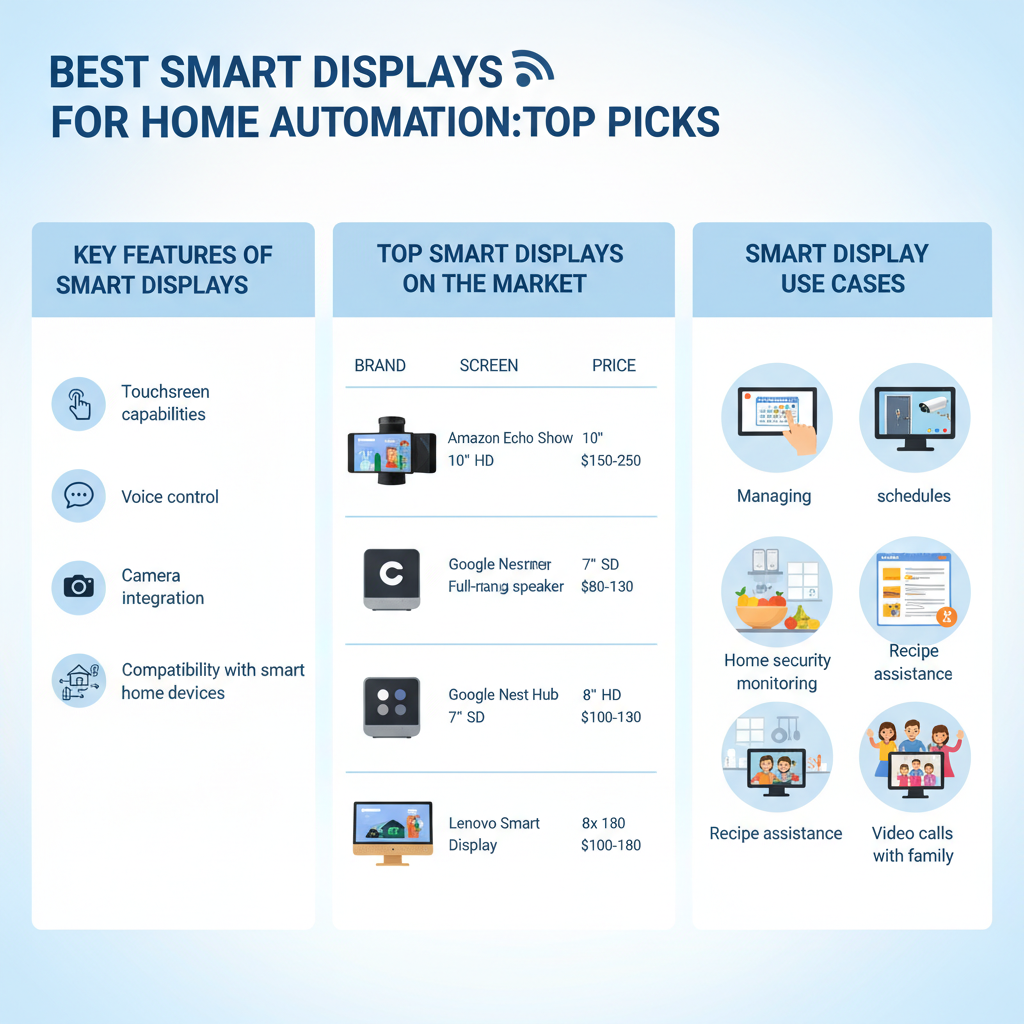
– Touchscreen Capabilities: One of the most user-friendly aspects of smart displays is their touchscreen functionality. This allows for intuitive navigation, making it easy to swipe through apps, check the weather, or play your favorite music. A larger screen often translates to better visibility, especially when displaying multiple pieces of information at once.
– Voice Control Integration: Most smart displays come equipped with popular voice assistants like Amazon Alexa or Google Assistant. This integration allows you to control your smart home devices with simple voice commands, making it effortless to adjust settings while you’re busy with other tasks—like cooking or cleaning.
– Compatibility with Various Smart Home Devices: The best smart displays are versatile and can connect with a wide range of smart devices, including lights, thermostats, cameras, and even door locks. This compatibility ensures that you can create a cohesive smart home ecosystem tailored to your needs.
Top Smart Displays on the Market
When it comes to choosing a smart display, a few standout models have garnered positive reviews and user satisfaction.
– Amazon Echo Show 10: This smart display features a unique rotating screen that follows you as you move around the room, ensuring you have the best view for video calls or recipes. Additionally, it includes robust security features, such as a built-in camera that can be used for monitoring your home when you’re away.
– Google Nest Hub Max: With its large 10-inch display, the Nest Hub Max is perfect for video calling and streaming content. It integrates seamlessly with Nest cameras, enabling you to monitor your home’s security effortlessly. Plus, its ambient display feature shows useful information without being intrusive.
Smart Display Use Cases
Smart displays can serve various functions that enhance your daily life and home security.
– Home Security Monitoring: Many smart displays have built-in cameras or can connect to existing security cameras. This capability allows you to monitor your home in real-time, receive alerts for unusual activity, and even communicate with visitors at your door through two-way audio.
– Managing Daily Schedules and Reminders: With voice control, you can set reminders, manage your calendar, and check your to-do lists without lifting a finger. For busy households, this hands-free functionality can be a lifesaver, ensuring everyone stays on track.
Comparing Screen Sizes and Resolutions
Selecting the right screen size and resolution is essential for maximizing your smart display experience.
– Importance of Screen Size: The size of the screen can influence where you place your smart display. For instance, a larger 10-inch screen might be more suitable for a kitchen or living room, where multiple people can view it at once. Conversely, a smaller display might be ideal for a bedside table or a home office.
– Impact of Resolution: A higher resolution can significantly enhance your viewing experience, especially when watching videos or viewing photos. Look for displays that offer at least 720p resolution for clear images and crisp text. This is particularly important if you plan to use it for video calls or streaming services.
Integration with Smart Home Ecosystems
One of the major advantages of smart displays is their ability to integrate with various smart home ecosystems.
– Compatibility with Smart Devices: Smart displays can connect to a multitude of devices, including smart lights, thermostats, and security systems. This compatibility allows you to control everything from one central location, simplifying your daily routines.
– Benefits of a Single App: Many smart displays come with their own companion app that offers a user-friendly interface for managing your smart devices. Using a single app to control multiple devices not only saves time but also reduces the complexity of managing different systems.
Privacy and Security Considerations
As smart displays connect to the internet and often include cameras and microphones, privacy and security should be top of mind.
– Privacy Features: Look for models that offer physical camera covers or microphone controls. These features allow you to disable the camera and microphone for added peace of mind when privacy is a concern.
– Importance of Software Updates: Regular software updates are crucial for maintaining the security of your device. Manufacturers often release updates that protect against vulnerabilities. Ensure that your smart display is set to automatically update so you can enjoy the latest features and security enhancements without hassle.
Future Trends in Smart Displays
The landscape of smart displays is continually evolving, with exciting advancements on the horizon.
– Advancements in AI and Machine Learning: Future smart displays are expected to leverage AI and machine learning to offer more personalized experiences. This could include smarter recommendations based on your usage patterns and preferences.
– Growth of Video Calling and Remote Work Functionalities: With the rise of remote work, smart displays are likely to enhance their video calling capabilities. Expect features like improved camera quality, better sound, and even virtual backgrounds to become standard, making remote communication more effective and enjoyable.
In summary, smart displays play a pivotal role in home automation, offering convenience, connectivity, and enhanced functionality. By choosing the right device tailored to your needs and preferences, you can transform your living space into a smart haven. Take the first step towards a more automated lifestyle by exploring options that fit seamlessly into your daily routine, and enjoy the benefits of a connected home!
Frequently Asked Questions
What features should I look for in the best smart displays for home automation?
When selecting the best smart displays for home automation, consider features such as voice assistant compatibility (like Amazon Alexa or Google Assistant), screen size, camera quality for video calls, and smart home integration capabilities. Additionally, look for displays with high-resolution screens, touch functionality, and built-in speakers to enhance your multimedia experience. These features will ensure that the smart display serves as a central hub for managing your connected devices effectively.
How can a smart display improve my home automation experience?
A smart display enhances your home automation experience by serving as a visual interface for managing smart devices, displaying information, and providing hands-free control through voice commands. With the ability to show camera feeds, control lighting, adjust thermostats, and access calendars, smart displays simplify interaction with your smart home ecosystem. Additionally, they can provide visual feedback and reminders, making it easier to stay organized and connected.
Why should I choose a smart display over a traditional smart speaker for home automation?
Choosing a smart display over a traditional smart speaker provides several advantages, including visual interaction and richer content presentation. With a smart display, you can see visual cues, such as weather updates, video feeds from security cameras, and recipe steps while cooking. This visual element enhances the usability of home automation tasks, making it more intuitive and engaging compared to voice-only interactions offered by traditional smart speakers.
Which smart display is best for integrating with my existing smart home devices?
The best smart display for integrating with your existing smart home devices largely depends on the ecosystem you’ve already adopted. For homes equipped with Amazon devices, the Echo Show series is highly recommended due to its compatibility with a wide range of smart home products. Conversely, if you’re invested in Google Home, the Nest Hub series is an excellent choice for seamless integration. Always check compatibility with your specific devices to ensure optimal functionality.
How much should I expect to spend on a quality smart display for home automation?
The price of a quality smart display for home automation can range from around $80 to over $300, depending on the brand, features, and screen size. Budget models typically offer basic functionalities, while premium options provide larger screens, better sound quality, and advanced features like built-in cameras and improved processing power. Assess your needs and budget to find a smart display that delivers the best value for enhancing your home automation experience.
References
- Smart speaker
- https://www.wired.com/story/best-smart-displays/
- Best Smart Displays of 2026: Home Control at a Touch – CNET
- https://www.techradar.com/news/best-smart-display
- https://www.tomsguide.com/us/best-smart-displays,review-2204.html
- https://www.theverge.com/2021/11/2/22760303/smart-display-google-amazon-best-buy-guide