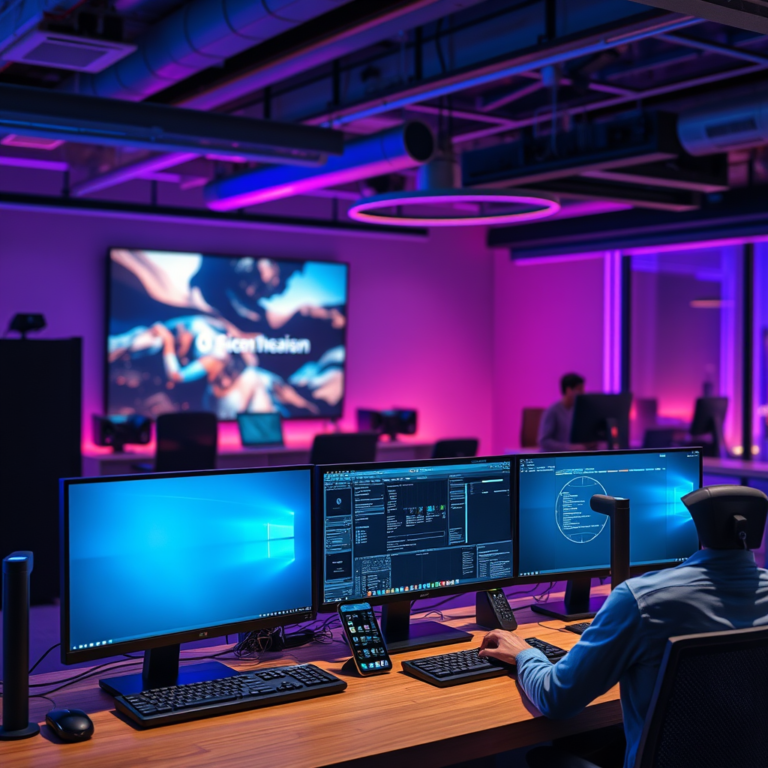

Edge computing is essential for optimizing 5G-powered video services, as it significantly reduces latency and enhances data processing speeds. By bringing computation and storage closer to the user, edge computing enables seamless streaming experiences and supports high-quality video delivery. In this article, we will explore how edge computing is transforming video services in the 5G landscape.
Understanding Edge Computing in the Context of 5G

Edge computing refers to the practice of processing data near the source of data generation rather than relying solely on centralized data centers. This decentralization allows for quicker data processing and reduced transmission times, which is crucial for applications demanding real-time responses. In the context of 5G, edge computing thrives on the network’s high-speed capabilities and low latency. The synergy between these two technologies creates an environment where video services can flourish, providing users with immediate access to rich content without frustrating delays.
5G networks are designed to support an enormous number of devices while delivering ultra-reliable low-latency communications (URLLC). When paired with edge computing, which allows data to be processed near the user, the result is a powerful combination that enhances the user experience significantly. For example, imagine watching a live sports event where every moment is streamed in real-time without a hitch—this is made possible by the edge computing model working in tandem with 5G technology.
Benefits of Edge Computing for Video Services

One of the primary benefits of edge computing for video services is the dramatic reduction in latency. Lower latency means that video streams can be delivered to users almost instantaneously, creating a more engaging experience. For instance, in the fast-paced world of online gaming or live broadcasting, even a few milliseconds of delay can disrupt user enjoyment. By processing data at the edge, businesses can ensure that their video services are not only quick but also responsive to user interactions.
Additionally, edge computing improves bandwidth management and efficiency. With the ability to process data locally, less information needs to travel back and forth to a centralized server, which is particularly beneficial in areas with limited internet connectivity. This efficient data flow means that more users can enjoy high-quality video streams simultaneously without experiencing buffering. For example, during major events like the Super Bowl, edge computing allows service providers to handle millions of concurrent streams without compromising quality.
Real-Time Data Processing and Analytics
Edge computing empowers real-time processing of video data, allowing service providers to analyze and respond to user behavior on the fly. This capability is essential for delivering personalized content. For instance, platforms like Netflix and YouTube can track user preferences and viewing habits in real time, adjusting recommendations and advertisements instantaneously. This level of personalization can significantly enhance user satisfaction and engagement.
Moreover, the integration of analytics at the edge enables providers to gather insights into how users interact with video content. This data can inform decisions about content strategy, such as what types of shows to produce or which features to enhance. With real-time analytics, businesses can pivot quickly in response to trends, ensuring that they remain relevant in a competitive marketplace.
Enhancing Content Delivery Networks (CDNs)
Edge computing plays a vital role in optimizing Content Delivery Networks (CDNs) for video streaming. Traditional CDNs rely on a centralized model where content is delivered from a single location, which can lead to delays and buffering. By leveraging edge computing, CDNs can cache and deliver content from servers that are geographically closer to users. This reduces the distance data must travel, resulting in faster load times and a smoother viewing experience.
For example, consider a user in New York trying to access a video hosted on a server in California. Without edge computing, the data must traverse the entire distance, potentially leading to lag. However, if a copy of that video is cached on an edge server in New York, the user can access it almost instantaneously. This not only enhances user experience but also optimizes network resources, allowing providers to serve more users effectively.
Supporting Emerging Video Technologies
Edge computing is also instrumental in supporting emerging technologies like augmented reality (AR) and virtual reality (VR), both of which require high bandwidth and low latency for optimal performance. These technologies often demand real-time data processing to create immersive experiences, and edge computing can deliver that by reducing the time it takes to process and render video data.
For instance, in a VR gaming environment, if latency is too high, users may experience motion sickness or disorientation. By processing data at the edge, gaming companies can ensure that the experience is fluid and responsive. Similarly, in the world of AR applications, such as those used in retail to visualize products in real-world settings, edge computing allows for quick rendering of overlays, making the shopping experience more interactive and enjoyable.
Challenges and Considerations
Despite its many benefits, edge computing does come with challenges, particularly concerning security and data privacy. With data being processed closer to the user, there are increased risks of breaches and unauthorized access. Businesses must implement robust security measures to ensure that user data remains protected.
Additionally, the infrastructure required to support edge computing can be a significant investment. Organizations need to evaluate their existing networks and determine if upgrades are necessary to accommodate edge deployments. This includes ensuring sufficient bandwidth, processing power, and storage capacity at the edge.
Future Trends in Edge Computing and Video Services
Looking ahead, the advancements in edge computing are poised to revolutionize video service quality. As technology continues to evolve, we can expect improvements in processing speeds and capabilities, which will further enhance user experiences. Innovations like AI-driven content delivery and automated video editing are on the horizon, promising to make video services even more personalized and engaging.
Furthermore, the adoption of 5G is expected to accelerate, expanding the reach of edge computing solutions. As more devices become connected, the demand for high-quality video content will only increase. Businesses that leverage edge computing will be in a prime position to meet these demands, driving user engagement and satisfaction to new heights.
Summarizing the transformative role of edge computing in 5G-powered video services highlights its importance for enhancing user experiences and enabling new technologies. As the demand for high-quality video content continues to grow, businesses should consider leveraging edge computing to stay competitive. Explore how you can implement edge solutions to elevate your video services today!
Frequently Asked Questions
What is edge computing and how does it relate to 5G-powered video services?
Edge computing refers to the processing of data near the source of data generation, rather than relying on a centralized data center. In the context of 5G-powered video services, edge computing minimizes latency and enhances real-time processing capabilities, which is essential for applications like live streaming, augmented reality, and interactive video experiences. As 5G networks provide faster speeds and greater bandwidth, integrating edge computing allows for more efficient video delivery and a richer user experience.
How does edge computing improve video streaming quality in 5G networks?
Edge computing significantly enhances video streaming quality in 5G networks by reducing latency and buffering times. By processing video data closer to the end-user, edge nodes can deliver content more quickly and efficiently, resulting in smoother playback and higher resolutions. This is particularly important for high-definition and 4K streaming, where data demands are higher, ensuring users enjoy seamless viewing experiences without interruptions.
Why is low latency crucial for video services in a 5G environment?
Low latency is critical for video services in a 5G environment because it directly impacts user experience, especially in applications requiring real-time interaction, such as gaming or live broadcasting. With 5G’s potential to achieve latencies as low as 1 millisecond, the integration of edge computing ensures that video content is delivered instantaneously, reducing lag and enabling interactive features. This responsiveness is essential for maintaining viewer engagement and satisfaction.
What are the best use cases for edge computing in 5G video applications?
The best use cases for edge computing in 5G video applications include live sports streaming, virtual reality (VR) experiences, and smart city surveillance systems. For live sports, edge computing allows for real-time analytics and instant replays without delay, while VR benefits from reduced latency for immersive experiences. Additionally, in smart city environments, edge computing facilitates quick processing of video feeds for security and traffic management, enhancing overall system efficiency.
Which industries can benefit the most from edge computing in 5G video services?
Industries that can benefit significantly from edge computing in 5G video services include entertainment (for immersive content delivery), healthcare (for telemedicine and remote monitoring), and transportation (for real-time vehicle tracking and management). In entertainment, edge computing enables high-quality streaming without buffering; in healthcare, it supports timely patient data processing; and in transportation, it improves safety and efficiency through faster data transmission. Each sector can leverage the low-latency capabilities of edge computing to enhance service delivery and operational effectiveness.
References
- Edge computing
- https://www.nist.gov/news-events/news/2020/05/edge-computing-and-5g-telecommunications
- https://www.sciencedirect.com/science/article/pii/S1386372319307100
- https://www.bbc.com/news/technology-51550066
- https://www.techrepublic.com/article/what-is-edge-computing-and-why-is-it-important-for-5g/
- https://www.itu.int/en/ITU-T/focusgroups/5G/Documents/FG-5G-D03.pdf
- https://www.forbes.com/sites/bernardmarr/2020/02/24/how-edge-computing-works-with-5g/
- https://www.nasa.gov/feature/nasa-and-5g-technology