The integration of AI in vehicle display systems is revolutionizing how drivers interact with their cars, allowing for a highly personalized experience. By leveraging data and machine learning, AI can adapt displays to individual preferences, enhancing usability and safety. This personalization not only makes driving more enjoyable but also ensures that critical information is accessible in a way that suits each driver’s unique style. In this article, we will explore how AI is shaping vehicle display personalization and the benefits it brings to drivers.




Understanding AI-Powered Personalization
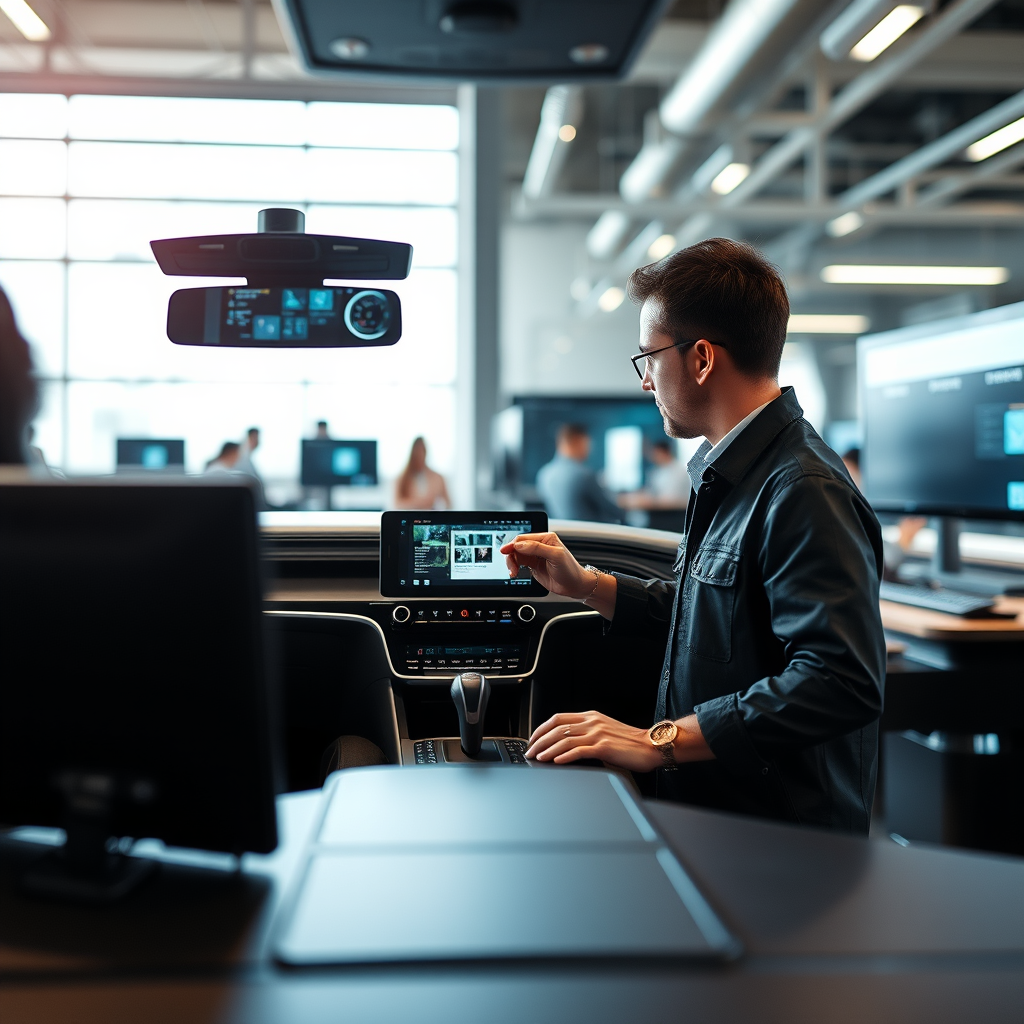
AI-powered personalization in vehicle displays is a game-changer in the way drivers engage with their automobiles. By analyzing driver behavior, preferences, and even mood—thanks to advanced sensors and data analytics—AI systems can customize display settings to enhance the overall driving experience. For instance, if a driver frequently adjusts the climate control or navigation settings, the AI can learn these preferences over time and automatically adjust them as soon as the driver enters the vehicle.
Machine learning algorithms play a crucial role here, continuously refining personalization. As the AI gathers more data, it becomes adept at predicting what information a driver might need at any given moment. For example, if a driver usually takes a specific route to work, the AI can proactively display traffic updates or alternative routes based on real-time conditions, making the journey smoother and more efficient.
Enhancing User Experience

User experience in vehicle displays has significantly improved thanks to AI. Gone are the days of cluttered screens filled with irrelevant information. With AI, tailored information is now presented based on driving habits and routes. If a driver often listens to a particular playlist during their commute, the display can highlight that playlist when they start the car, providing instant access to their preferred entertainment.
Furthermore, intuitive interfaces designed with AI in mind help reduce distractions. For instance, AI can determine when a driver is more focused on navigation and automatically simplify the display, showing only essential information. This not only keeps drivers engaged but also enhances their focus on the road, leading to safer driving experiences. Imagine a dashboard that knows when you’re driving through a busy city and only shows the most pertinent directions, while minimizing unnecessary notifications from other apps.
Safety Features and Alerts
Safety is paramount when it comes to driving, and AI is proving to be a valuable ally in this regard. AI can prioritize critical alerts and notifications based on real-time data, ensuring that drivers are informed about important safety issues without overwhelming them. For example, if road conditions change due to weather or an accident, AI can send an alert that takes precedence over non-urgent notifications, helping drivers react promptly to potential hazards.
Personalized safety features can also enhance driver awareness and response times. Some advanced systems use AI to monitor the driver’s attention level and can issue warnings if they detect signs of distraction or fatigue. Imagine your vehicle gently nudging you back to focus when it notices your eyes drifting away from the road—this is the future of driving safety made possible through AI technology.
Integration with Other Technologies
The capability of AI to integrate with other technologies is what makes vehicle displays truly exceptional. AI displays can connect seamlessly with smart devices, allowing drivers to interact with their phones, smartwatches, and home systems effortlessly. For example, a driver can receive notifications from their calendar directly on their dashboard, or control smart home devices like lights or thermostats before arriving home.
Moreover, vehicle-to-vehicle (V2V) communication further enhances the overall driving experience. AI systems can share information between cars, warning drivers about potential hazards ahead or coordinating actions to prevent accidents. Imagine being part of a network where your vehicle communicates with others nearby, making driving safer and more efficient through shared information. This interconnectedness is not just convenient; it’s a glimpse into a future where AI plays a pivotal role in ensuring safety on the roads.
Future Trends in AI and Vehicle Displays
Looking ahead, emerging technologies like augmented reality (AR) are poised to elevate vehicle display personalization to new heights. Imagine a heads-up display that overlays navigation directions onto the real-world view of the road, allowing drivers to keep their eyes forward while receiving guidance. This kind of innovation could revolutionize how we perceive and interact with our driving environment.
Predictions for the next decade suggest that AI will become even more integrated into vehicle displays, adapting to drivers’ changing lifestyles and preferences. As AI learns more about each individual, we can expect displays to provide not just personalized information but also proactive suggestions based on context—like reminding you to take a break on long drives or suggesting alternate routes based on your travel history and preferences.
Challenges and Considerations
While the benefits of AI in vehicle displays are clear, there are challenges and considerations that cannot be overlooked. Privacy concerns regarding data collection and usage are paramount. Drivers may be apprehensive about how their data is collected, stored, and used to personalize their experience. Ensuring that data practices are transparent and that user consent is obtained is crucial in maintaining trust with consumers.
Moreover, as the technology evolves, manufacturers must prioritize user-friendly interfaces that allow drivers to customize their privacy settings easily. There is a delicate balance between providing a personalized experience and respecting drivers’ boundaries regarding their data. This is an ongoing conversation in the automotive industry that requires careful navigation.
The advancements in AI technology are reshaping vehicle display personalization, offering drivers a more intuitive and tailored driving experience. As the automotive industry continues to innovate, embracing these changes will be essential for both manufacturers and consumers. By understanding how AI can enhance usability, safety, and overall enjoyment behind the wheel, drivers can look forward to a future where their vehicles are not just modes of transport, but personalized companions that adapt to their unique needs. Stay informed about these trends and consider how AI can enhance your driving experience, making every journey enjoyable and safe.
Frequently Asked Questions
What is the role of AI in vehicle display personalization?
AI plays a crucial role in vehicle display personalization by analyzing driver behavior, preferences, and environmental conditions to tailor the in-car experience. By utilizing machine learning algorithms, AI can adapt the vehicle’s infotainment system, navigation features, and dashboard displays to meet individual user needs, ensuring a more intuitive and enjoyable driving experience.
How does AI enhance driver safety through display personalization?
AI enhances driver safety by personalizing vehicle displays to minimize distractions and provide essential information in real-time. For instance, AI can prioritize navigation prompts based on the driver’s current route and traffic conditions, display alerts for nearby hazards, and adjust visibility settings based on ambient light, all of which contribute to a safer driving environment.
Why is vehicle display personalization important for user experience?
Vehicle display personalization is essential for user experience because it creates a more engaging and comfortable driving environment tailored to individual preferences. By integrating AI technology, vehicles can adjust settings like climate control, seat positioning, and entertainment options seamlessly, allowing drivers to focus on the road while enjoying a customized atmosphere that enhances their overall satisfaction.
Which AI technologies are commonly used for vehicle display personalization?
Several AI technologies are utilized for vehicle display personalization, including natural language processing (NLP) for voice commands, computer vision for recognizing driver gestures, and predictive analytics for anticipating user needs. These technologies work together to create a cohesive system that learns from driver interactions, ultimately leading to a more personalized and efficient user experience in vehicles.
What are the best practices for implementing AI in vehicle display personalization?
The best practices for implementing AI in vehicle display personalization include ensuring data privacy and security, utilizing user feedback for continuous improvement, and integrating adaptive interfaces that can evolve with user preferences. Additionally, manufacturers should prioritize user-friendly designs and maintain transparency about how AI systems learn and adapt, fostering trust and enhancing the overall acceptance of AI-driven features in vehicles.
References
- Artificial intelligence
- https://www.sciencedirect.com/science/article/pii/S2351978919312241
- https://www.nhtsa.gov/equipment/vehicle-displays
- https://www.itu.int/en/ITU-T/focusgroups/ai4good/Documents/2019/AI_in_vehicles.pdf
- https://www.theguardian.com/technology/2021/jun/15/car-technology-future-ai-potential
- https://www.researchgate.net/publication/343678349_Personalized_Vehicle_Interfaces
- Emerging Architectures for Global System Science – AAAI
- https://www.automotiveworld.com/articles/ai-the-future-of-vehicle-personalization/
- https://www.techrepublic.com/article/how-ai-is-transforming-the-automotive-industry/
- https://www.itu.int/en/ITU-T/focusgroups/ai4good/Pages/default.aspx