
AI-powered motion tracking is set to revolutionize video editing by automating tedious processes, enhancing precision, and allowing editors to focus on creativity. As technology evolves, editors can expect to see smoother workflows, improved accuracy, and new tools that will redefine the editing experience. In this article, you’ll discover how AI is transforming motion tracking, the benefits it brings to editing workflows, and what to expect in the coming years.
The Evolution of Motion Tracking Technology
To appreciate the future of motion tracking, it’s essential to understand its past. Traditional motion tracking methods relied heavily on manual keyframing, where editors painstakingly marked points on the screen to follow the movement of objects frame by frame. This process was time-consuming and often resulted in inconsistent tracking, especially in complex scenes with rapid movement or intricate backgrounds.
Fast forward to today, and advancements in AI technologies are changing the landscape. Machine learning algorithms are now capable of analyzing vast amounts of video data, recognizing patterns, and learning how to track objects with minimal human intervention. Tools like Adobe After Effects and Mocha Pro have integrated AI features that can automatically identify and follow objects, making the editing process much more efficient. These AI-powered solutions are not only quicker but also more reliable, allowing for seamless integration of effects and graphics into moving footage.
Enhancements in Editing Workflows
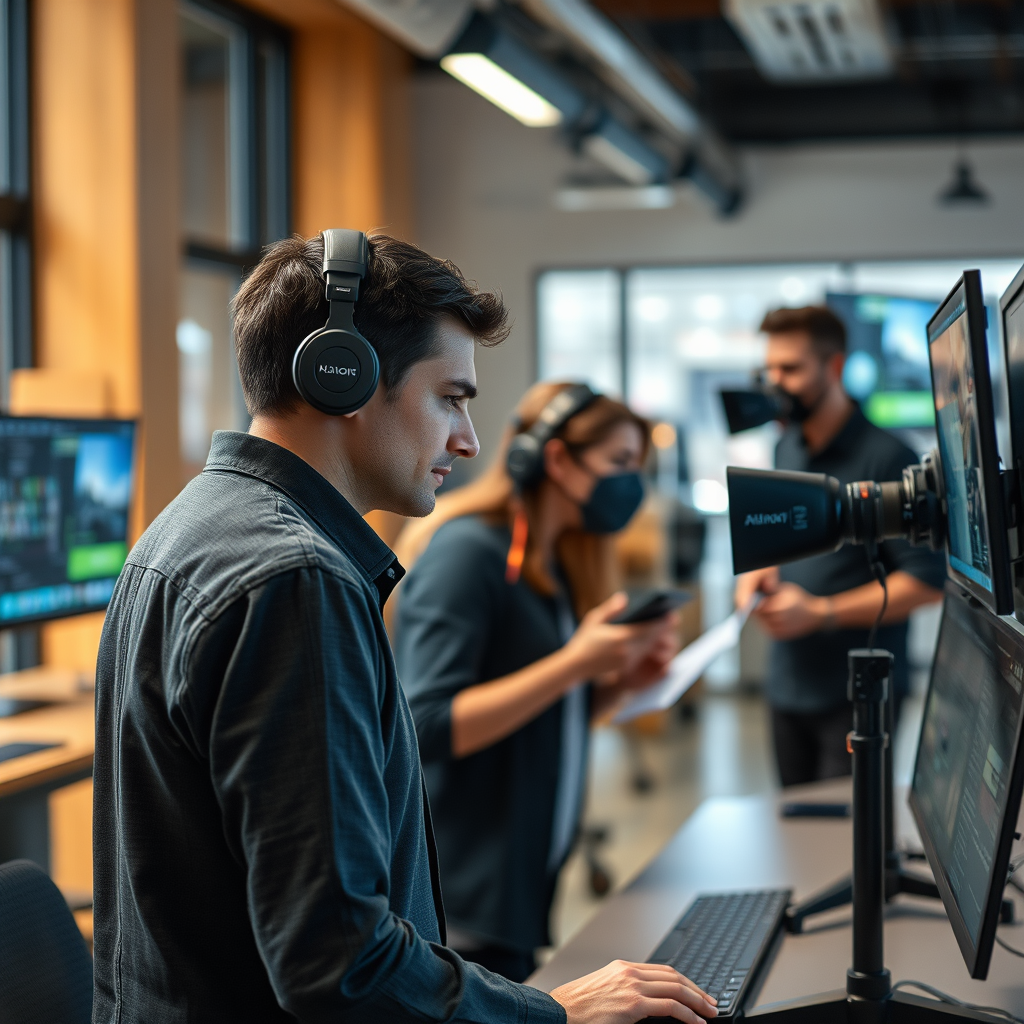
One of the most significant benefits of AI in motion tracking is the way it streamlines the editing process. With the automation of tracking, editors can save countless hours that would have been spent on manual adjustments. This means that tasks like stabilizing shaky footage, keying out backgrounds, or adding visual effects can now be accomplished with just a few clicks, rather than through tedious manual labor.
The impact of automation on productivity is profound. Editors can focus their energy on the creative aspects of projects—storytelling, pacing, and visual design—rather than getting bogged down in technical minutiae. This shift not only enhances the quality of the final product but also fosters a more enjoyable editing experience. With AI handling the grunt work, there’s more room for creativity and innovation, enabling editors to experiment with new techniques and styles that may have previously seemed daunting.
Precision and Accuracy with AI
When it comes to motion tracking, precision is key. AI algorithms have significantly improved tracking accuracy by leveraging advanced techniques like deep learning and computer vision. These systems can detect and follow objects in real-time, even in challenging environments where lighting and background elements fluctuate. For example, AI can now distinguish between similar-looking objects, allowing for more accurate tracking that was once a challenge for traditional methods.
Numerous case studies showcase successful implementations of AI in motion tracking. For instance, the popular film “Avengers: Endgame” utilized AI technology to track and render complex visual effects seamlessly. This not only saved time during post-production but also enhanced the overall visual storytelling. By using AI-driven motion tracking, filmmakers can ensure that their effects are synchronized perfectly with the action, resulting in a more immersive viewer experience.
Challenges and Limitations
Despite its many advantages, AI-powered motion tracking is not without its challenges. Current limitations can arise from the complexity of certain scenes, such as those involving fast movements, overlapping objects, or dynamic lighting conditions. AI may struggle to maintain accuracy in these scenarios, leading to tracking errors that can compromise the final product.
Additionally, ethical considerations must be addressed in automated editing processes. As AI takes over more tasks traditionally performed by humans, questions arise about job displacement and the quality of creative input. Editors and content creators need to strike a balance between leveraging AI tools and maintaining the human touch that makes storytelling compelling. Responsible use of AI in editing should prioritize enhancement over replacement, ensuring that creative professionals remain at the forefront of the filmmaking process.
Future Trends in AI and Motion Tracking
Looking ahead, the future of AI in motion tracking is bright. Predictions for technological advancements include even more sophisticated algorithms that will enhance tracking capabilities across various platforms. We may see features that allow for real-time adjustments during filming, enabling editors to make on-the-fly corrections and improvements.
Potential new tools on the horizon may include fully automated editing software that utilizes AI to suggest cuts, transitions, and effects based on the content of the footage. Imagine an editor uploading raw footage and receiving a polished video with minimal input. Such innovations could revolutionize not just the way motion tracking is approached, but the entire video editing landscape.
Real-World Applications
AI-powered motion tracking is already making waves across various industries. In the film industry, directors and editors are using AI to enhance visual effects and CGI integration, leading to more captivating storytelling. For example, in the gaming industry, AI motion tracking helps create realistic animations by capturing player movements and translating them into character actions, making the gameplay experience more immersive.
Social media platforms are also embracing AI technology. Content creators are using AI-driven motion tracking to produce engaging videos that catch the viewer’s eye, whether it’s through dynamic transitions or interactive elements. With the rise of short-form video content, the demand for efficient and effective motion tracking solutions is only expected to grow.
As AI continues to advance, we can anticipate even more exciting applications across diverse fields, from virtual reality experiences to educational content, where motion tracking can enhance engagement and interactivity.
In summary, AI-powered motion tracking is not just a trend; it is a pivotal shift in how video editing is approached. As technology continues to evolve, editors will need to stay informed and adapt to these changes to leverage the full potential of AI in their work. Explore AI tools today to enhance your editing experience.
Frequently Asked Questions
What is AI-powered auto-motion tracking and how does it work in video editing?
AI-powered auto-motion tracking is a technology that utilizes artificial intelligence algorithms to automatically follow and track moving subjects within video footage. This process involves analyzing frames in real-time, allowing editors to isolate and manipulate objects or subjects without extensive manual effort. By leveraging deep learning techniques, AI can enhance accuracy and reduce the time required for tasks like keyframing or rotoscoping, making video editing more efficient.
How can AI motion tracking improve the video editing workflow?
AI motion tracking significantly streamlines the video editing workflow by automating tedious tasks that traditionally require manual intervention, such as object masking and stabilization. Editors can save valuable time by letting AI handle complex tracking, allowing them to focus on creative aspects like storytelling and visual aesthetics. This increased efficiency not only enhances productivity but also reduces the likelihood of human error in tracking tasks.
Why should video editors invest in AI-powered motion tracking tools?
Investing in AI-powered motion tracking tools can provide a competitive edge for video editors by enhancing their capabilities and output quality. These tools offer advanced features like real-time tracking and intelligent object recognition, which can lead to more polished and professional results. Moreover, as AI technology continues to evolve, editors who adopt these tools early can stay ahead of industry trends and client demands, setting themselves apart in a crowded market.
What are the best AI motion tracking software options available for editors today?
Some of the best AI motion tracking software options currently available include Adobe After Effects with its Content-Aware Fill, DaVinci Resolve’s Fusion, and HitFilm Express. These programs integrate powerful AI features that simplify motion tracking and object manipulation, catering to both beginner and advanced editors. Each software offers unique tools and interfaces, so exploring a few options can help editors find the best fit for their specific needs and project requirements.
Which industries can benefit the most from AI-powered auto-motion tracking technology?
Various industries can benefit from AI-powered auto-motion tracking technology, particularly film and television production, advertising, and gaming. In film and TV, it enhances post-production processes and visual effects, while in advertising, it allows for more dynamic and engaging content creation. The gaming sector can utilize motion tracking for realistic character animations and interactions, demonstrating the technology’s versatility across multiple applications and creative fields.
References
- Artificial intelligence
- https://www.sciencedirect.com/science/article/pii/S0167865519301841
- https://www.nature.com/articles/s41598-021-89053-x
- https://www.bbc.com/news/technology-59084850
- https://www.theguardian.com/technology/2021/aug/23/ai-video-editing-digital-content-creation
- https://www.wired.com/story/ai-video-editing-tools/
- https://www.techrepublic.com/article/how-ai-can-improve-video-editing/
- https://www.nist.gov/news-events/news/2020/02/ai-video-editing-tools-are-here-what-does-it-mean-creators
- https://www.researchgate.net/publication/337169234_The_Role_of_AI_in_Media_Production_and_Editing