

AI creates hyper-personalized video ads by analyzing vast amounts of consumer data to tailor content that resonates with individual preferences and behaviors. This innovative technology allows brands to deliver highly relevant messages, significantly boosting engagement and conversion rates. In this article, we’ll explore how AI achieves this personalization, the types of data it utilizes, and the impact on marketing strategies.
Understanding Hyper-Personalization in Advertising

Hyper-personalization refers to the ability to tailor marketing messages and experiences to individual consumers based on their unique behaviors, preferences, and needs. Unlike traditional advertising, which often employs a one-size-fits-all approach, hyper-personalization leverages insights derived from data to create personalized experiences that resonate more deeply with each consumer. This shift is significant in modern marketing because it fosters stronger connections between brands and customers, leading to increased loyalty and higher conversion rates.
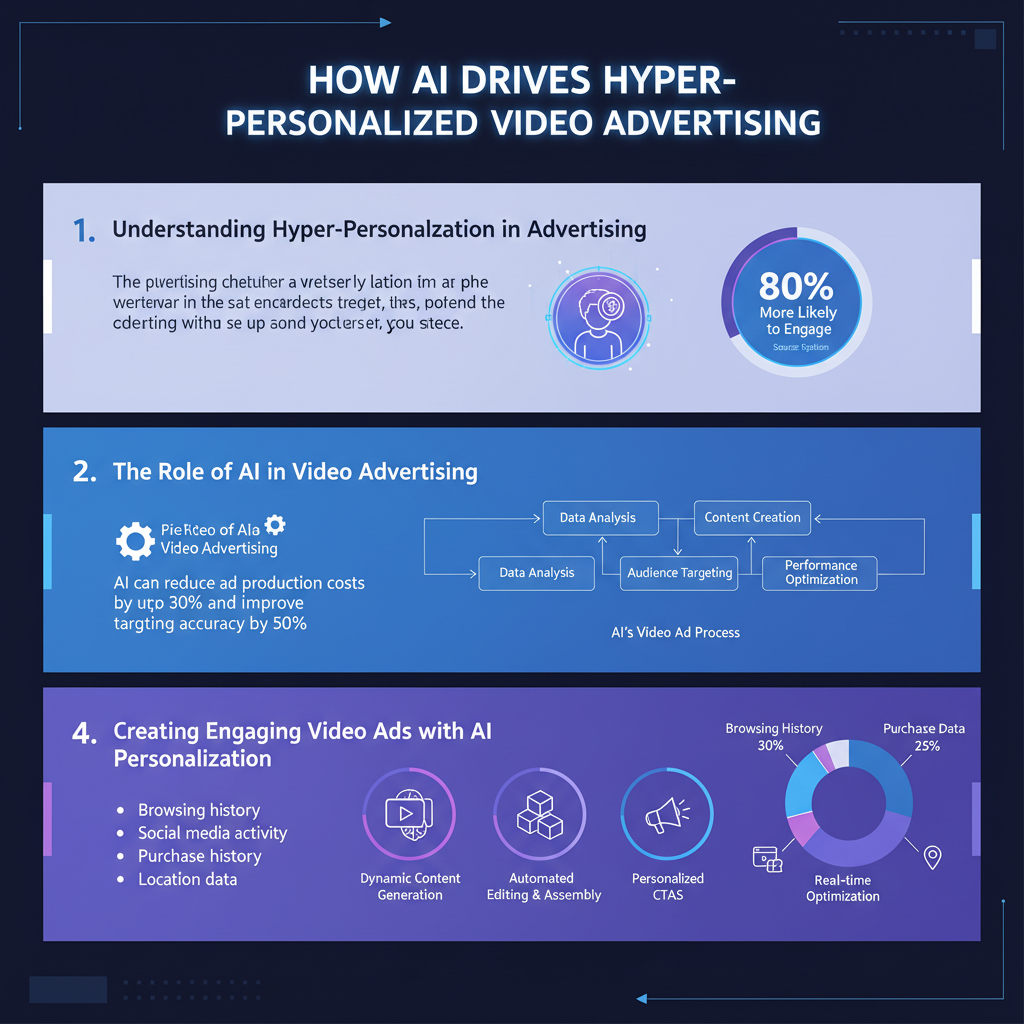
In traditional advertising, campaigns are often designed for broad audiences, leading to generic messages that may not appeal to everyone. Hyper-personalized approaches, on the other hand, focus on micro-targeting, using advanced analytics to segment audiences based on specific traits and behaviors. This ensures that the right message reaches the right person at the right time, making the advertising experience more relevant and effective.
The Role of AI in Video Advertising

AI technologies play a critical role in the creation and delivery of hyper-personalized video advertising. Key technologies involved include machine learning, which enables systems to learn from data patterns and improve over time, and natural language processing (NLP), which helps in understanding consumer sentiments and preferences through language.
AI analyzes consumer behavior in real-time, tapping into various signals such as viewing habits, engagement metrics, and social media interactions. For instance, if a consumer frequently watches fitness-related content, AI can identify this pattern and serve them video ads related to gym equipment or healthy meal delivery services. By utilizing data-driven insights, brands can craft ad content that resonates with individual viewers, increasing the likelihood of engagement and conversion.
Data Sources for Personalization
The effectiveness of hyper-personalized video advertising hinges on the quality and variety of data used by AI. Some of the primary types of data include:
1. Demographic Data: Information such as age, gender, location, and income helps brands understand who their audience is.
2. Behavioral Data: This includes online behaviors like browsing history, purchase patterns, and social media activity, providing insights into consumers’ interests and preferences.
3. Contextual Data: This involves the environment in which the content is consumed, such as the device used, time of day, and location, allowing for more timely and relevant ads.
However, it’s crucial to navigate the complexities of data privacy and ethical considerations. Consumers are becoming increasingly aware of how their data is used, and brands must prioritize transparency and consent in their data collection practices. Implementing stringent data privacy policies not only builds trust but also enhances brand reputation in the long run.
Creating Engaging Video Content
AI employs several advanced techniques to produce dynamic and relevant video content that captivates audiences. For instance, AI can analyze the performance of various video elements—such as visuals, text, and audio—across different demographics. By determining which elements resonate best with specific audience segments, brands can create more engaging content.
One notable example is Netflix, which utilizes AI to personalize its video thumbnails based on user preferences. By testing different images and styles for the same show, Netflix ensures that each user is presented with a thumbnail that appeals to their tastes, increasing the chances of them clicking to watch.
Another successful case is that of Spotify’s personalized video ads that showcase curated playlists based on users’ listening habits. By tapping into behavioral data, Spotify creates a compelling experience that not only promotes music but also fosters a sense of personal connection with the platform.
Measuring Success and Effectiveness
To assess the impact of hyper-personalized video ads, brands need to track key performance indicators (KPIs) that highlight engagement and conversion rates. Some critical KPIs include:
– Click-Through Rate (CTR): Measures how many viewers clicked on the ad compared to how many saw it.
– Conversion Rate: Indicates the percentage of viewers who completed a desired action, such as making a purchase or signing up for a newsletter.
– Engagement Metrics: Includes metrics like average watch time, shares, and comments, which provide insights into how well the content resonates with the audience.
Utilizing analytics platforms such as Google Analytics, HubSpot, or specialized video marketing tools can help brands gather and analyze these metrics. By regularly assessing ad performance, brands can refine their strategies, ensuring that their hyper-personalized video ads continue to deliver results.
Future Trends in AI and Video Advertising
As technology continues to advance, several emerging AI technologies hold promise for further enhancing hyper-personalization in video advertising. One such trend is the rise of augmented reality (AR) and virtual reality (VR), which can create immersive advertising experiences tailored to individual preferences. Imagine a video ad where consumers can interact with products in a virtual environment, making the experience not only personalized but also highly engaging.
Additionally, the integration of AI with blockchain technology may provide more secure and transparent ways to handle consumer data, addressing privacy concerns while still enabling hyper-personalized experiences.
Looking ahead, we can expect video advertising to evolve alongside changing consumer expectations. As audiences become more accustomed to tailored experiences, brands will need to innovate continuously to stay relevant and meet these demands.
In a world where consumers are bombarded with advertisements, AI-driven hyper-personalization stands out as a game-changer. By leveraging data to create tailored content, brands can significantly improve their marketing effectiveness. As technology continues to evolve, staying abreast of these trends will be crucial for marketers looking to engage their audiences meaningfully. Embracing AI not only enhances advertising strategies but also paves the way for deeper connections with consumers, ensuring a brighter future for both brands and their audiences.
Frequently Asked Questions
What is hyper-personalization in video ads and how does AI contribute to it?
Hyper-personalization in video ads refers to the practice of tailoring content to individual viewers based on their preferences, behaviors, and demographics. AI contributes to this process by analyzing vast amounts of data from user interactions, social media behaviors, and previous viewing habits. This enables marketers to create highly relevant and targeted video content that resonates with specific audience segments, significantly improving engagement and conversion rates.
How does AI analyze user data to create personalized video ads?
AI employs machine learning algorithms to sift through massive datasets, identifying patterns and trends in user behavior. By leveraging techniques such as natural language processing and predictive analytics, AI can segment audiences and determine which types of video content will appeal most to them. This data-driven approach allows advertisers to craft video ads that speak directly to the interests and needs of each viewer, enhancing the effectiveness of their campaigns.
Why is hyper-personalized video advertising important for businesses?
Hyper-personalized video advertising is crucial for businesses as it enhances customer engagement, improves brand loyalty, and increases conversion rates. Consumers today expect tailored experiences; when ads reflect their interests and needs, they are more likely to respond positively. Additionally, personalized video ads can lead to higher return on investment (ROI) for advertising spend, as they tend to outperform generic ads in both click-through and retention rates.
What are the best practices for creating hyper-personalized video ads using AI?
To create effective hyper-personalized video ads using AI, businesses should focus on collecting high-quality user data, segmenting their audience accurately, and utilizing dynamic content tailored to different viewer profiles. Incorporating A/B testing can help refine content strategies based on real-time performance metrics. Additionally, ensuring that video ads are mobile-friendly and easily shareable can enhance reach and engagement, making them more effective in capturing audience interest.
Which industries benefit the most from hyper-personalized video advertising?
Several industries benefit significantly from hyper-personalized video advertising, including e-commerce, travel, entertainment, and real estate. E-commerce brands can showcase products tailored to individual shopping behaviors, while the travel industry can create personalized itineraries based on user preferences. Similarly, the entertainment industry can recommend films or shows based on viewing history, and real estate can target potential buyers with listings that match their specific interests, maximizing the impact of their advertising efforts.
References
- Personalization
- https://www.forbes.com/sites/bernardmarr/2021/01/18/how-ai-helps-create-hyper-personalized-video-ads/
- https://www.sciencedirect.com/science/article/pii/S0969699717300395
- https://www.pewresearch.org/internet/2021/01/20/the-future-of-technology-and-the-impact-on-advertising/
- https://www.wired.com/story/the-future-of-advertising-is-personalization/
- https://www.bbc.com/news/technology-50791136
- https://www.nytimes.com/2020/11/30/technology/personalized-advertising-privacy.html
- https://www.theguardian.com/media-network/2017/jul/11/personalised-video-ads-ai-technology
