
AI plays a crucial role in auto-generating short-form video content by streamlining the creation process, enhancing personalization, and improving engagement. By leveraging advanced algorithms and analytics, AI allows creators to produce captivating videos faster and more efficiently than ever before. This revolution in video content creation not only saves time but also helps creators connect better with their audiences through tailored content that resonates with viewers’ interests.

![VideoPad Video Editor Free - Create Stunning Movies and Videos with Effects and Transitions [Download]](https://m.media-amazon.com/images/I/810xsDCJ4eL._SL500_.png)

Understanding AI’s Impact on Video Creation

AI is transforming video creation by analyzing vast amounts of data to discern viewer preferences and trends. This enables creators to produce tailored content that is more likely to capture attention. For instance, platforms like TikTok and Instagram Reels utilize AI to recommend videos based on users’ past interactions, effectively personalizing the viewing experience.
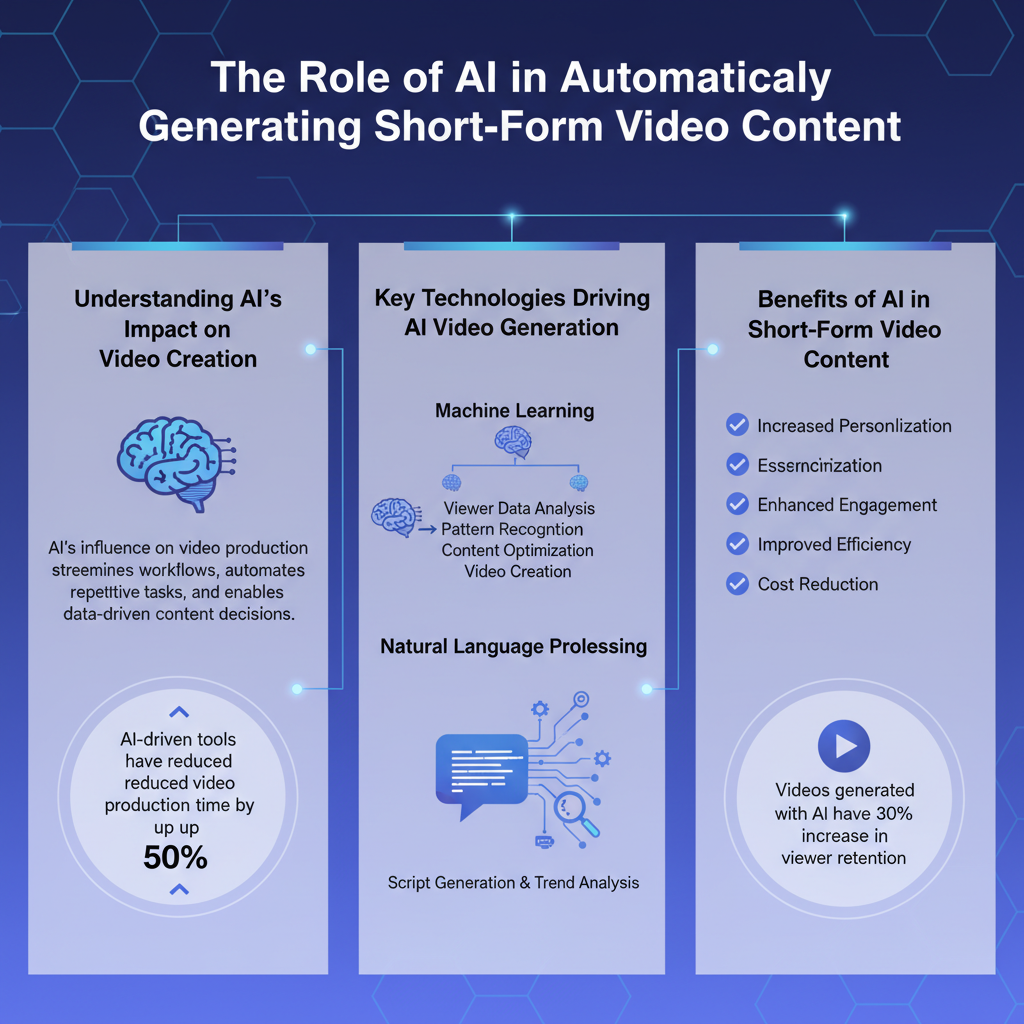
Moreover, automation tools powered by AI significantly reduce the time required for video editing and production. Traditional video editing can be a labor-intensive process, often requiring hours of painstaking work. However, with AI-driven tools like Adobe Premiere Pro’s Sensei and Magisto, creators can automate tasks such as cutting, transitioning, and even adding music. This not only accelerates the workflow but also allows creators to focus on the creative aspects of video production—resulting in higher quality content delivered in shorter timeframes.
Key Technologies Driving AI Video Generation

Several key technologies are at the forefront of AI video generation, each contributing to a more seamless creation process.
Machine Learning
Machine learning algorithms are designed to learn from data patterns, enabling systems to improve video suggestions over time. For example, YouTube’s recommendation system utilizes machine learning to analyze user behavior and suggest videos that align with their viewing habits. This technology not only enhances user experience but also drives engagement, as viewers are more likely to watch content that resonates with their interests.
Natural Language Processing
Natural Language Processing (NLP) plays a critical role in converting scripts and text into engaging visual narratives. With tools like Lumen5 and Animoto, creators can input text, and AI will generate corresponding visuals and animations that complement the storyline. This allows even those without extensive video editing skills to produce high-quality content that captures viewers’ attention. By automating the visualization of scripts, NLP helps streamline the creative process and encourages more frequent content production.
Benefits of AI in Short-Form Video Content
AI brings a plethora of benefits to short-form video content creation, making the process not only more efficient but also more engaging for audiences.
Increased Efficiency
One of the most significant advantages of AI is the increase in efficiency it offers. By automating repetitive tasks such as editing and organizing footage, creators can redirect their energy towards brainstorming and crafting original ideas. For instance, platforms like InVideo allow users to create videos in mere minutes by providing templates and automated editing features. This means that creators can produce more content in less time, keeping their channels fresh and engaging.
Enhanced Engagement
AI also enhances engagement by optimizing content for various platforms and audience preferences. For example, AI tools can analyze the best times to post videos based on when a creator’s audience is most active, ensuring maximum visibility. Additionally, AI can suggest edits or formats that have historically performed well, providing insights that help creators make data-driven decisions. By tailoring content to specific demographics, creators can foster a deeper connection with their audience, leading to increased viewership and loyalty.
Challenges of AI-Generated Video Content
Despite the numerous benefits, there are challenges that come with AI-generated video content that creators need to address.
Quality Control
Ensuring that AI-generated videos meet high creative standards can be complex. While AI can automate many tasks, it may lack the nuanced understanding of storytelling that human creators possess. As a result, videos may sometimes come across as generic or lacking in emotional depth. Creators need to find ways to incorporate their unique voice and artistic vision into AI-generated content, ensuring that it resonates with viewers on a personal level.
Ethical Considerations
Another challenge revolves around ethical considerations, particularly regarding authenticity and misinformation. With the rise of deepfake technology and AI-generated content, there are growing concerns about the potential for misleading information. Content creators must navigate these ethical dilemmas carefully, ensuring transparency in their use of AI tools and maintaining trust with their audience. This includes being upfront about the extent to which AI is used in content creation and being vigilant against the spread of misinformation.
The Future of AI in Video Production
The future of AI in video production looks promising, with advancements in technology promising even more sophisticated content generation. As AI continues to evolve, we can expect tools that are more intuitive and capable of understanding human emotions and nuances in storytelling.
Moreover, collaboration between human creators and AI tools will become increasingly commonplace. Instead of viewing AI as a replacement for human creativity, creators will likely embrace it as a partner that enhances their work. This hybrid approach may lead to groundbreaking content that pushes the boundaries of what is currently possible in video production.
Best Practices for Using AI in Video Creation
To make the most of AI in video creation, creators should adopt several best practices that enhance their workflow and output quality.
Leverage AI Tools
Utilizing AI tools to analyze performance metrics is key to refining content strategy. By examining data on viewer engagement, creators can identify which types of content resonate most with their audience and adjust their strategies accordingly. For example, tools like Vidooly can provide insights into video performance and audience demographics, allowing creators to tailor their content for maximum impact.
Maintain a Human Touch
While AI can automate many aspects of video creation, maintaining a human touch in storytelling is essential to preserve authenticity. Creators should aim to infuse their personality and unique perspective into their videos, ensuring that they stand out in a sea of content. This balance between AI efficiency and human creativity will not only enhance viewer engagement but also foster a genuine connection with audiences.
AI is reshaping the landscape of short-form video content creation, making it more efficient and engaging while presenting unique challenges and opportunities. By exploring AI technologies and best practices, creators can harness these advancements to elevate their video content to new heights. Take the first step today by experimenting with AI tools in your video production process, and watch as your creative potential expands.
Frequently Asked Questions
What is the role of AI in auto-generating short-form video content?
AI plays a crucial role in auto-generating short-form video content by utilizing algorithms that analyze existing footage, scripts, and audience preferences. By employing machine learning techniques, AI can create engaging videos tailored to specific demographics, optimizing elements like visuals, audio, and pacing. This technology streamlines the video production process, significantly reducing the time and cost involved while enhancing content relevance and viewer engagement.
How can businesses benefit from using AI for short-form video creation?
Businesses can benefit from using AI for short-form video creation in several ways, including increased efficiency, cost savings, and improved audience targeting. AI tools can quickly produce high-quality videos that resonate with viewers, allowing brands to maintain a consistent online presence. Additionally, the data-driven insights provided by AI can help businesses refine their marketing strategies and create content that aligns with consumer preferences, ultimately boosting engagement and conversions.
Why is short-form video content important for digital marketing?
Short-form video content is essential for digital marketing because it caters to the shrinking attention spans of online audiences and the growing popularity of platforms like TikTok and Instagram Reels. These bite-sized videos are easily shareable, making them ideal for enhancing brand visibility and fostering engagement. Furthermore, short-form videos often lead to higher retention rates, as viewers are more likely to watch and share brief, impactful content, thereby amplifying marketing efforts.
What tools are available for auto-generating short-form video content using AI?
Several tools are available for auto-generating short-form video content using AI, including Lumen5, InVideo, and Magisto. These platforms offer user-friendly interfaces that allow users to input text, images, and videos, which the AI then transforms into polished short videos. Many of these tools also provide templates, stock footage, and music libraries, enabling creators to produce professional-grade content without extensive video editing skills.
Which industries can benefit most from AI-generated short-form video content?
Various industries can significantly benefit from AI-generated short-form video content, particularly those in e-commerce, entertainment, education, and marketing. E-commerce brands can use short videos to showcase products, while entertainment companies can promote shows and movies. Educational institutions can create engaging learning materials, and marketers can leverage short-form videos to enhance brand storytelling and connect with their audience more effectively.
References
- https://en.wikipedia.org/wiki/Artificial_intelligence_in_media
- https://www.bbc.com/news/technology-54012665
- https://www.sciencedirect.com/science/article/pii/S1877050919316789
- https://www.nytimes.com/2022/06/11/technology/ai-video-content.html
- https://www.forbes.com/sites/bernardmarr/2021/09/27/how-ai-is-revolutionizing-video-production-and-marketing/?sh=1a7f8c5b4b5e
- https://www.technologyreview.com/2021/02/16/1018003/how-ai-is-changing-the-way-videos-are-made/
- https://www.wired.com/story/ai-video-short-form-content/
- https://www.pewresearch.org/internet/2021/12/08/the-future-of-video-content-and-ai/
- https://www.jstor.org/stable/10.5325/jacontent.14.2.0227