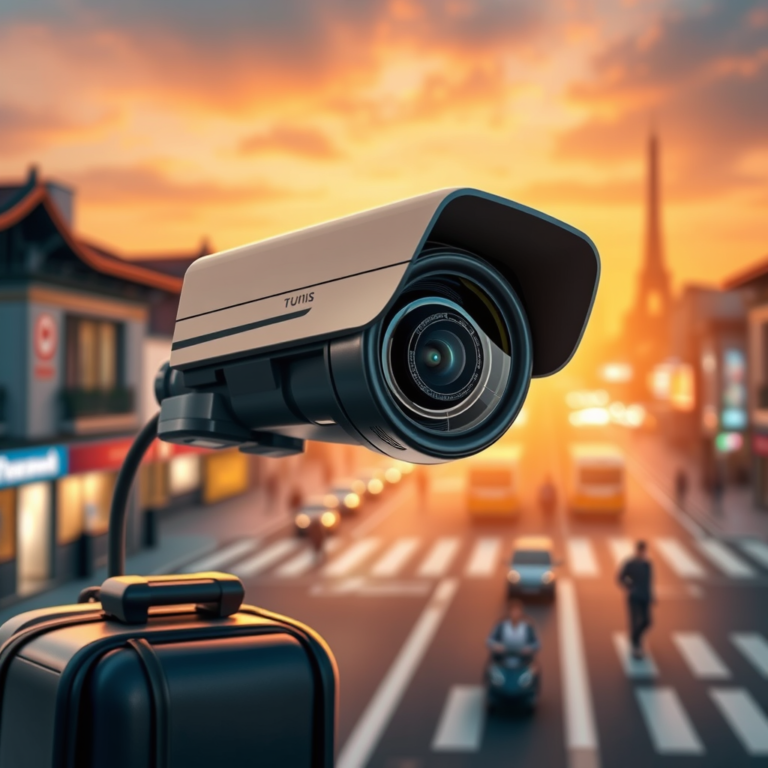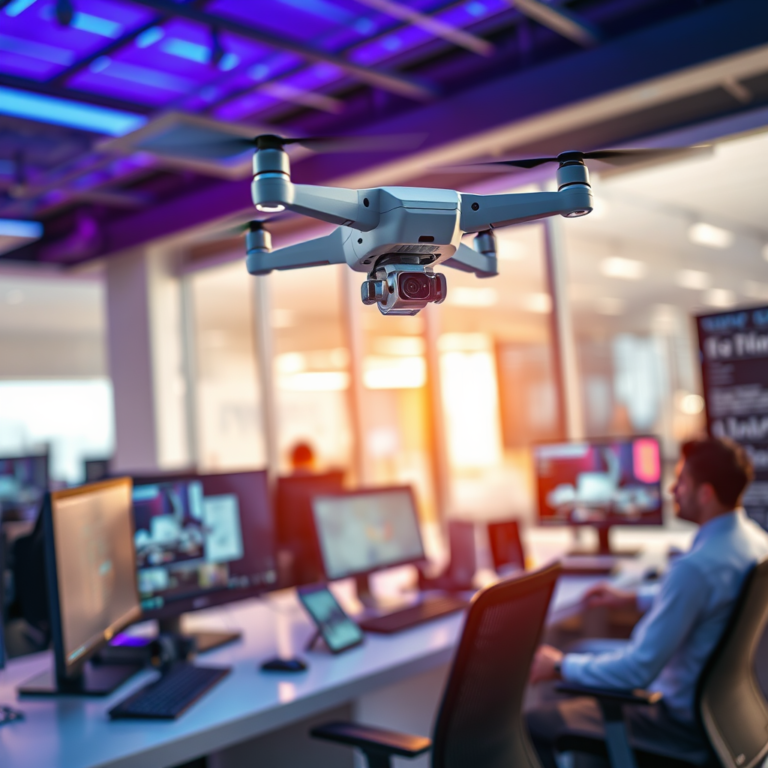

AI-based object detection enhances real-time video streams by enabling instant identification and tracking of various objects, significantly impacting industries such as security, transportation, and retail. This technology not only improves surveillance and safety but also fuels smarter automated systems that can respond rapidly to dynamic environments. In this article, you will learn about the mechanisms, applications, and challenges of implementing AI-based object detection in live video feeds.
Understanding AI-Based Object Detection

Object detection refers to the ability of a system to identify and classify objects within digital images or video streams. In the context of video analytics, it’s crucial because it provides actionable insights in real-time, allowing for timely responses to various situations. For example, in a security setting, detecting a suspicious person in a crowded area can trigger alerts for immediate action.
At the heart of AI-based object detection are machine learning techniques, particularly neural networks. These networks, inspired by the human brain, consist of layers of interconnected nodes that process input data. Convolutional Neural Networks (CNNs) are especially prevalent in image and video analysis due to their ability to automatically extract features from raw images, leading to improved accuracy in detection tasks. By training these networks on large datasets, they learn to recognize patterns and classify objects effectively.
Key Technologies Behind Real-Time Detection

Computer vision is pivotal in processing video data for object detection. It combines algorithms and models that enable machines to interpret and understand visual information from the world. With advancements in computer vision, video streams can be analyzed in real-time, allowing systems to detect and track multiple objects simultaneously.
Deep learning frameworks like TensorFlow and PyTorch play a crucial role in developing and deploying object detection models. TensorFlow, developed by Google, offers robust tools and libraries for building deep learning applications, while PyTorch, favored for its dynamic computation graph, provides flexibility and ease of use, particularly for research and development. Both frameworks support various pre-trained models, making it easier for developers to implement object detection without starting from scratch.
Applications of AI Object Detection in Video Streams
AI-based object detection has a myriad of applications, particularly in security surveillance. For instance, systems equipped with this technology can identify potential threats by recognizing unusual behaviors or detecting unauthorized access. Security personnel can receive real-time alerts, enabling them to respond quickly and effectively. A notable example is the implementation of AI in urban surveillance systems to monitor public spaces, enhancing safety and reducing crime rates.
In retail, AI object detection is revolutionizing how businesses understand customer behavior. By analyzing video streams, retailers can track foot traffic patterns, monitor product interactions, and even manage inventory levels more efficiently. For example, a store can use AI to detect when shelves are running low on popular items and automatically alert staff to restock. This not only improves customer satisfaction but also optimizes inventory management processes.
Challenges in Implementing AI Object Detection
Despite its advantages, implementing AI-based object detection presents several challenges. One major technical hurdle is achieving the necessary processing speed and accuracy. Real-time processing requires substantial computational resources, and even minor delays can lead to missed opportunities or false alerts. Balancing speed and accuracy is essential, especially in critical applications like security.
Data privacy issues are another significant concern. The use of surveillance cameras and AI technology raises ethical questions about consent and the potential for misuse of data. Organizations must navigate the complex landscape of data regulations and ensure that their systems are designed with privacy in mind. Implementing robust data security measures and transparent policies can help address these challenges and build trust among users.
Future Trends in AI-Based Object Detection
The future of AI-based object detection looks promising, with emerging technologies like edge computing poised to enhance real-time processing capabilities. Edge computing allows data to be processed closer to the source, reducing latency and improving responsiveness. This is particularly beneficial for applications where immediate decisions are required, such as in self-driving cars or smart surveillance systems.
Advancements in AI algorithms are also set to improve detection capabilities significantly. Techniques such as transfer learning, where models trained on one task can be adapted for another, are gaining traction. This approach not only accelerates the training process but also enhances model performance with less data. As AI continues to evolve, we can expect even more sophisticated and efficient object detection solutions.
Best Practices for Implementation
When implementing AI-based object detection, selecting the right hardware and software is crucial. High-quality cameras with sufficient resolution can significantly enhance detection accuracy. Additionally, powerful GPUs (Graphics Processing Units) are recommended to handle the computational demands of real-time processing.
Training models with diverse datasets is another best practice. By exposing the model to a variety of scenarios, lighting conditions, and object types, developers can improve the robustness and accuracy of their detection systems. Regular updates and retraining with new data can help maintain performance over time, adapting to changing environments or new types of objects.
In summary, AI-based object detection in real-time video streams offers transformative potential across various sectors by enhancing monitoring and analysis capabilities. This technology not only improves safety and efficiency but also opens new avenues for innovation. To dive deeper into this technology, consider exploring available AI frameworks and tools, or start implementing a pilot project to see its benefits firsthand. Whether in security, retail, or beyond, the future of AI-based object detection is bright, and its impact will undoubtedly continue to grow.
Frequently Asked Questions
What is AI-based object detection in real-time video streams?
AI-based object detection in real-time video streams refers to the use of artificial intelligence algorithms, particularly deep learning models, to identify and classify objects within video footage as it is being captured. This technology analyzes each frame of the video stream to recognize various objects, such as people, vehicles, or animals, enabling applications in security surveillance, autonomous vehicles, and smart city initiatives. The efficiency and accuracy of AI models allow for instantaneous feedback, making it a critical tool in modern video analytics.
How does real-time object detection work in video streams?
Real-time object detection works by processing video frames through neural networks that have been trained on large datasets to recognize specific objects. As each frame is captured, the AI model applies algorithms to detect objects, calculate their location, and classify them. This process often involves techniques such as convolutional neural networks (CNNs) and can be optimized for speed and accuracy, enabling applications to react promptly to dynamic scenarios. The use of powerful GPUs and edge computing further enhances the real-time capabilities of these systems.
Why is AI-based object detection important for security applications?
AI-based object detection is crucial for security applications because it enhances surveillance systems by providing rapid and accurate identification of potential threats. By automating the monitoring process, security personnel can focus on critical incidents rather than sifting through hours of footage. Furthermore, AI can integrate with other security measures, such as alarm systems and access controls, to create a more robust and responsive security framework, ultimately leading to improved safety and crime prevention.
What are the best AI frameworks for implementing real-time object detection?
The best AI frameworks for implementing real-time object detection include TensorFlow, PyTorch, and OpenCV. TensorFlow offers a comprehensive ecosystem with tools like TensorFlow Lite for mobile and embedded devices, making it suitable for various applications. PyTorch is favored for its ease of use and dynamic computation capabilities, especially in research and prototyping. OpenCV, while primarily a computer vision library, provides excellent support for integrating AI models into video processing applications, making it a versatile choice for developers.
Which industries benefit the most from AI-based object detection in real-time video streams?
Several industries benefit significantly from AI-based object detection in real-time video streams, including retail, transportation, healthcare, and manufacturing. In retail, businesses use it for inventory management and customer behavior analysis. Transportation companies leverage the technology for monitoring traffic patterns and enhancing road safety. In healthcare, it aids in patient monitoring and alerting staff to emergencies, while manufacturing utilizes it for quality control and safety monitoring. The versatility of AI object detection makes it an invaluable asset across diverse sectors.
References
- Object detection
- https://www.sciencedirect.com/science/article/pii/S0031320319305118
- https://www.nature.com/articles/s41597-020-00738-2
- https://www.mdpi.com/2076-3417/10/22/7902
- https://www.nist.gov/publications/guide-real-time-object-detection-video-streams
- https://www.ijcaonline.org/archives/volume182/number20/om-2021-ijca-091095.pdf
- https://towardsdatascience.com/introduction-to-object-detection-in-real-time-video-streams-8d6d7d6cb3e4
- https://www.bbc.com/future/article/20200320-how-ai-can-detect-objects-in-real-time-video
- https://www.researchgate.net/publication/342365145_Real-Time_Object_Detection_Using_Deep_Learning_Techniques