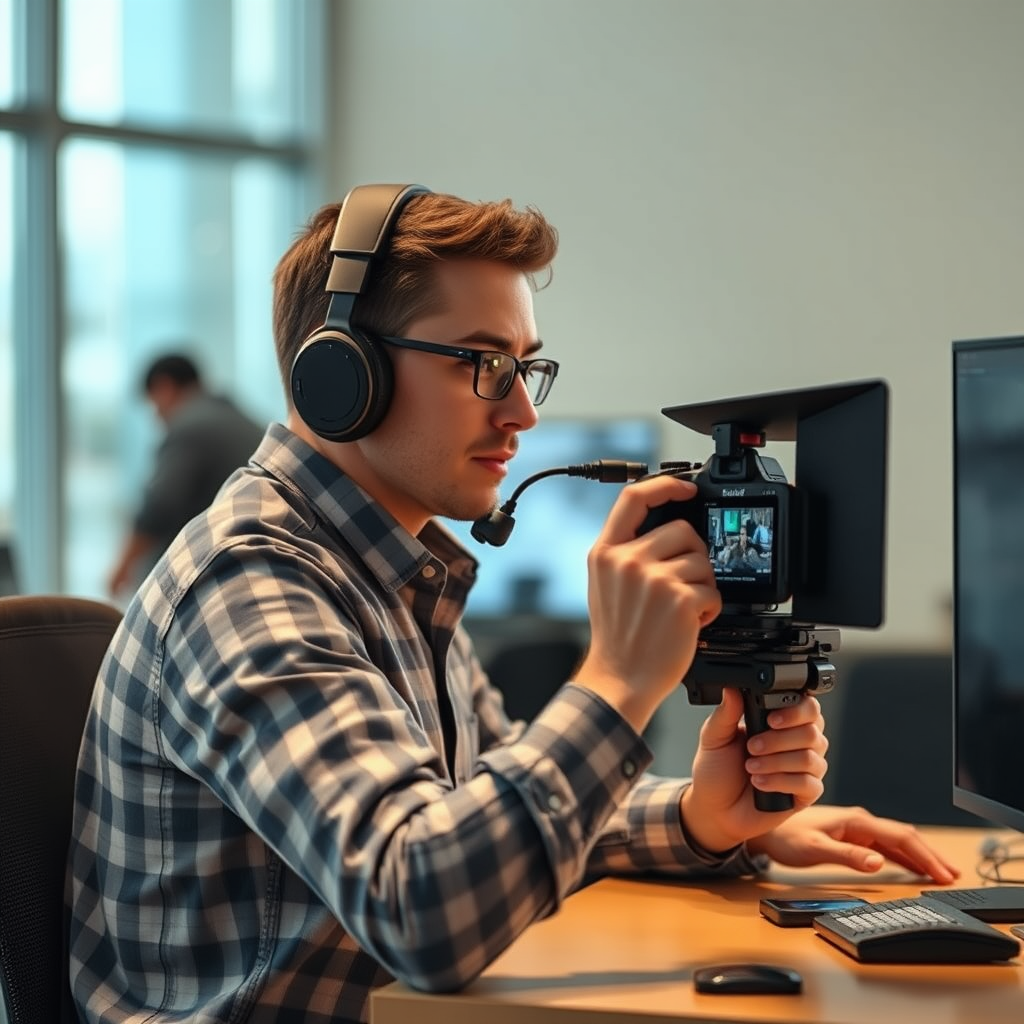

The integration of 5G technology is set to revolutionize remote video editing and production by significantly enhancing speed, efficiency, and collaboration. With its lightning-fast data transfer rates and ultra-low latency, video professionals can now work in real-time from virtually anywhere in the world, overcoming many traditional hurdles in the editing process. By embracing 5G, the video editing landscape is on the brink of transformation, enabling creative teams to push the boundaries of what’s possible in video production.
Enhanced Data Transfer Speeds

One of the most significant advantages of 5G is its impressive data transfer speeds, which can be up to 100 times faster than its predecessor, 4G. This means that video editors are no longer bogged down by long upload and download times when working with large video files. For instance, a high-definition film that previously took hours to upload can now be transferred in mere minutes, allowing editors to access footage almost instantaneously.
This rapid data transfer capability is particularly beneficial for projects involving 4K and even 8K resolution videos, which are becoming increasingly common in the industry. With 5G, editors can retrieve high-resolution footage on-the-fly, allowing for a more fluid editing process. Imagine being able to pull in raw footage from a recent shoot while simultaneously working on another project—this kind of multitasking is now a reality with 5G, creating new efficiencies and opportunities for creativity.
Real-Time Collaboration

Another game-changing feature of 5G is its potential to foster real-time collaboration among creative teams dispersed around the globe. With faster connections, teams can share edits, provide feedback, and brainstorm ideas instantly, making remote work feel more connected than ever. This is especially crucial in the video production world, where timing and communication can significantly impact the final product.
Tools like Adobe Premiere Pro and DaVinci Resolve are already beginning to incorporate cloud-based features that leverage 5G technology, enabling editors to work on the same project simultaneously without lag. For example, two editors working on different aspects of a project can see changes in real-time, ensuring that everyone is on the same page and reducing the chances of miscommunication. This collaborative environment not only enhances productivity but also encourages creativity, as team members can build off each other’s ideas without the constraints of distance.
Improved Streaming Capabilities
With 5G, the feasibility of live streaming high-quality video is dramatically increased, opening new avenues for remote productions. Live events, such as concerts and sports, can be broadcast in real time with minimal buffering and delays. This capability allows video editors to engage with live footage, making real-time adjustments that can enhance the viewing experience for audiences.
For instance, during a live event, an editor can seamlessly cut between different camera angles or add graphics on-the-fly, all while ensuring that the stream remains smooth and uninterrupted. This not only elevates the quality of live broadcasts but also allows for a more interactive experience for viewers, who can engage with content as it unfolds. As 5G technology continues to advance, we can expect to see even more innovative uses for live streaming in the video production industry.
Reduced Latency for Editing
The ultra-low latency characteristic of 5G technology greatly enhances the editing experience. For video professionals, this means that playback during editing becomes incredibly responsive, leading to a more efficient workflow. With traditional internet connections, editors often face frustrating delays when scrubbing through high-resolution files, but with 5G, that issue is significantly mitigated.
Imagine working on a complex edit of a high-definition film where every frame counts. With 5G, you can experience smooth playback, allowing you to make precise cuts and adjustments without the annoying lag. This responsiveness not only saves time but also nurtures creativity, as editors can experiment more freely without the constraints of slow processing speeds. The ability to work efficiently and effectively translates into a higher quality final product.
Greater Accessibility to Cloud Resources
5G technology enhances access to cloud storage and processing power, diminishing the reliance on powerful local hardware. This shift is particularly beneficial for small to medium-sized video production companies that may not have the budget for high-end editing rigs. With 5G, video editors can take full advantage of robust cloud-based tools and applications that previously suffered from bandwidth limitations.
For example, platforms like Frame.io and Avid Media Composer Cloud allow editors to upload, review, and collaborate on projects without needing extensive local resources. This democratization of technology means that even independent filmmakers can produce high-quality work without the financial burden of expensive equipment. As a result, 5G is leveling the playing field, enabling more creators to bring their visions to life.
Support for Advanced Technologies
5G also lays the groundwork for integrating advanced technologies like augmented reality (AR) and virtual reality (VR) into video production. As the capability to handle large sets of data simultaneously becomes standard, video professionals can explore innovative editing techniques that were previously unfeasible. For instance, AR can be used to superimpose graphics onto live footage during editing, providing a more immersive experience for audiences.
Furthermore, VR editing environments can allow editors to manipulate 3D content in a virtual space, enhancing creativity and precision. This opens up new creative possibilities, enabling video professionals to tell stories in ways that were once reserved for science fiction. With 5G, the video editing landscape will not only become faster but also more imaginative.
Future of Video Production
As the adoption of 5G technology continues to grow, it is likely to lead to the emergence of new business models and workflows within the video production industry. Creative teams will need to adapt to the fast-paced changes brought about by 5G, leveraging its capabilities to stay competitive in a rapidly evolving marketplace.
For instance, the rise of remote work may lead to the development of new collaborative platforms tailored specifically for video production, further enhancing team dynamics and project management. Professionals who can embrace and adapt to these changes will find themselves at the forefront of the industry, unlocking new opportunities for storytelling and creativity.
The rapid advancement of 5G technology is poised to reshape remote video editing and production, making it faster, more collaborative, and more innovative than ever before. As these technologies continue to evolve, video professionals should stay informed and consider integrating 5G capabilities into their workflows to remain competitive in a fast-changing landscape. By embracing the possibilities that 5G offers, the future of video production looks bright and full of potential.
Frequently Asked Questions
How will 5G technology improve the speed of remote video editing and production?
5G technology significantly enhances internet speeds, offering up to 100 times faster data transfer than 4G. This improvement allows video editors to upload and download large files, such as high-resolution footage, almost instantaneously. As a result, remote video editing and production teams can collaborate more efficiently, reducing downtime and accelerating project timelines, which is crucial in today’s fast-paced content creation environment.
What are the key benefits of 5G for remote video editing collaboration?
The primary benefits of 5G for remote video editing collaboration include low latency, high bandwidth, and improved connectivity. With reduced latency, editors can work on live edits and receive real-time feedback from clients or team members without noticeable delays. High bandwidth enables seamless streaming of high-definition video content, while better connectivity ensures that remote teams can interact and share resources without interruptions, thus enhancing overall productivity.
Why is low latency important for remote video production using 5G?
Low latency is crucial for remote video production because it allows for real-time interaction and immediate feedback during the editing process. With 5G’s reduced latency, video editors can make changes on-the-fly while clients or team members view the edits simultaneously. This immediacy not only improves the collaborative experience but also helps maintain creative momentum, ultimately leading to a more polished final product.
Which tools and software can benefit most from 5G connectivity in video editing?
Tools and software that rely heavily on cloud computing and streaming capabilities will benefit most from 5G connectivity. For instance, applications like Adobe Premiere Pro, DaVinci Resolve, and Final Cut Pro X can leverage faster upload and download speeds to handle large file sizes effectively. Additionally, cloud-based platforms for collaboration, such as Frame.io or Avid Media Composer Cloud, will see improved performance, allowing teams to work together more seamlessly.
How can video production companies prepare for the transition to 5G technology?
Video production companies can prepare for the transition to 5G technology by investing in compatible hardware and software that support high-speed connectivity, such as 5G-enabled devices and cloud services. Training staff on new workflows that take advantage of 5G speeds is also essential. Furthermore, companies should consider partnerships with internet service providers to ensure they have access to reliable 5G networks, allowing them to fully leverage the benefits of enhanced connectivity for remote video editing and production.
References
- https://www.wired.com/story/5g-impact-video-production-editing/
- https://www.bbc.com/news/technology-51749421
- https://www.sciencedirect.com/science/article/pii/S0167739X19309720
- https://www.nytimes.com/2020/03/29/technology/5g-video-streaming.html
- https://www.npr.org/2020/03/30/823176957/5g-technology-set-to-change-how-we-create-and-consume-content
- https://www.jstor.org/stable/10.5325/jmediacultstudies.10.2.0114
- https://www.researchgate.net/publication/340256689_5G_and_the_Future_of_Video_Production
- https://www.itu.int/en/ITU-T/focusgroups/5g/Documents/FG-5G-Report.pdf