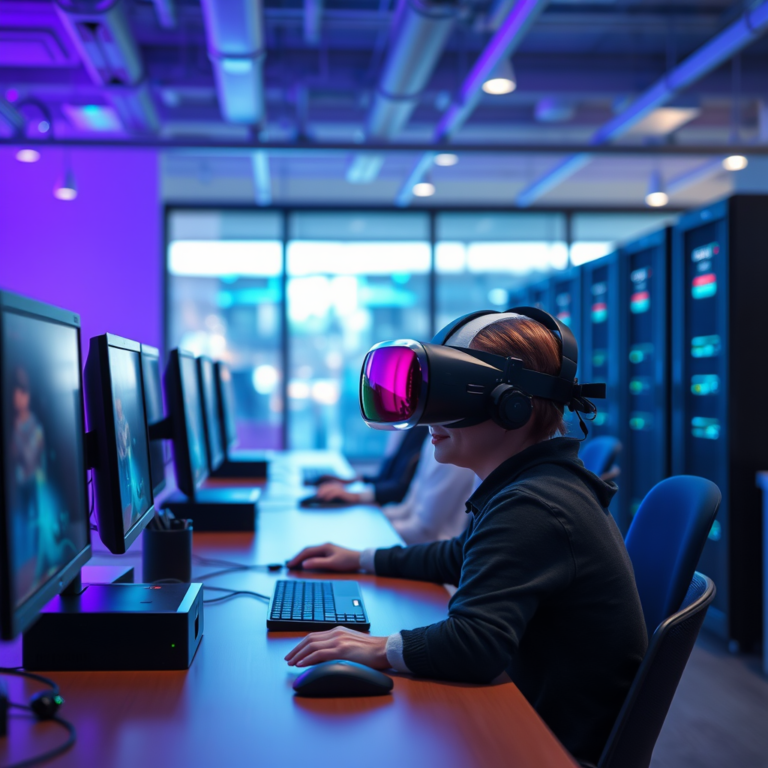
As 5G technology rolls out, it significantly enhances augmented reality (AR) video streaming by providing high-speed data transfer, lower latency, and improved connectivity. These improvements are game-changers, allowing users to experience AR applications in ways that were previously unimaginable. With 5G, the AR landscape is transforming, making immersive experiences more accessible and interactive than ever before.
The Impact of 5G on Data Speed
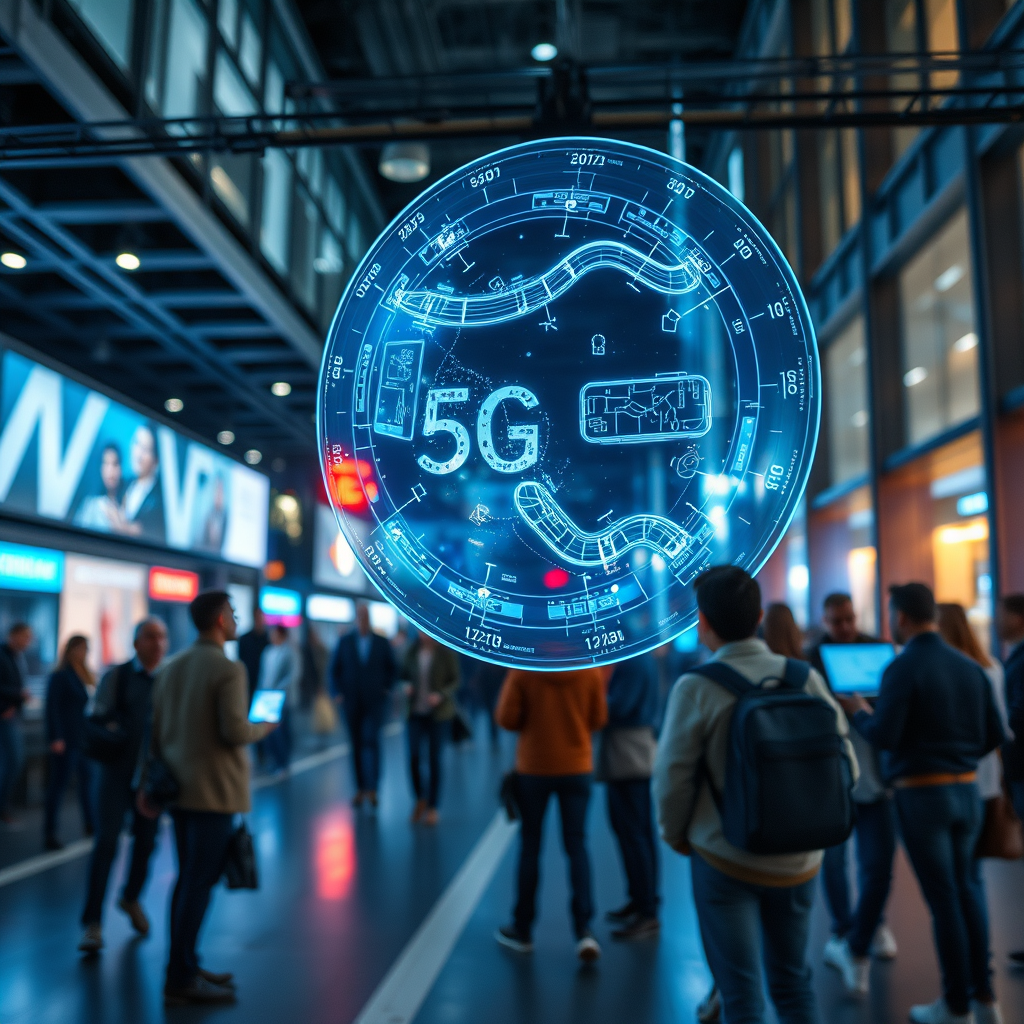
One of the most exciting benefits of 5G is its ability to deliver data speeds that can reach up to 100 times faster than 4G networks. This enhancement allows for seamless streaming of high-definition AR content, eliminating buffering and loading delays that can hinder user experience. Imagine wearing AR glasses or using your smartphone to stream a live AR concert, where every detail comes through crisply and clearly. With 5G’s high-speed data transfer, users can engage with rich visual content in real-time, enhancing the overall immersion.
Rapid data transfer isn’t just about speed; it also enables real-time interactions that are vital for many AR applications. For instance, in a retail scenario, customers can see how a piece of furniture looks in their living room via AR, and with 5G, the visualization updates instantaneously based on their movements or selections. As such, the potential for AR in e-commerce becomes limitless, driving not only customer satisfaction but also sales conversions.
Reducing Latency for Enhanced Interactivity

Latency refers to the delay before data begins to transfer after a command is issued, and with 5G, this lag is dramatically reduced to as low as 1 millisecond. This is particularly critical for AR environments where instantaneous responses are essential. In gaming, for example, the difference between a 50-millisecond and a 1-millisecond latency can mean the difference between victory and defeat. Players can react to in-game events with lightning speed, making the gaming experience feel more fluid and engaging.
Moreover, in educational settings, imagine students using AR technology to conduct remote science experiments. With 5G, they can receive real-time feedback on their actions, making learning interactive and effective. For training simulations in industries like aviation or medicine, quick response times ensure that learners can practice skills in a safe environment, building confidence before they apply what they’ve learned in real-world situations.
Improved Connectivity for Multiple Users
5G networks can support a significantly higher number of connected devices simultaneously without degrading performance. This capability is a boon for collaborative AR experiences, where multiple users can interact with the same content in real-time from different locations. Picture a group of architects and clients discussing a new building design through AR. With 5G, everyone can view and manipulate the same 3D model simultaneously, regardless of where they are in the world.
This improved connectivity also opens the door to social AR applications, where friends can explore virtual games or experiences together, even if they are miles apart. The ability to connect and share experiences in real-time fosters a sense of community and enhances the overall user experience, making AR not just a solitary endeavor but a shared adventure.
Enabling Advanced AR Features
5G’s enhanced computational power supports more sophisticated AR features that go beyond basic overlays. With capabilities such as environmental mapping and object recognition, AR applications can create experiences that feel more integrated into the user’s real world. For instance, an AR navigation app can recognize surrounding landmarks and provide contextual information in real-time, making it easier for users to navigate unfamiliar areas.
Advanced AR features also allow for more personalized user experiences. Imagine entering a store and using an AR app that recognizes your preferences and suggests items tailored to your taste. This level of interactivity not only improves customer engagement but can also lead to higher sales as users find products that genuinely interest them.
Industry Applications of 5G-Enhanced AR
The gaming industry is one of the most prominent sectors benefiting from 5G-enhanced AR experiences. Games that utilize AR can now offer richer, more immersive environments that react to player actions in real-time. Titles like Pokémon GO have already set the stage, but with 5G, we can expect even more interactive and engaging gameplay that keeps players coming back for more.
In healthcare, the integration of AR with 5G technology is revolutionizing remote consultations and training. Medical professionals can use AR to provide visual aids during virtual consultations, allowing them to demonstrate procedures or diagnoses more effectively. Additionally, training simulations can benefit from real-time data analytics, where trainees receive immediate feedback and guidance based on their actions, significantly enhancing their learning curve.
Future of 5G and AR Integration
As 5G technology continues to evolve, the possibilities for AR applications are boundless. We can expect innovations that further push the boundaries of what AR can achieve. The integration of artificial intelligence (AI) and machine learning with 5G and AR will likely lead to smarter, more intuitive applications that adapt to user behavior and preferences.
Imagine an AR app that learns your habits and suggests activities or information based on your location and past interactions. This level of personalization will create a more engaging experience, making users feel as though the technology is tailored specifically for them.
The enhancements brought by 5G technology are transforming the landscape of augmented reality video streaming, making it more immersive, responsive, and collaborative. As these technologies continue to develop, users can look forward to a future where AR experiences are seamlessly integrated into their everyday lives. Explore the latest AR applications and consider how you can leverage 5G for your own projects! The future is bright, and with 5G, the world of augmented reality is just beginning to unfold.
Frequently Asked Questions
What are the key benefits of using 5G for augmented reality (AR) video streaming?
The key benefits of using 5G for augmented reality video streaming include ultra-low latency, faster download speeds, and higher data capacity. These enhancements allow for seamless integration of virtual elements into the real world, enabling smoother experiences without lag. Additionally, 5G’s ability to connect a vast number of devices simultaneously ensures that multiple users can enjoy AR applications without degradation in performance, making it ideal for interactive and immersive experiences.
How does 5G improve the user experience in augmented reality applications?
5G significantly improves the user experience in augmented reality applications by providing real-time data processing and rendering. With its high bandwidth, users can stream high-definition AR content without interruptions, resulting in a more immersive experience. Furthermore, the low latency of 5G networks reduces delays, allowing for instantaneous interactions with AR elements, which is crucial for applications in gaming, education, and remote assistance.
Why is low latency important for augmented reality video streaming?
Low latency is crucial for augmented reality video streaming because it ensures that there is minimal delay between a user’s actions and the corresponding changes in the AR environment. This is particularly important for applications that require immediate feedback, such as gaming or training simulations. High latency can lead to disorientation and frustration, diminishing the overall experience; thus, 5G’s low latency capabilities are essential for creating engaging and responsive AR applications.
Which industries are most likely to benefit from 5G-enhanced augmented reality video streaming?
Industries that are most likely to benefit from 5G-enhanced augmented reality video streaming include gaming, healthcare, retail, education, and manufacturing. In gaming, 5G can enable multiplayer experiences in real-time; in healthcare, AR can assist in remote surgeries and medical training. Retail can utilize AR for virtual try-ons, while education can create immersive learning environments. Finally, manufacturing can leverage AR for training and maintenance, improving efficiency and safety.
What are the challenges of implementing 5G technology for augmented reality streaming?
The challenges of implementing 5G technology for augmented reality streaming include the need for extensive infrastructure investment, the requirement for compatible devices, and potential security concerns. As 5G networks are still being rolled out in many regions, coverage can be inconsistent. Additionally, not all devices support 5G technology yet, which limits accessibility. Finally, with increased connectivity, there is a heightened risk of cyber threats, necessitating robust security measures to protect user data and privacy.
References
- 5G
- https://www.researchgate.net/publication/332987456_5G_and_Augmented_Reality_The_Next_Transformational_Technology
- https://www.sciencedirect.com/science/article/pii/S0925231220301091
- https://www.nature.com/articles/s41598-020-65245-1
- https://www.bbc.com/news/technology-49597850
- https://www.forbes.com/sites/bernardmarr/2021/06/07/how-5g-will-transform-augmented-reality-and-virtual-reality/?sh=7b15417c5f5d
- https://www.qualcomm.com/news/onq/2021/06/10/how-5g-augmented-reality-and-virtual-reality-will-transform-the-way-we-live
- https://www.itu.int/en/ITU-T/focusgroups/5g/Documents/FG-5G-2nd-Meeting/5G-AR-VR-2020.pdf