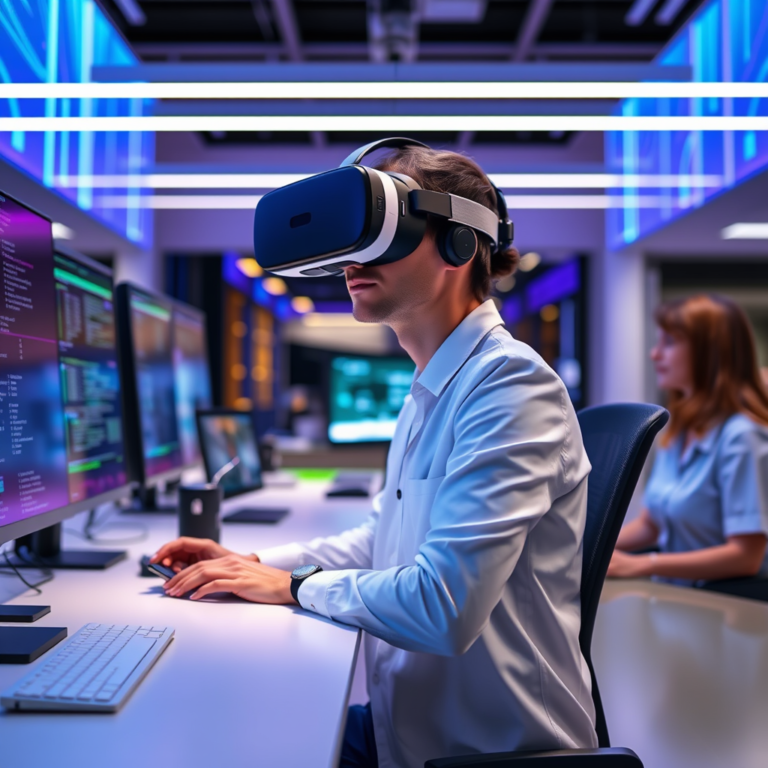

AI significantly improves AR video object detection and tracking by utilizing advanced machine learning algorithms that enable real-time analysis and accurate identification of objects in dynamic environments. This powerful combination of AI and augmented reality (AR) is revolutionizing how we interact with the digital world. In this article, you’ll discover how AI technologies are transforming AR experiences by enhancing precision, efficiency, and user interaction, opening doors to new applications across various industries.
The Role of AI in Object Detection

AI algorithms are the backbone of modern object detection in AR environments. They analyze visual data captured through cameras and sensors to identify and classify objects, such as furniture in a room or products on a shelf. This is accomplished through sophisticated machine learning models that have been trained on vast datasets, which expose them to countless images and scenarios.
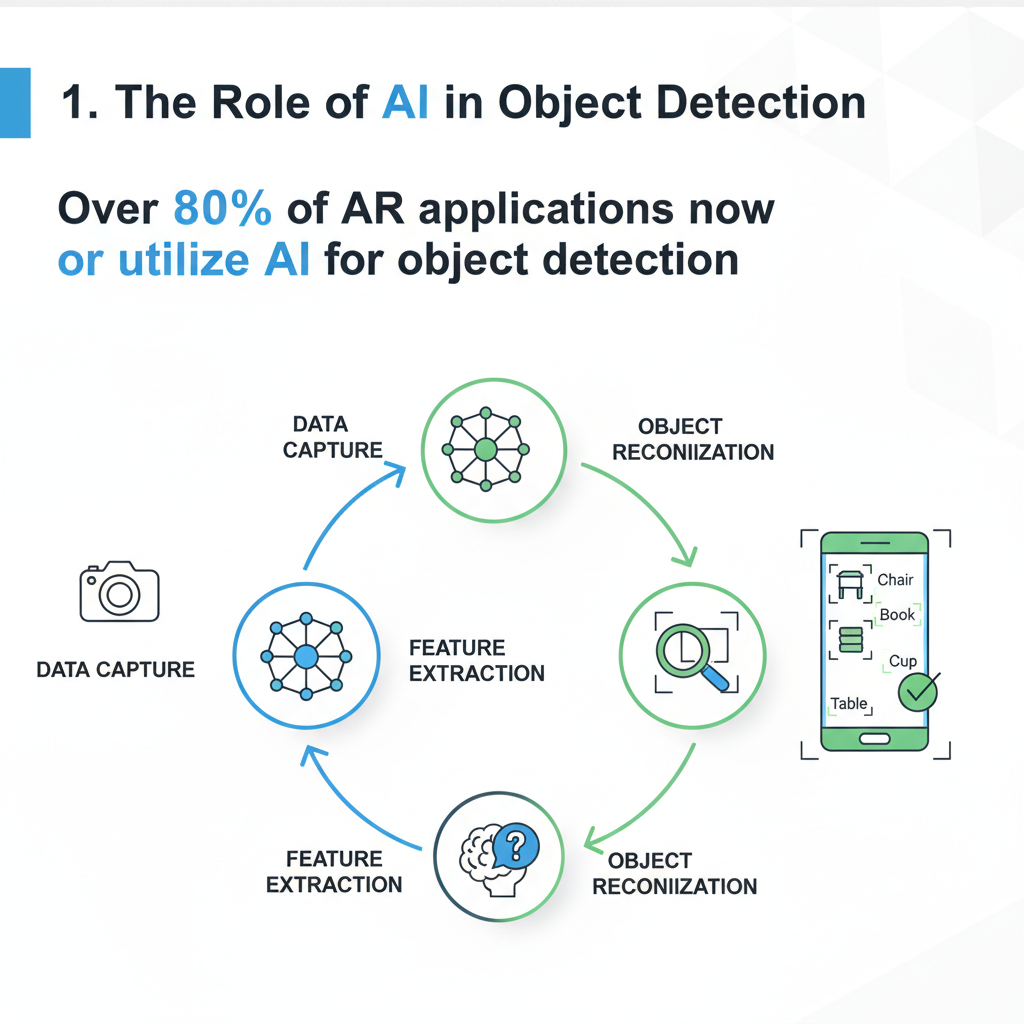
For example, a model trained on thousands of images of cats and dogs can learn to distinguish between the two with remarkable accuracy. These algorithms utilize techniques like convolutional neural networks (CNNs) to process visual information, allowing them to recognize patterns and features in images. As a result, the precision of object recognition in AR applications has grown exponentially, enabling users to interact with their environments in ways that were previously unimaginable.
Real-Time Tracking Capabilities

One of the most exciting advancements that AI brings to AR is its ability to seamlessly track moving objects in real-time. Traditional tracking methods can struggle with speed and accuracy, especially in dynamic environments where objects are constantly changing position. However, AI enhances this process by utilizing predictive algorithms that can anticipate object movements.
For instance, in a gaming application, if a character is running, AI can predict where that character is likely to move next and adjust the AR overlay accordingly. This minimizes lag and enhances the overall user experience. Moreover, the integration of AI-powered tracking allows for interactive features, such as virtual objects that can be manipulated in real time, responding instantly to user input. This level of responsiveness not only makes applications more engaging but also creates a sense of immersion that keeps users coming back for more.
Integration with AR Technologies
The true magic happens when AI works hand-in-hand with established AR frameworks, such as ARKit by Apple and ARCore by Google. These platforms provide the necessary tools for developers to create rich AR experiences, while AI enhances these functionalities through advanced object detection and tracking.
For example, imagine you’re using an AR application to visualize furniture in your living room. AI can help identify the dimensions of the room and the furniture itself, allowing for contextual overlays that adjust in real time as you move around. This means that users can see how different pieces of furniture fit together in their space, making informed decisions about purchases. The seamless integration of AI into AR technology not only enriches user engagement but also paves the way for creating more intelligent and responsive applications.
Benefits for Various Industries
The benefits of AI-enhanced AR are being felt across a multitude of industries, each finding unique applications that improve efficiency and user experience.
In retail, for example, AI-powered AR applications allow customers to visualize products in their own spaces before making a purchase. Brands like IKEA have embraced this technology, enabling shoppers to use their smartphones to see how a piece of furniture would look in their home. This not only enhances customer satisfaction but also reduces return rates, benefiting both consumers and retailers.
Similarly, in education, AR applications are revolutionizing the learning experience. By providing interactive content tailored to students’ needs, educators can create engaging lessons that cater to various learning styles. For instance, using AR to visualize complex scientific concepts or historical events can make the learning process more immersive and impactful. This approach not only captures students’ attention but also fosters deeper understanding and retention of knowledge.
Challenges and Solutions
Despite the tremendous benefits of integrating AI with AR, several challenges must be addressed to ensure effective implementation. One significant concern is computational load, which can lead to latency issues, especially on mobile devices. If an app takes too long to process visual data, users may experience frustrating lag, negating the immersive nature of AR.
To tackle these challenges, developers can focus on optimizing algorithms specifically for mobile devices, ensuring that they run efficiently without draining battery life. Additionally, leveraging cloud computing for processing power can alleviate some of the burdens on local devices, allowing for more complex computations to be handled remotely. By adopting these solutions, developers can create smoother, more responsive AR experiences that fully utilize the capabilities of AI.
Future Trends in AI and AR
As technology continues to evolve, the future of AI-enhanced AR looks incredibly promising. Advancements in AI technologies, particularly in neural networks and deep learning, are set to further enhance AR capabilities. For example, improvements in natural language processing could enable users to interact with AR applications using voice commands, making them even more intuitive and accessible.
Moreover, the potential for AI-driven AR applications is vast, extending beyond gaming and retail into fields like healthcare, where AR can assist in surgical procedures by overlaying critical information onto a surgeon’s field of view. The implications for training and education in medical fields are profound, providing future healthcare professionals with immersive and practical learning experiences.
As we look to the future, it is clear that the synergy between AI and AR will continue to transform our interactions with technology and the world around us.
AI is paving the way for a new era in augmented reality, making object detection and tracking not only more efficient but also more integrated into our daily lives. As technology continues to evolve, staying updated on these advancements will be crucial for leveraging their full potential in your projects. Whether you’re a developer, a business leader, or simply an enthusiast, the fusion of AI and AR promises to enhance our experiences in ways we are just beginning to explore.
Frequently Asked Questions
How does AI enhance the accuracy of AR video object detection and tracking?
AI enhances the accuracy of augmented reality (AR) video object detection and tracking by utilizing advanced algorithms, such as deep learning and neural networks. These technologies enable systems to learn from vast datasets, improving their ability to identify and track objects in real-time. As a result, AI can reduce false positives and increase the precision of object recognition, leading to a more seamless AR experience for users.
What are the key benefits of integrating AI in AR video applications?
Integrating AI into AR video applications offers several key benefits, including improved object recognition and tracking, enhanced user interaction, and reduced latency. AI algorithms can process visual data more efficiently, allowing AR systems to respond to movements and changes in the environment almost instantaneously. This creates a more immersive and interactive experience, making it particularly useful in industries like gaming, education, and retail.
Why is real-time object tracking important in AR video experiences?
Real-time object tracking is crucial in AR video experiences because it ensures that virtual objects remain accurately aligned with their real-world counterparts as the user moves. This alignment is vital for maintaining the illusion of reality, preventing disorientation and enhancing user engagement. Without effective real-time tracking, AR applications can feel disjointed, diminishing the overall user experience.
Which AI techniques are most effective for AR video object detection and tracking?
Some of the most effective AI techniques for AR video object detection and tracking include convolutional neural networks (CNNs), recurrent neural networks (RNNs), and reinforcement learning. CNNs are particularly powerful for image classification and object detection, while RNNs can handle time-series data, making them suitable for tracking moving objects. Additionally, reinforcement learning can optimize tracking strategies by learning from user interactions and performance metrics.
How can businesses benefit from using AI-driven AR video solutions?
Businesses can significantly benefit from AI-driven AR video solutions by enhancing customer engagement, improving training processes, and increasing operational efficiency. For instance, retailers can use AR to provide interactive shopping experiences, allowing customers to visualize products in their own space. In training scenarios, AR can create realistic simulations that help employees learn complex tasks more effectively, ultimately leading to increased productivity and better outcomes.
References
- Artificial intelligence
- https://www.sciencedirect.com/science/article/abs/pii/S0031320321000611
- https://www.nature.com/articles/s41598-021-86889-0
- https://www.frontiersin.org/articles/10.3389/frobt.2021.643992/full
- https://www.techrepublic.com/article/how-ai-is-changing-augmented-reality/
- https://www.bbc.com/news/technology-54100695
- https://www.researchgate.net/publication/343456789_Artificial_Intelligence_in_Augmented_Reality_Applications
- https://www.nist.gov/news-events/news/2021/06/ai-augmented-reality-technology-potential-and-challenges
- https://www.itu.int/en/ITU-T/focusgroups/ai4iot/Documents/FG-AI4IOT-DOC-00018.pdf