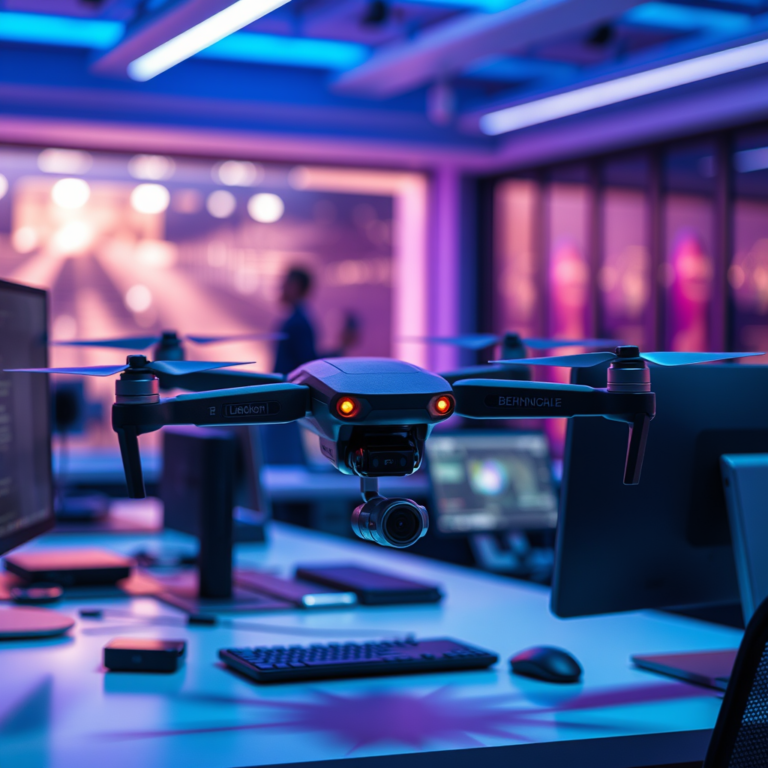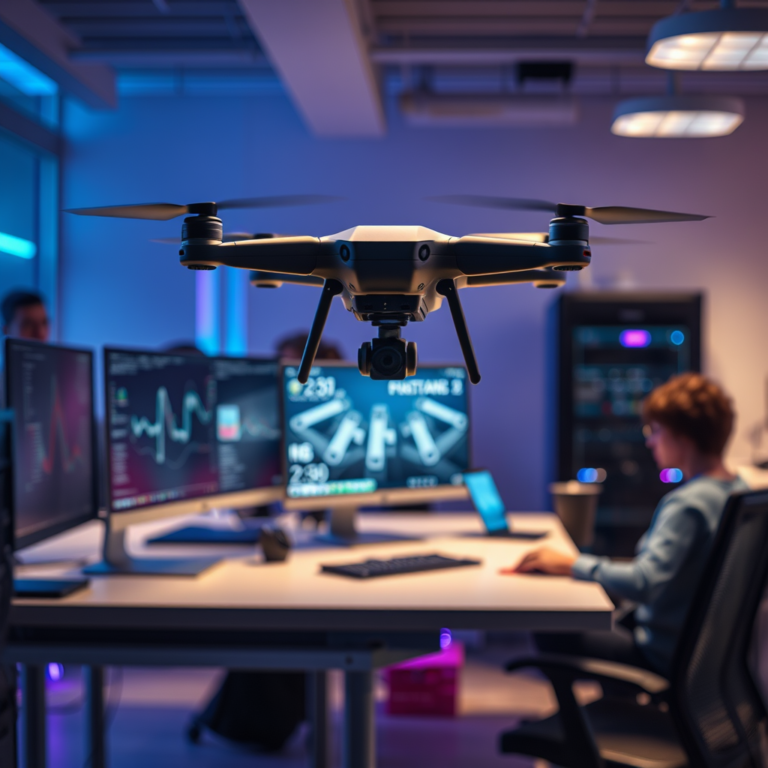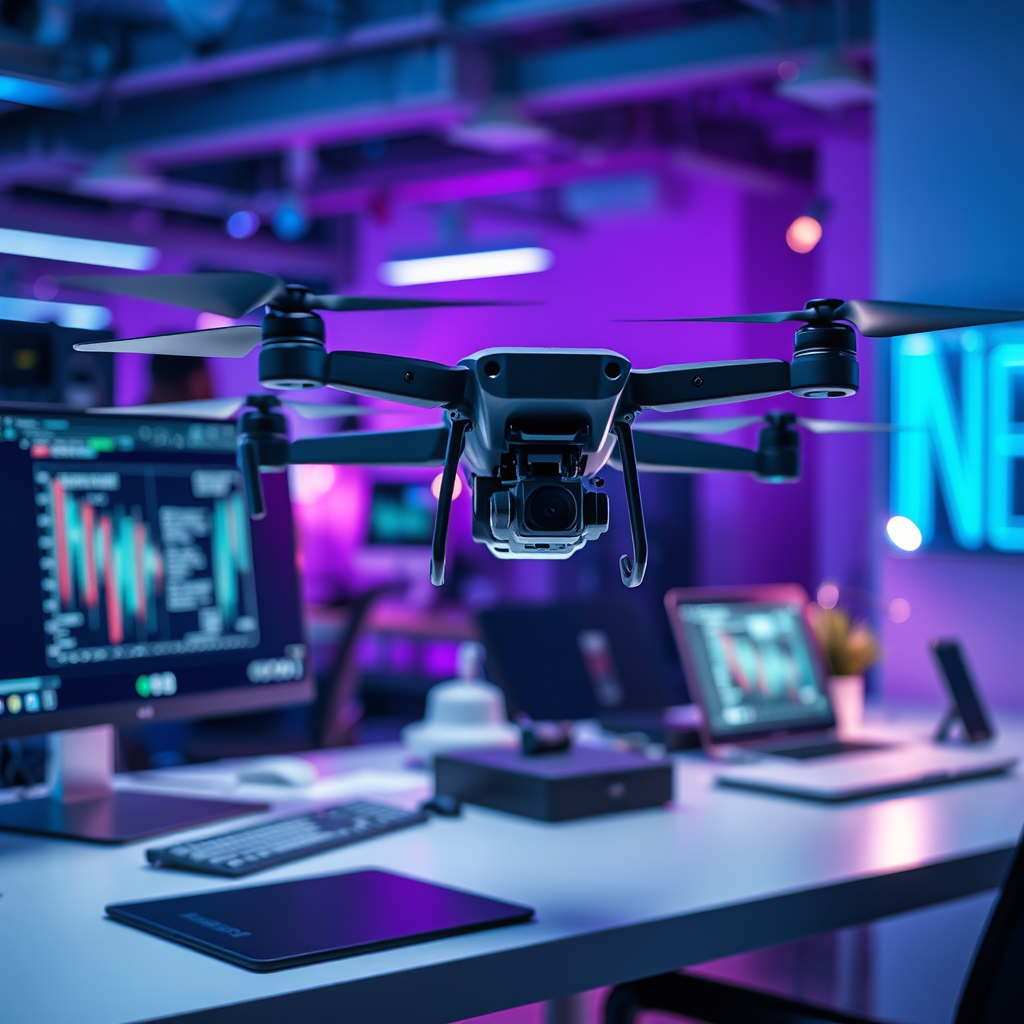

Real-time object tracking in drone cameras has been significantly enhanced by artificial intelligence (AI), allowing drones to efficiently navigate and monitor their surroundings. This cutting-edge technology enables drones to automatically follow moving subjects, which is transforming a variety of fields such as agriculture, security, and filmmaking. In this article, we’ll explore how AI contributes to real-time object tracking and the numerous benefits it offers to drone operations.
Understanding AI in Drone Technology
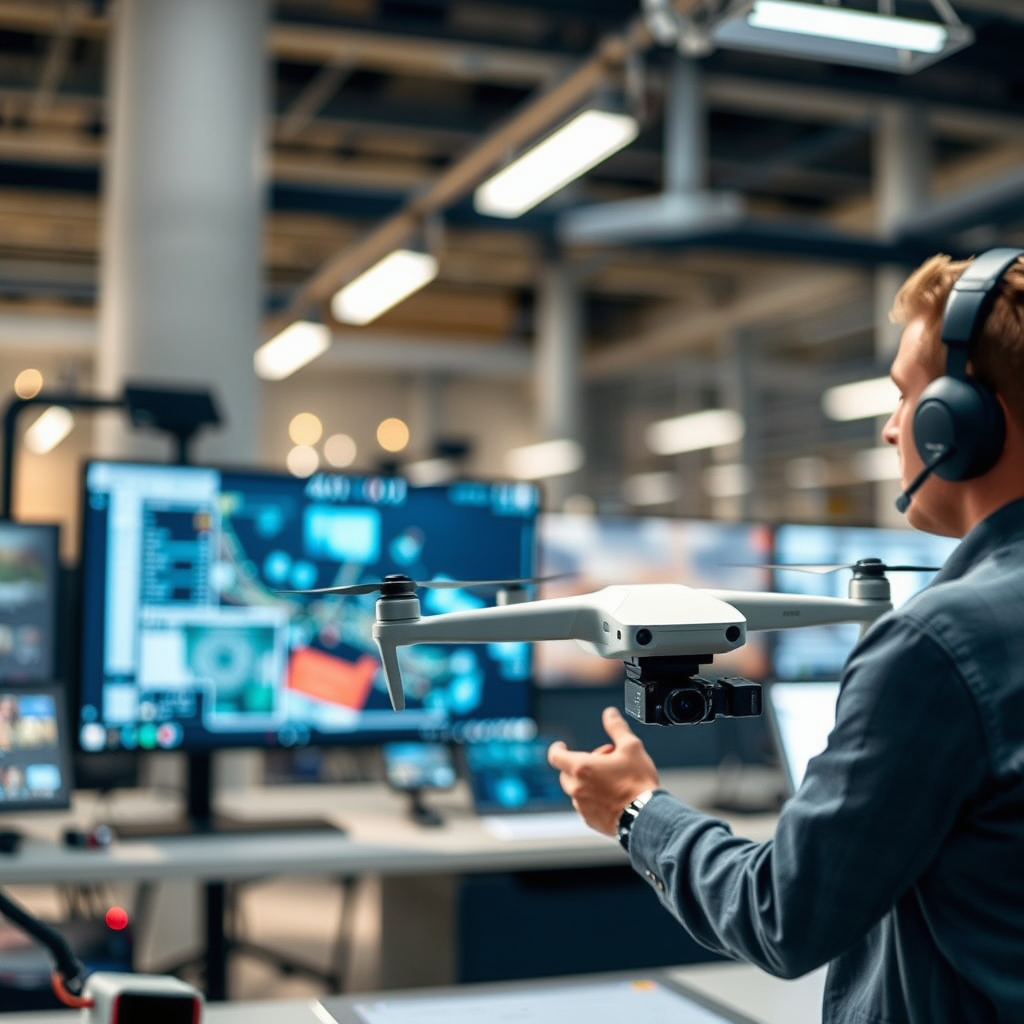
AI algorithms are at the heart of modern drone technology, processing video feeds in real time to detect and identify objects with remarkable precision. These algorithms analyze frames of video as they are captured, quickly distinguishing between various elements in the environment, such as people, vehicles, and animals. The efficiency of this process is largely due to machine learning models, which are trained on vast datasets that include thousands of images representing different scenarios. As these models are exposed to more data, they improve their accuracy over time, enabling drones to better recognize and track objects even in complex environments.
For example, a drone employed in wildlife research can be trained to identify specific species of animals by learning from thousands of images. The more data it processes, the better it becomes at distinguishing these animals from their surroundings. This capability not only enhances the tracking efficiency but also minimizes the chances of misidentification, which is crucial in sensitive applications like wildlife conservation.
The Mechanism of Real-Time Object Tracking
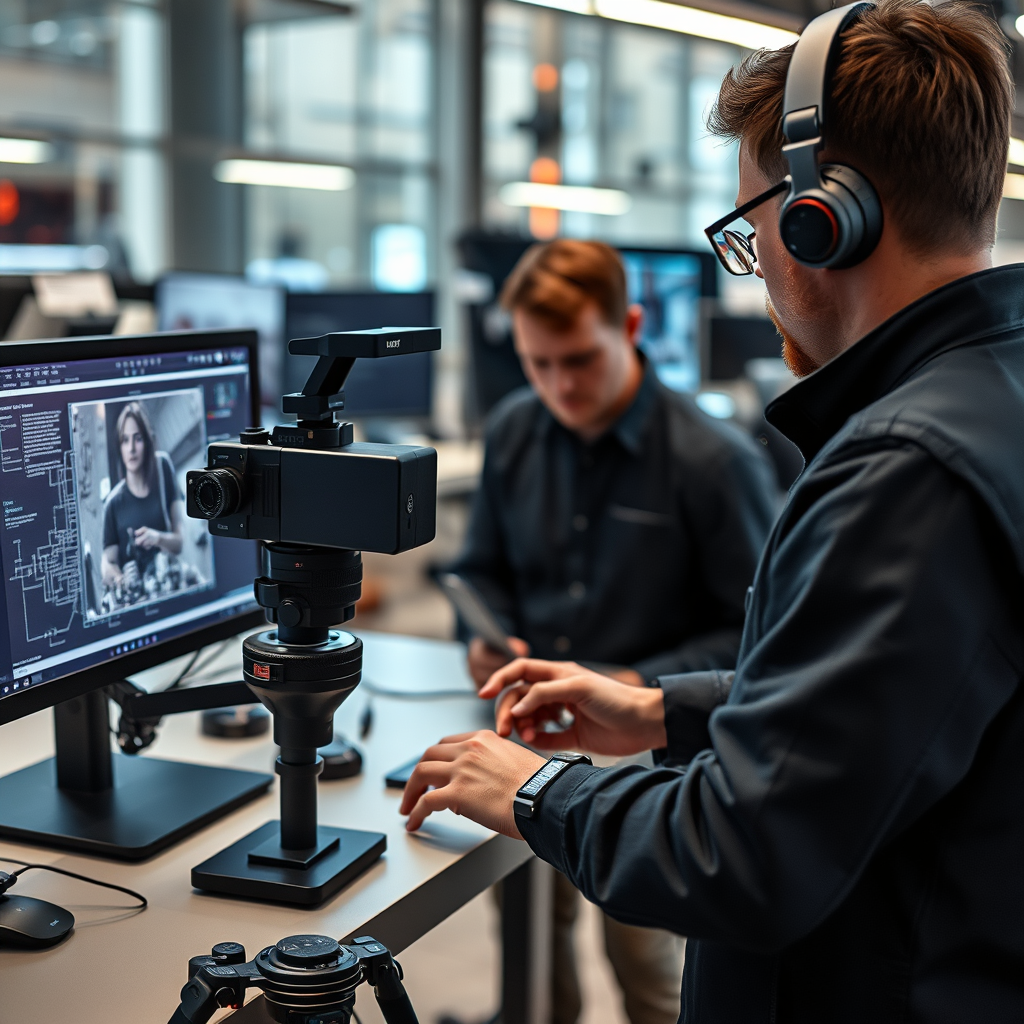
The mechanism behind real-time object tracking in drones relies heavily on advanced computer vision techniques. Using a combination of algorithms, drones can interpret visual data and track subjects dynamically. One common approach involves the use of bounding boxes, which outline the detected object within the video feed, allowing the drone to maintain focus on it as it moves. Additionally, more sophisticated techniques like image segmentation can isolate objects from the background, providing even clearer tracking capabilities.
For instance, a drone filming a sporting event can utilize these techniques to follow a player as they move across the field. The bounding box ensures that the camera stays centered on the player, while segmentation helps avoid distractions from the crowd or other objects in the scene. This seamless tracking ability is essential for capturing high-quality footage and provides an immersive viewing experience.
Applications of AI-Driven Object Tracking
AI-driven object tracking has a multitude of applications across various industries. In agriculture, drones are increasingly utilized to monitor crop health by tracking growth patterns and identifying anomalies. By analyzing data gathered from the air, farmers can make informed decisions about irrigation, fertilization, and pest control, all of which enhance crop yield and sustainability.
In the security sector, drones equipped with AI capabilities provide a powerful surveillance tool. Security agencies can use drones to monitor large areas efficiently, ensuring that every corner is covered. For example, during a large public event, drones can track crowd movements and identify any unusual activity, enabling rapid response if necessary. The integration of AI allows for real-time alerts and data analysis, making security measures more proactive and effective.
Filmmakers are also tapping into AI-driven object tracking to create breathtaking visuals. Drones can autonomously follow a subject, allowing filmmakers to capture dynamic shots without requiring extensive manual control. This not only saves time but also opens up creative possibilities, resulting in unique storytelling perspectives.
Challenges in Real-Time Object Tracking
Despite the incredible advancements in AI-driven object tracking, several challenges remain. Environmental factors such as weather conditions, varying lighting, and obstructions can impact tracking accuracy. For instance, heavy rain or fog can obscure the drone’s vision, making it difficult to maintain a lock on a moving subject. Similarly, drastic changes in lighting—like moving from a bright outdoor setting to a dimly lit indoor space—can confuse the object detection algorithms.
Another significant challenge is the computational load imposed on drones. Real-time object tracking requires substantial processing power, which can limit the operational time of drones. As drones work harder to analyze video feeds and maintain tracking, their battery life may diminish more quickly. This can restrict their usability in long-duration missions or in remote areas where recharging opportunities are limited.
Future Trends in AI and Drone Object Tracking
Looking ahead, the future of AI in drone object tracking is promising. Advancements in AI technologies are expected to yield better predictive models for tracking fast-moving objects, making them even more responsive and accurate. For example, drones may soon be able to anticipate a subject’s movement patterns based on historical data, allowing them to adjust their flight paths accordingly.
Moreover, the integration of other technologies, such as 5G networks, is set to revolutionize data transmission and processing speed. With faster connectivity, drones can leverage cloud computing to offload some of their processing tasks, allowing for more complex algorithms without compromising battery life. This means drones will not only become smarter but also more efficient, enhancing their capabilities across various applications.
Best Practices for Implementing AI in Drone Operations
To leverage the full potential of AI in drone operations, organizations should adopt some best practices. Regular updates to AI models are essential to ensure they remain effective and accurate. As new data becomes available, updating the algorithms can help improve their performance and adapt to changing conditions.
Additionally, training operators in the latest AI tools and techniques is crucial for enhancing overall drone performance. By investing in education and training, organizations can empower their teams to maximize the capabilities of AI-driven drones, leading to improved outcomes in their operations.
Finally, fostering a culture of innovation and exploration can lead to the discovery of new applications and methods for using AI in drone technology. Engaging with the latest research and developments in AI can help organizations stay ahead in this rapidly evolving field.
The integration of AI in real-time object tracking for drone cameras marks a significant leap forward in aerial technology. By understanding its mechanisms and applications, users can leverage these advancements for improved efficiency and effectiveness in their respective fields. If you’re looking to enhance your drone operations, consider exploring the latest AI technologies and best practices to stay ahead in this evolving landscape. The future of drone technology is bright, and with AI at the helm, the possibilities are limitless.
Frequently Asked Questions
What is real-time object tracking in drone cameras, and how does AI enhance it?
Real-time object tracking in drone cameras refers to the ability to follow and monitor moving objects continuously during flight. AI enhances this capability by utilizing advanced algorithms such as computer vision and machine learning, allowing drones to identify, recognize, and predict the movement of objects with high accuracy. This enables applications like search and rescue, wildlife monitoring, and surveillance to be conducted more efficiently.
How do AI algorithms improve the accuracy of object tracking in drones?
AI algorithms improve accuracy in drone object tracking by processing vast amounts of visual data in real-time, enabling the drone to adapt to changing environments and object dynamics. Techniques such as deep learning can distinguish between objects, filter out noise, and mitigate occlusions, ensuring that the drone maintains a precise lock on the target despite obstacles. This capability is essential for applications requiring high precision, such as agricultural monitoring or disaster response.
Why is real-time object tracking important for drone applications?
Real-time object tracking is crucial for drone applications as it enhances operational efficiency and safety. For instance, in search and rescue missions, drones need to quickly locate and follow moving targets, such as people or vehicles. Additionally, in agriculture, tracking livestock or monitoring crop health in real-time can lead to timely interventions, ultimately improving productivity and outcomes.
Which industries benefit the most from AI-powered real-time object tracking in drones?
Several industries benefit significantly from AI-powered real-time object tracking in drones, including agriculture, public safety, construction, and wildlife conservation. In agriculture, drones can monitor crops and livestock efficiently. In public safety, drones can assist in search and rescue operations. The construction industry uses drones for site monitoring, while wildlife conservation efforts leverage drones to track endangered species without disturbing their habitats.
What are the challenges of implementing AI in real-time object tracking for drones?
Implementing AI in real-time object tracking for drones presents several challenges, including the need for high computational power and reliable data processing capabilities. Environmental factors like poor lighting, weather conditions, and complex terrains can hinder tracking accuracy. Additionally, ensuring the drone can operate autonomously while making real-time decisions requires robust AI training and continuous algorithm improvement to adapt to unpredictable scenarios.
References
- Tracking
- https://www.sciencedirect.com/science/article/pii/S0925231221000354
- Deep Neural Networks and Transfer Learning for Food Crop Identification in UAV Images
- https://www.ncbi.nlm.nih.gov/pmc/articles/PMC7220523/
- Frontiers | Radiation Tolerance Testing Methodology of Robotic Manipulator Prior to Nuclear Waste…
- https://www.researchgate.net/publication/347845963_A_Survey_on_Deep_Learning_for_Object_Tracking_in_Videos
- https://www.bbc.com/news/technology-57468507
- https://www.nytimes.com/2021/11/04/technology/drone-technology.html