The emergence of AI-powered deepfake videos is revolutionizing the entertainment industry by enhancing storytelling, enabling creative possibilities, and sparking ethical debates. These advanced technologies are reshaping how we create and consume content, making everything from films to video games more immersive and personalized. In this article, we will explore the intricate details of how deepfakes are transforming entertainment, the tools that make it possible, and the implications for artists and audiences alike.
The Technology Behind Deepfakes

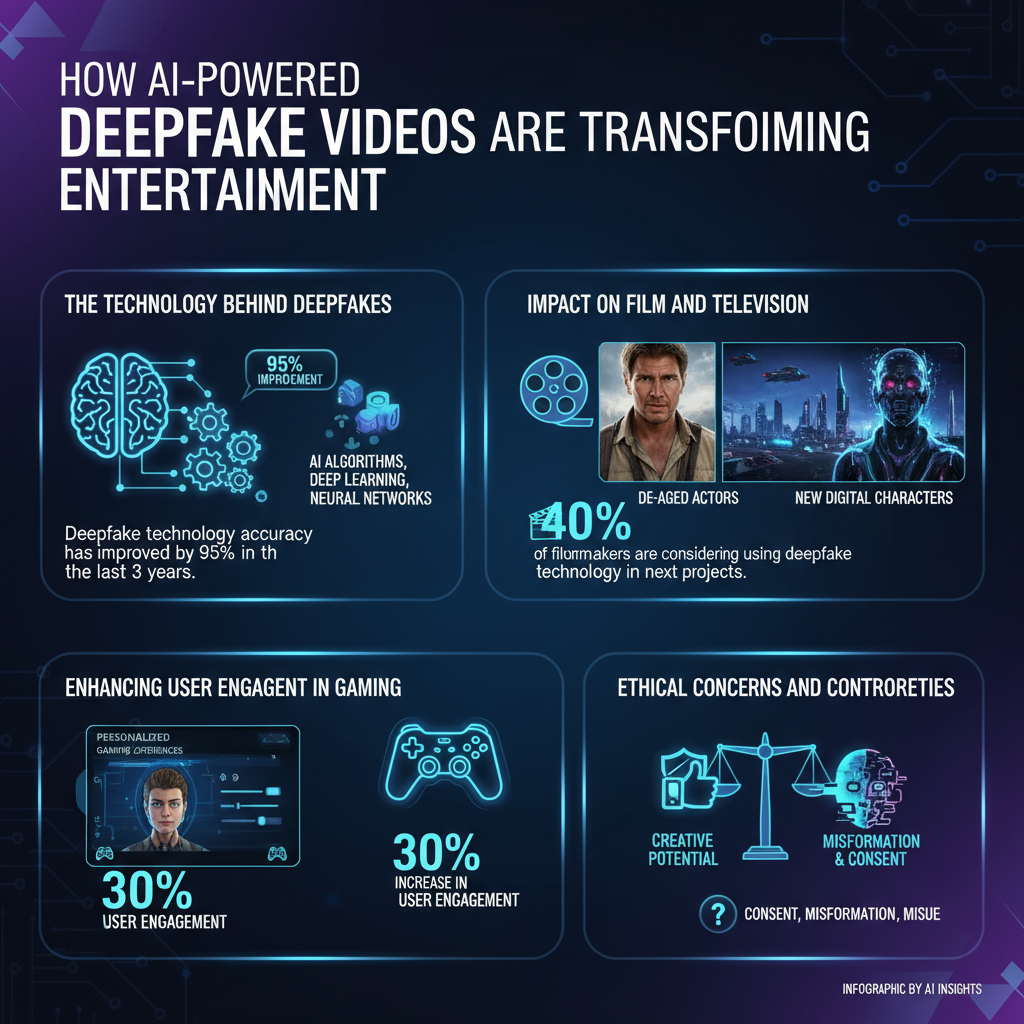
At the heart of deepfake technology are sophisticated artificial intelligence algorithms, particularly those involving deep learning and neural networks. These algorithms analyze vast amounts of data, learning to mimic human expressions, voices, and movements with astonishing accuracy. The most commonly used technique is called Generative Adversarial Networks (GANs), which pits two neural networks against each other: one generates fake content while the other attempts to detect its authenticity. This constant back-and-forth leads to ever-improving outputs, resulting in deepfake videos that can be nearly indistinguishable from the real thing.
For content creators, a plethora of tools and software are available to harness the power of deepfake technology. Programs like DeepFaceLab and Zao allow users to create their own deepfake videos with relative ease. These tools often come with user-friendly interfaces and tutorials, making them accessible to both professionals and amateurs. As the technology matures, we can expect even more advanced software to emerge, pushing the boundaries of what deepfakes can achieve in storytelling and entertainment.
Impact on Film and Television
The impact of deepfake technology on film and television is nothing short of revolutionary. One of the most notable applications has been in the realm of visual effects, where deepfakes allow for the seamless integration of digital characters into live-action footage. For instance, in the Star Wars franchise, deepfake technology was notably used to recreate the likeness of young Carrie Fisher in “Rogue One,” allowing for a poignant appearance that honored the late actress without compromising the narrative.
Moreover, popular series like “The Mandalorian” have leveraged deepfake technology to de-age actors, creating strikingly realistic portrayals of characters in various stages of their lives. This not only enriches storytelling but also opens new avenues for character development, allowing writers to explore complex narratives across different time periods without the constraints of traditional casting.
Enhancing User Engagement in Gaming
The gaming industry is also experiencing a surge in the integration of deepfake technology, particularly in character animations. Imagine a video game where your avatar not only looks like you but also mimics your expressions and movements in real-time, creating a personalized gaming experience. This is becoming a reality as developers harness AI to create more lifelike characters that respond dynamically to player interactions.
Games like “Cyberpunk 2077” have already begun to experiment with deepfake technology to enhance character realism, but the potential is even greater. Future advancements could lead to fully customized gaming experiences, where players can input their own likenesses and have AI-generated avatars that respond to their unique emotional cues, thus deepening their immersion in the game world.
Ethical Concerns and Controversies
While the creative possibilities of deepfake technology are exciting, they also raise significant ethical concerns. One of the most pressing issues is the potential for misinformation and misuse. Deepfake videos can easily be weaponized to spread false narratives, manipulate public opinion, or damage reputations, as seen in various political scandals.
Additionally, the legal landscape surrounding deepfakes is murky at best. Questions about ownership, consent, and copyright loom large as creators navigate this new territory. For instance, if a deepfake video uses a celebrity’s likeness without permission, who is held accountable? These ethical dilemmas necessitate ongoing discussions among creators, lawmakers, and audiences to establish guidelines that protect rights while fostering innovation.
Future Trends in AI and Deepfake Technology
Looking ahead, the evolution of deepfake technology in the entertainment sector seems inevitable. We can expect to see more sophisticated tools that will make creating high-quality deepfakes accessible to even more creators. This democratization of technology could lead to a surge in independent content that pushes creative boundaries.
The role of regulation cannot be understated, as industry standards will be essential in addressing the ethical concerns associated with deepfakes. Institutions and organizations may need to develop frameworks that ensure responsible usage while still allowing for creative expression. As public awareness of deepfakes grows, audiences will also demand more transparency in the content they consume.
Audience Reactions and Acceptance
As deepfake technology becomes more prevalent, audience reactions are mixed. Some viewers are fascinated by the capabilities and creativity involved in deepfake videos, appreciating the enhanced storytelling and immersive experiences they offer. For instance, the viral deepfake recreations of celebrities in various scenarios have entertained millions, showcasing the fun side of the technology.
However, others express skepticism and concern, especially regarding the potential for deception. The blurred lines between what is real and what is not can create distrust, particularly when it comes to news and political content. Therefore, the acceptance of deepfakes will likely hinge on how effectively creators can communicate their intent and ensure ethical use of the technology.
The rise of AI-powered deepfake videos is undoubtedly transforming the entertainment industry, offering innovative opportunities while also raising critical ethical questions. As creators and audiences navigate the complexities of this technology, it becomes essential to remain informed about its implications. The future of entertainment will be shaped by how we balance the creative possibilities of deepfakes with the responsibility to protect against their potential misuse. Embracing this dialogue will help us appreciate the art of storytelling in an increasingly digital world.
Frequently Asked Questions
What are AI-powered deepfake videos and how are they created?
AI-powered deepfake videos are synthetic media where a person’s likeness is digitally altered to appear as if they are saying or doing something they did not actually say or do. These videos are created using advanced techniques like Generative Adversarial Networks (GANs) and machine learning algorithms that analyze real footage to generate realistic alterations. The technology behind deepfakes allows for seamless integration of faces, voices, and expressions, making them increasingly convincing and popular in the entertainment industry.
How are deepfake videos being used in the entertainment industry?
Deepfake videos are revolutionizing the entertainment industry by enhancing storytelling, creating realistic visual effects, and even resurrecting deceased actors for new performances. Filmmakers use this technology to reduce production costs, eliminate the need for extensive reshoots, or create more engaging content. For example, deepfakes can allow for the seamless aging or de-aging of characters, ultimately providing audiences with a richer cinematic experience.
Why are deepfakes considered both innovative and controversial in entertainment?
While deepfakes present innovative opportunities for creativity and storytelling in entertainment, they also raise significant ethical and legal concerns. The potential for misuse, such as creating misleading content or violating a person’s likeness without consent, poses risks to individual privacy and trust in media. As a result, the entertainment industry is grappling with the need for regulations and guidelines to ensure responsible use of this technology while still reaping its benefits.
What are the best practices for using deepfake technology ethically in entertainment?
To use deepfake technology ethically in entertainment, creators should prioritize transparency, obtain consent from individuals whose likenesses are used, and clearly label deepfake content to distinguish it from reality. Engaging in open discussions about the potential impacts of deepfakes and adhering to industry standards can help mitigate risks. Additionally, filmmakers should consider the context in which deepfakes are used to ensure they enhance rather than deceive the audience.
Which platforms or tools are best for creating high-quality deepfake videos?
Several platforms and tools have emerged for creating high-quality deepfake videos, including DeepFaceLab, Zao, and Reface. These tools offer user-friendly interfaces and advanced features for both amateur and professional creators. When selecting a tool, users should evaluate the quality of output, ease of use, and available resources or tutorials to maximize their deepfake creation experience while ensuring ethical guidelines are followed.
References
- Deepfake
- https://www.theguardian.com/technology/2020/jan/22/deepfake-technology-risks-and-opportunities
- https://www.bbc.com/news/technology-51639392
- https://www.nytimes.com/2020/01/07/technology/deepfakes-fake-news.html
- https://www.cnbc.com/2021/12/17/deepfakes-what-are-they-and-why-are-they-dangerous.html
- https://www.technologyreview.com/2020/01/14/844636/deepfakes-entertainment-ai-video-manipulation/
- https://www.forbes.com/sites/bernardmarr/2021/05/03/deepfake-technology-how-it-works-and-its-impact-on-business-and-society/
- https://www.sciencedirect.com/science/article/pii/S1877050919313768