
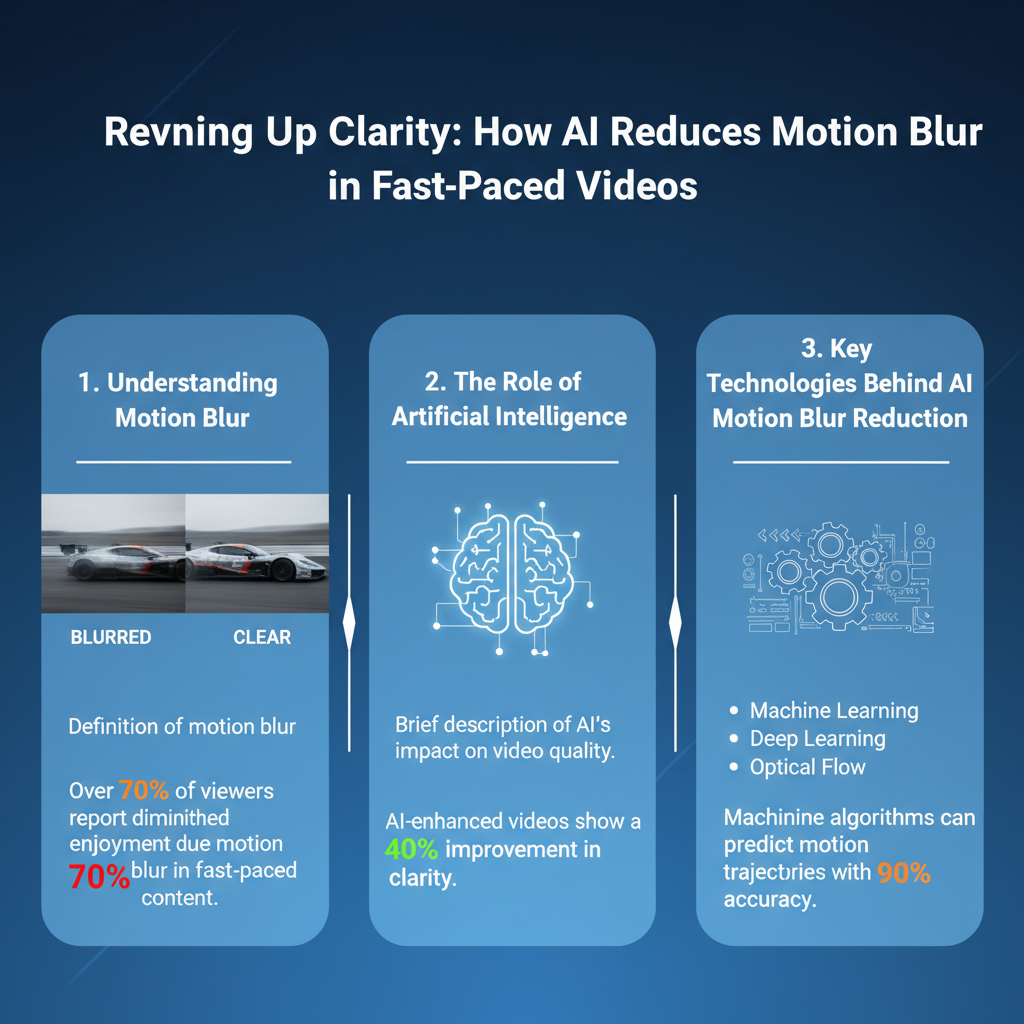
Incorporating artificial intelligence into video processing significantly minimizes motion blur in fast-paced videos. By utilizing advanced algorithms and techniques, AI can enhance clarity and detail, ensuring that viewers enjoy a smoother and more visually appealing experience. With the rise of high-speed filming and action-packed content, motion blur has become a common challenge, but AI is here to change the game. This article will explore how AI achieves this and the technologies involved, shedding light on the incredible innovations transforming video quality.
Understanding Motion Blur

Motion blur occurs when rapid movement in a scene exceeds the camera’s ability to capture it clearly, resulting in a smeared effect that can obscure details. This phenomenon can detract from the viewer’s experience, making it difficult to follow action and diminishing the overall quality of the footage. Common scenarios where motion blur is prevalent include chase scenes in films, fast-paced sports events, and dynamic video games where characters or objects move quickly across the screen. Such blurriness can be frustrating, as it not only affects storytelling but also impacts the emotional engagement of the audience.
The Role of Artificial Intelligence
Artificial intelligence plays a crucial role in combating motion blur by employing sophisticated algorithms that analyze motion patterns in videos. These algorithms can identify the direction and speed of moving objects, allowing them to predict and generate frame data that fills in the gaps left by movement. Unlike traditional methods that often rely on simple frame averaging or interpolation, AI-driven techniques utilize machine learning to learn from vast datasets, enabling them to create more accurate and visually appealing frames. This predictive capability means that even the fastest scenes can maintain clarity, enhancing the viewer’s experience and making the content more enjoyable.
Key Technologies Behind AI Motion Blur Reduction
At the heart of AI motion blur reduction are neural networks, which are designed to mimic the human brain’s way of processing information. These networks analyze existing frames and generate new ones based on learned patterns, a process known as frame interpolation. By leveraging deep learning, these networks can improve video resolution and clarity significantly, allowing for the enhancement of low-quality footage or the addition of frames to create smoother motion. Technologies like convolutional neural networks (CNNs) are particularly effective in this regard, as they excel at recognizing spatial hierarchies in images, making them ideal for video processing tasks.
Real-Time Processing Capabilities
One of the standout features of AI in video processing is its ability to operate in real-time. This capability is particularly beneficial in scenarios where immediate feedback is crucial, such as gaming and live sports broadcasts. Imagine watching a thrilling football match where every swift move and tackle is crystal clear, or playing an action game where every frame is rendered flawlessly, thanks to AI’s real-time processing. Companies like NVIDIA are already implementing these technologies in their graphics cards, allowing gamers to enjoy smooth gameplay without the annoyance of motion blur. Similarly, broadcasters can deliver high-quality live sports coverage that captures every moment without compromising on clarity.
Case Studies and Success Stories
Numerous filmmakers and content creators have turned to AI technologies to enhance their projects. For instance, in the production of high-octane films like “Mad Max: Fury Road,” filmmakers utilized AI to refine fast-moving sequences, ensuring the action remained engaging and visually stunning. Additionally, sports networks have seen success in implementing AI for live broadcasts, with companies like IBM using AI algorithms to analyze player movements and create clearer footage during fast-paced games. Testimonials from industry professionals highlight the transformative impact of AI, with many praising its ability to elevate the visual storytelling of their work.
Future Trends in AI and Video Quality
Looking ahead, the future of AI in video quality is brimming with potential. As AI technologies continue to evolve, we can expect even more sophisticated algorithms that not only reduce motion blur but also enhance color accuracy and dynamic range. The integration of AI-driven tools in mobile devices could empower amateur videographers to produce professional-quality content effortlessly. However, this rapid advancement raises potential challenges, including ethical considerations regarding content authenticity and the potential for misuse in generating misleading videos. As we navigate this landscape, it’s crucial for creators and consumers alike to remain vigilant about the implications of AI in media.
Incorporating AI technology into video editing processes can drastically improve the visual quality of fast-paced content by reducing motion blur. This not only enhances viewer experience but also opens new avenues for creativity in video production. As AI continues to advance, we can expect even more innovative solutions to improve video clarity and detail. For those interested in exploring AI tools for video editing, consider experimenting with available software to witness these benefits firsthand. Embracing AI in video processing isn’t just a trend; it’s a leap into the future of visual storytelling.
Frequently Asked Questions
What is motion blur, and why does it occur in fast-paced videos?
Motion blur is a visual effect that occurs when an object moves quickly across the frame during video capture, resulting in a streaked or smeared appearance. It typically happens due to the camera’s shutter speed being too slow to freeze the motion, leading to a loss of clarity. In fast-paced videos, such as sports or action scenes, this blur can detract from the viewing experience, making it hard for audiences to follow the action.
How does AI technology reduce motion blur in videos?
AI technology reduces motion blur by utilizing machine learning algorithms that analyze frame data and predict the intended motion of objects within the scene. This allows AI to create sharper frames by reconstructing the details of blurred areas, effectively enhancing clarity without the need for high shutter speeds. Techniques such as frame interpolation and motion estimation enable smoother playback and improved visual fidelity in fast-paced content.
Why is reducing motion blur important for video quality?
Reducing motion blur is crucial for video quality because it enhances the viewer’s ability to see fast-moving subjects clearly, improving overall engagement and enjoyment. In competitive environments such as gaming, sports broadcasting, and action filmmaking, clear visuals are essential for narrative comprehension and emotional impact. By minimizing motion blur, creators can deliver a more immersive experience that retains viewers’ attention.
What are the best AI tools for reducing motion blur in video editing?
Some of the best AI tools for reducing motion blur in video editing include Adobe Premiere Pro with its “Optical Flow” feature, DaVinci Resolve’s motion estimation capabilities, and Topaz Video Enhance AI. These tools leverage advanced algorithms to analyze and enhance video frames, allowing editors to achieve professional results with minimal effort. By integrating these AI-powered solutions, users can significantly improve the quality of their fast-paced videos.
Which video formats benefit the most from AI motion blur reduction?
Video formats that typically benefit the most from AI motion blur reduction include high frame rate (HFR) videos, such as those shot at 60fps or higher, and formats used in gaming, sports, or action sequences. These formats often contain rapid movements that can lead to pronounced motion blur. By applying AI techniques to these videos, creators can elevate the quality and clarity, making them more suitable for platforms that emphasize high-definition content, such as streaming services and social media.
References
- https://en.wikipedia.org/wiki/Motion_blur
- https://www.sciencedirect.com/science/article/pii/S0031320319302230
- https://www.nature.com/articles/s41598-021-82783-0
- https://www.technologyreview.com/2020/10/21/1010735/ai-video-enhancement-motion-blur/
- https://www.bbc.com/future/article/20210414-how-ai-is-changing-the-way-we-watch-video
- https://www.wired.com/story/how-ai-is-improving-video-quality/
- https://www.researchgate.net/publication/341134493_A_Review_on_Motion_Blur_Removal_Techniques
- https://www.nytimes.com/2022/01/30/technology/ai-video-enhancement.html