
When it comes to cutting-edge display technologies, Nano-LED and MicroLED are at the forefront, each offering distinct benefits tailored to different needs. While Nano-LED technology excels in producing vibrant colors with high precision, MicroLED technology boasts incredible brightness and efficiency. Understanding how these two technologies compare can help consumers and businesses make informed decisions about their display options.
Overview of Nano-LED Technology
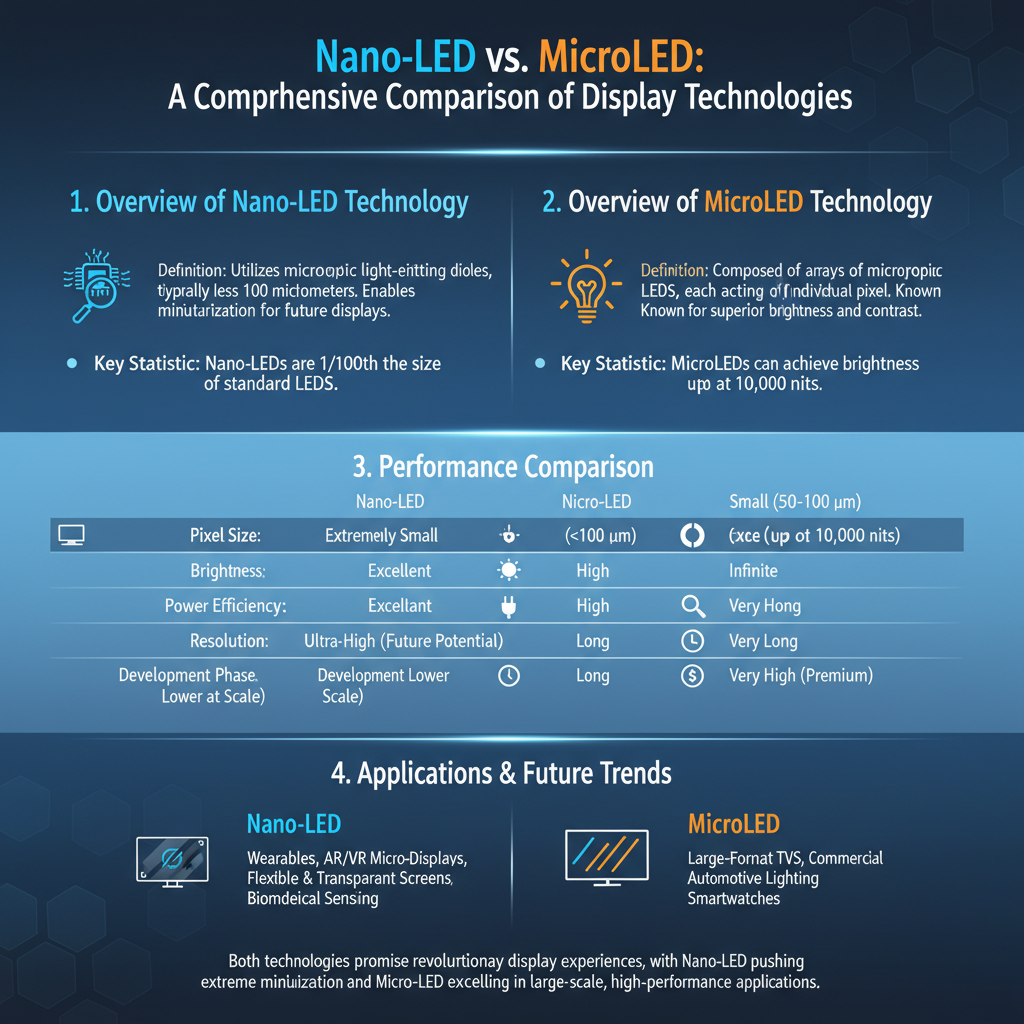
Nano-LED technology represents a significant innovation in display technology, utilizing microscopic light-emitting diodes (LEDs) that are smaller than traditional LEDs. These tiny light sources allow for greater pixel density, leading to sharper images and more accurate color reproduction. In essence, Nano-LEDs can achieve extraordinary brightness levels while maintaining energy efficiency, which is particularly beneficial for high-definition displays.
Currently, Nano-LED technology is gaining traction in the consumer electronics market, especially in premium television sets and mobile devices. Brands are increasingly incorporating this technology to enhance the viewing experience, making it a notable trend in the industry. As competition heats up, manufacturers are looking to differentiate their products through superior color accuracy and brightness, attributes that Nano-LEDs can deliver.
Overview of MicroLED Technology
MicroLED technology, like Nano-LED, utilizes tiny LEDs, but the fundamental difference lies in its structure and capabilities. MicroLEDs are self-emissive, meaning each pixel generates its own light, allowing for exceptional contrast ratios and deep blacks. This characteristic makes MicroLED displays incredibly appealing for a wide range of applications, from large-scale commercial displays to home televisions.
MicroLED is currently being utilized in various devices, such as smart TVs, smartphones, and even wearables. One of the most popular applications includes massive video walls and outdoor displays, where high brightness and excellent color fidelity are crucial. As manufacturers continue to innovate, MicroLED technology is becoming increasingly accessible to consumers, promising to revolutionize how we experience visual content.
Performance Comparison
When comparing the performance of Nano-LED and MicroLED technologies, brightness and color accuracy are two key metrics. Nano-LED displays are known for their ability to produce vivid colors while achieving high brightness levels, which is essential for viewing in bright environments. For instance, a Nano-LED TV can deliver an impressive peak brightness of over 2000 nits, making it ideal for daytime viewing.
On the other hand, MicroLED technology excels in contrast and can achieve near-perfect black levels due to its self-emissive nature. The response time and refresh rates also play a critical role in the viewing experience. MicroLED displays typically offer faster response times, making them suitable for high-speed content like gaming or sports. With refresh rates exceeding 120Hz, they provide smooth motion with minimal blurring, a significant advantage for avid gamers.
Energy Efficiency
Energy efficiency is becoming increasingly important as consumers seek environmentally friendly options. Nano-LED technology optimizes power consumption by dynamically adjusting brightness levels based on content, ensuring that energy is used more effectively. For instance, when displaying darker images, Nano-LEDs can reduce their power usage without sacrificing image quality.
In contrast, MicroLED displays are also designed with energy efficiency in mind. Because MicroLEDs are self-emissive, they do not require a backlight, significantly reducing power consumption, especially in darker scenes. Studies suggest that MicroLEDs can consume up to 30% less power than traditional LCDs, making them an attractive option for energy-conscious consumers. This efficiency not only benefits the environment but also translates to lower electricity bills over time.
Cost Analysis
When it comes to cost, the initial investment for Nano-LED technology can be quite high due to the advanced manufacturing processes involved. As of now, Nano-LED displays are predominantly found in high-end models, which may not be affordable for every consumer. However, the longevity and durability of these displays can justify the cost, as they typically have a longer lifespan than traditional LED screens.
MicroLED technology, while also initially expensive, has seen a gradual decrease in costs as the manufacturing techniques improve. The potential for modular designs—where individual MicroLED panels can be replaced independently—can lead to lower long-term maintenance costs. Additionally, the longevity of MicroLEDs, which can last up to 100,000 hours, means that consumers can enjoy their investment for many years without needing a replacement.
Future Developments
The future of Nano-LED technology looks promising as researchers continue to explore new materials and techniques to enhance performance. Emerging trends include the integration of Nano-LEDs in augmented reality (AR) and virtual reality (VR) devices, where size and weight are critical factors. This could open new avenues for immersive experiences, making Nano-LED a key player in the next generation of display technology.
MicroLED technology is also poised for exciting developments. With ongoing research aimed at improving manufacturing scalability and reducing costs, we can expect to see MicroLED displays in more consumer products. Predictions suggest that by the end of the decade, MicroLED technology will dominate the market, especially as manufacturers focus on creating larger, more versatile displays for both residential and commercial use.
Use Cases and Practical Applications
Nano-LED technology is ideally suited for applications requiring high color accuracy and vibrant visuals. For instance, artists and designers may prefer Nano-LED displays for graphic work due to their superior color reproduction capabilities. Additionally, high-end televisions and mobile devices benefit from Nano-LED technology, providing viewers with an exceptional viewing experience.
MicroLED technology, on the other hand, is the preferred choice for applications demanding high brightness and contrast. This makes it the go-to option for commercial displays, such as those found in stadiums or shopping malls, where visibility in bright environments is essential. Furthermore, MicroLEDs are an excellent choice for gaming and entertainment setups, as they offer rapid response times and stunning visual fidelity.
The comparison of Nano-LED and MicroLED technologies highlights their distinct qualities and potential applications in the evolving landscape of display technology. As advancements continue, staying informed about these technologies can help consumers and businesses make educated decisions regarding their display needs. For deeper insights or specific inquiries, feel free to reach out or explore further resources.
Frequently Asked Questions
What is the main difference between Nano-LED technology and MicroLED technology?
The primary difference between Nano-LED and MicroLED technology lies in their size and application. Nano-LEDs are even smaller than MicroLEDs, typically measuring less than 1 micron, allowing for more compact displays with potentially higher pixel densities. While both technologies offer superior brightness and contrast compared to traditional LED, Nano-LEDs can lead to finer image details and enhanced color accuracy, making them ideal for high-end devices like wearables and smartphones.
How do Nano-LEDs improve display performance compared to MicroLEDs?
Nano-LEDs enhance display performance by enabling higher pixel densities and better color accuracy due to their smaller size. This results in sharper images and more vibrant colors, especially at close viewing distances. Additionally, Nano-LED technology often incorporates advanced materials that can improve energy efficiency and lifespan, making them a more sustainable choice for future display innovations compared to MicroLEDs.
Why are manufacturers interested in developing Nano-LED technology over MicroLED?
Manufacturers are drawn to Nano-LED technology because of its potential to create ultra-compact displays that can fit into a variety of devices, from smartphones to VR headsets. The finer pixel pitch and superior performance metrics of Nano-LEDs allow for more immersive user experiences and better visual quality. Furthermore, as the demand for high-resolution and portable devices increases, Nano-LEDs present a promising solution to meet these evolving consumer needs.
What are the advantages of using MicroLED technology instead of Nano-LEDs?
MicroLED technology offers several advantages, particularly in terms of production scalability and cost-effectiveness. While Nano-LEDs provide exceptional image quality, they can be more complex and expensive to manufacture. MicroLEDs, on the other hand, allow for easier assembly and integration into larger displays, making them suitable for televisions and commercial screens. Additionally, MicroLEDs generally have longer lifespans and can reach higher brightness levels, which is beneficial for various lighting environments.
Which technology is better for gaming, Nano-LED or MicroLED?
For gaming, the choice between Nano-LED and MicroLED technology depends on specific use cases. Nano-LEDs offer higher pixel density and color accuracy, which can create a more immersive gaming experience, particularly in handheld devices. However, MicroLEDs provide excellent brightness and contrast, making them ideal for large displays and gaming monitors. Ultimately, the best choice will depend on the gamer’s preferences for display size, resolution, and performance in varied lighting conditions.
References
- MicroLED
- https://www.sciencedirect.com/science/article/pii/S1877050919319115
- https://www.nature.com/articles/s41566-020-00710-9
- https://www.techrepublic.com/article/what-is-microled-technology-and-how-is-it-different-from-oled/
- https://www.theverge.com/2021/1/11/22221188/microled-tv-technology-explained-ces-2021
- https://www.bbc.com/news/technology-55417865