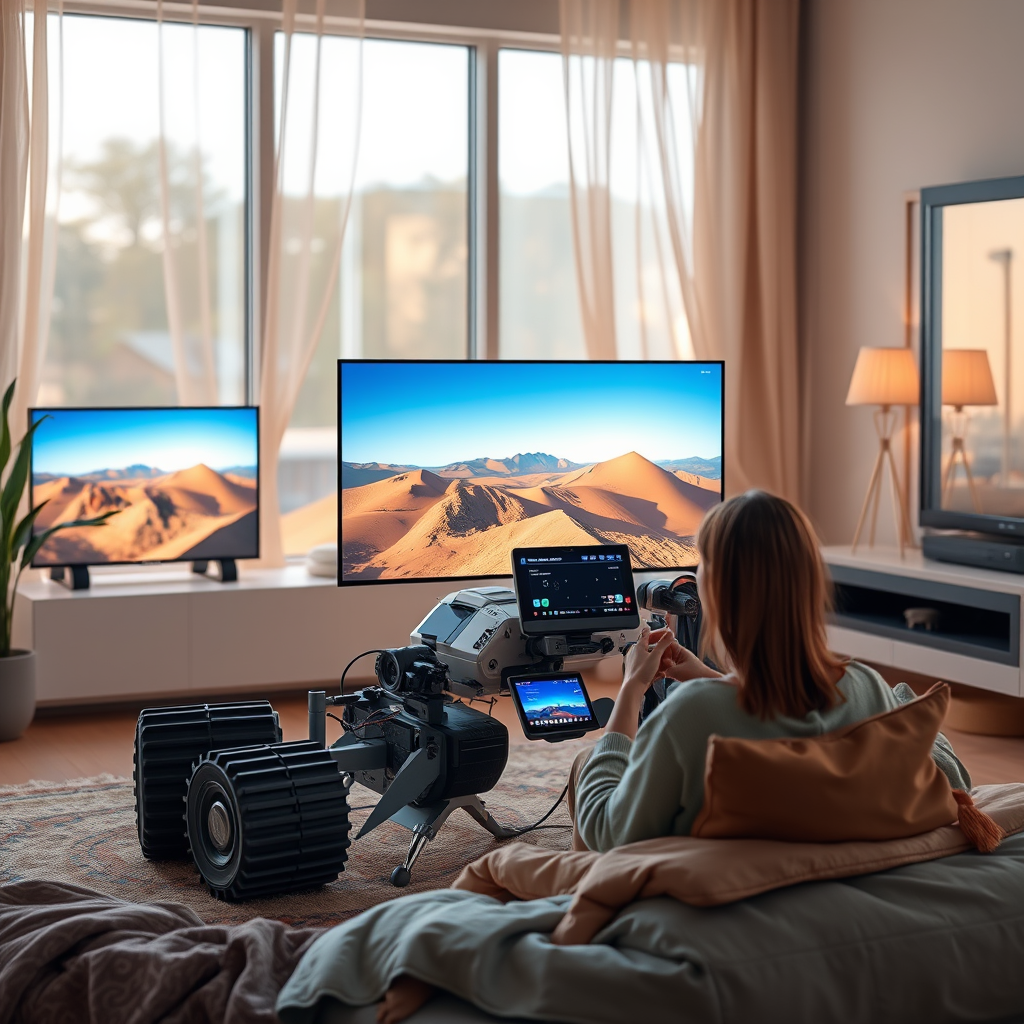

Smart displays significantly enhance space rover navigation by delivering real-time data visualization and intuitive user interfaces that empower scientists and engineers. These advanced technologies allow for rapid decision-making, which is crucial when navigating challenging terrains and executing complex tasks in extraterrestrial environments. As we delve into the various ways smart displays contribute to space exploration, we will uncover their impact on mission success and efficiency.
The Role of Real-Time Data Visualization
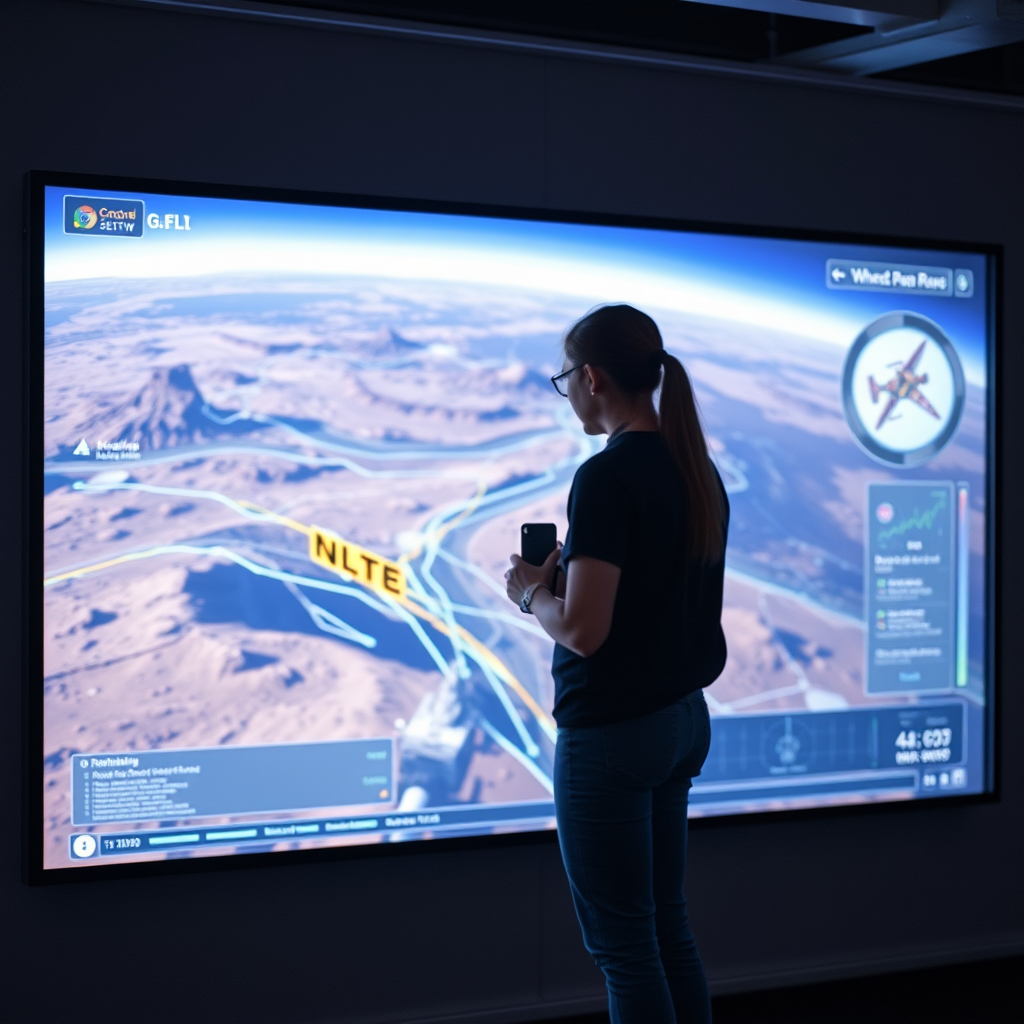
Real-time data visualization is one of the most critical functions of smart displays in space rover navigation. These displays present essential navigation information—such as terrain elevation, rover position, and slope angles—in formats that are easily interpretable. For instance, a graphical representation of the rover’s current location superimposed on a 3D map of the surrounding area allows mission control teams to grasp the rover’s context quickly.
Furthermore, smart displays enable mission control to track the rover’s path in real-time. This capability is vital, as it allows for immediate adjustments to navigation plans based on the latest data. If a rover encounters an unexpected obstacle, operators can quickly reroute its course, minimizing potential risks and maximizing the rover’s operational efficiency. The ability to visualize data instantaneously is a game-changer in space exploration, where every second counts.
Enhanced User Interfaces for Remote Control

One of the standout features of smart displays is their user-friendly interfaces. These intuitive designs simplify the control of rovers, making them accessible even for operators who may not have extensive technical training. Touchscreen capabilities allow for quick commands and adjustments, which is particularly important during critical mission phases when swift responses are necessary.
Imagine a scenario where a rover needs to navigate around a rocky outcrop. With a smart display, an operator can simply tap on the screen to redirect the rover, rather than inputting complex commands through traditional interfaces. This streamlined approach reduces the likelihood of errors and accelerates the decision-making process, enhancing overall mission success.
Integration of AI and Machine Learning
Smart displays are not just passive information tools; they often incorporate advanced AI and machine learning algorithms that analyze navigation data in real-time. These intelligent systems can predict potential obstacles and suggest optimal routes based on a continuously updated assessment of the environment.
For example, if a rover is traversing a Martian landscape, AI algorithms can identify patterns in terrain features, allowing the rover to avoid areas where previous missions have encountered difficulties. Machine learning capabilities also enable the rover to adapt its navigation strategies based on previous experiences and environmental feedback. This means that each mission can build on the knowledge gained from earlier explorations, leading to increasingly refined navigation techniques and successful outcomes.
Improved Communication with Ground Control
Smart displays play a vital role in enhancing communication between the rover and mission control. They facilitate seamless information exchange, ensuring that critical updates and alerts are prioritized for immediate attention. For instance, if a rover encounters a malfunction or an unexpected environmental condition, the smart display can instantly relay this information back to mission control, where teams can respond swiftly.
Moreover, these displays can present complex data in a visually accessible manner, allowing ground control operators to make informed decisions quickly. By keeping everyone on the same page, smart displays help foster a collaborative environment that is essential for the success of space missions.
Visualization of Scientific Data
In addition to their navigation capabilities, smart displays significantly enhance the visualization of scientific data collected by the rover’s instruments. For example, a rover exploring the surface of Titan, Saturn’s largest moon, could utilize its smart display to showcase detailed images of the terrain, atmospheric composition, and even potential organic materials discovered during its exploration.
This integration of navigational and scientific data allows scientists to better understand the environments being explored. With visual representations of findings at their fingertips, they can plan future experiments and adjust navigation strategies based on the scientific insights gathered. It creates a holistic approach to exploration, where navigation and science go hand in hand.
Case Studies of Successful Missions
Several notable missions have highlighted the crucial role of smart displays in enhancing rover navigation. The Mars rovers, such as Curiosity and Perseverance, serve as prime examples. These rovers are equipped with advanced smart displays that provide real-time navigation data and allow for remote control through intuitive interfaces.
During the Perseverance mission, for instance, its smart display enabled scientists to analyze terrain data dynamically, leading to quick adjustments in the rover’s planned path. The outcome was a highly efficient mission that successfully collected samples and conducted experiments in some of the most challenging Martian environments.
In these missions, the integration of smart displays has not only improved efficiency but also significantly increased the success rate of complex operations, showcasing the potential of this technology in future explorations.
Future Trends in Smart Display Technology
Looking ahead, emerging technologies in smart displays could revolutionize rover navigation even further. One exciting development is the potential integration of augmented reality (AR) features. Imagine a rover’s smart display providing an AR overlay of the terrain, highlighting obstacles and potential pathways in real-time. This could greatly enhance operators’ situational awareness and decision-making processes.
Additionally, advancements in display materials and user interfaces are on the horizon. Flexible, lightweight displays that can withstand harsh extraterrestrial environments may become standard, allowing for even more innovative design possibilities. As these technologies evolve, they will undoubtedly shape the future of space exploration, making missions safer and more efficient.
Summarizing the significant advantages that smart displays bring to space rover navigation showcases their vital role in modern exploration efforts. From real-time data visualization and enhanced user interfaces to the integration of AI and improved communication, smart displays are transforming how we navigate and explore the cosmos. As technology continues to evolve, these innovations will undoubtedly shape the future of space missions, making it essential for those interested in the intersection of technology and space exploration to stay informed about these advancements.
Frequently Asked Questions
How do smart displays enhance the navigation systems of space rovers?
Smart displays improve the navigation systems of space rovers by providing real-time data visualization, allowing operators to monitor the rover’s environment and trajectory effectively. These displays integrate advanced algorithms that process sensor data, helping to identify obstacles and optimize routes. By presenting critical information in an easily digestible format, smart displays enable faster decision-making, crucial for successful rover missions in challenging terrains.
What technologies are used in smart displays for space rover navigation?
Smart displays for space rover navigation utilize a combination of technologies, including augmented reality (AR), artificial intelligence (AI), and machine learning (ML). These technologies work together to analyze vast amounts of data collected from sensors and cameras, enhancing the rover’s ability to navigate autonomously. Additionally, advanced graphical interfaces provide intuitive representations of the rover’s surroundings, improving situational awareness for operators on Earth.
Why are smart displays considered essential for autonomous navigation in space rovers?
Smart displays are essential for autonomous navigation in space rovers because they facilitate communication between the rover and mission control while processing data in real time. This capability allows rovers to adapt to unforeseen challenges, such as rough terrain or sudden obstacles, without relying solely on commands from Earth. By enabling autonomous decision-making, smart displays significantly increase the efficiency and safety of rover operations in remote environments.
Which space missions have successfully implemented smart displays for rover navigation?
Notable space missions that have successfully implemented smart displays for rover navigation include NASA’s Mars rovers, such as Curiosity and Perseverance. These rovers utilize smart display technology to enhance their navigation capabilities, allowing for autonomous exploration and data collection on the Martian surface. The integration of smart displays has proven vital for navigating the complex landscape of Mars, contributing to the overall success of these missions.
What are the benefits of using smart displays over traditional navigation systems in space rovers?
The benefits of using smart displays over traditional navigation systems in space rovers include improved real-time data processing, enhanced user interfaces, and greater autonomy. Smart displays allow for quicker responses to environmental changes and provide operators with a clearer understanding of the rover’s status. Additionally, the integration of advanced technologies helps reduce the risk of human error, thereby increasing mission success rates in unpredictable extraterrestrial environments.
References
- Rover (space exploration)
- https://www.nasa.gov/mission_pages/rovers/overview/index.html
- https://www.sciencedirect.com/science/article/pii/S0094576521000683
- NASA Marks Earth Day’s 50th Anniversary with #EarthDayAtHome | NASA Jet Propulsion Laboratory (JPL)
- https://www.nature.com/articles/s41598-020-78188-9
- https://www.space.com/space-rovers-navigation-technology.html
- Nuclear Weapons: Actions Needed to Improve Management of NNSA’s Lithium Activities | U.S. GAO
- https://www.aaas.org/resources/space-rovers-navigating-mars
- https://www.nationalgeographic.com/science/article/how-nasa-uses-artificial-intelligence-in-space-rovers