
Optimizing your subwoofer for balanced bass is crucial for enhancing your audio experience. It requires thoughtful placement, precise tuning, and meticulous calibration to achieve that perfect blend of deep bass and overall sound quality. In this article, you will discover the essential steps to optimize your subwoofer, ensuring it complements your entire audio system and elevates your listening experiences.
Understanding Your Subwoofer’s Role
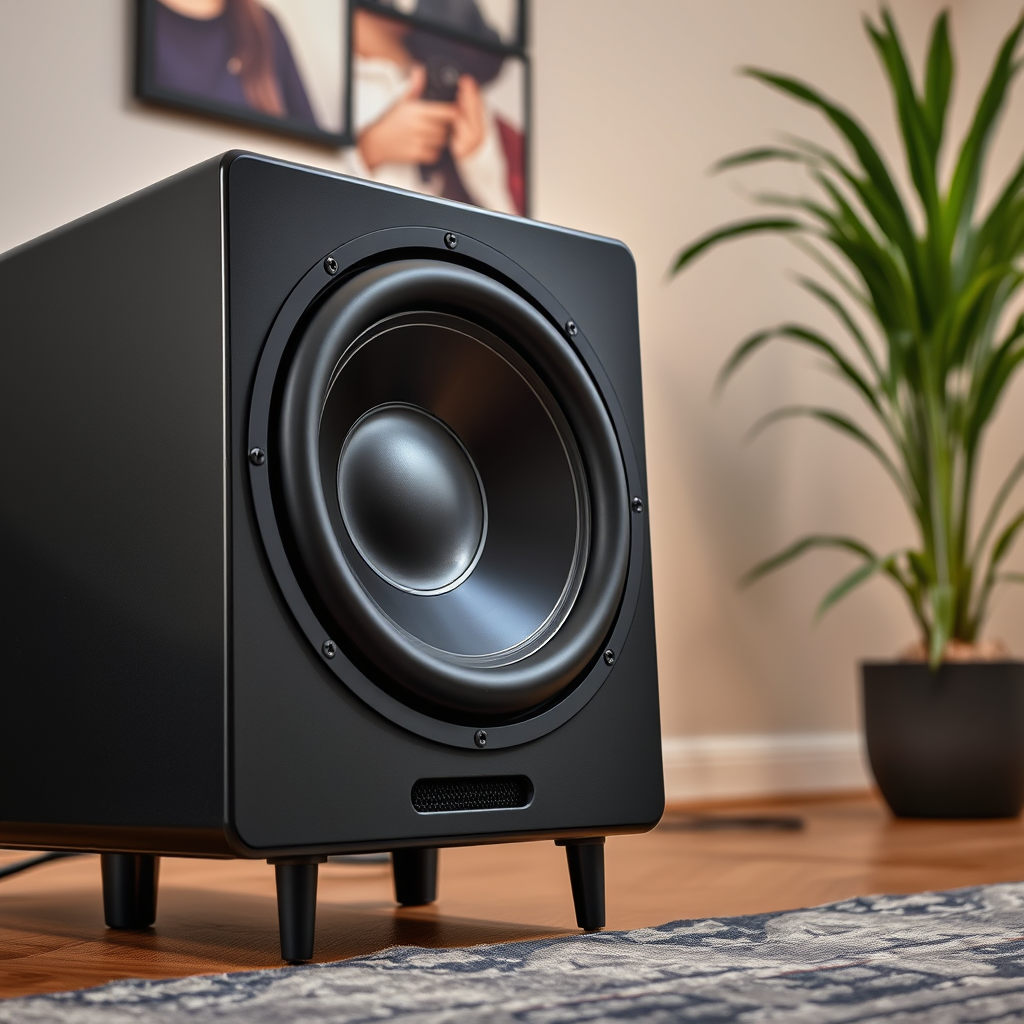
The role of a subwoofer in an audio system cannot be overstated, as it significantly contributes to the overall sound quality by delivering deep, rich bass frequencies. Bass is a fundamental element in music, providing rhythm and depth that can immerse listeners in the experience. In film soundtracks, it conveys the impact of explosions, the rumble of vehicles, and the subtleties of musical scores, enhancing the emotional connection to the content.
Subwoofers work in conjunction with other speakers in your audio setup, filling in the low-frequency gaps that standard speakers often cannot reproduce effectively. This synergy is essential for achieving a balanced sound profile, where the bass complements the mid and high frequencies rather than overpowering them. Understanding the subwoofer’s role will help you appreciate the importance of proper optimization for an enriched audio experience.
Placement Tips for Optimal Sound
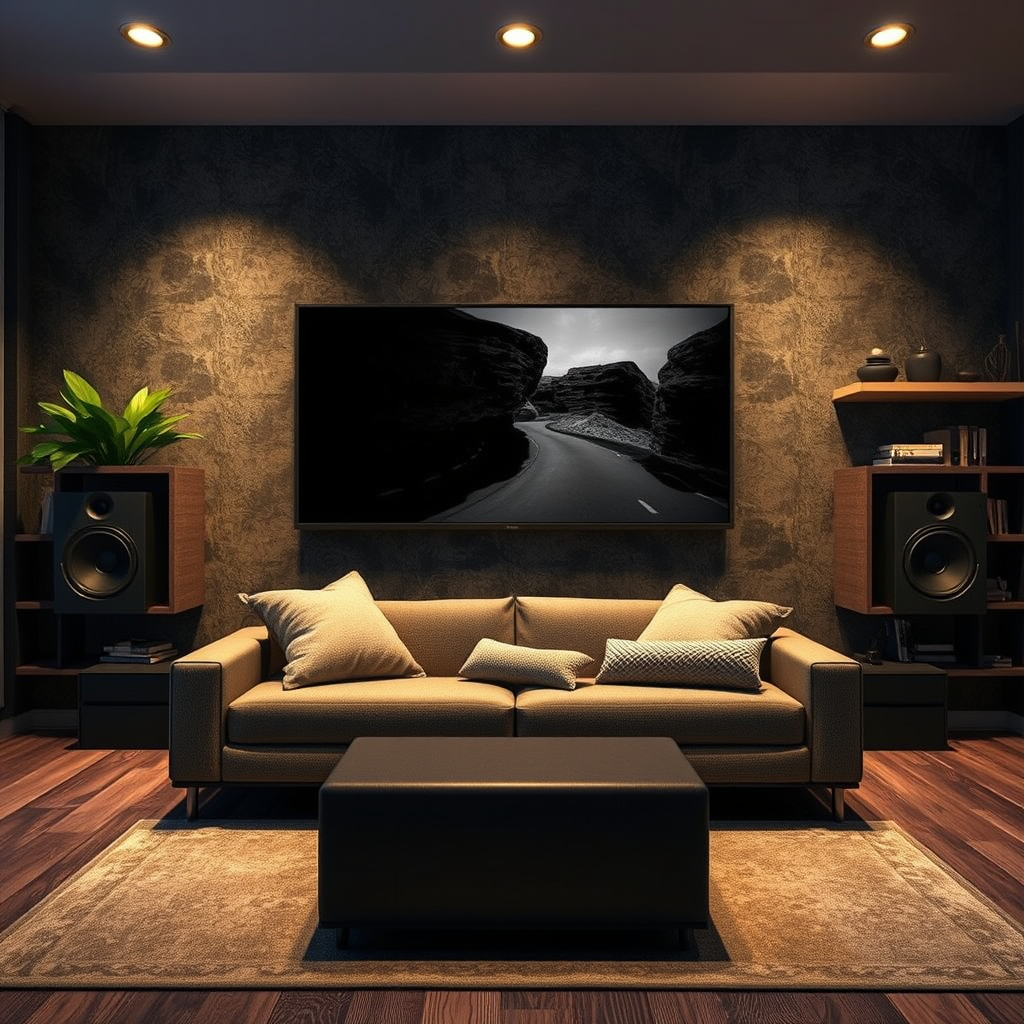
The placement of your subwoofer plays a pivotal role in its performance and the overall sound quality of your audio system. Here are some effective placement tips:
1. Room Corners: Placing your subwoofer in a corner can amplify its output due to the boundary reinforcement effect. However, this may lead to an overly boomy sound, so careful evaluation is necessary.
2. Wall Proximity: If corner placement is not suitable, consider placing the subwoofer along a wall or near the front speakers. This positioning often helps in achieving a balanced bass response without excessive boominess.
3. Avoiding Obstacles: Ensure that the subwoofer is not obstructed by furniture or other objects, as this can negatively impact sound waves and bass performance.
4. Room Acoustics: The acoustics of your room greatly influence how bass sounds. Soft furnishings can absorb sound, while hard surfaces can reflect it. Experimenting with different placements and considering the room’s acoustics can lead to significant improvements in bass clarity and depth.
Tuning Your Subwoofer Settings
Once you have placed your subwoofer optimally, fine-tuning its settings is the next step to achieve balanced bass. This process involves adjusting several key parameters:
1. Crossover Frequency: The crossover frequency determines the point at which the subwoofer takes over from your main speakers. A good starting point is around 80 Hz. Adjusting this setting higher may result in a more pronounced bass, while lowering it may lead to a more seamless integration with the rest of your speakers.
2. Phase Control: Phase control helps align the subwoofer’s output with that of your main speakers. If your subwoofer is out of phase, it can cause cancellation, resulting in weak bass. Experiment with the phase switch or dial to find the setting that provides the most coherent sound.
📋 Subwoofer Settings Comparison Table
Typical Subwoofer Settings for Balanced Sound
| # | Setting | Recommended Value | Adjustment Notes |
|---|---|---|---|
| 1 | Crossover Frequency | 80 Hz | Adjust based on speaker capabilities |
| 2 | Phase Control | 0° / 180° | Experiment to find the best alignment |
| 3 | Volume | 50-75% | Balance with main speakers |
| 4 | Low Pass Filter | 80 Hz | Ensure compatibility with speakers |
| 5 | Equalization | Flat | Adjust based on room acoustics |
| 6 | Distance Setting | 0-15 ft | Adjust to speaker distance |
| 7 | Room Correction | Enabled | Use for optimal calibration |
Utilizing Room Correction Technology
Room correction technology can significantly enhance the performance of your subwoofer. Many modern audio systems come equipped with automatic room correction systems that analyze the acoustics of your space and adjust the sound output accordingly. These systems can measure the frequency response and adjust settings like equalization and phase control to optimize the audio experience seamlessly.
For those without advanced technology, manual calibration techniques can be employed. This involves using a sound level meter to measure the output of your subwoofer at various frequencies, allowing you to make precise adjustments based on actual performance rather than assumptions.
📈 Subwoofer Performance Bar Chart
Subwoofer Output Frequency Response (%)
Testing and Fine-Tuning Your Setup
Once you have set up your subwoofer, testing and fine-tuning its performance is essential. Here are some methods to consider:
1. Sound Level Meters: Invest in a sound level meter or use an app to measure your subwoofer’s output at various frequencies. This will help you identify any peaks or dips in bass response.
2. Test Tones: Play test tones ranging from 20 Hz to 200 Hz to evaluate how your subwoofer performs across the frequency spectrum. Listen for clarity, depth, and any distortion.
3. Incremental Adjustments: Make small adjustments to your settings based on your tests. Fine-tuning should be a gradual process, allowing you to identify which changes lead to improvements.
4. Listening Tests: Conduct listening tests with a variety of music genres and movie soundtracks. Pay attention to how well the subwoofer integrates with the rest of your audio system, ensuring that the bass feels tight and controlled.
Common Mistakes to Avoid
When optimizing your subwoofer, there are several common mistakes that should be avoided:
1. Misplacing the Subwoofer: Placing the subwoofer in the wrong location can lead to uneven bass response. For example, a subwoofer placed in a corner may create overwhelming bass that drowns out other frequencies.
2. Over or Under-Adjusting Settings: Many users make drastic changes to their settings in an attempt to achieve the perfect sound. This can lead to an unbalanced audio experience. Instead, focus on making incremental adjustments and testing the effects.
3. Ignoring Room Acoustics: Failing to consider the acoustics of your room can hinder your ability to achieve balanced bass. Always evaluate how sound travels and interacts with surfaces in your space.
4. Neglecting Calibration: Skipping the calibration process, whether automatic or manual, can result in a poorly tuned system. Ensure that you take the time to calibrate your subwoofer to your specific environment.
Maintenance and Upkeep for Longevity
To ensure your subwoofer continues to perform optimally over time, regular maintenance is key. Here are some tips to consider:
1. Routine Checks: Regularly check all connections and cables to ensure they are secure and in good condition. Loose connections can lead to loss of sound quality.
2. Cleaning: Periodically clean the exterior of your subwoofer with a soft, dry cloth to remove dust and debris. Avoid using harsh chemicals that could damage the finish.
3. Re-evaluating Settings: As your room or audio equipment changes, re-evaluate your subwoofer settings and placement. What worked in one setup may not be optimal in another.
4. Listening for Changes: Pay attention to any changes in sound quality over time. If you notice a decline in performance, it may indicate a need for recalibration or even servicing.
By following these steps, you can significantly enhance the performance of your subwoofer and enjoy a more balanced and engaging audio experience. Experiment with positioning and settings, and don’t hesitate to make adjustments based on your listening preferences. Happy listening!
Frequently Asked Questions
What is the best placement for my subwoofer to achieve balanced bass?
The best placement for your subwoofer is typically in a corner or against a wall, as this can enhance low-frequency output. However, to achieve truly balanced bass, you should experiment with different locations in the room, particularly the “subwoofer crawl” method, where you place the subwoofer at your listening position and move around the room to find the spot with the best bass response.
How can I adjust my subwoofer settings for optimal performance?
To optimize your subwoofer settings, start by adjusting the crossover frequency, which should typically be set around 10 Hz above the lowest frequency your main speakers can handle. Additionally, fine-tune the volume and phase settings to match your speakers; this will help create a seamless blend between your subwoofer and main speakers, resulting in balanced bass.
Why does my subwoofer sound boomy, and how can I fix it?
A boomy subwoofer often results from improper placement or settings that amplify certain frequencies too much. To fix this, try repositioning your subwoofer, adjusting the crossover frequency, and experimenting with the phase setting. You can also use room correction software or bass traps to minimize resonance and achieve a clearer bass response.
Which types of music benefit most from a well-optimized subwoofer?
Music genres such as electronic, hip-hop, and orchestral compositions benefit significantly from a well-optimized subwoofer, as they often feature deep bass lines and low-frequency effects. When your subwoofer is tuned correctly, it enhances the overall listening experience by providing a fuller, richer sound that complements the intricate details in these genres.
What tools can I use to measure and optimize my subwoofer’s performance?
To measure and optimize your subwoofer’s performance, you can use an SPL (Sound Pressure Level) meter or a smartphone app to analyze sound levels at various frequencies. Additionally, room measurement software can provide detailed insights into frequency response and help you adjust settings for a more balanced bass experience. Using these tools will ensure that your subwoofer is performing at its best.
References
- Subwoofer
https://en.wikipedia.org/wiki/Subwoofer - https://pubmed.ncbi.nlm.nih.gov/21194436/
https://pubmed.ncbi.nlm.nih.gov/21194436/ - https://www.sciencedirect.com/science/article/pii/S221313881730051X
https://www.sciencedirect.com/science/article/pii/S221313881730051X - https://www.ncbi.nlm.nih.gov/pmc/articles/PMC5936195/
https://www.ncbi.nlm.nih.gov/pmc/articles/PMC5936195/ - https://www.acoustics.org/press/160th/3d/3d.htm
https://www.acoustics.org/press/160th/3d/3d.htm - https://www.bbc.com/future/article/20210218-how-to-get-the-best-bass-from-your-speakers
https://www.bbc.com/future/article/20210218-how-to-get-the-best-bass-from-your-speakers - https://www.theguardian.com/music/2021/mar/11/how-to-get-the-best-sound-from-your-speakers
https://www.theguardian.com/music/2021/mar/11/how-to-get-the-best-sound-from-your-speakers - Google Scholar Google Scholar
https://scholar.google.com/scholar?q=optimize+subwoofer+balanced+bass - Google Scholar Google Scholar
https://scholar.google.com/scholar?q=subwoofer+performance+optimization - Google Scholar Google Scholar
https://scholar.google.com/scholar?q=bass+management+in+audio+systems