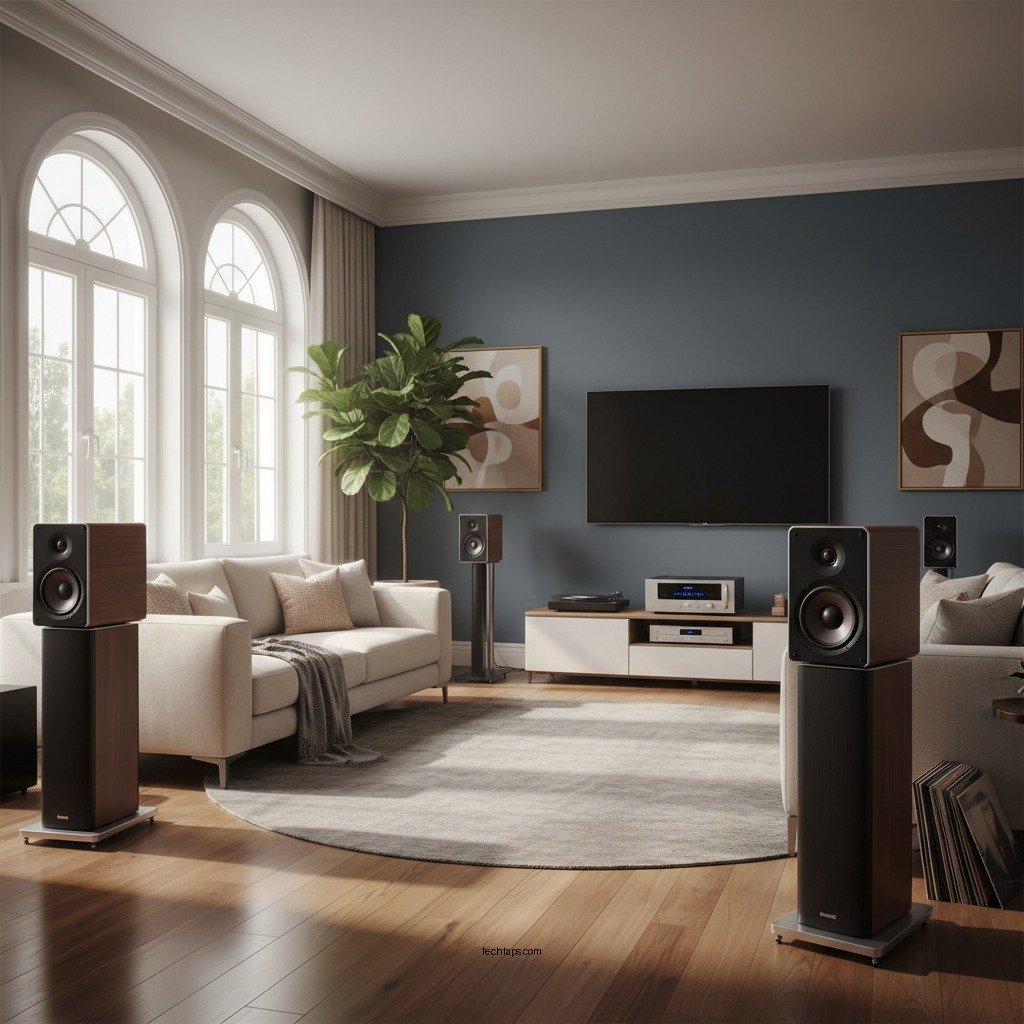

To set up a high-end home audio system in a large room, you need to focus on speaker placement, equipment selection, and room acoustics. By strategically choosing components and optimizing their arrangement, you can create an immersive listening experience that fills the entire space. This guide will walk you through the essential steps to achieve top-notch sound quality in your home.
Choosing the Right Audio Components
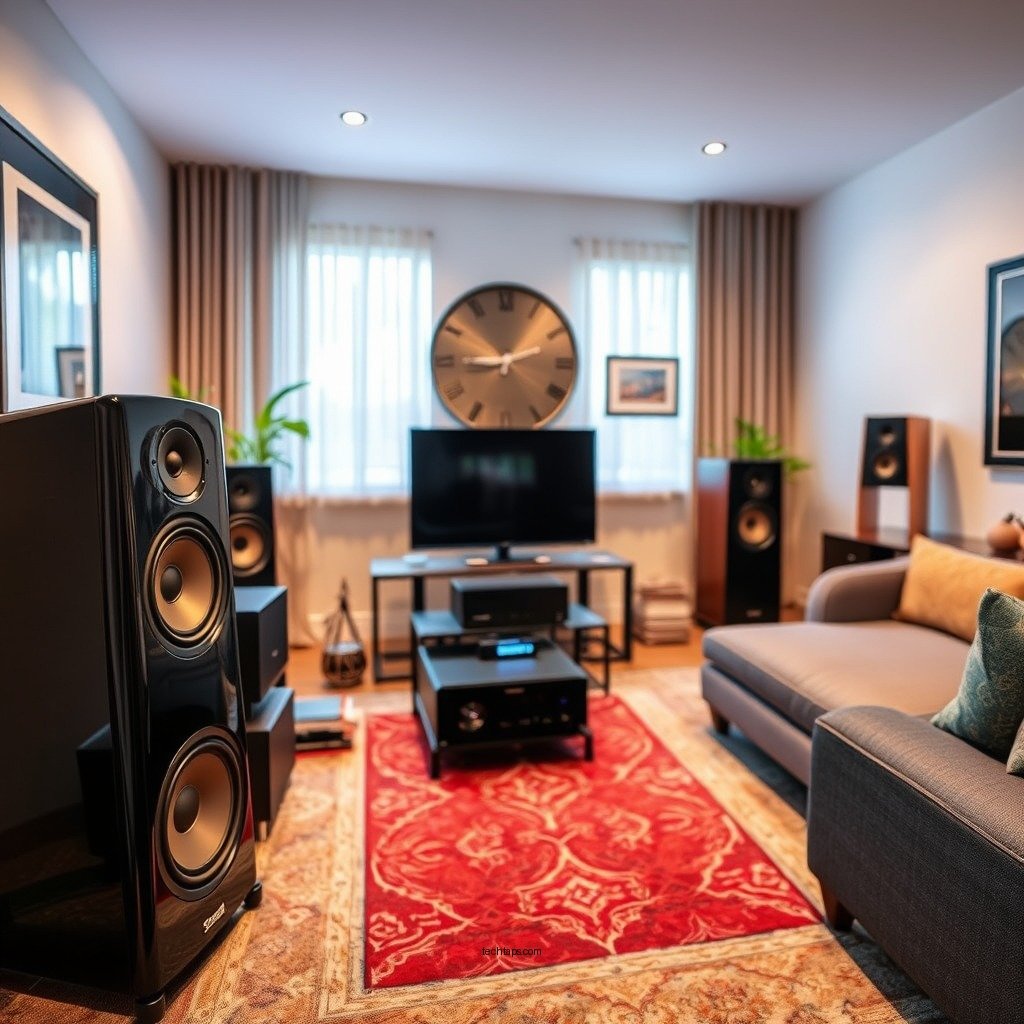
Selecting the right audio components is crucial for creating a high-end home audio system that performs well in a large room. Start with high-quality speakers that are suited for larger spaces; floor-standing speakers often provide superior sound quality and depth, making them an excellent choice for expansive areas. Alternatively, large bookshelf models can also be effective if positioned correctly. Brands such as Bowers & Wilkins, Klipsch, and Focal offer models that deliver exceptional sound fidelity.
Next, invest in an AV receiver that can handle multiple channels and provide sufficient power for your room size. Look for a receiver with at least 7.1 channels to ensure you can accommodate surround sound setups. Brands like Denon, Yamaha, and Onkyo offer reliable options with advanced features, including Dolby Atmos support, which can significantly enhance your listening experience with three-dimensional sound.
Optimizing Speaker Placement
Speaker placement is one of the most critical factors in achieving great sound quality. Position your speakers at ear level when seated, as this allows for optimal sound projection. Ideally, create an equilateral triangle between your seating area and the speakers, which helps ensure that sound waves reach your ears simultaneously.
When placing your speakers, ensure they are distanced adequately from walls to minimize unwanted reflections. A distance of at least 2-3 feet is often recommended. Additionally, angling the speakers slightly towards the listening area can further enhance clarity and definition in the soundstage. Experimenting with the arrangement can lead to discovering the sweet spot for your specific room.
Addressing Room Acoustics
Room acoustics play a significant role in how sound is perceived. To manage sound reflections and reduce echo in your large room, incorporate acoustic panels on walls and ceilings. These panels can absorb excess sound, leading to a more controlled listening environment. Rugs and heavy curtains are also beneficial, as they can dampen sound waves and improve clarity.
Furthermore, consider adding bass traps in the corners of your room. These specialized acoustic treatments are designed to control low-frequency sound waves, which can often be problematic in larger spaces. By strategically placing these traps, you can enhance low-frequency response and achieve a more balanced overall sound.
Top 7 High-End Speaker Brands for Large Rooms (2024)
| # | Brand | Model | Type | Rating |
|---|---|---|---|---|
| 1 | Bowers & Wilkins | 803 D3 | Floor-standing | ★★★★☆ |
| 2 | Klipsch | RP-8000F | Floor-standing | ★★★★★ |
| 3 | Focal | Kanta No2 | Floor-standing | ★★★★★ |
| 4 | Paradigm | Persona 9H | Floor-standing | ★★★★☆ |
| 5 | MartinLogan | Electromotion ESL | Electrostatic | ★★★★★ |
| 6 | Sonus Faber | Olympica Nova III | Floor-standing | ★★★★☆ |
| 7 | Cabasse | L’Ocean | Floor-standing | ★★★★☆ |
Wiring and Connectivity
The integrity of your audio system’s wiring and connectivity can significantly impact performance. Using high-quality speaker wire and interconnects is essential for maintaining signal integrity and reducing interference. Look for oxygen-free copper wiring, which offers better conductivity and durability.
Plan your wiring layout to keep cables tidy and avoid clutter. Consider using cable management solutions like cable raceways or under-carpet channels. This not only enhances the aesthetics of your setup but also minimizes the risk of accidental disconnections or damage to the wires.
For modern systems, ensure your receiver and speakers support high-definition audio formats, such as Dolby TrueHD or DTS-HD Master Audio. HDMI connections are preferable for digital audio signals, providing a single cable solution for both audio and video.
Calibration and Fine-Tuning
Once your system is set up, calibration and fine-tuning are vital to optimize sound settings based on your room’s acoustics. Most modern AV receivers come equipped with calibration tools that measure the room’s characteristics and adjust settings accordingly. Utilize these tools to automatically balance speaker levels, distances, and equalization.
After the initial calibration, experiment with different sound profiles and settings to match your personal listening preferences. Many receivers allow for custom EQ adjustments, enabling you to tailor the sound to suit your tastes, whether you prefer a warmer sound or a more analytical presentation.
Enhancing the Listening Experience
To elevate your listening experience further, consider incorporating smart home technology. Smart speakers or systems that integrate with home automation allow for easy control of your audio system. You can seamlessly stream music, control playback, and even adjust settings with voice commands or mobile apps.
Additionally, think about expanding your audio setup with additional components such as subwoofers for deep bass or multi-room audio systems that distribute sound throughout your home. This flexibility can transform your audio experience, allowing you to enjoy high-fidelity sound in every corner of your living space.
Your high-end home audio system can transform your large room into a private concert hall with the right setup. By focusing on quality components, thoughtful placement, and room acoustics, you can create an unparalleled audio experience. Start planning your system today and enjoy the rich sounds that will elevate your home entertainment!
Frequently Asked Questions
What are the essential components needed for a high-end home audio system in a large room?
To set up a high-end home audio system in a large room, you’ll need several key components: a high-quality AV receiver, floor-standing or bookshelf speakers, a subwoofer for low frequencies, and high-fidelity audio sources like a CD player or streaming device. Additionally, consider incorporating a high-end turntable for vinyl enthusiasts and quality cables to ensure optimal sound transmission.
How do I determine the best speaker placement in a large room for optimal sound quality?
To achieve the best speaker placement in a large room, start by positioning your main speakers at least 3-6 feet from the back wall and at ear level when seated. Use the equilateral triangle method, where the distance between the two speakers is the same as the distance from each speaker to the listening position, and experiment with slight adjustments to find the optimal soundstage.
Why is room acoustics important when setting up a high-end audio system?
Room acoustics play a crucial role in the performance of a high-end audio system because sound waves interact with room surfaces, affecting clarity and overall sound quality. Factors such as wall materials, furniture placement, and room dimensions can cause echoes or dead spots, so it’s essential to incorporate sound-absorbing materials like rugs, curtains, and acoustic panels to enhance the listening experience.
What is the best way to connect my high-end audio components in a large room?
The best way to connect your high-end audio components is to use high-quality, shielded cables that minimize interference and signal loss. HDMI cables should be used for digital connections to your AV receiver, while speaker wire should be appropriately gauged to match the distance between your receiver and speakers, ensuring a strong connection without degradation in sound quality.
Which brands are considered top-tier for high-end audio equipment suitable for large rooms?
Some of the top-tier brands for high-end audio equipment suitable for large rooms include Bowers & Wilkins, Klipsch, MartinLogan, and Focal for speakers, and Denon or Marantz for AV receivers. These brands are renowned for their superior sound quality, innovative technology, and durability, making them ideal choices for creating an immersive audio experience in spacious environments.
References
- Sound system
https://en.wikipedia.org/wiki/Sound_system - Google Scholar Google Scholar
https://scholar.google.com/scholar?q=high-end+home+audio+system - https://www.audioholics.com/home-theater-education
https://www.audioholics.com/home-theater-education - https://www.crutchfield.com/S-0T9D2YhQ4F/learn/home-theater-home-audio-system-setup.html
https://www.crutchfield.com/S-0T9D2YhQ4F/learn/home-theater-home-audio-system-setup.html - https://www.nytimes.com/2021/10/29/technology/home-audio-systems.html
https://www.nytimes.com/2021/10/29/technology/home-audio-systems.html - https://www.bbc.com/news/technology-56330883
https://www.bbc.com/news/technology-56330883 - https://www.theguardian.com/music/2020/aug/13/setting-up-home-audio-system
https://www.theguardian.com/music/2020/aug/13/setting-up-home-audio-system - Google Scholar Google Scholar
https://scholar.google.com/scholar?q=setting+up+high-end+audio+in+large+rooms - https://www.sciencedirect.com/topics/engineering/audio-systems
https://www.sciencedirect.com/topics/engineering/audio-systems - Google Scholar Google Scholar
https://scholar.google.com/scholar?q=How+to+Set+Up+a+High-End+Home+Audio+System+in+a+Large+Room