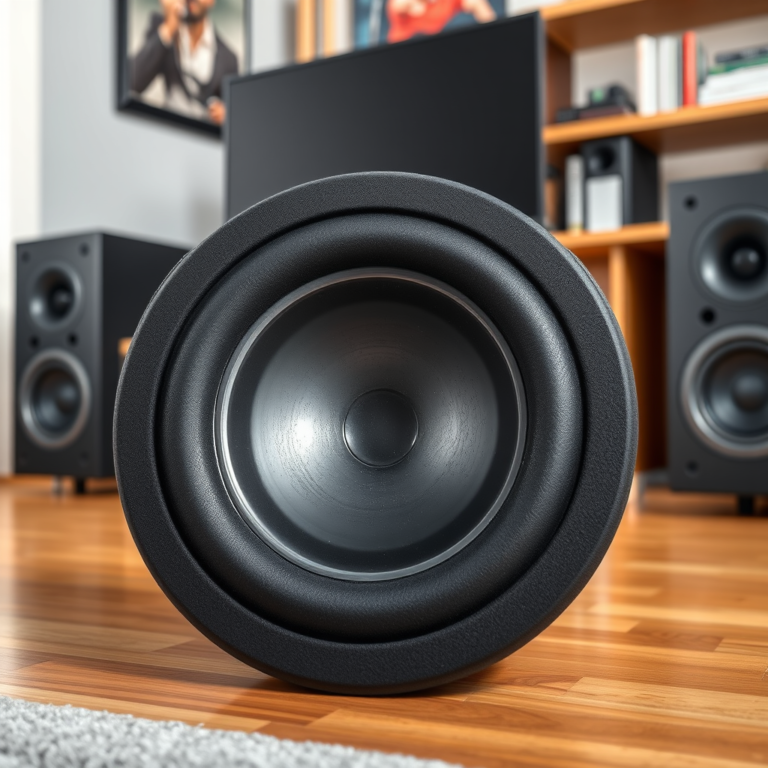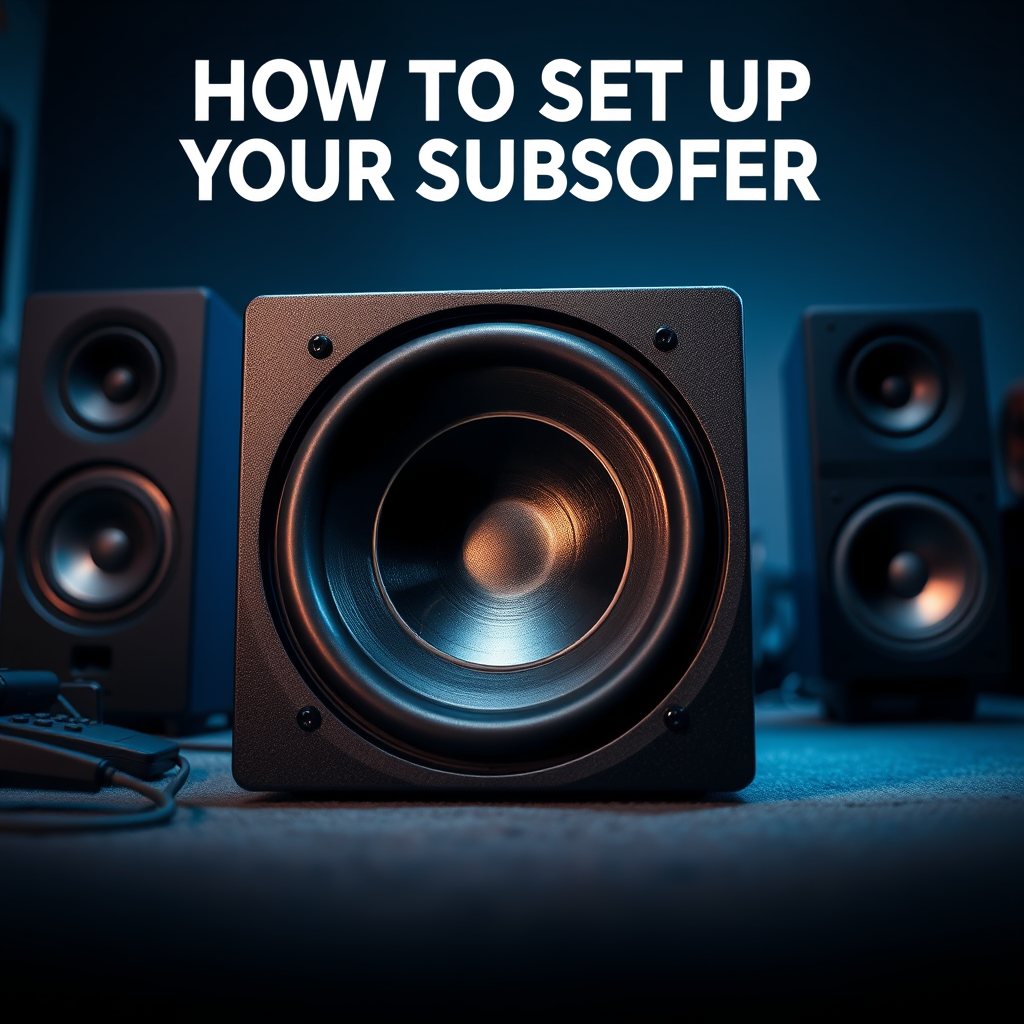

Setting up your subwoofer properly is essential for achieving the best bass response in your audio system. By following a few key steps, you can enhance the depth and clarity of the low frequencies in your music or home theater experience. In this guide, you’ll learn the best practices for placement, calibration, and fine-tuning your subwoofer, ensuring an immersive audio experience that meets your expectations.
Choosing the Right Location

The location of your subwoofer plays a pivotal role in how well it performs. Proper placement can significantly affect the depth and quality of the bass response in your audio setup.
– Room Placement: Start by experimenting with different locations in the room. A common myth is that placing a subwoofer in a corner will always yield the best results. While corner placement can indeed boost bass levels due to boundary reinforcement, it can also lead to uneven bass response and muddiness in sound. To find the optimal spot, try placing the subwoofer along different walls and at various distances from the corners to see where it sounds best.
– Avoiding Obstacles: Ensure that your subwoofer has enough space around it to allow sound waves to propagate freely. Walls, furniture, and other obstructions can interfere with the sound waves, leading to phase cancellations and uneven bass. Ideally, leave at least a few inches of space between the subwoofer and any obstacles to minimize this effect.
Calibration and Settings
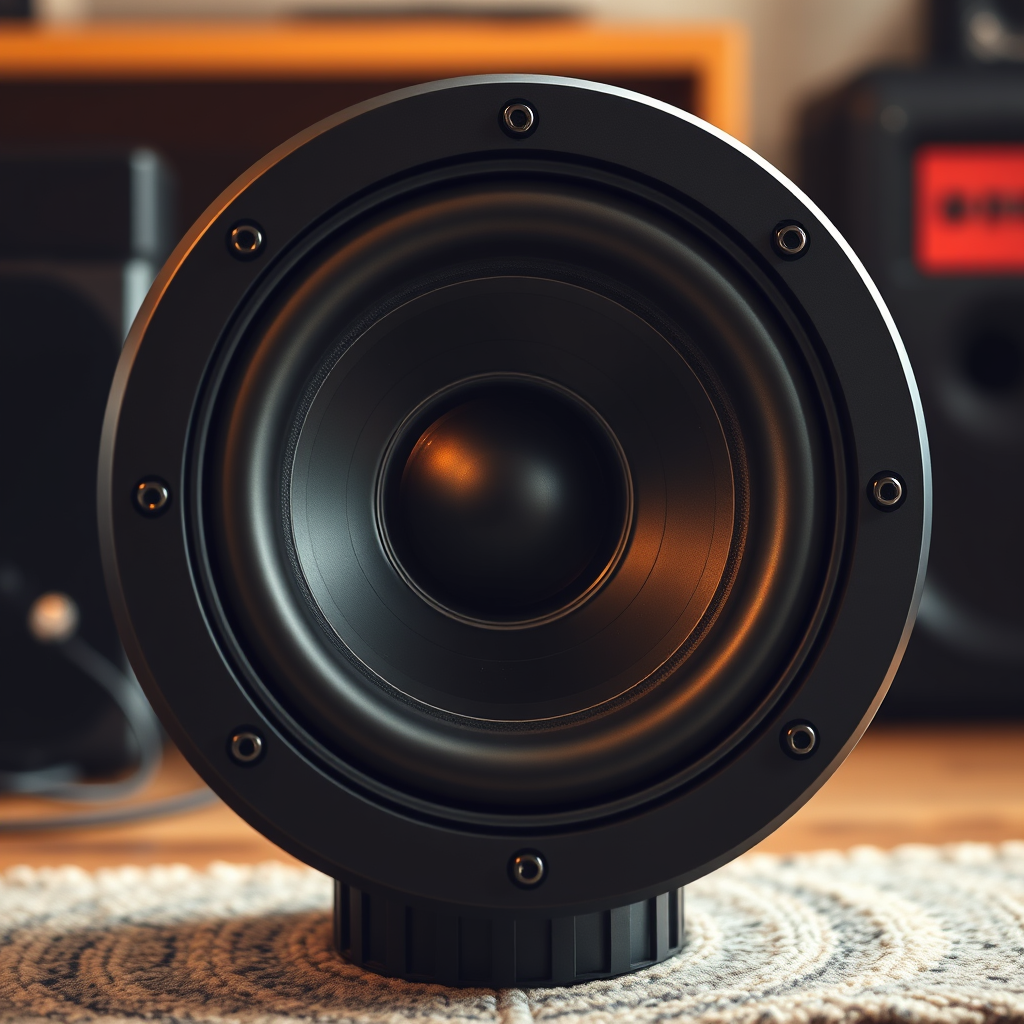
Once you’ve found the right location, the next crucial step is calibrating the subwoofer and adjusting its settings to achieve a balanced sound profile.
– Volume Level: The subwoofer’s volume level should be set to match the output of your main speakers. If the subwoofer is too loud, it can overpower the mid-range and high frequencies, leading to a disjointed listening experience. Conversely, if it’s too quiet, you’ll miss out on the impactful bass that enriches music and movie soundtracks. A good starting point is to set the subwoofer’s volume to about one-third of its maximum and then adjust based on your listening preferences.
– Phase Adjustment: The phase control on your subwoofer helps align its output timing with that of your main speakers. This is crucial for creating a cohesive soundstage where the bass integrates seamlessly with the rest of the audio frequencies. Experiment with the phase setting while playing bass-heavy music to find the optimal alignment that enhances clarity and depth.
Using Room Correction Technology
Modern audio systems often come equipped with advanced room correction technologies that can significantly improve the performance of your subwoofer.
– Automatic Calibration: Many receivers feature built-in room correction software that analyzes your room’s acoustics and adjusts the subwoofer settings accordingly. This technology uses microphones to measure sound at various points in the room, ensuring that the subwoofer responds optimally to the unique characteristics of your space. If you have this feature, take advantage of it for an effortless setup.
– Manual Adjustments: If your audio system lacks automatic correction, you can still achieve excellent results with manual adjustments. Consider using a sound pressure level (SPL) meter to measure sound levels at your listening position. This allows you to make precise adjustments to the subwoofer’s volume, crossover, and phase settings based on actual data rather than subjective listening.
Subwoofer Calibration Features Comparison
| # | Feature | Automatic Calibration | Manual Adjustments | User-Friendly Interface |
|---|---|---|---|---|
| 1 | Denon AVR-X6700H | Yes | Yes | Excellent |
| 2 | Yamaha RX-A3080 | Yes | Yes | Good |
| 3 | Marantz SR7015 | Yes | Yes | Excellent |
| 4 | Onkyo TX-RZ840 | Yes | Yes | Good |
| 5 | Sony STR-DN1080 | No | Yes | Average |
| 6 | Pioneer VSX-LX504 | Yes | Yes | Good |
| 7 | NAD T 758 V3 | No | Yes | Average |
Fine-Tuning the Crossover Frequency
Fine-tuning the crossover frequency is essential for ensuring that the subwoofer and main speakers work harmoniously together.
– Setting the Crossover: The crossover frequency determines the point at which the audio signal is divided between the subwoofer and the main speakers. For most home theater setups, a crossover frequency between 80-120 Hz is recommended. This range allows the subwoofer to handle the low frequencies while the main speakers manage the mid-range and highs. Adjust the crossover frequency according to your speakers’ capabilities and your personal preferences.
– Listening Tests: Conducting listening tests is crucial to finding the ideal crossover setting. Play various types of music and movie soundtracks, adjusting the crossover frequency to determine where the bass sounds most natural and cohesive. It’s important to strike a balance; setting the crossover too high may result in a lack of impact, while setting it too low can lead to a loss of clarity in the bass.
Experimenting with Different Genres
To truly evaluate the effectiveness of your subwoofer setup, it’s essential to test it across a variety of music genres and media formats.
– Bass-heavy Music: Use bass-heavy tracks to assess the performance of your subwoofer. Genres such as hip-hop, electronic dance music (EDM), and dubstep often feature prominent bass lines, making them ideal for testing low-frequency response. Pay attention to how the bass feels in your chest and whether it maintains clarity without distortion.
– Adjusting for Content: Be prepared to tweak your settings based on the type of media being played. For instance, movie soundtracks often have dynamic range, meaning the bass may fluctuate significantly between scenes. Adjust the subwoofer’s volume or crossover settings as needed to ensure that you fully experience the intended impact of the content you’re enjoying.
Maintenance and Troubleshooting
Regular maintenance and troubleshooting are critical to ensuring your subwoofer continues to perform at its best.
– Regular Checks: Periodically check all connections, including power cables and audio inputs, to ensure everything is functioning correctly. Loose or damaged connections can lead to poor performance or even complete failure of the subwoofer. Additionally, dust and debris can accumulate over time; consider cleaning the enclosure and surrounding areas to maintain optimal sound quality.
– Identifying Issues: If you notice distortion or a lack of bass response, investigate potential issues. Reassess your speaker placement and ensure there are no obstructions affecting sound quality. Additionally, revisit your settings to ensure they align with best practices. If problems persist, it may be worth consulting the manufacturer’s troubleshooting guide or reaching out to a professional for assistance.
Bass Level Test Results Across Different Genres
Your subwoofer’s setup is crucial for an immersive audio experience. By carefully choosing its location, calibrating settings, and fine-tuning your system, you can achieve impressive bass response that elevates your listening enjoyment. Take these steps today to transform your audio setup and enjoy the rich, deep bass you’ve been looking for. With consistent maintenance and a willingness to experiment with different configurations, your audio experience will always be at its peak.
Frequently Asked Questions
How do I choose the best location for my subwoofer?
Choosing the best location for your subwoofer is crucial for optimal bass response. Start by placing it in a corner to amplify the low frequencies, but experiment with different positions, such as along a wall or closer to your main speakers, to find where the bass sounds the most balanced. Use the “subwoofer crawl” method, where you temporarily place the subwoofer in your listening position and move around the room to find the spot with the best sound.
What are the common mistakes to avoid when setting up a subwoofer?
Common mistakes include placing the subwoofer too far from the main speakers, neglecting to adjust the phase settings, and failing to calibrate the volume levels properly. Additionally, avoid putting the subwoofer in an enclosed space, which can muffle sound. Ensuring proper placement and settings can significantly enhance your listening experience and bass performance.
Why is phase adjustment important for my subwoofer?
Phase adjustment is important because it helps synchronize the sound waves from your subwoofer with those from your main speakers. If the phase is not set correctly, it can cause destructive interference, leading to weaker bass response. Properly adjusting the phase ensures that the bass frequencies blend seamlessly with the rest of your audio, resulting in a fuller, more impactful sound.
How can I optimize my subwoofer settings for music versus movies?
To optimize your subwoofer settings for music, set the crossover frequency around 80-100 Hz to ensure clarity in mid-bass sounds. For movies, you may want to increase the crossover to about 120 Hz to enhance the low-frequency effects and explosions. Adjusting the volume and equalization settings based on the content type can also help achieve the best bass response for each experience.
Which subwoofer features should I prioritize for better bass response?
When looking for a subwoofer that delivers better bass response, prioritize features like a built-in amplifier for adequate power, adjustable phase and crossover controls for fine-tuning, and a ported design for increased efficiency. Additionally, look for models with a frequency response that extends down to 20 Hz for deeper bass, ensuring you experience the full range of sound in your audio setup.
References
- Subwoofer
https://en.wikipedia.org/wiki/Subwoofer - https://www.oberlin.edu/arts-and-sciences/academic-departments/music/music-resources/subwoofer-setup-guide
https://www.oberlin.edu/arts-and-sciences/academic-departments/music/music-resources/subwoofer-setup-guide - Google Scholar Google Scholar
https://scholar.google.com/scholar?q=How+to+Set+Up+Your+Subwoofer+for+Better+Bass+Response - https://www.audioholics.com/home-theater-articles/how-to-set-up-a-subwoofer
https://www.audioholics.com/home-theater-articles/how-to-set-up-a-subwoofer - https://www.researchgate.net/publication/335233420_Subwoofer_Setup_for_Better_Bass_Response
https://www.researchgate.net/publication/335233420_Subwoofer_Setup_for_Better_Bass_Response - Google Scholar Google Scholar
https://scholar.google.com/scholar?q=subwoofer+setup+bass+response - https://www.bbc.co.uk/sound/guide-to-setting-up-a-subwoofer
https://www.bbc.co.uk/sound/guide-to-setting-up-a-subwoofer - https://www.sciencedirect.com/topics/engineering/subwoofer
https://www.sciencedirect.com/topics/engineering/subwoofer - How to Set Up Your Subwoofer for Better Bass Response – Search results
https://en.wikipedia.org/wiki/Special:Search?search=How+to+Set+Up+Your+Subwoofer+for+Better+Bass+Response - https://www.ncbi.nlm.nih.gov/search/research-articles/?term=How+to+Set+Up+Your+Subwoofer+for+Better+Bass+Response
https://www.ncbi.nlm.nih.gov/search/research-articles/?term=How+to+Set+Up+Your+Subwoofer+for+Better+Bass+Response