
Eye-tracking technology significantly enhances virtual reality (VR) displays by providing a deeper level of immersion and interaction for users. By meticulously monitoring where a user is looking, VR systems can dynamically adjust visual elements in real time, leading to a more engaging and realistic experience. This article will dive into the mechanics of eye-tracking in VR, its myriad benefits, the challenges developers face, and what the future holds for this innovative technology.
Understanding Eye-Tracking Technology
Eye-tracking is a fascinating field that involves measuring the movement and position of the eyes to determine where a person is looking. This technology captures data related to gaze direction, fixation points, and pupil dilation, which can provide insights into user attention and engagement.
There are several techniques used for eye-tracking, including remote sensing, electrooculography (EOG), and video-based methods. Remote sensing typically employs infrared cameras that detect reflections from the user’s eyes, while EOG uses electrodes placed around the eyes to measure the electrical signals generated by eye movements. Video-based methods utilize high-speed cameras to capture images of the eyes and analyze them for movement and focus. Each technique has its strengths and weaknesses, but they all work towards the same goal: understanding how users engage with their environments.
The Role of Eye-Tracking in VR
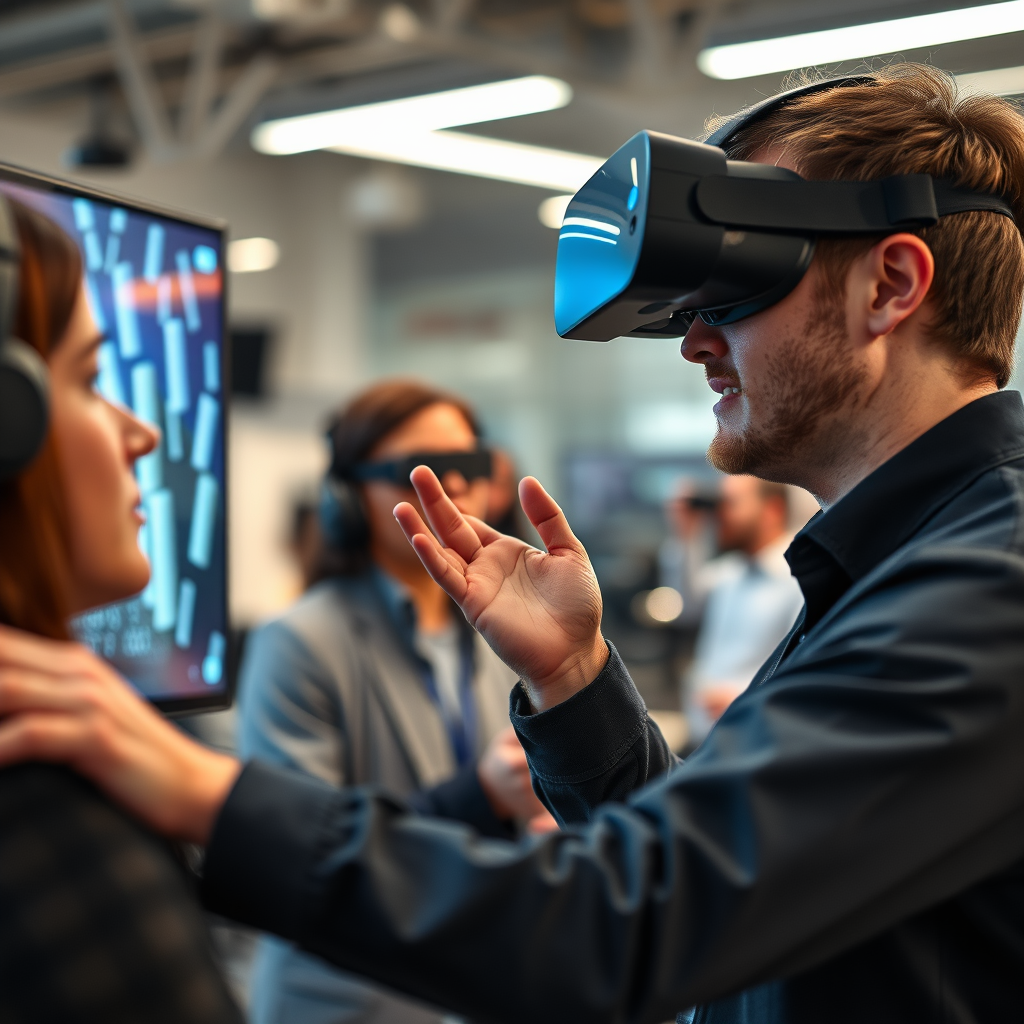
In VR environments, eye-tracking plays a pivotal role by allowing systems to render graphics only in the areas where a user is looking. This optimization results in better performance and efficiency, as it reduces the workload on the graphics processor. For instance, imagine a user exploring a stunning virtual landscape; with eye-tracking, the system can allocate more processing power to the high-resolution details in the user’s direct line of sight while rendering peripheral areas in lower resolution. This technique is known as foveated rendering.
Foveated rendering enhances realism by mimicking how human vision works—our eyes see clearly only in a small area of focus, while our peripheral vision is less detailed. This means that VR experiences can become more lifelike and captivating, as they align closely with natural human perception. Additionally, eye-tracking allows for smoother interactions within VR environments, making experiences feel more intuitive and responsive.
Benefits of Eye-Tracking in VR
The incorporation of eye-tracking technology into VR displays brings multiple benefits, significantly increasing user immersion. One of the primary advantages is the ability to create a more lifelike experience tailored to user attention. For example, in a VR game, enemies could react based on where the player is looking, adding an exciting layer of realism and engagement.
Eye-tracking also facilitates intuitive user interaction. Instead of relying solely on controllers or hand gestures, users can navigate and select options using their gaze. This creates a more natural user experience, reducing the learning curve for new users, especially in educational or training applications. Imagine a virtual classroom where students can highlight text by simply looking at it, or a medical training simulation where practitioners can focus on specific areas of a virtual patient.
Challenges in Implementing Eye-Tracking
Despite its numerous benefits, implementing eye-tracking technology in VR is not without challenges. One of the primary technical limitations lies in latency and precision. If there’s a delay in tracking eye movements, it can lead to a disjointed experience, causing discomfort or even motion sickness for users. Additionally, variations in user anatomy, such as differences in eye shape and size, can complicate the calibration process, making it difficult to ensure consistent performance across diverse users.
Calibration issues can also arise, as each user may require different settings to achieve optimal tracking accuracy. This can be particularly challenging in scenarios where multiple users are engaging with the VR system simultaneously, such as in gaming or collaborative work environments. Developers must find a way to create a seamless experience that accommodates various users without requiring extensive setup.
Future Trends in Eye-Tracking for VR
As technology continues to evolve, the future of eye-tracking in VR looks promising. Ongoing advancements in machine learning and computer vision are expected to enhance the accuracy and reliability of eye-tracking systems. These improvements could lead to more sophisticated applications beyond gaming, such as in training simulations, education, and therapeutic environments.
For example, imagine VR therapy sessions where therapists can monitor patients’ focus and emotional responses based on their eye movements. This could provide invaluable insights into the patient’s state of mind and help tailor treatment plans accordingly. Similarly, in educational settings, eye-tracking could be used to assess student engagement and comprehension, allowing educators to adapt their teaching methods in real-time.
User Experience Considerations
When integrating eye-tracking technology into VR, it is crucial to prioritize user experience. Awareness of user comfort and usability is essential, as excessive eye-tracking demands can lead to fatigue and strain. Long sessions in VR environments can be taxing, particularly for users who might not be accustomed to wearing headsets for extended periods.
Designers must balance sophisticated features with user-friendly interfaces to enhance VR adoption. This includes ensuring that eye-tracking systems are easy to calibrate, responsive to individual users, and designed in a way that minimizes discomfort. Furthermore, providing users with control over how eye-tracking influences their experience can lead to greater satisfaction and engagement.
Incorporating eye-tracking technology into VR displays significantly enriches the user experience by offering a more interactive and realistic environment. As technology continues to evolve, expect even more innovative applications and improvements in eye-tracking capabilities in the VR space. For those interested in the latest VR trends, exploring these advancements can provide valuable insights into the future of immersive technology.
In conclusion, eye-tracking technology is revolutionizing the way we experience virtual reality by enhancing immersion and interactivity. While there are challenges to overcome, the benefits and future possibilities of this technology present exciting opportunities for creators and users alike. As we continue to explore and refine eye-tracking in VR, we can anticipate a future where our virtual experiences become increasingly aligned with our natural human behaviors and perceptions.
Frequently Asked Questions
What is eye-tracking technology in VR displays and how does it work?
Eye-tracking technology in VR displays refers to the capability of the headset to detect and interpret the movement and position of the user’s eyes. This is achieved through infrared sensors and cameras that track eye position and gaze direction, allowing the system to adjust visuals in real-time. This technology enhances user experience by enabling foveated rendering, where only the area the user is looking at is rendered in high detail, thereby improving performance and reducing computational load.
How does eye-tracking improve the user experience in virtual reality?
Eye-tracking significantly enhances the user experience in virtual reality by creating more immersive and interactive environments. It allows for more natural interactions, such as selecting objects simply by looking at them, and helps in refining graphics quality through foveated rendering. Additionally, it can provide insights into user behavior, enabling developers to create more tailored experiences based on where users tend to focus their attention.
Why is eye-tracking technology important for gaming and simulation in VR?
Eye-tracking technology is essential for gaming and simulation in VR, as it enhances realism and engagement. By tracking eye movement, games can react dynamically, offering a more intuitive way to interact with the virtual environment. This technology also aids in creating realistic depth perception and can reduce motion sickness by ensuring that the visuals align with the user’s focus, thereby providing a smoother gaming experience.
Which VR headsets currently utilize eye-tracking technology?
Several advanced VR headsets incorporate eye-tracking technology, including the HTC Vive Pro Eye, Oculus Quest Pro, and the Varjo VR-3. These headsets leverage eye-tracking to enhance visual fidelity and user interaction, making them popular choices among gamers and professionals in fields like training and simulation. As eye-tracking continues to evolve, more headsets are expected to integrate this feature to improve overall user experience.
What are the potential drawbacks of eye-tracking technology in VR displays?
While eye-tracking technology offers numerous benefits, some potential drawbacks include privacy concerns and the need for precise calibration. Users may feel uneasy about their gaze data being collected or misused, raising ethical questions around data privacy. Additionally, if the eye-tracking system is not calibrated properly, it can lead to tracking inaccuracies, which might result in frustration or a diminished experience in virtual environments.
References
- Eye tracking
- https://www.sciencedirect.com/science/article/pii/S1877050919311541
- Frontiers | Self-Objectification and Cognitive Performance: A Systematic Review of the Literature
- Chemosensitizing activity of peptide from Lentinus squarrosulus (Mont.) on cisplatin-induced apop…
- https://www.bbc.com/news/technology-50904547
- https://www.techrepublic.com/article/how-eye-tracking-works-in-vr/
- https://www.researchgate.net/publication/335943348_Virtual_Reality_and_Eye_Tracking
- https://www.usnews.com/news/technology/articles/2020-01-07/how-eye-tracking-technology-is-changing-the-way-we-use-vr
- https://www.microsoft.com/en-us/research/publication/eye-tracking-for-virtual-reality/