

Interactive LEGO Smart Bricks are transforming play tech by merging traditional building with cutting-edge digital innovation, making learning both engaging and fun. These smart bricks empower children to delve into hands-on play while cultivating essential skills like problem-solving, coding, and critical thinking. In this article, we will explore the features, benefits, and applications of these innovative bricks, showcasing how they can convert playtime into a rich educational experience that inspires creativity and fosters a love for learning.
The Technology Behind LEGO Smart Bricks
At the heart of LEGO Smart Bricks lies an impressive array of sensors and connectivity features that enable exciting interactions. These bricks are equipped with motion sensors, light sensors, and even sound sensors that respond to their environment, creating a dynamic play experience. For instance, a child can build a car that reacts to light changes or a robot that navigates through sound commands. The connectivity options—such as Bluetooth and Wi-Fi—allow children to connect their creations to tablets or computers, enabling them to program their models through intuitive apps like LEGO® Education SPIKE™ or LEGO® Boost.
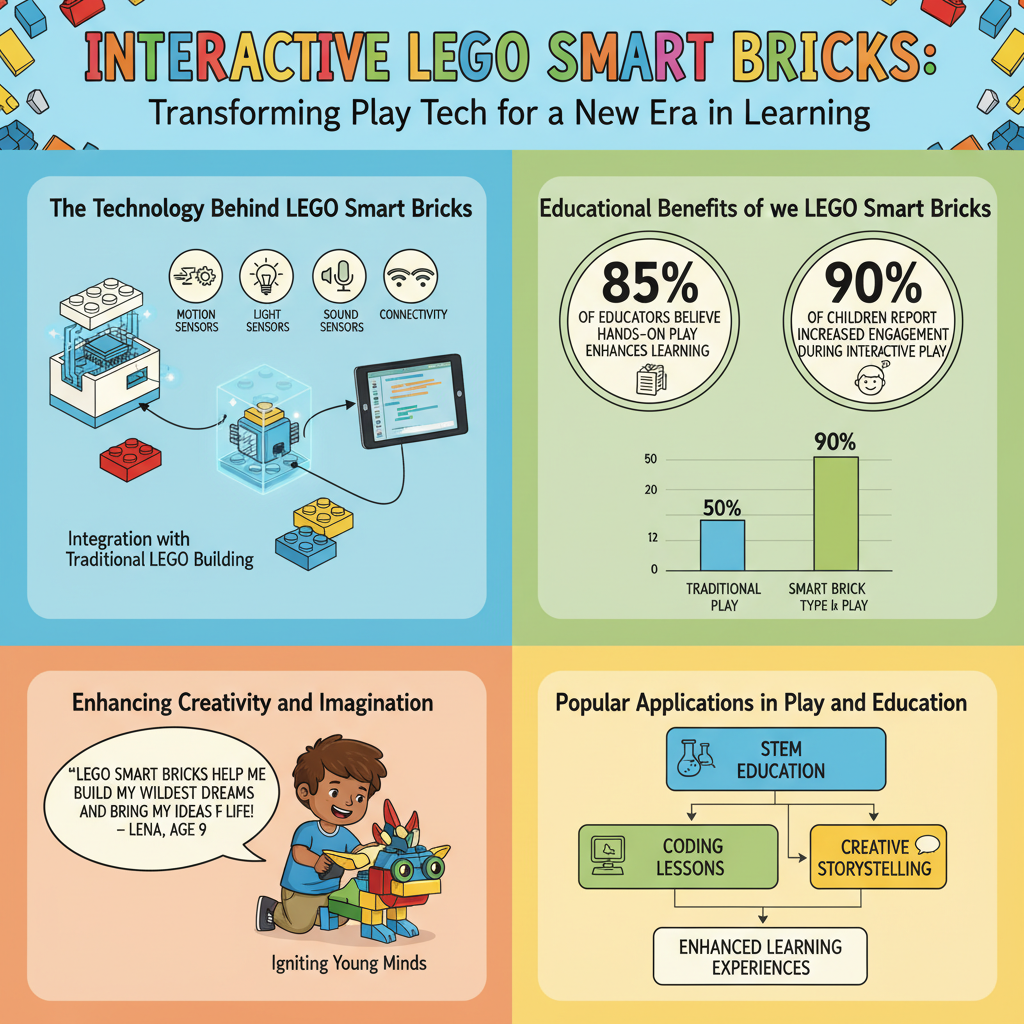
The programming interface is designed to be user-friendly and accessible, allowing users of all ages to customize their creations easily. With block-based coding, children can drag and drop commands to control their models in a straightforward manner. This engaging method not only teaches basic programming concepts but also encourages experimentation and iteration, which are vital skills in today’s technology-driven world.
Educational Benefits of Interactive LEGO Smart Bricks

One of the most significant advantages of LEGO Smart Bricks is their ability to promote STEM (Science, Technology, Engineering, and Mathematics) learning through hands-on activities. Children can explore concepts like geometry and physics while constructing their models. For example, as they build a bridge, they can test its stability and learn about weight distribution and balance. This hands-on approach makes abstract concepts tangible, enhancing comprehension and retention.
Moreover, interactive LEGO Smart Bricks foster collaboration and communication skills. When children work together on projects, they learn to share ideas, delegate tasks, and provide constructive feedback. This collaborative environment mirrors real-world scenarios, preparing them for future teamwork in both academic and professional settings. Group projects, such as building a smart city with interconnected models, encourage discussions around design choices and problem-solving strategies, further enriching their educational experience.
Popular Applications in Play and Education
Schools and educational institutions are increasingly integrating LEGO Smart Bricks into their curricula to enhance learning outcomes. For instance, many STEM programs employ these bricks in robotics classes, where students build and program robots to complete specific tasks, like navigating mazes or competing in challenges. This hands-on experience not only reinforces theoretical knowledge but also ignites a passion for technology among students.
Community programs and workshops are also leveraging these interactive bricks for educational purposes. For example, libraries and community centers are hosting LEGO Smart Brick clubs where children can gather to collaborate on projects, learn coding skills, and participate in challenges. This not only promotes learning but also builds a sense of community and belonging among participants. Such initiatives demonstrate the versatility of LEGO Smart Bricks in various educational settings, making them a valuable tool for both formal and informal learning.
Enhancing Creativity and Imagination
LEGO Smart Bricks are uniquely positioned to encourage open-ended play, which is crucial for fostering creativity and innovative thinking. Unlike traditional toys with fixed outcomes, these bricks invite children to experiment and explore their imaginations. By allowing kids to create anything from a futuristic vehicle to a programmable pet, they can express their individuality and bring their ideas to life.
Case studies of children’s projects highlight the incredible potential of these smart bricks. For instance, a group of fifth graders used LEGO Smart Bricks to design a model of a sustainable city, complete with solar-powered buildings and automated public transport. Their project not only showcased their creativity but also sparked conversations about environmental responsibility and urban planning. Such examples illustrate how interactive play can lead to meaningful learning experiences and help children develop a deeper understanding of complex subjects.
Tips for Parents and Educators
Introducing LEGO Smart Bricks to children can be an exciting journey. Here are some tips to effectively integrate these innovative tools into playtime or educational activities:
1. Start Small: Begin with simple projects to build confidence. Focus on basic tasks like programming a simple movement before progressing to more complex creations.
2. Encourage Exploration: Allow children to experiment without strict guidelines. Open-ended questions like, “What happens if you change this code?” can lead to valuable discoveries.
3. Utilize Online Resources: There are numerous tutorials, forums, and video guides available online that can support learning. Websites like LEGO Education provide lesson plans and project ideas.
4. Join Communities: Engaging with local or online LEGO communities can enhance the learning experience. These groups often share tips, participate in challenges, and provide a network of support.
By creating an encouraging environment and providing access to resources, parents and educators can foster a love for learning and exploration with LEGO Smart Bricks.
Future Trends in Interactive Play Tech
The future of interactive play tech is bright, with LEGO at the forefront of this evolution. As technology advances, we can expect more sophisticated features in smart bricks. For example, advancements in artificial intelligence could enable bricks to learn from user interactions, providing personalized feedback and suggestions for projects based on individual skill levels.
Moreover, the integration of augmented reality (AR) may further enhance the play experience. Imagine a scenario where children can visualize their builds in a virtual environment, or receive interactive instructions overlaying their physical models. Such innovations could transform how children engage with educational tools, making learning even more immersive and enjoyable.
As we look ahead, the implications for learning are significant. The fusion of play and technology will continue to shape educational experiences, making them more engaging and relevant to the needs of future generations.
Interactive LEGO Smart Bricks offer a unique and engaging way for children to learn and develop essential skills through play. By merging technology with creativity, they not only enhance the educational experience but also foster a love for learning. Whether in schools, community programs, or at home, these innovative tools can transform playtime into a rich, educational adventure. Explore the possibilities of LEGO Smart Bricks today and consider incorporating them into your child’s playtime or educational activities for a more enriching experience!
Frequently Asked Questions
What are Interactive LEGO Smart Bricks and how do they work?
Interactive LEGO Smart Bricks are innovative building blocks embedded with technology that allows them to communicate with devices and respond to user inputs. They typically feature sensors, motors, and connectivity options like Bluetooth, enabling users to create interactive models that can be programmed through compatible apps. This integration of physical play with digital technology enhances creativity and learning in areas such as coding and engineering.
How can I use Interactive LEGO Smart Bricks for educational purposes?
Interactive LEGO Smart Bricks can be utilized in educational settings to teach concepts like robotics, coding, and problem-solving. By engaging students in hands-on projects, they can learn programming skills through block-based coding applications that control the Smart Bricks. This practical approach not only reinforces STEM education but also fosters teamwork and critical thinking among students.
Why should I choose Interactive LEGO Smart Bricks over traditional LEGO sets?
Choosing Interactive LEGO Smart Bricks offers a unique play experience that combines the joy of building with the excitement of technology. Unlike traditional LEGO sets, which are static, Smart Bricks enable users to create dynamic models that can react to their environment or user commands. This added layer of interactivity promotes deeper engagement and learning, making it a valuable investment for both play and education.
What are the best projects to create with Interactive LEGO Smart Bricks?
Some of the best projects to create with Interactive LEGO Smart Bricks include robotic vehicles, interactive games, and automated systems such as smart home models. These projects challenge users to think critically about design and functionality while allowing them to experiment with coding and electronics. By starting with simple designs and progressing to more complex builds, users can gradually increase their skills and creativity.
Which apps are compatible with Interactive LEGO Smart Bricks for programming?
Several apps are compatible with Interactive LEGO Smart Bricks, including LEGO’s own programming app, LEGO Mindstorms, and LEGO Boost. These apps offer intuitive interfaces that allow users to drag and drop code blocks, making it easier for beginners to learn programming concepts. Additionally, other platforms like Scratch and Tynker can be used to further enhance the programming experience, providing a range of resources for users at all skill levels.
References
- Lego
- https://www.npr.org/sections/technology/2017/02/11/514402168/lego-boost-a-new-way-to-make-play-and-learning-interactive
- https://www.sciencedirect.com/science/article/pii/S187704281500884X
- https://www.educationworld.com/a_tech/tech/tech146.shtml
- Worksheets, Educational Games, Printables, and Activities | Education.com
- https://www.theguardian.com/technology/2020/jun/23/lego-education-boost-robotics-kids-learning
- https://www.sciencedaily.com/releases/2019/10/191020142554.htm